Artwork
Untitled
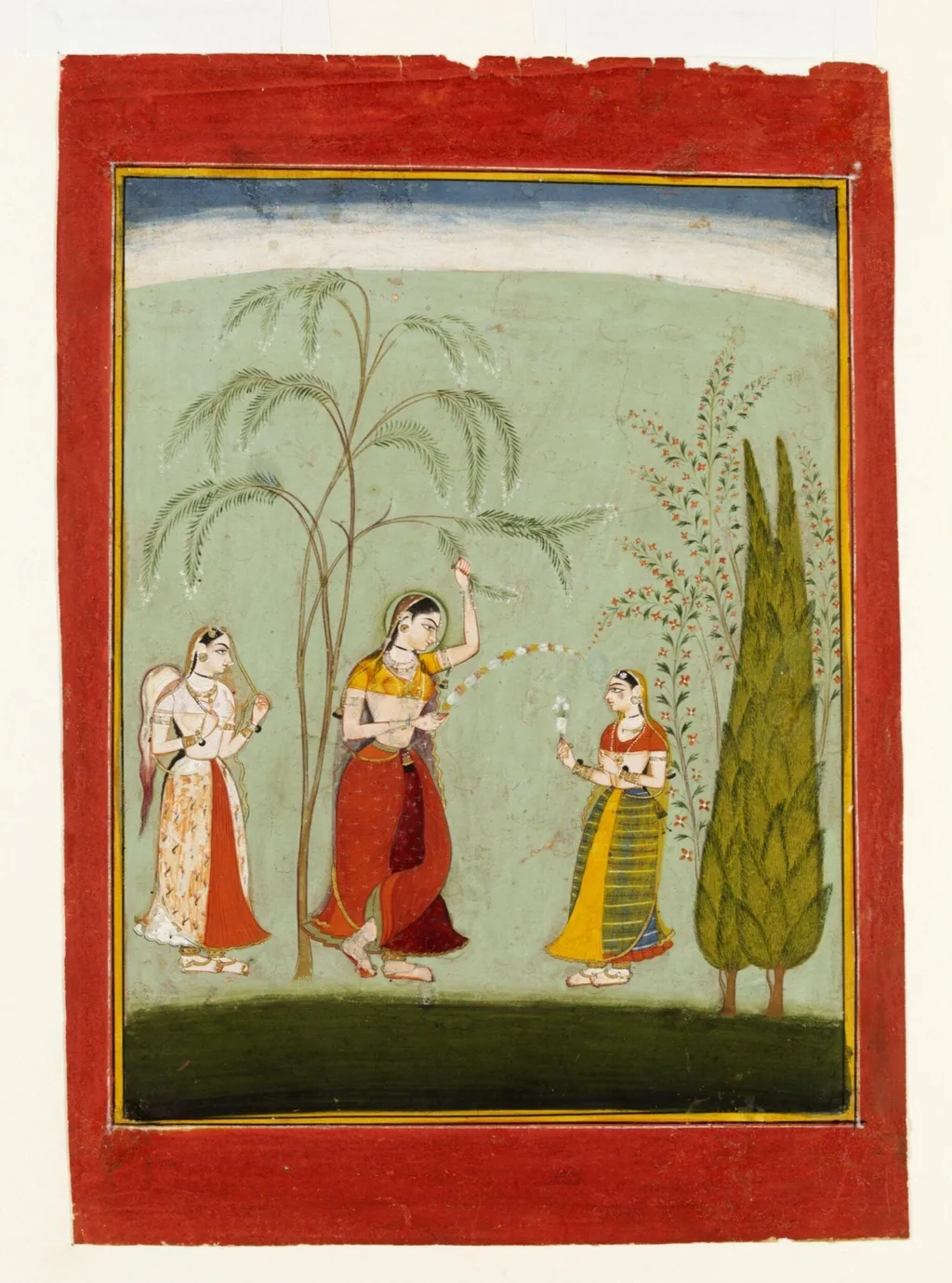
Untitled is a paint painting by the Baroque artist Unknown. It dates from 1680 and is held in the collection of the Victoria and Albert Museum.
About this work
Overview
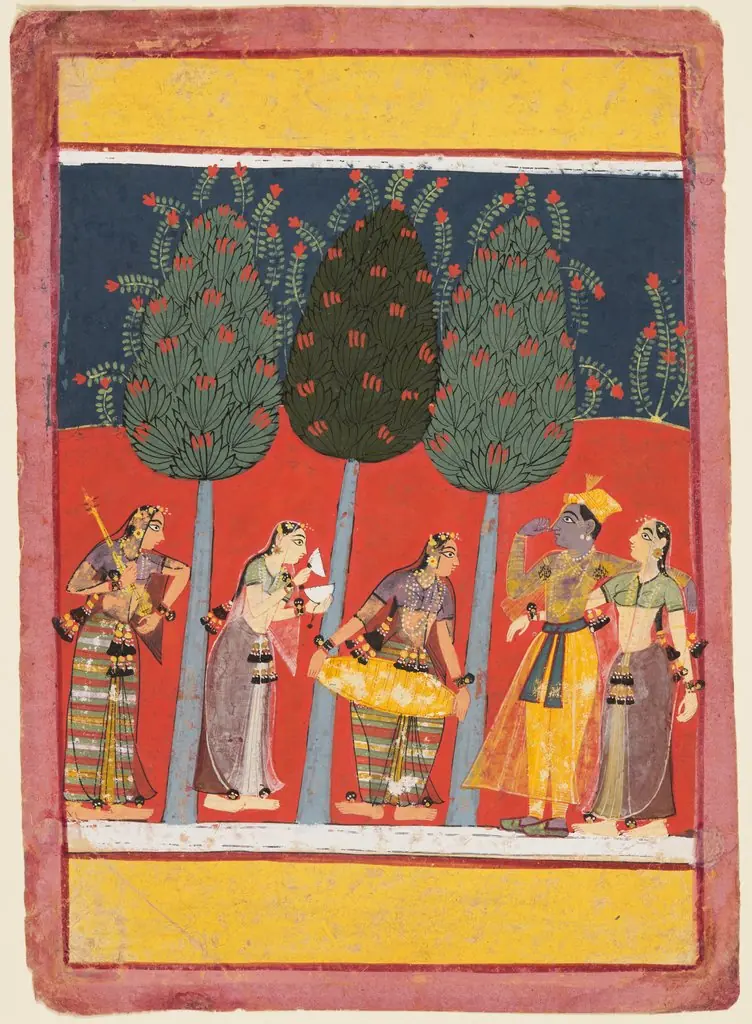
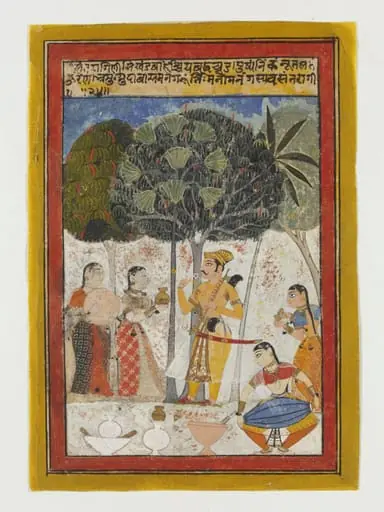
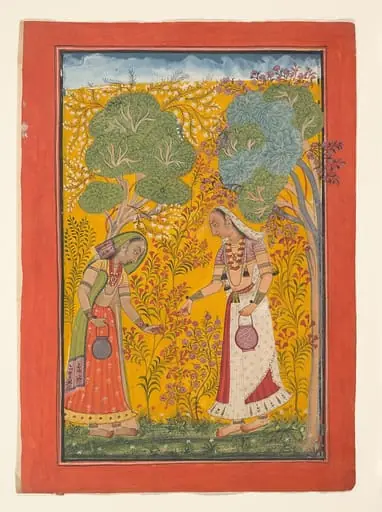
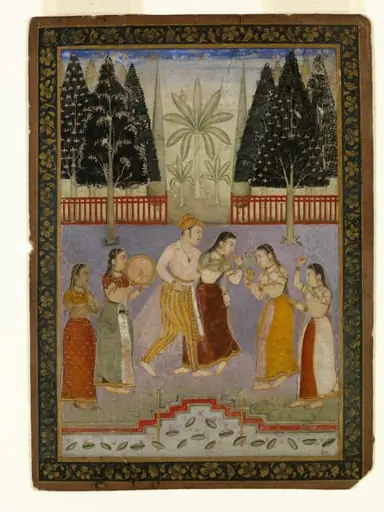
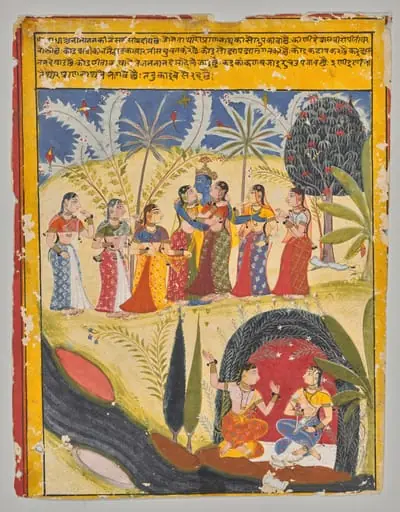
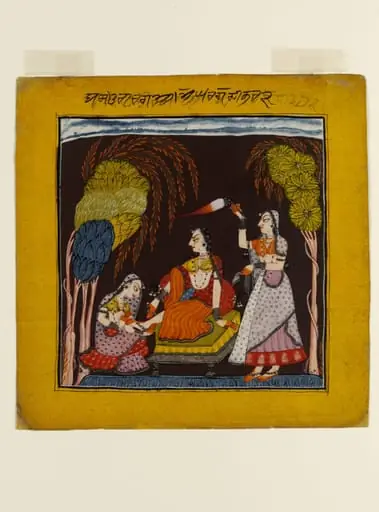
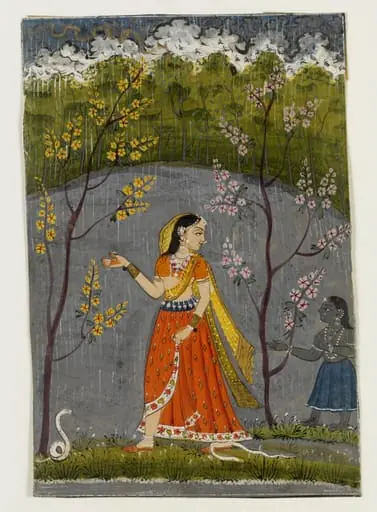
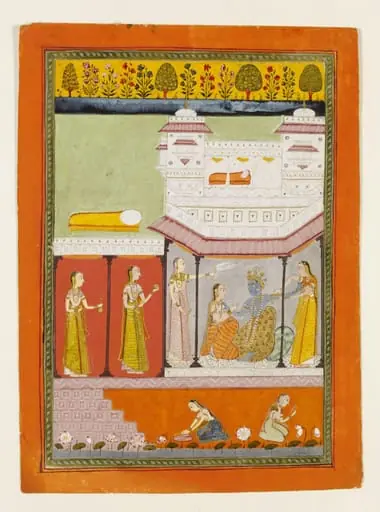
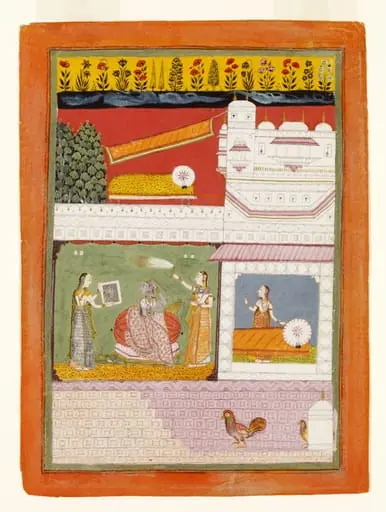
This painting depicts three women standing together in an outdoor setting, their figures rendered with attention to textile detail and natural light.
This painting depicts three women standing together in an outdoor setting, their figures rendered with attention to textile detail and natural light. Dressed in vividly colored garments adorned with jewelry, they appear in a moment of quiet repose. The background features lush foliage and a soft blue sky, framing the figures without overwhelming them. The composition emphasizes stillness and harmony, characteristic of Baroque-era portraiture that blends realism with decorative elegance.
Subject & Meaning
The three women, positioned with subtle spatial balance, suggest a private, intimate gathering. Their relaxed postures and shared accessories—fans and ornamental jewelry—hint at social status and leisure. The central figure’s hold of a small, unidentified object may imply ritual, memory, or personal significance. The scene avoids narrative drama, instead conveying dignity and quiet companionship, typical of domestic or aristocratic female portraiture in the period.
Technique & Style
The artist employs fine brushwork to render the intricate patterns of fabric and the delicate textures of skin and foliage. Colors are saturated but harmonized through soft transitions in the background, drawing focus to the figures. Light falls gently across the forms, modeling volume without harsh contrasts. The style reflects Baroque conventions of naturalism and ornamental richness, prioritizing tactile detail and atmospheric cohesion over theatrical intensity.
History & Provenance
The painting’s origin remains undocumented in public records, with no known artist attribution or early ownership history. Its survival suggests it was likely commissioned by a private patron, possibly within a European or colonial context where Baroque aesthetics were embraced. The absence of signatures or inscriptions complicates dating, though stylistic elements align with late 17th- to early 18th-century practices in regions influenced by Spanish or Italian traditions.
Context
Created during the Baroque era, the work reflects broader cultural interests in depicting private moments among the elite, particularly women in controlled, serene environments. Unlike grand historical or religious scenes, this painting focuses on personal presence and material culture—clothing, adornment, and natural surroundings—as markers of identity and refinement. It aligns with a growing trend in portraiture that valued subtlety over spectacle.
Legacy
Though not widely exhibited or studied, the painting contributes to the understanding of lesser-known Baroque portraiture that emphasized quiet dignity over grandeur. Its preservation offers insight into regional variations of the style, particularly in how female subjects were rendered outside formal court settings. It remains a quiet example of how everyday moments were elevated through careful composition and material detail in early modern visual culture.
Artist & collection

 Domestic Scene
 Giacomo and Cardinal Marco, investing Andrea, Abbot of San Zeno, with his Benefice
 The Nymph of Fontainebleau
 Portrait of a Woman
 Madonna and Child with Saints in the Enclosed Garden
 Venus and Minerva
 Family Group of Four on Sofa
 Wall painting from Room H of the Villa of P. Fannius Synistor at Boscoreale