Artwork
Untitled
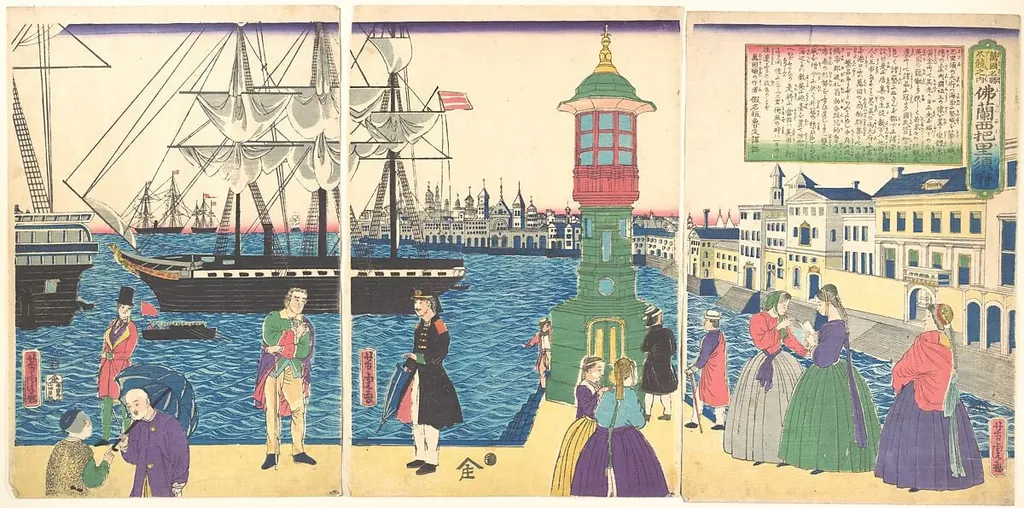
Untitled is an ink print by the Impressionist artist Unknown. It dates from 1862 and is held in the collection of the Metropolitan Museum of Art. This triptych consists of three woodblock prints on paper, rendered in ink and color.
About this work
Overview
This triptych consists of three woodblock prints on paper, rendered in ink and color. Each panel presents a distinct urban scene along a harbor, capturing moments of daily life during a period of cultural transition. The composition is divided horizontally into three equal parts, each offering a separate yet thematically linked vignette of people, architecture, and vessels.
Subject & Meaning
The lighthouse and harbor imply movement, trade, and observation, subtly framing the encounter between global and local identities.
The scenes depict a convergence of Eastern and Western influences: Western-style ships and attire appear alongside traditional Japanese clothing and architecture. The figures—men in suits, women in kimonos, a uniformed official—suggest a society navigating modernization. The lighthouse and harbor imply movement, trade, and observation, subtly framing the encounter between global and local identities.
Technique & Style
The prints employ bold, flat areas of color with sharp outlines, characteristic of ukiyo-e traditions adapted for modern subjects. Vibrant blues dominate the water, while reds and greens accentuate clothing and structures, creating visual contrast without gradient shading. The lack of perspective and emphasis on pattern reflect a decorative sensibility rooted in Japanese printmaking, yet aligned with contemporary interest in everyday realism.
History & Provenance
Created during the late 19th or early 20th century, the work likely emerged from a period of rapid change in Japan following the Meiji Restoration. It may have been produced by a printmaker responding to domestic and foreign demand for imagery documenting Japan’s transformation. Exact origins remain undocumented, but its style aligns with commercial prints of the era aimed at both local and international audiences.
Context
The triptych reflects Japan’s engagement with Western technology and fashion during a time of deliberate modernization. Harbors became symbolic spaces where foreign ships docked and cultural exchange occurred. The presence of Western garments and vessels alongside traditional dress illustrates the coexistence of old and new, a theme prevalent in visual culture as Japan redefined its national identity amid globalization.
Legacy
Though not widely attributed to a named artist, the work contributes to a broader archive of Japanese prints that recorded societal shifts. It stands as a quiet document of visual adaptation, preserving the textures of daily life during a transformative era. Its preservation allows continued study of how print media mediated cultural change in modernizing societies.
Artist & collection

 Domestic Scene
 Giacomo and Cardinal Marco, investing Andrea, Abbot of San Zeno, with his Benefice
 The Nymph of Fontainebleau
 Portrait of a Woman
 Madonna and Child with Saints in the Enclosed Garden
 Venus and Minerva
 Family Group of Four on Sofa
 Wall painting from Room H of the Villa of P. Fannius Synistor at Boscoreale
 Furansu Paris no fu|Paris, France
 英吉利国|England (Igirisukoku)
 Amerika Karuhorunia Ko shuppan no zu|Sailing from a California Port
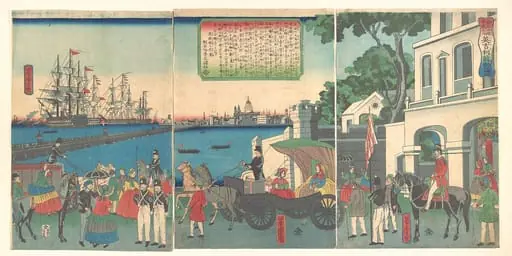 Igirisu Rondon no kaiko|The Port of London England
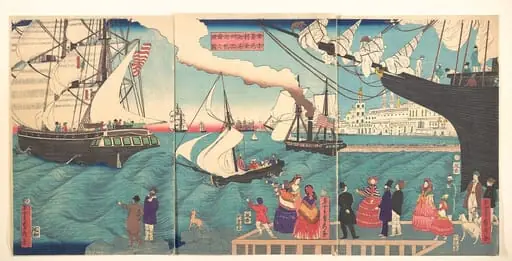 Untitled
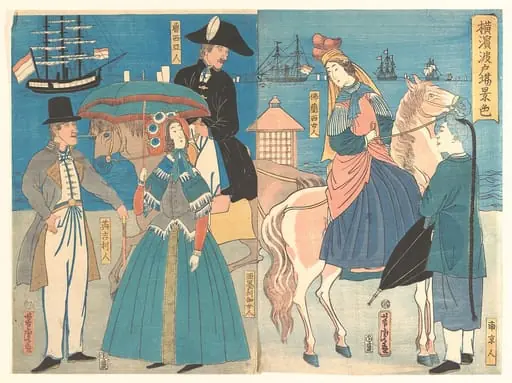 Yokohama hatoba keshiki|A View of the Wharves in Yokohama
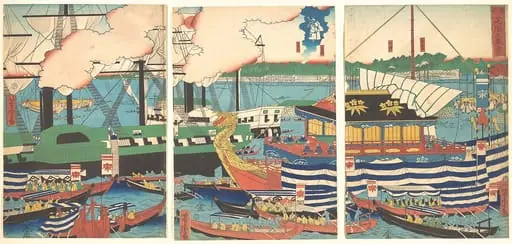 東都芝浦之風景|View of Shibaura, from the series Eastern Capital (Tōto, Shibaura no fūkei)