Artwork
Untitled
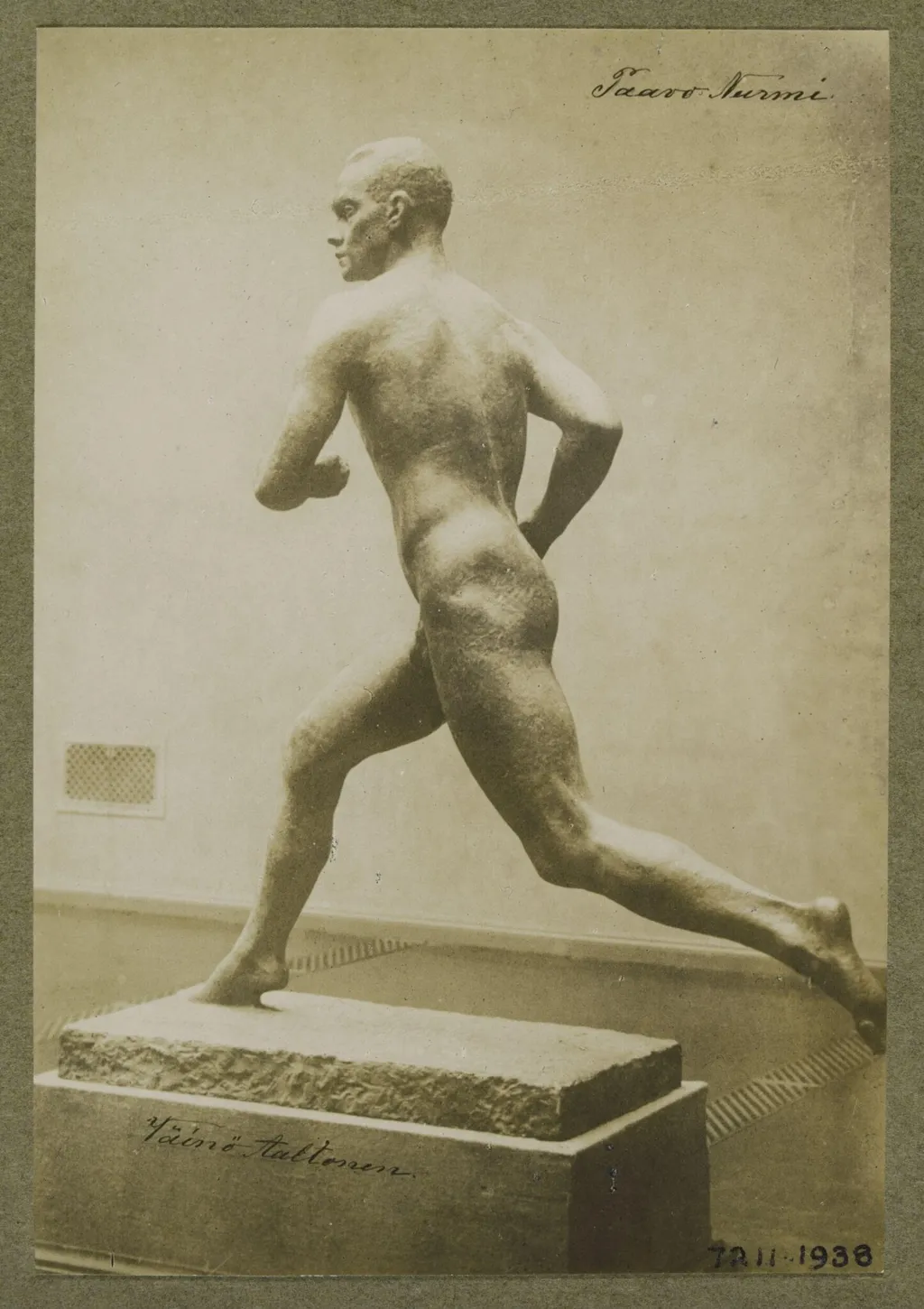
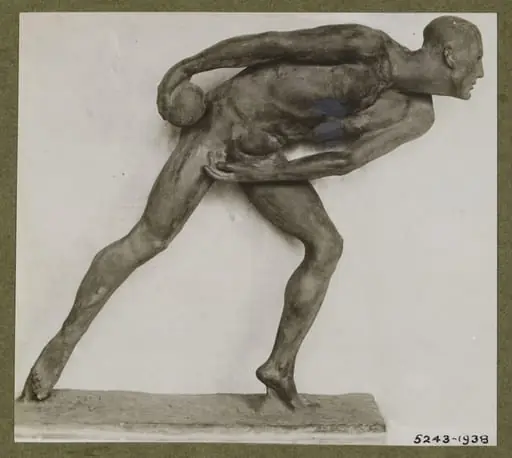
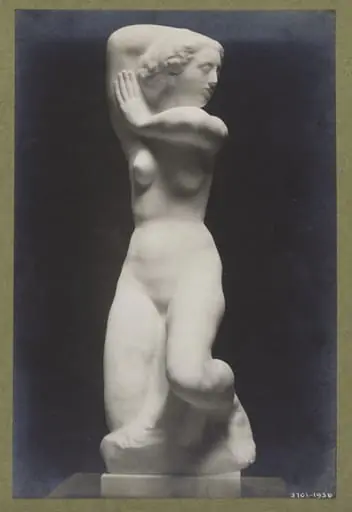
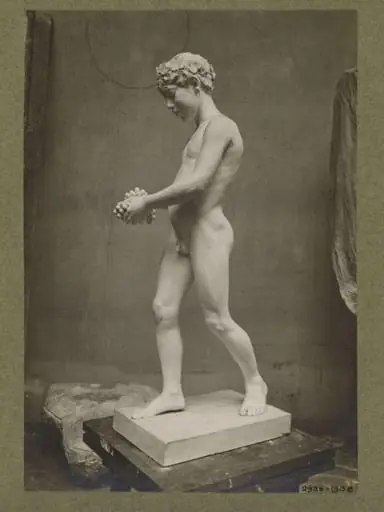
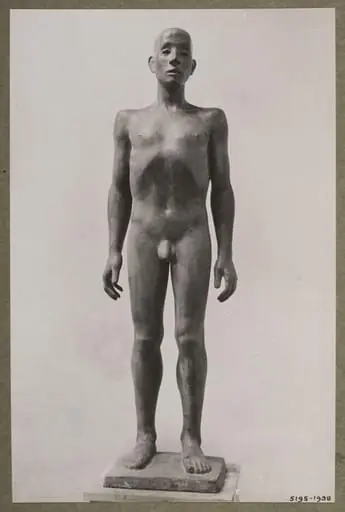
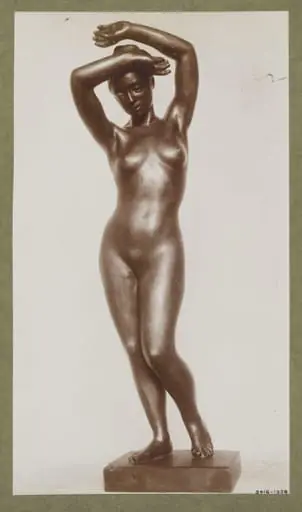
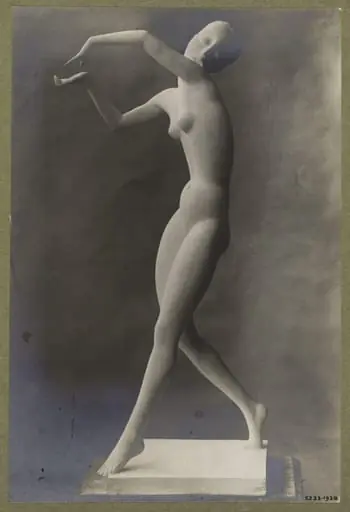
Untitled is a photographic photography by Unknown. It dates from 1925 and is held in the collection of the Victoria and Albert Museum. A black-and-white photograph, mounted on a green card, depicts a small sculpted figure of a barefoot man in motion.
About this work
The statue shows a barefoot man mid-stride, one leg lifted high, as if he’s running or jumping.
This is a black-and-white photo of a small statue. The statue shows a barefoot man mid-stride, one leg lifted high, as if he’s running or jumping. His body is smooth but muscular, and he’s standing on a simple stone base with a carved border.
The photo looks old, with a faded, slightly yellowed tone. The artist’s name is signed in the top corner, but it’s hard to read. The date "1925" is stamped in the bottom right.
If you like this kind of sculpture, check out the Victoria and Albert Museum.
Overview
A black-and-white photograph, mounted on a green card, depicts a small sculpted figure of a barefoot man in motion. Created in 1925, the image was one of many submitted to William Kineton Parkes as part of a scholarly survey of contemporary sculptors. The photograph itself is a documentary record, preserved in the collection Kineton Parkes bequeathed to an institution in 1938.
Subject & Meaning
The sculpture portrays a male figure mid-stride, one leg raised as if in a leap or sprint. The form is simplified yet muscular, emphasizing dynamic tension rather than narrative detail. The bare feet and lack of clothing suggest a primal or universal human movement, possibly evoking classical ideals of physicality. No explicit symbolism is evident, and the work appears focused on form and motion.
Technique & Style
The sculpture is rendered in a smooth, streamlined style with minimal surface detail, highlighting the artist’s control over volume and balance. The figure stands on a plain stone base with a carved edge, grounding the composition without distraction. The photograph captures the work in even lighting, preserving the contrast between the figure’s polished surface and the textured base.
History & Provenance
The photograph was likely sent to William Kineton Parkes by the sculptor in response to a questionnaire about contemporary work. Parkes, a noted scholar of sculpture, collected such materials to document the field. After his death in 1938, his archive, including this image, was bequeathed to a public institution, where it remains as part of a historical record of early 20th-century sculptural practice.
Context
In the 1920s, surveys like Kineton Parkes’s sought to map the evolving landscape of British and European sculpture. Artists responded with photographs and descriptions, often to assert their place in a tradition influenced by classical and modernist ideals. This image reflects a moment when sculptors were negotiating between academic conventions and emerging modernist abstraction.
Legacy
The photograph survives as a fragment of a broader archival effort to document sculptural production outside the mainstream. Though the artist’s identity remains unclear, the image contributes to understanding how sculptors presented their work for scholarly review. It stands as a quiet testament to the networks of documentation that shaped art historical knowledge in the early 20th century.
Artist & collection

 Domestic Scene
 Giacomo and Cardinal Marco, investing Andrea, Abbot of San Zeno, with his Benefice
 The Nymph of Fontainebleau
 Portrait of a Woman
 Madonna and Child with Saints in the Enclosed Garden
 Venus and Minerva
 Family Group of Four on Sofa
 Wall painting from Room H of the Villa of P. Fannius Synistor at Boscoreale