Artwork
Untitled
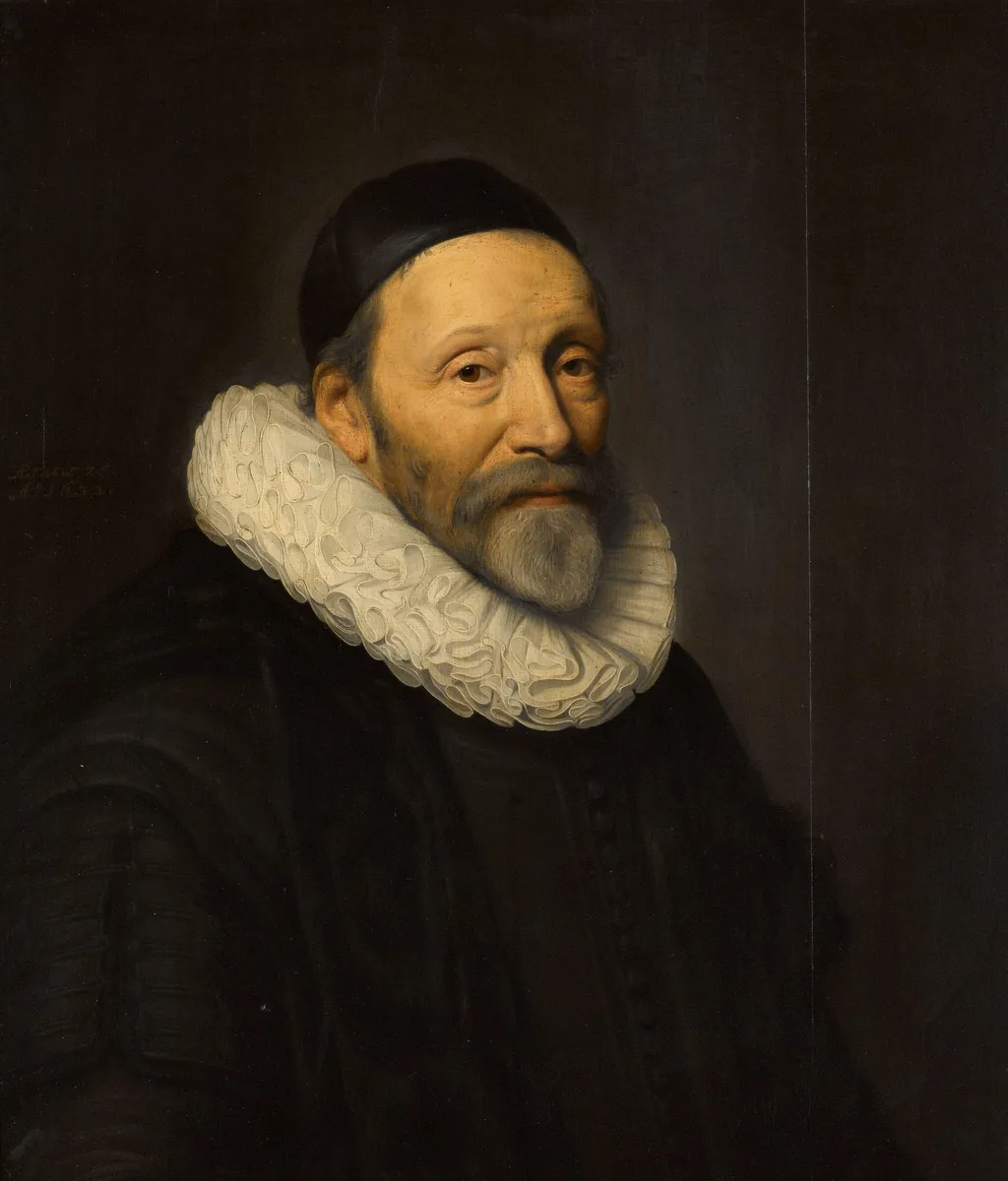
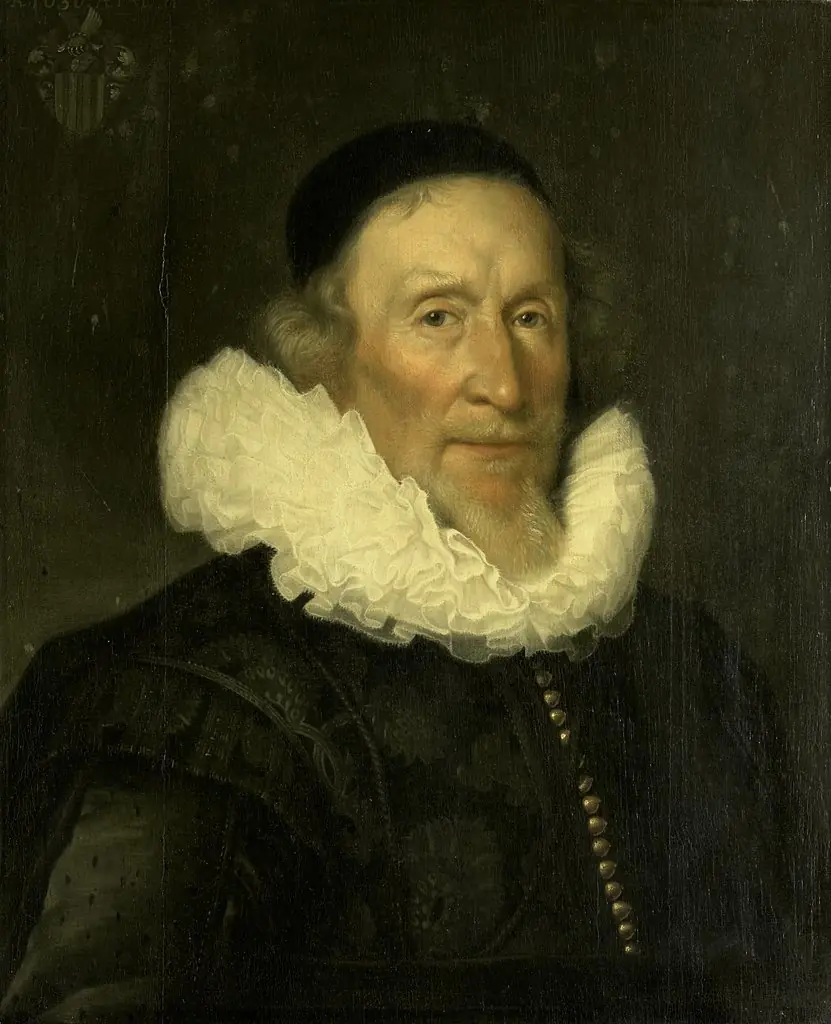
Untitled is an unspecified painting by the Dutch Golden Age artist Unknown. It dates from 1632 and is held in the collection of the Rijksmuseum. This portrait depicts Johannes Uytenbogaert, a prominent Dutch theologian and political figure, painted in the year of his death, 1632.
About this work
Overview
This portrait depicts Johannes Uytenbogaert, a prominent Dutch theologian and political figure, painted in the year of his death, 1632. Though the artist remains unidentified, the work captures the subject with a quiet immediacy, avoiding idealization. Uytenbogaert is shown in dark clerical attire, holding a document, suggesting his role as a writer and thinker amid religious turmoil.
Subject & Meaning
His views brought him into conflict with Prince Maurice of Orange and the state church, resulting in exile.
Uytenbogaert was a leading voice among the Remonstrants, a faction within the Reformed Church that advocated for theological tolerance and opposed strict Calvinist orthodoxy. His views brought him into conflict with Prince Maurice of Orange and the state church, resulting in exile. The portrait, made at the end of his life, reflects his resilience and intellectual gravity, embodying a man who stood by his convictions despite political consequences.
Technique & Style
The painting employs a restrained palette dominated by blacks and grays, emphasizing the subject’s somber dignity. Facial features are rendered with subtle modeling, capturing the texture of aged skin and the weight of experience. The paper in his hand is rendered with delicate precision, drawing attention to his identity as a writer. The background is neutral, focusing all attention on the figure and his quiet presence.
History & Provenance
Commissioned shortly before Uytenbogaert’s death, the portrait likely served as a personal or familial commemoration rather than an official state image. Its survival suggests it was preserved by sympathizers, given his controversial status. The work entered the Rijksmuseum’s collection in the 19th century, where it remains as a testament to a figure once marginalized by the very institutions he helped shape.
Context
Painted during a period of intense religious and political division in the Dutch Republic, the portrait reflects the tension between state authority and theological dissent. While the official church aligned with Prince Maurice, Uytenbogaert’s Remonstrant movement sought a more inclusive interpretation of faith. His portrait, made in the year he returned from exile, quietly asserts the endurance of his ideas beyond political defeat.
Legacy
Though Uytenbogaert was condemned in his time, his writings later influenced broader movements for religious freedom in Europe. This portrait, unadorned and human, preserves his likeness not as a hero or villain, but as a man of principle. It stands among other 17th-century Dutch portraits that value psychological truth over ceremonial grandeur, offering a quiet counterpoint to the era’s power structures.
Artist & collection

 Domestic Scene
 Giacomo and Cardinal Marco, investing Andrea, Abbot of San Zeno, with his Benefice
 The Nymph of Fontainebleau
 Portrait of a Woman
 Madonna and Child with Saints in the Enclosed Garden
 Venus and Minerva
 Family Group of Four on Sofa
 Wall painting from Room H of the Villa of P. Fannius Synistor at Boscoreale