Artwork
Portrait of Paulus Cornelisz van Beresteyn, Burgomaster of Delft
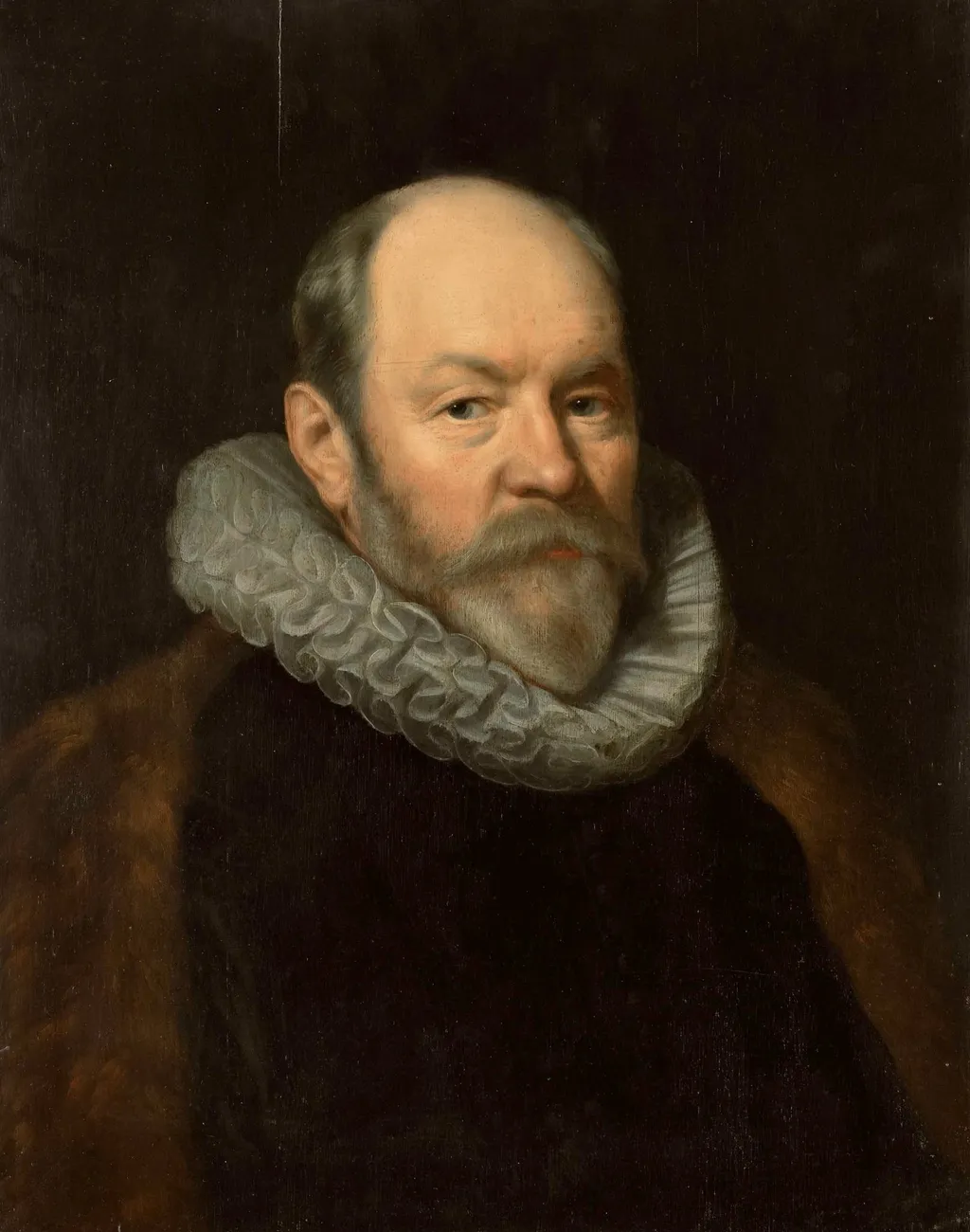
Portrait of Paulus Cornelisz van Beresteyn, Burgomaster of Delft is an unspecified painting by the Baroque artist Unknown. It dates from 1617 and is held in the collection of the Rijksmuseum. This portrait depicts Paulus Cornelisz van Beresteyn, a civic leader in Delft, rendered with restrained elegance.
About this work
Overview
The absence of architectural or symbolic elements directs attention entirely to his presence, emphasizing his status through quiet dignity rather than ornament.
This portrait depicts Paulus Cornelisz van Beresteyn, a civic leader in Delft, rendered with restrained elegance. The composition eliminates extraneous detail, centering the sitter’s face and upper torso against a deep, unbroken background. The absence of architectural or symbolic elements directs attention entirely to his presence, emphasizing his status through quiet dignity rather than ornament.
Subject & Meaning
As burgomaster of Delft, van Beresteyn held a position of civic authority. His portrayal avoids grandeur, instead conveying gravitas through stillness and composure. The fur-lined cloak and crisp white ruff signify wealth and social standing, while his calm, unsmiling gaze suggests responsibility and introspection. The image functions as a record of civic identity, not personal vanity.
Technique & Style
The artist employs chiaroscuro to model the face with subtle gradations of light and shadow, enhancing the three-dimensionality of skin and fabric. The texture of the beard and the crisp folds of the ruff are rendered with precise brushwork, while the dark background recedes, isolating the figure. The lighting is directional and controlled, creating a sense of quiet intensity without theatricality.
History & Provenance
The portrait was likely commissioned during van Beresteyn’s tenure as burgomaster in the early 17th century. It remained within Delft’s civic or family circles for generations before entering a public collection. Its survival reflects the value placed on preserving the likenesses of local leaders, though its exact early ownership history remains partially undocumented.
Context
In early 17th-century Dutch cities, portraiture of civic officials was common, serving both commemorative and institutional purposes. Unlike aristocratic portraits, these emphasized sobriety and competence. The restrained palette and focus on facial expression align with broader trends in Dutch civic portraiture, where moral seriousness outweighed decorative flourish.
Legacy
The portrait exemplifies the quiet realism that defined Dutch civic portraiture of the period. Its emphasis on psychological presence over symbolism influenced later generations of regional artists. Though not widely known outside Delft, it remains a representative example of how local elites were visually framed as responsible, grounded figures within their communities.
Artist & collection

 Domestic Scene
 Giacomo and Cardinal Marco, investing Andrea, Abbot of San Zeno, with his Benefice
 The Nymph of Fontainebleau
 Portrait of a Woman
 Madonna and Child with Saints in the Enclosed Garden
 Venus and Minerva
 Family Group of Four on Sofa
 Wall painting from Room H of the Villa of P. Fannius Synistor at Boscoreale
 Untitled
 Samuel van Lansbergen (d 1669). Remonstrant minister in Rotterdam
 Portrait of Maerten Ruychaver (1545-1626)
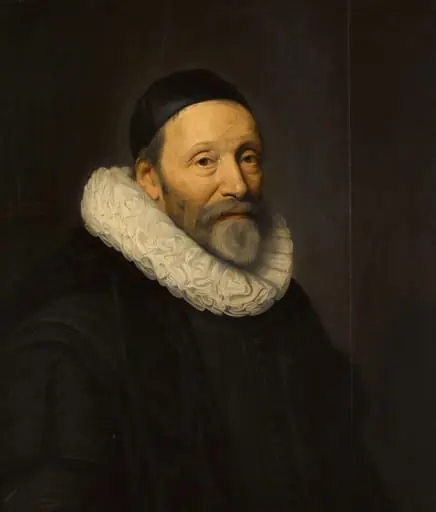 Portrait of Johannes Wttenbogaert (Jan Uytenbogaert), Remonstrant Minister in The Hague, Pastor of the Wallon Church
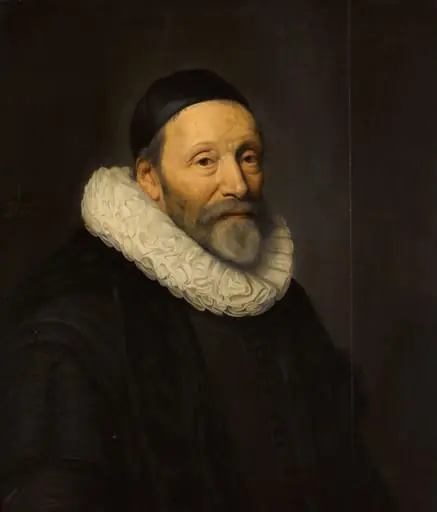 Untitled
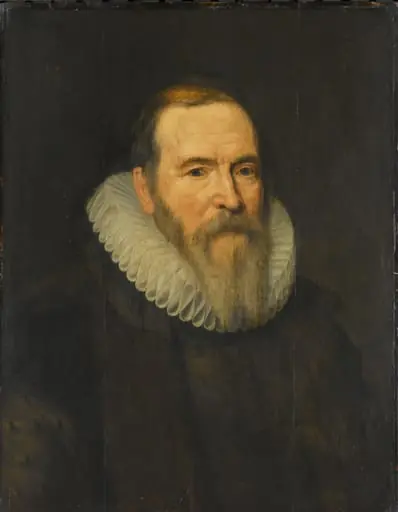 Portrait of Johan van Oldenbarnevelt
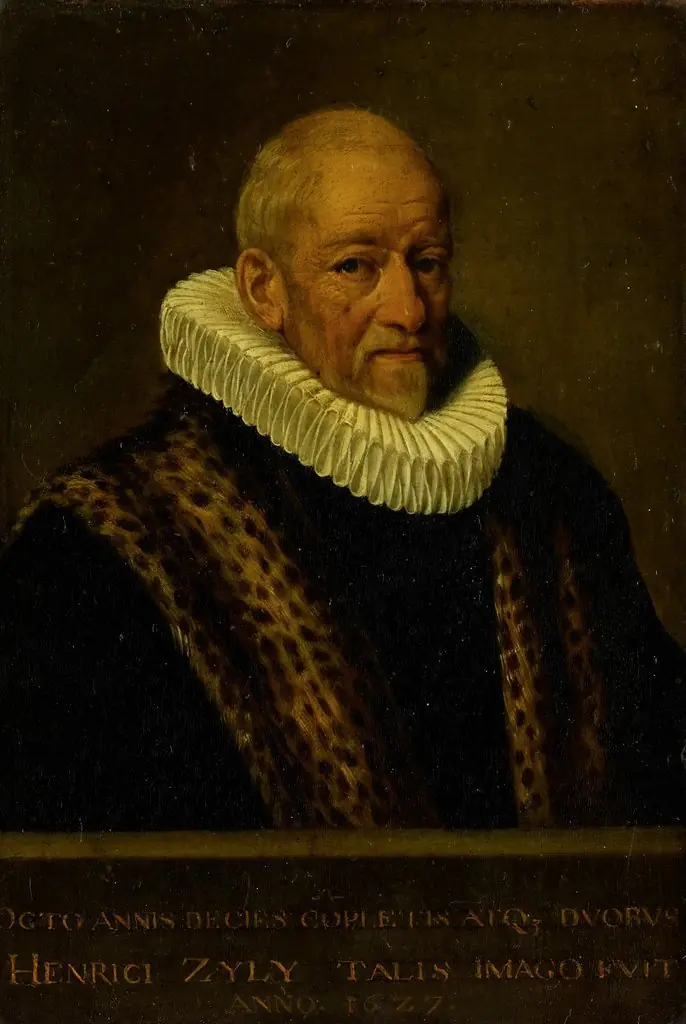 Portrait of Henricus van Zijl (1545-1627)
 Untitled
 Portrait of Jacob Gerritsz van der Mij (1559/60-1635?)
 Portrait of Johan van Oldenbarneveldt (1547-1619)