Artwork
Untitled
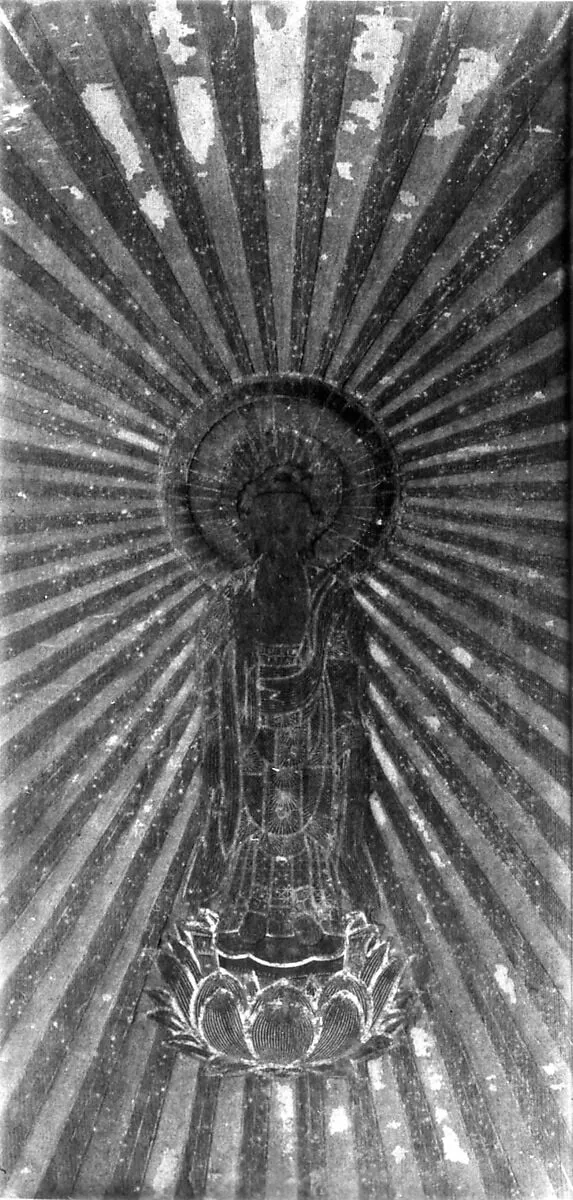
Untitled is a paint painting. It dates from 1749 and is held in the collection of the Metropolitan Museum of Art.
About this work
Overview
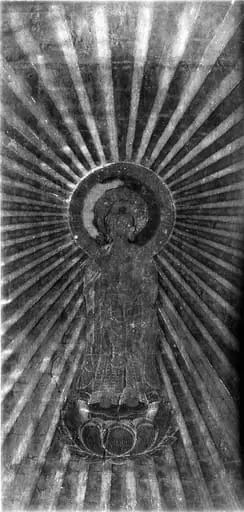
This untitled painting depicts a golden Buddha seated in a cross-legged posture upon a lotus flower, with hands gently folded in his lap. Executed on paper, the work presents a devotional image through a medium less commonly associated with Buddhist art of its period. Its directness and simplicity suggest a focused intent, offering a glimpse into a particular approach to religious imagery.
Subject & Meaning
The central figure of the Buddha, rendered in a golden hue, embodies a traditional iconography of enlightenment and serenity. His seated position on a lotus, a symbol of purity and spiritual awakening, reinforces the sacred nature of the subject. The folded hands convey a state of meditation or inner peace, aligning the artwork with practices of personal devotion and contemplation.
Technique & Style
The artist employed paper as the substrate for this painting, a departure from the more customary silk or wood used for Buddhist art during its era.
The artist employed paper as the substrate for this painting, a departure from the more customary silk or wood used for Buddhist art during its era. This choice of material, along with the confident yet simple linear execution, lends the piece an immediate, almost sketch-like quality. Despite its directness, the composition feels resolved, demonstrating an economy of means to convey its spiritual subject.
Context
The selection of paper for this devotional image points to a potentially different function compared to artworks intended for temples. As a less expensive material, paper suggests the painting may have been created for private worship or personal contemplation rather than for public display within a monastic setting. This practical consideration offers insight into the accessibility and dissemination of Buddhist imagery.
Artist & collection