Artwork
Vangala Raga
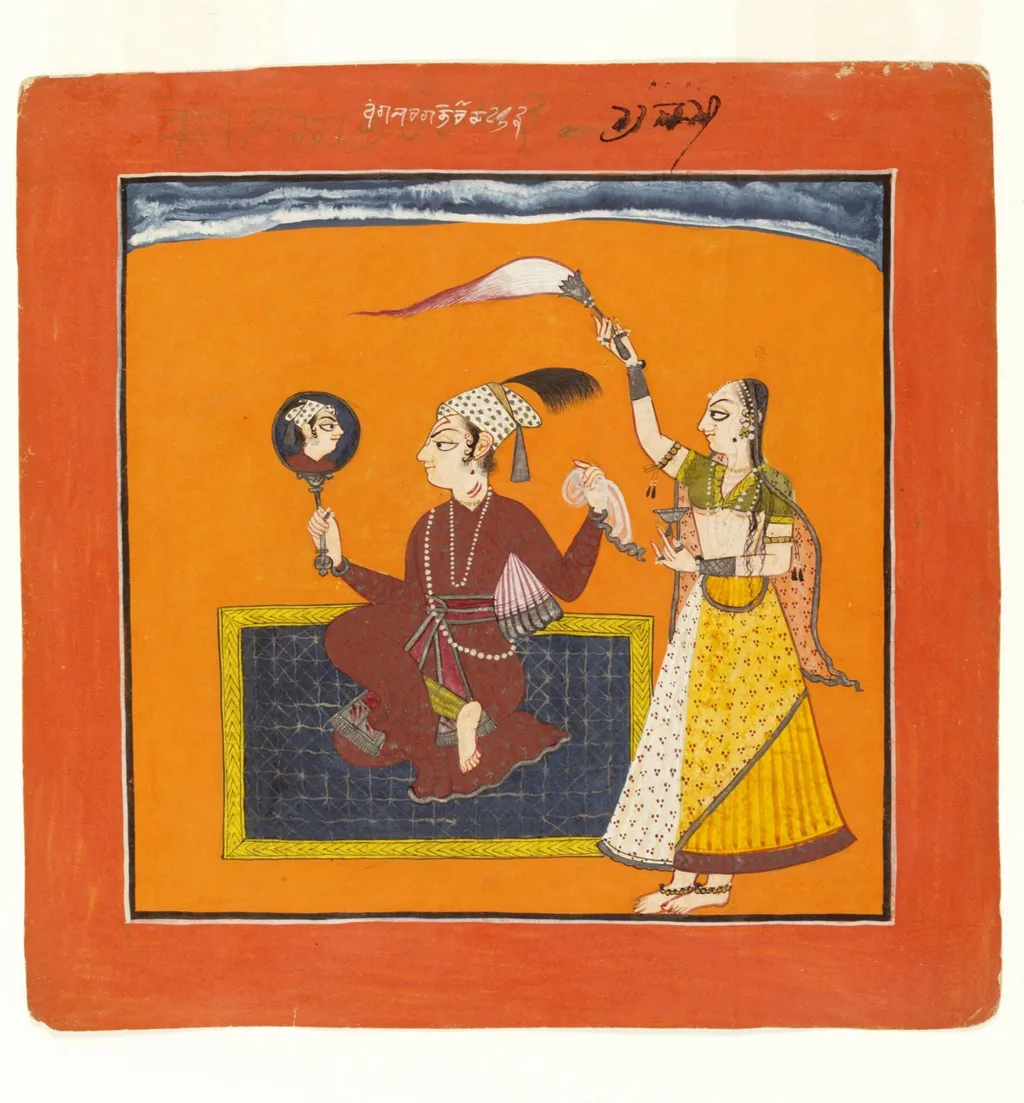
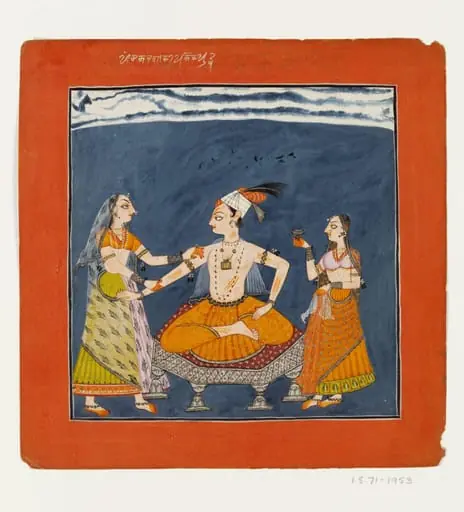
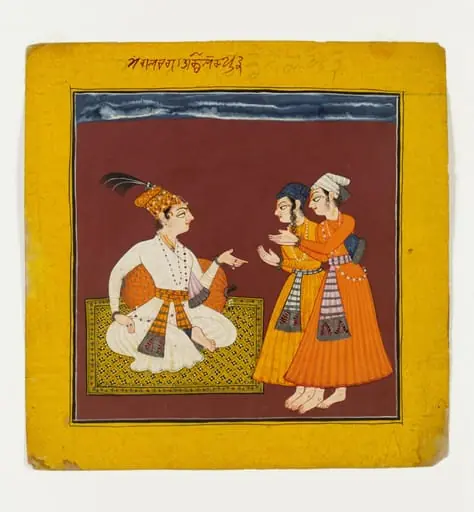
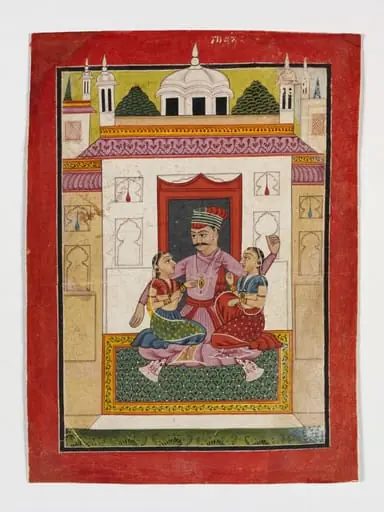
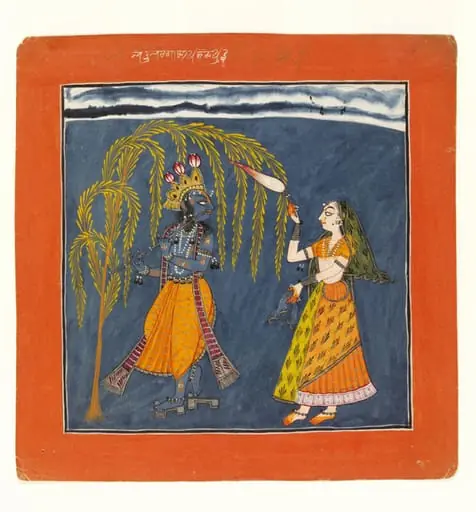
Vangala Raga is a paint painting by the Baroque artist Unknown. It dates from 1700 and is held in the collection of the Victoria and Albert Museum. This opaque watercolor on paper belongs to the Ragamala tradition, a series of Indian paintings that visually interpret musical modes.
About this work
Overview
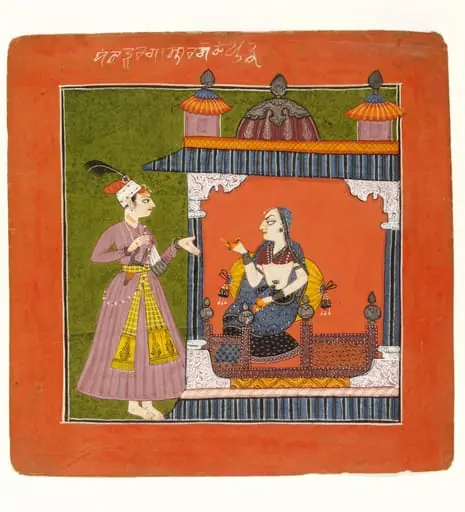
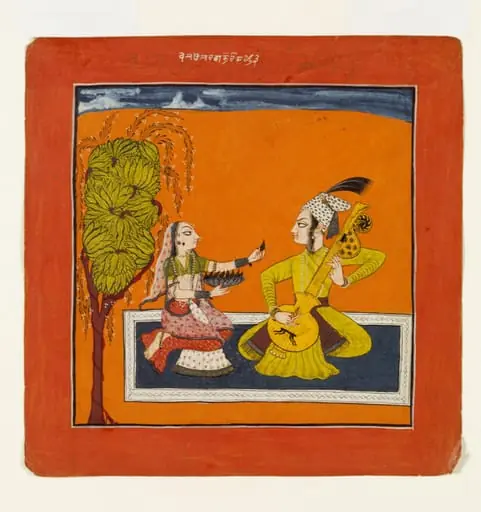
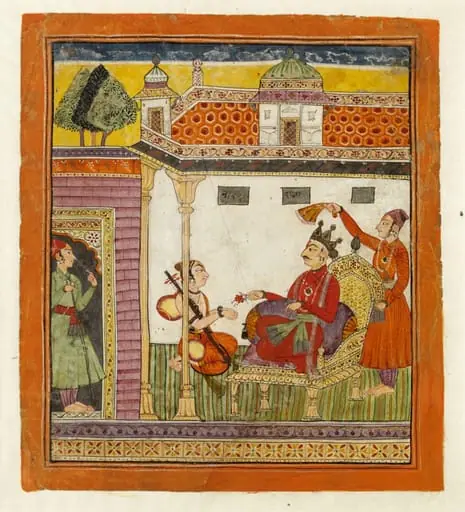
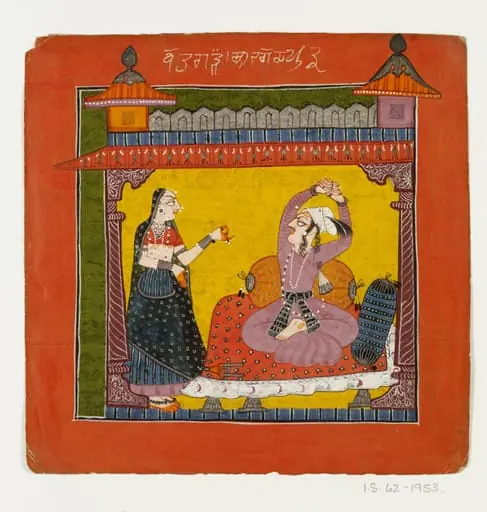
This opaque watercolor on paper belongs to the Ragamala tradition, a series of Indian paintings that visually interpret musical modes. It illustrates Vangala Raga, a late evening melody associated with introspection and courtly grace. The scene unfolds within a modest interior, framed by a decorative blue border, with an orange background that enhances the figures' luminous pigments.
Subject & Meaning
A prince sits in quiet contemplation, holding a mirror as a symbol of self-reflection, while a female attendant fans him with a fly-whisk. The act of gazing into the mirror suggests inner awareness, aligning with the raga’s emotional tone. The presence of the attendant underscores themes of service and refined leisure, common in courtly depictions of musical contemplation.
Technique & Style
The painting employs fine brushwork and mineral-based pigments typical of Rajasthani or Pahari schools. Colors are applied in opaque layers, creating rich, flat planes with subtle gradations. The figures are rendered with delicate outlines, and the use of gold and white highlights adds texture to fabrics and accessories, enhancing the sense of quiet luxury without illusionistic depth.
History & Provenance
The work entered a public collection in 1953 as part of a group of Indian miniatures acquired from Mr. Michael Rothenstein’s private holdings. The purchase, made for £300, was part of a broader postwar effort to preserve South Asian artistic heritage in British institutions. Its catalog number, IS.46 to 73-1953, reflects its systematic integration into the museum’s holdings.
Context
Ragamala paintings emerged in the 16th century as visual companions to musical poetry, linking ragas with moods, times of day, and courtly imagery.
Ragamala paintings emerged in the 16th century as visual companions to musical poetry, linking ragas with moods, times of day, and courtly imagery. Vangala Raga, often associated with twilight, was depicted through solitary figures and intimate settings. This painting reflects the fusion of devotional and secular aesthetics in North Indian courts, where music and visual art were deeply intertwined.
Legacy
Though often overshadowed by larger Mughal commissions, Ragamala paintings like this one preserve a nuanced tradition of emotional expression through visual form. Their quiet compositions and symbolic details continue to inform scholarly understanding of Indian aesthetics, offering insight into how music was imagined and experienced beyond sound.
Artist & collection

 Domestic Scene
 Giacomo and Cardinal Marco, investing Andrea, Abbot of San Zeno, with his Benefice
 The Nymph of Fontainebleau
 Portrait of a Woman
 Madonna and Child with Saints in the Enclosed Garden
 Venus and Minerva
 Family Group of Four on Sofa
 Wall painting from Room H of the Villa of P. Fannius Synistor at Boscoreale