Artwork
Mangala Raga
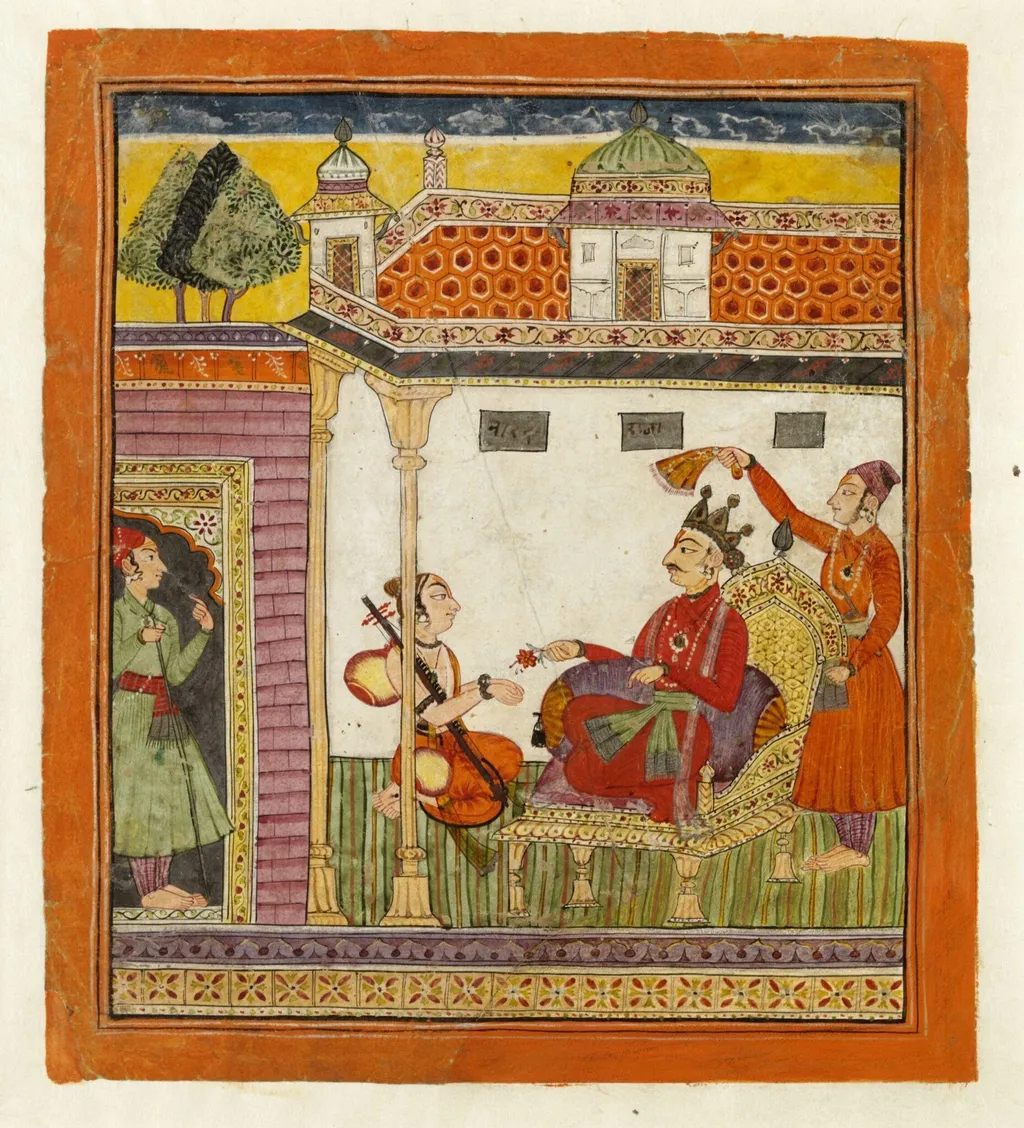
Mangala Raga is a paint painting by the Baroque artist Unknown. It dates from 1690 and is held in the collection of the Victoria and Albert Museum.
About this work
Overview
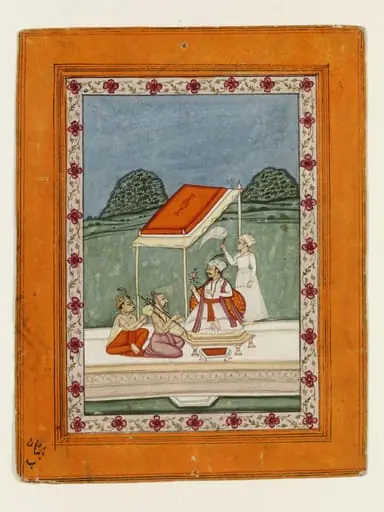
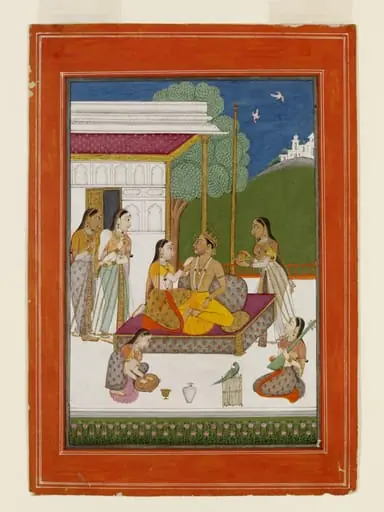
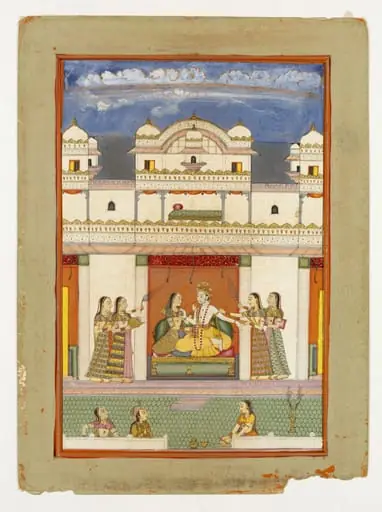
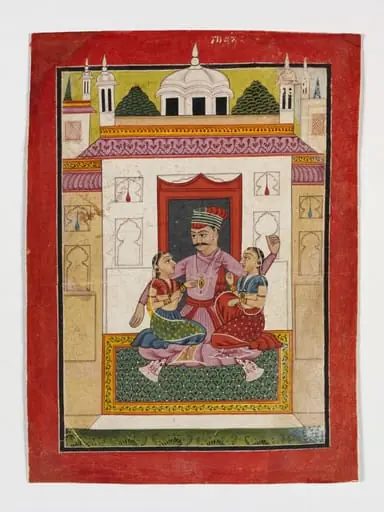
Created in 1690, *Mangala Raga* is an opaque watercolor on paper that presents a courtly tableau. A princely figure in vivid red robes, a green sash and a golden crown occupies a raised seat within a pavilion, while a kneeling musician and a fan‑bearing attendant attend him. The background features a domed structure with patterned walls beneath a yellow sky, framed by a solitary tree.
Subject & Meaning
The work illustrates the mythological character Mangala Raga, identified as the son of Hindola Raga, a figure from Indian musical tradition. The presence of the sage‑musician Narada, shown kneeling, underscores the scene’s devotional and artistic connotations, linking royal patronage with the transmission of ragas.
Technique & Style
Executed in opaque watercolor, the artist employs a flat, saturated palette that emphasizes the red garment and golden crown. Delicate washes render the architectural details and sky, while fine brushwork defines the textures of the fan, the stringed instrument, and the ornamental patterns on the pavilion walls.
History & Provenance
The painting entered the market through the auction house Maggs Bros., where it was sold as part of a larger collection (catalogue reference IS. 90 to 128‑1954) for £150. Its documented provenance begins with this 20th‑century sale, after which it entered a private collection.
Context
The attire, fan, and architectural elements suggest a setting rooted in South Asian court culture of the late 17th century. The combination of regal dress and musical iconography reflects contemporary visual conventions that linked sovereignty with the arts, particularly the patronage of classical ragas.
Artist & collection

 Domestic Scene
 Giacomo and Cardinal Marco, investing Andrea, Abbot of San Zeno, with his Benefice
 The Nymph of Fontainebleau
 Portrait of a Woman
 Madonna and Child with Saints in the Enclosed Garden
 Venus and Minerva
 Family Group of Four on Sofa
 Wall painting from Room H of the Villa of P. Fannius Synistor at Boscoreale