Artwork
Vibhasa Raga
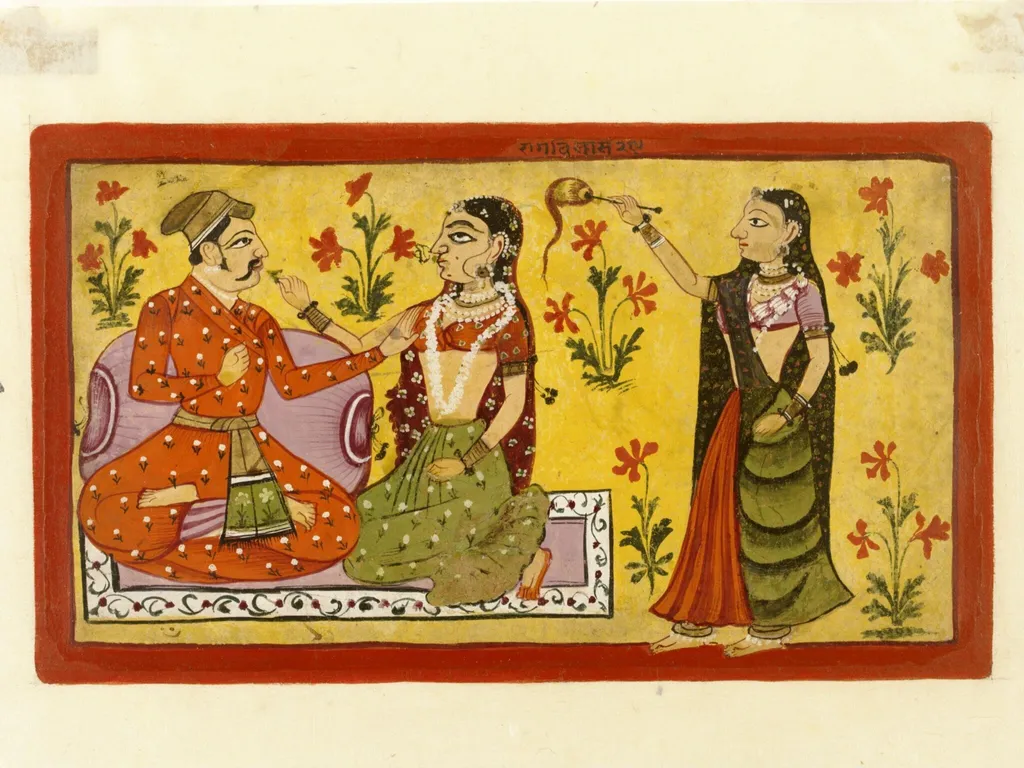
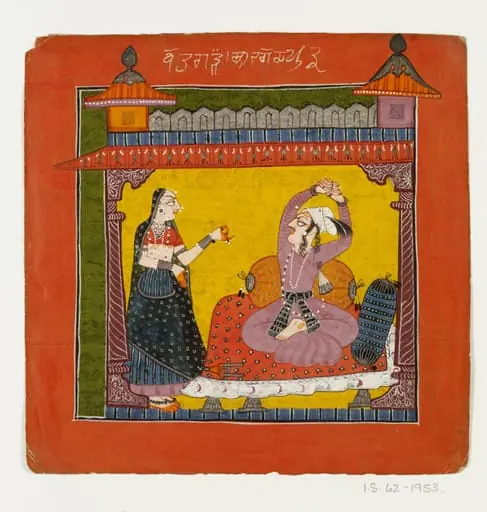
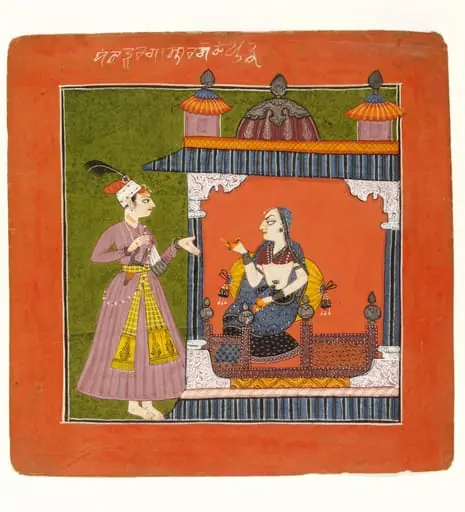
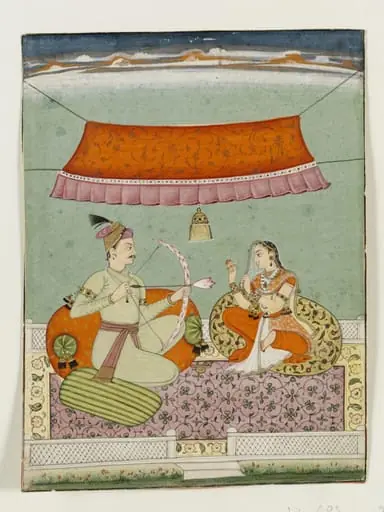
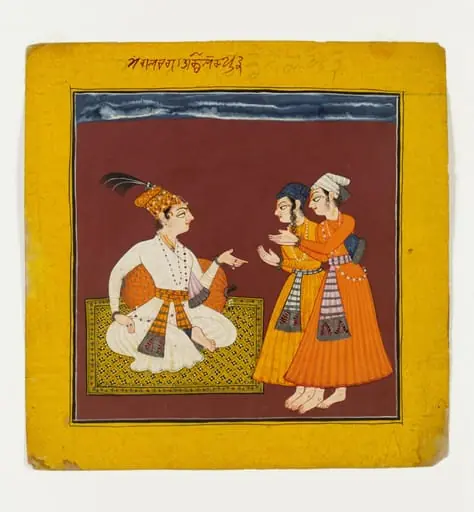
Vibhasa Raga is a paint painting by Unknown. It dates from 1650 and is held in the collection of the Victoria and Albert Museum. This 17th-century Indian painting, dated around 1650, is part of a Ragamala series that visually interprets musical modes.
About this work
Overview
Executed in opaque watercolor on paper, it depicts a scene tied to the Vibhasa Raga, though its setting echoes elements of Malakausa Raga.
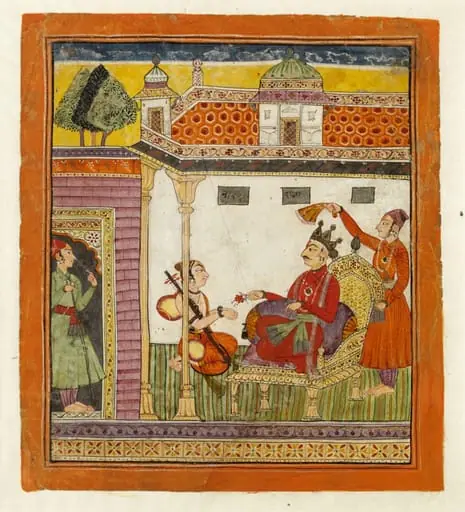
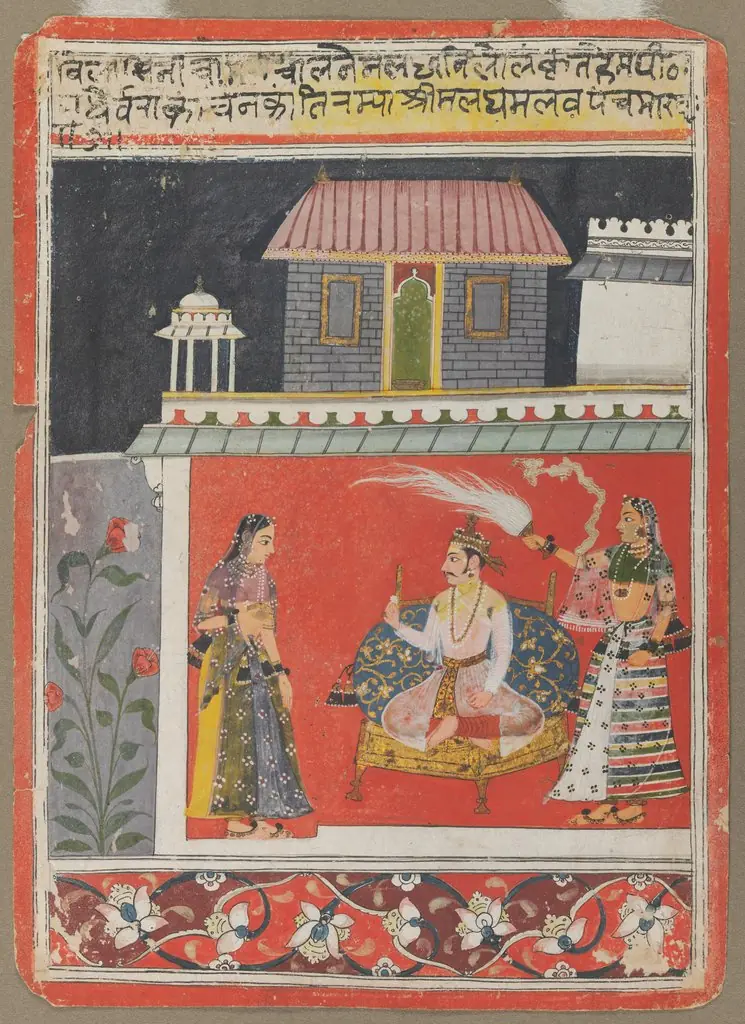
This 17th-century Indian painting, dated around 1650, is part of a Ragamala series that visually interprets musical modes. Executed in opaque watercolor on paper, it depicts a scene tied to the Vibhasa Raga, though its setting echoes elements of Malakausa Raga. The composition features three figures in a stylized interior, rendered with vivid, unmodulated hues and precise outlines, characteristic of Rajput court painting traditions.
Subject & Meaning
The scene portrays a prince seated on a cushion, attended by two women. One offers him a betel leaf, a gesture of courtly hospitality, while the other applies a cosmetic or perfume to his face. These actions suggest an intimate, ritualized moment of adornment, aligning with the raga’s association with dawn and quiet reflection. The figures’ presence underscores the connection between music, emotion, and daily ceremonial life in Mughal and Rajput courts.
Technique & Style
The painting employs flat areas of bold color—orange, green, red, and gold—with no attempt at shading or perspective. Figures are outlined sharply, and details like floral patterns and jewelry are rendered with fine, deliberate brushwork. The background features stylized architecture and vegetation, contributing to a decorative, symbolic space rather than a naturalistic one. This approach reflects the conventions of Rajput miniature painting, prioritizing symbolic clarity over spatial realism.
History & Provenance
Created in the mid-17th century, likely in a Rajput workshop influenced by Mughal aesthetics, this work belongs to a broader tradition of Ragamala illustrations commissioned by royal patrons. While its exact origin is unconfirmed, similar paintings are held in institutions such as the Victoria and Albert Museum, suggesting it was part of a larger, circulating collection of musical iconography produced for elite audiences.
Context
Ragamala paintings emerged as visual counterparts to North Indian classical ragas, each linked to a time of day, season, or emotional state. Vibhasa Raga, associated with morning, was often depicted with serene, contemplative imagery. This painting’s focus on personal adornment and quiet interaction reflects how music was woven into the rhythms of courtly life, blending spiritual symbolism with aristocratic ritual.
Legacy
As part of the Ragamala tradition, this painting contributes to a visual language that connected sound and image in pre-colonial India. Though largely overlooked in Western art history, such works remain vital to understanding the interplay of music, poetry, and painting in South Asian courts. Their stylistic consistency across regions highlights shared aesthetic values among royal patrons and artists of the era.
Artist & collection

 Domestic Scene
 Giacomo and Cardinal Marco, investing Andrea, Abbot of San Zeno, with his Benefice
 The Nymph of Fontainebleau
 Portrait of a Woman
 Madonna and Child with Saints in the Enclosed Garden
 Venus and Minerva
 Family Group of Four on Sofa
 Wall painting from Room H of the Villa of P. Fannius Synistor at Boscoreale