Artwork
View of a Rocky Coast by Moonlight
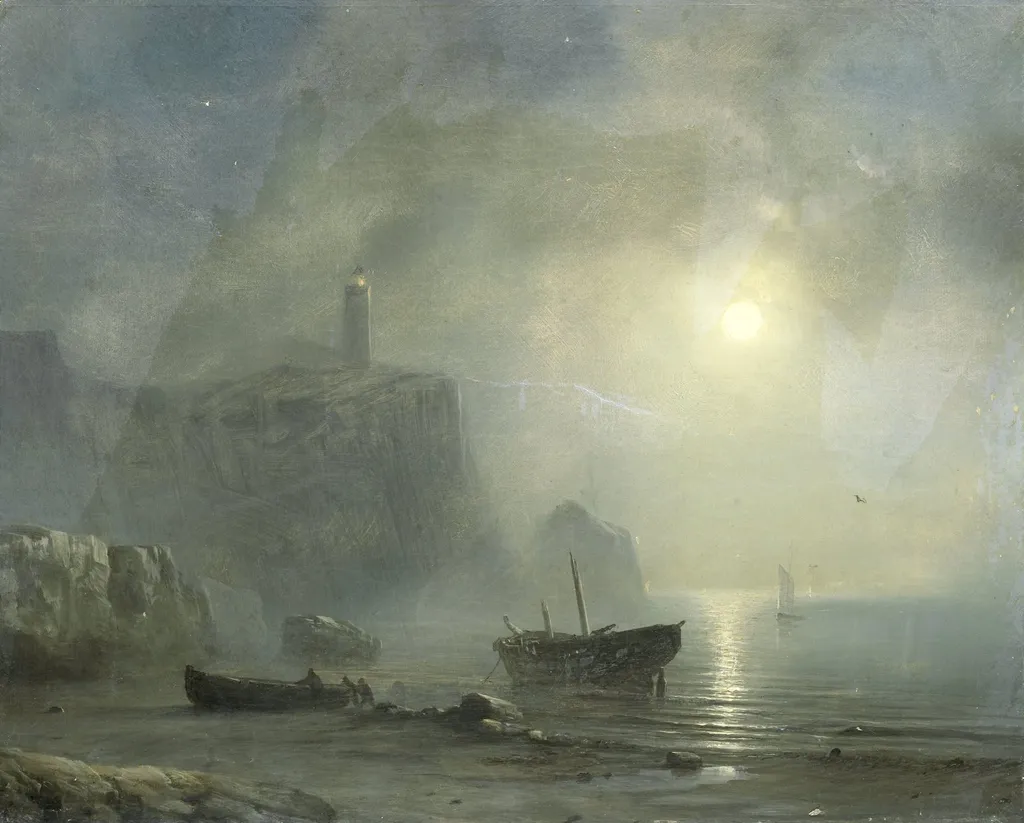
View of a Rocky Coast by Moonlight is an unspecified painting by Unknown. It dates from 1855 and is held in the collection of the Rijksmuseum.
About this work
Overview
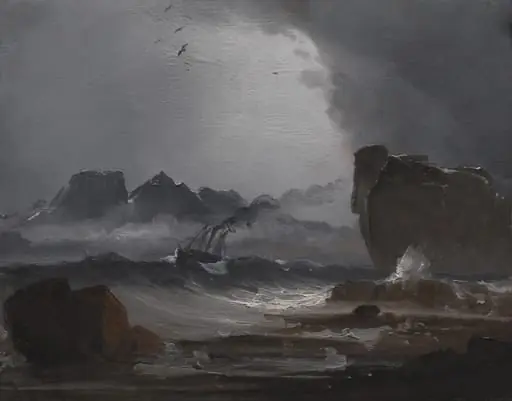
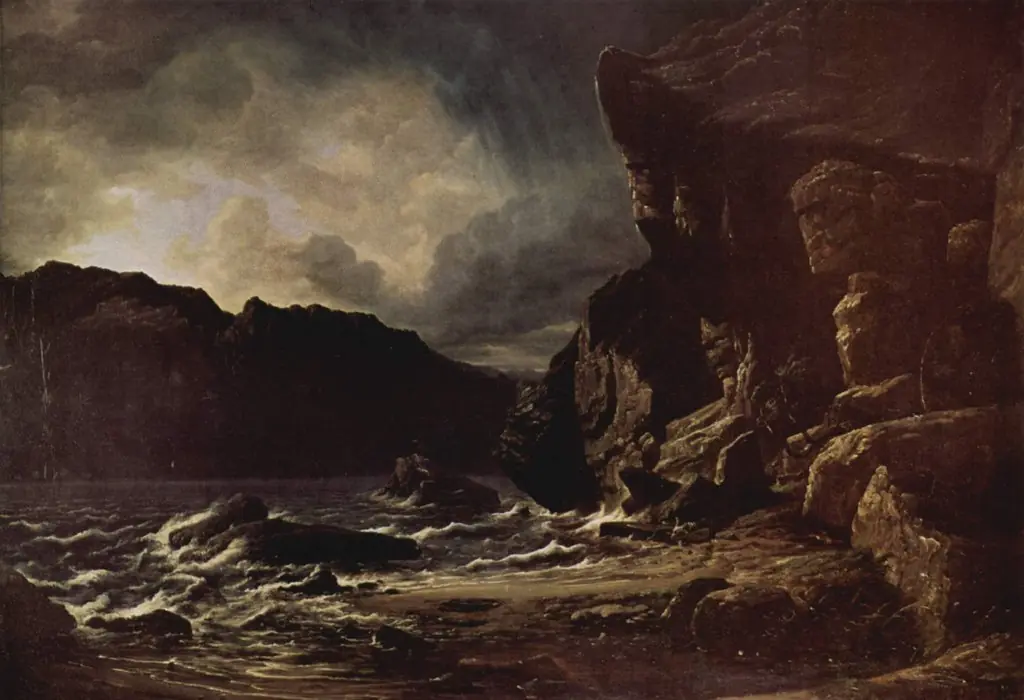
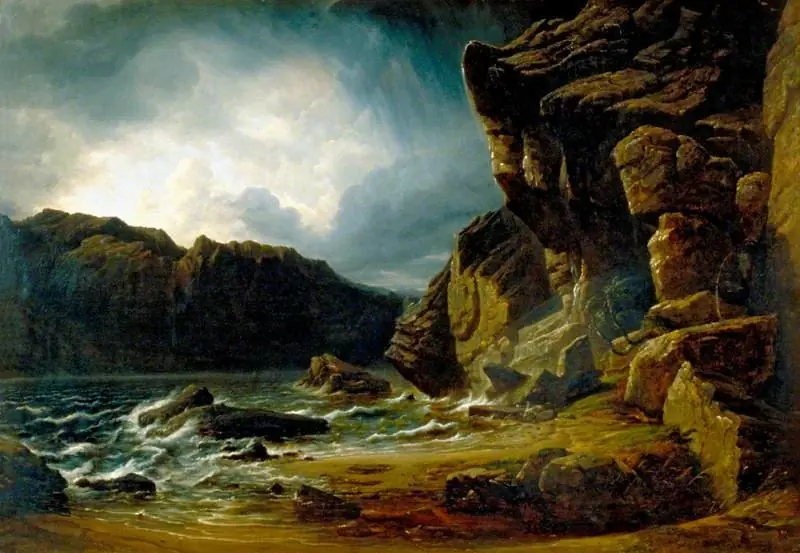
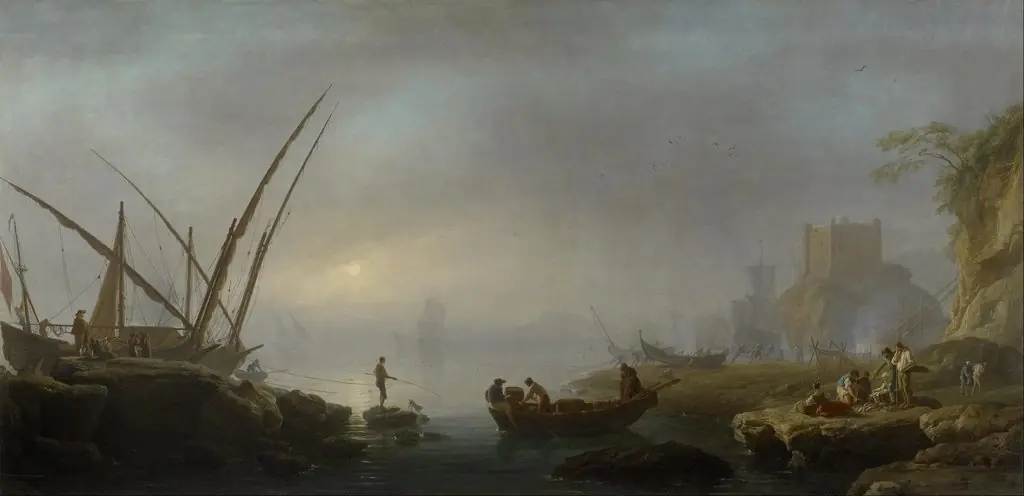
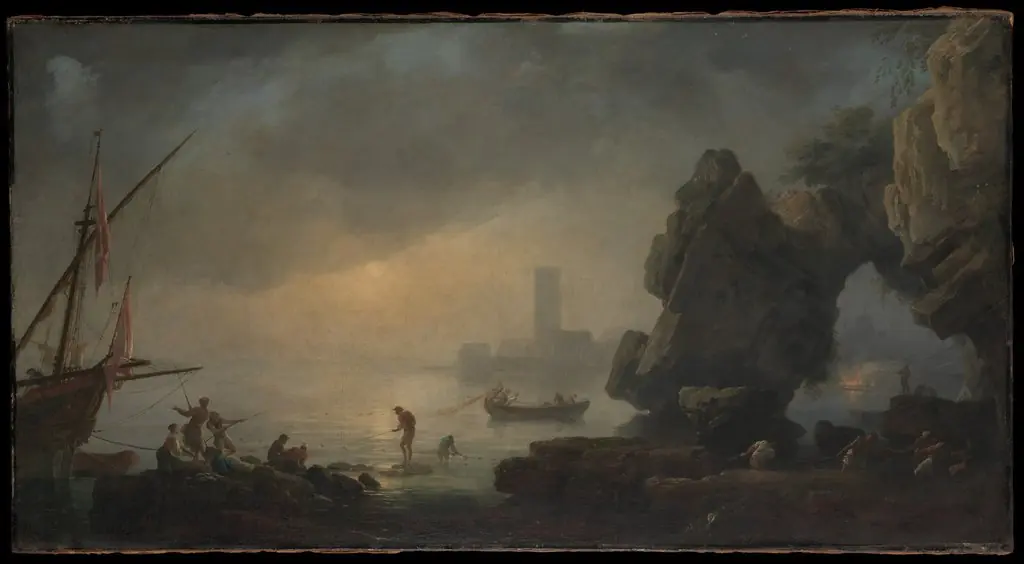
This nocturnal coastal scene depicts a rugged shoreline illuminated by moonlight, with a lighthouse on the left and figures laboring to haul a boat ashore.
This nocturnal coastal scene depicts a rugged shoreline illuminated by moonlight, with a lighthouse on the left and figures laboring to haul a boat ashore. A derelict fishing vessel drifts just offshore, adding a note of quiet decay. The absence of a known artist and the painting’s atmospheric stillness suggest a focus on mood over narrative, inviting contemplation rather than telling a specific story.
Subject & Meaning
The painting captures a moment of human effort against the enduring forces of nature. The men pushing the boat and the abandoned vessel imply the precariousness of coastal livelihoods, while the lighthouse offers a silent, steady presence. The moon’s glow transforms the scene into something meditative—neither celebratory nor tragic, but quietly resonant with the rhythms of sea and labor.
Technique & Style
Thick, textured brushwork conveys the roughness of rocks and the churning sea, creating a tactile sense of the environment. The artist employs strong contrasts between the cool lunar light and deep shadows, enhancing the scene’s depth without artificial drama. The handling of light suggests an intuitive grasp of chiaroscuro, where illumination defines form rather than merely illuminating it.
History & Provenance
The painting’s origin remains undocumented; no artist signature, exhibition record, or early ownership is known. Its style aligns with late 17th- or early 18th-century Dutch or Flemish marine painting, yet it lacks the precision typical of known contemporaries. Its survival suggests it was privately held, possibly as a personal study or decorative piece rather than a commissioned work.
Context
In an era when coastal scenes often celebrated maritime trade or naval power, this work focuses on quiet, unheroic labor and decay. It reflects a shift toward intimate, atmospheric depictions of nature, common among artists who valued mood over grandeur. The moonlit coast was a recurring theme in Northern European art, symbolizing solitude and the passage of time.
Legacy
Though unsigned and unattributed, the painting endures as an example of understated nocturnal landscape painting. Its emotional resonance lies in its restraint—avoiding spectacle in favor of texture, light, and quiet motion. It contributes to a broader tradition of European art that finds dignity in the unnoticed, the transient, and the elemental.
Artist & collection

 Domestic Scene
 Giacomo and Cardinal Marco, investing Andrea, Abbot of San Zeno, with his Benefice
 The Nymph of Fontainebleau
 Portrait of a Woman
 Madonna and Child with Saints in the Enclosed Garden
 Venus and Minerva
 Family Group of Four on Sofa
 Wall painting from Room H of the Villa of P. Fannius Synistor at Boscoreale