Artwork
View on the Nile, opposite Aswan
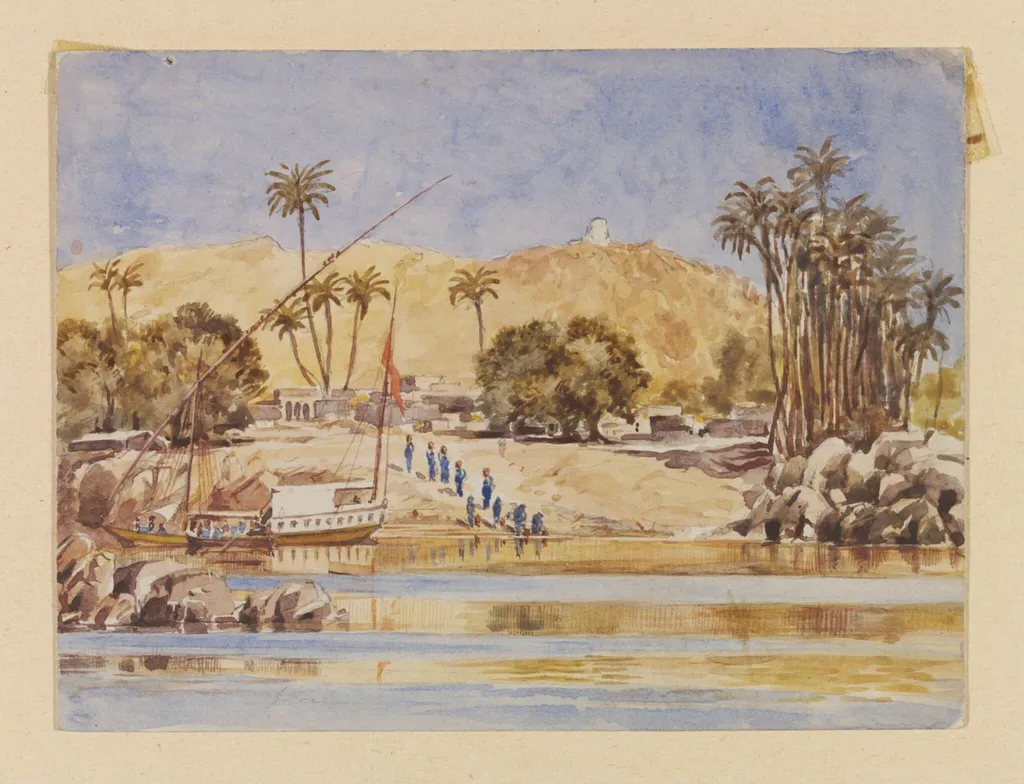
View on the Nile, opposite Aswan is a watercolor work on paper by the Impressionist artist Unknown. It dates from 1885 and is held in the collection of the Victoria and Albert Museum. Painted in 1885, this watercolour captures a tranquil stretch of the Nile River opposite Aswan.
About this work
Overview
Painted in 1885, this watercolour captures a tranquil stretch of the Nile River opposite Aswan. The artist used the reverse side of an English calendar from the previous year as support, reflecting practical constraints and the spontaneity of travel sketching. The scene is unembellished, focusing on the quiet rhythm of riverside life rather than monumental landmarks.
Subject & Meaning
The composition centers on daily activity along the riverbank: figures stroll lightly along the shore, while a small boat rests near the water. Palm trees frame the foreground, and modest dwellings cling to the distant rocky hills. There is no narrative climax—instead, the work conveys stillness and routine, emphasizing the harmony between people and their environment.
Technique & Style
Loose, fluid brushwork and soft color transitions characterize the piece, aligning it with Impressionist approaches to light and atmosphere. Washes of watercolour suggest distance and haze, while minimal detail in the background enhances depth. The artist prioritized immediate visual sensation over precise rendering, capturing the fleeting quality of sunlight on water and foliage.
History & Provenance
Created during a period of increased European travel to Egypt, the work was likely made on-site by a visitor. Its reuse of a discarded calendar indicates it was a spontaneous sketch, not a commissioned piece. The survival of the work suggests it was retained by the artist or a close associate, later entering private or institutional collections.
Context
In the late 19th century, Western artists increasingly turned to North Africa for subject matter, drawn by its light and perceived exoticism. This work reflects a quieter trend within that movement—not grand archaeological vistas, but intimate, unposed moments of local life. It echoes broader shifts toward plein air painting and observational realism.
Legacy
Though not widely exhibited, the painting contributes to a lesser-known body of travel watercolours that document everyday Egyptian life through a Western lens. Its modest scale and unpretentious subject offer a counterpoint to more sensationalized Orientalist imagery, preserving a subtle, personal record of place and time.
Artist & collection

 Domestic Scene
 Giacomo and Cardinal Marco, investing Andrea, Abbot of San Zeno, with his Benefice
 The Nymph of Fontainebleau
 Portrait of a Woman
 Madonna and Child with Saints in the Enclosed Garden
 Venus and Minerva
 Family Group of Four on Sofa
 Wall painting from Room H of the Villa of P. Fannius Synistor at Boscoreale
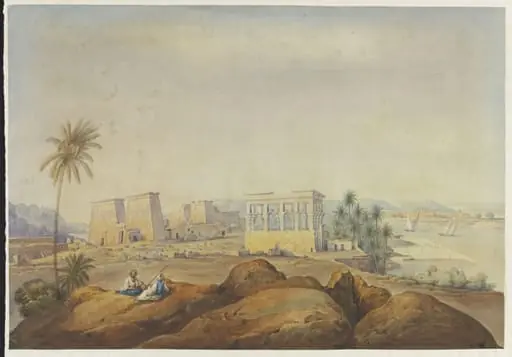 The Temple of Isis and Kiosk of Trajan on the Island of Philae
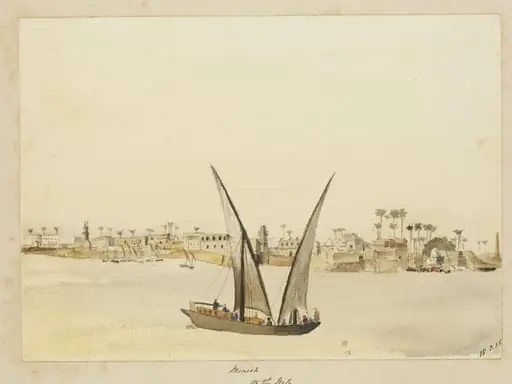 `Minieh On the Nile'
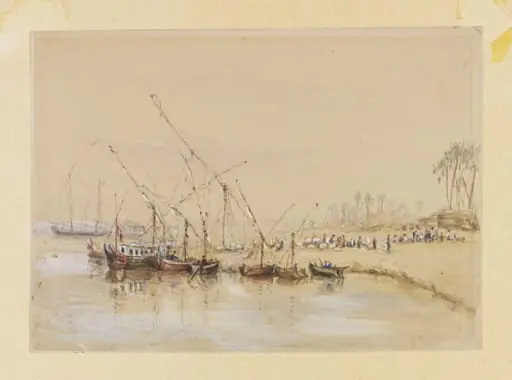 A Scene on the Nile: with dahabiyyahs and bales of cotton being loaded into feluccas
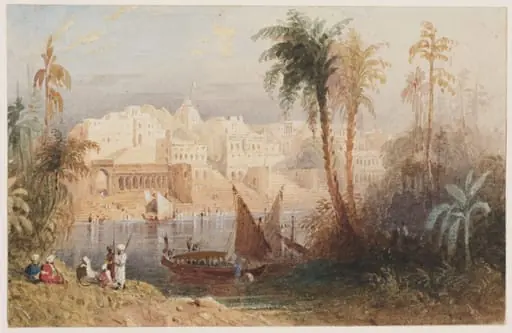 A view of an Indian city beside a river
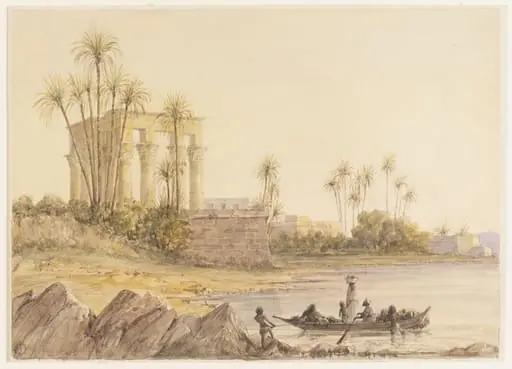 Landing Place. Philoe
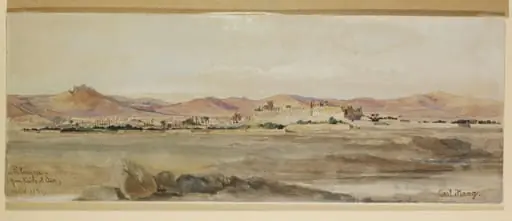 Palmyra (from Kasr el Ain)
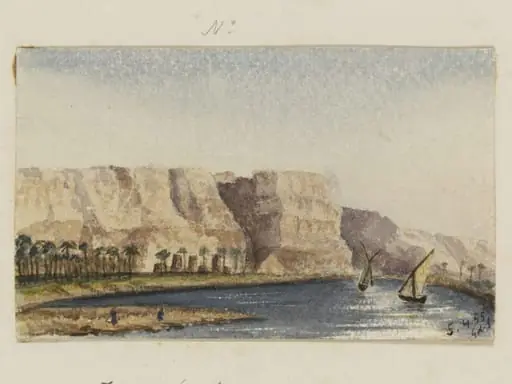 `Kusr-é-Syad. Opposite Choenoboscion. Upper Egypt'