Artwork
Virgin and Child with Saint John (recto)
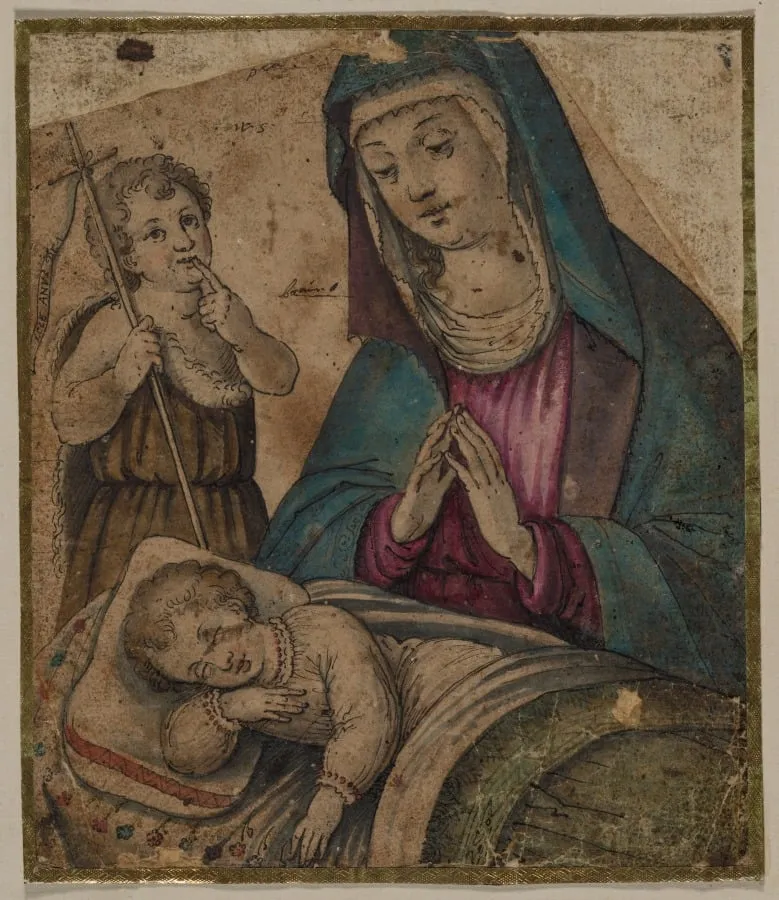
Virgin and Child with Saint John (recto) is a drawing by the Renaissance artist Unknown. It dates from 1504 and is held in the collection of the Cleveland Museum of Art. This drawing depicts the Virgin Mary with the infant Jesus and the young Saint John the Baptist.
About this work
Overview
The palette is muted, with faded blues and reds, and the forms appear flattened, suggesting an early stage in the development of Renaissance figure drawing.
This drawing depicts the Virgin Mary with the infant Jesus and the young Saint John the Baptist. The figures are arranged in a simple, frontal composition against an empty background. The Virgin’s posture is formal, her hands clasped in prayer, while the Christ Child sleeps in her lap and John stands beside them, holding a cross. The palette is muted, with faded blues and reds, and the forms appear flattened, suggesting an early stage in the development of Renaissance figure drawing.
Subject & Meaning
The scene presents a devotional image common in late medieval and early Renaissance art. The Virgin’s contemplative expression and clasped hands emphasize her role as intercessor, while the sleeping Christ Child suggests his future sacrifice. Saint John, holding a cross, foreshadows his role as prophet and witness to Christ’s mission. The absence of narrative context focuses attention on spiritual presence rather than story, aligning with private worship practices of the time.
Technique & Style
The artist employs directional lighting to model the figures, creating subtle contrasts between light and shadow, particularly on the Virgin’s face. The limbs and drapery are rendered with firm, linear contours, giving the forms a sculptural yet rigid quality. Colors, once more vibrant, have faded over time, leaving a muted tonality. The lack of atmospheric depth and the flatness of the figures reflect an early approach to spatial representation before the full adoption of perspective and sfumato.
History & Provenance
The drawing’s origins are undocumented, but its style and materials suggest it was produced in Italy during the late 15th century, possibly as a preparatory study or devotional object. Its current condition—faded pigments, worn edges—indicates long-term exposure and handling. No definitive record of its early ownership exists, though its intimate scale and subject imply it was made for private, rather than public, religious use.
Context
This work emerged during a period when artists in central Italy were transitioning from Gothic conventions to more naturalistic forms. While contemporaries like Leonardo were refining chiaroscuro and soft contours, this drawing retains a more archaic stiffness, suggesting it may come from a provincial workshop or an artist still learning emerging techniques. Its focus on sacred figures without landscape or architectural setting reflects the enduring influence of devotional icons.
Legacy
Though not attributed to a major master, the drawing offers insight into the gradual evolution of Renaissance figure drawing. It demonstrates how artists experimented with light and form before achieving the fluidity seen in later works. Its preservation allows modern viewers to trace the step-by-step development of visual language in sacred imagery, bridging medieval symbolism and early humanist expression.
Artist & collection

 Domestic Scene
 Giacomo and Cardinal Marco, investing Andrea, Abbot of San Zeno, with his Benefice
 The Nymph of Fontainebleau
 Portrait of a Woman
 Madonna and Child with Saints in the Enclosed Garden
 Venus and Minerva
 Family Group of Four on Sofa
 Wall painting from Room H of the Villa of P. Fannius Synistor at Boscoreale
 The Virgin and Child
 Virgin and Child
 Madonna and Child Seated on a Grassy Bank with Angels
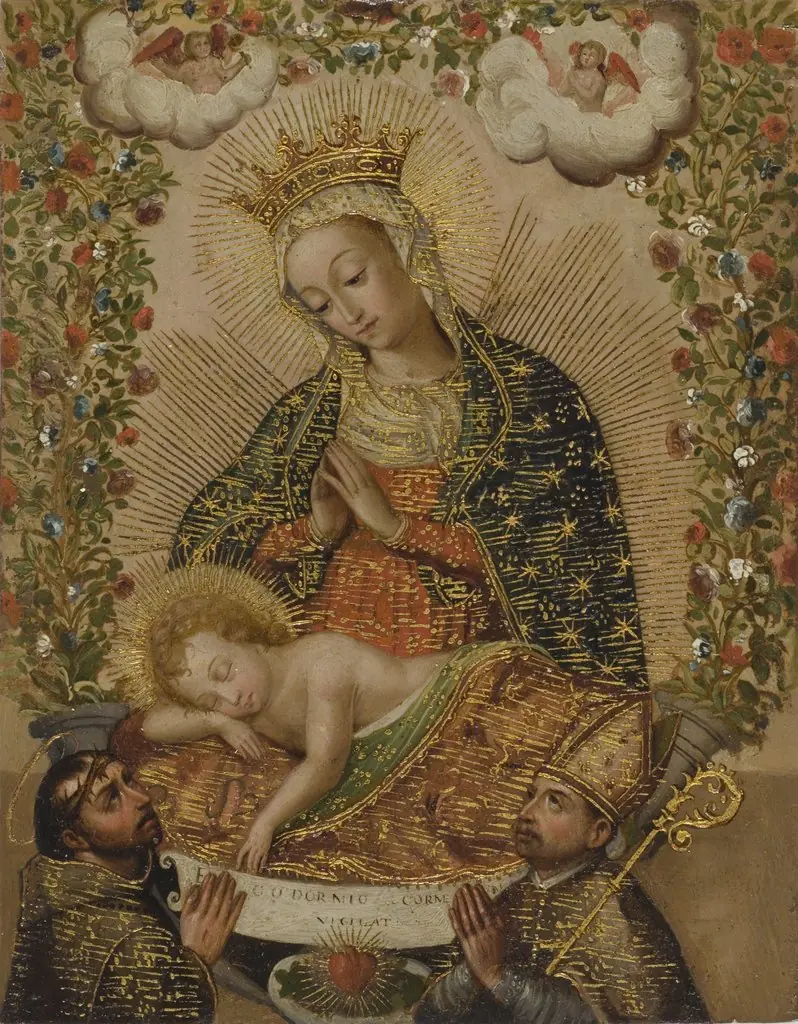 The Virgin Adoring the Christ Child with Two Saints (La Virgin adorando al Niño Jesús con dos santos)
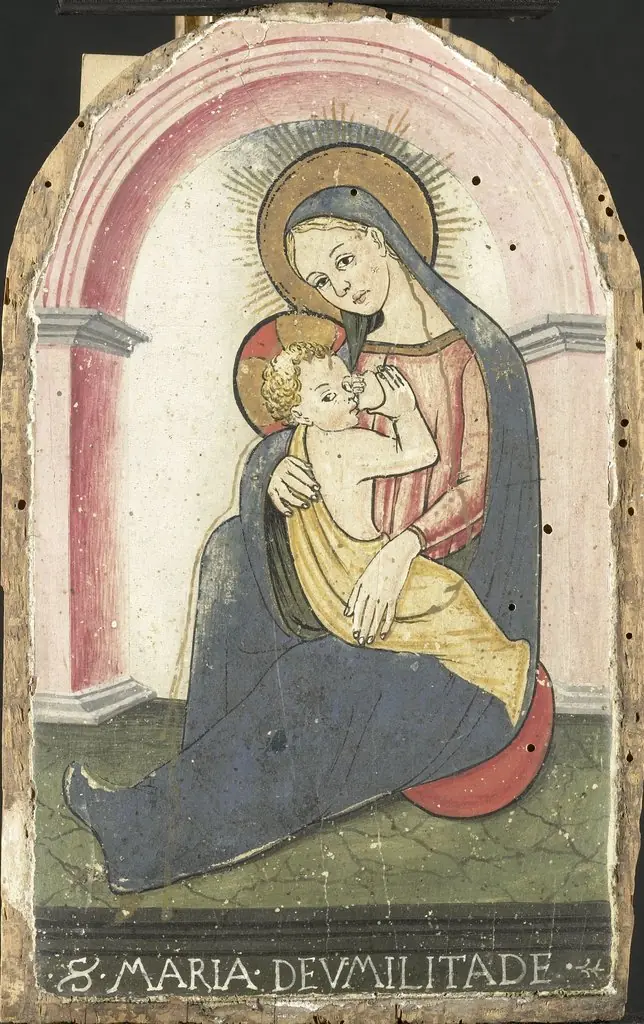 Madonna of Humility
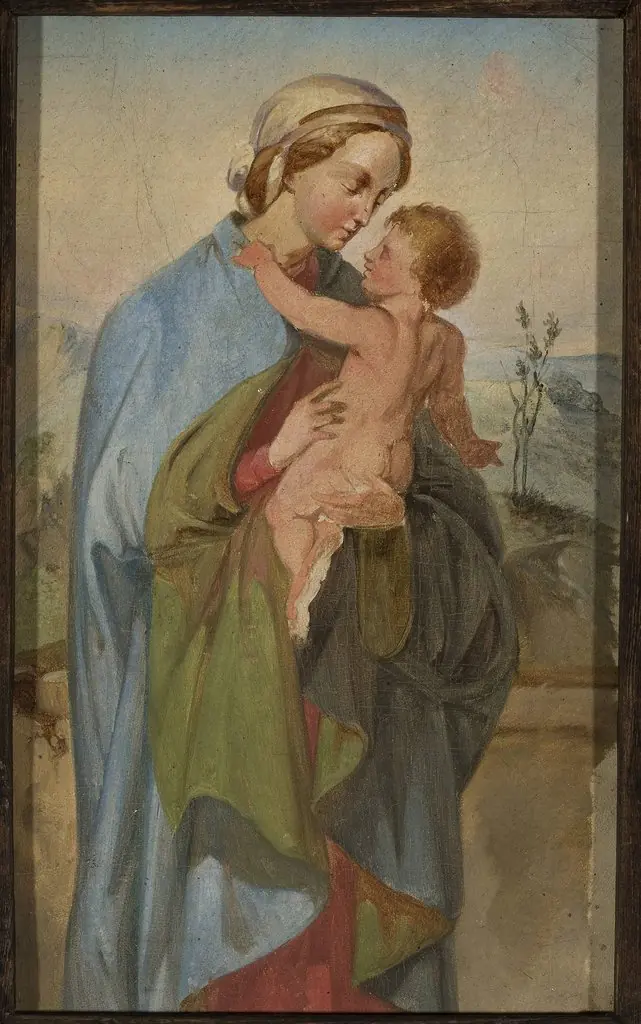 Virgin Mary with Jesus
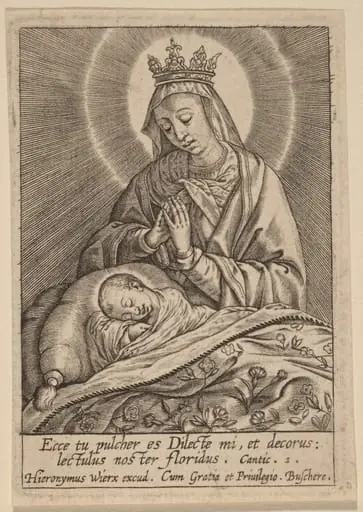 Ecce tu pulcher es Dilecte ...
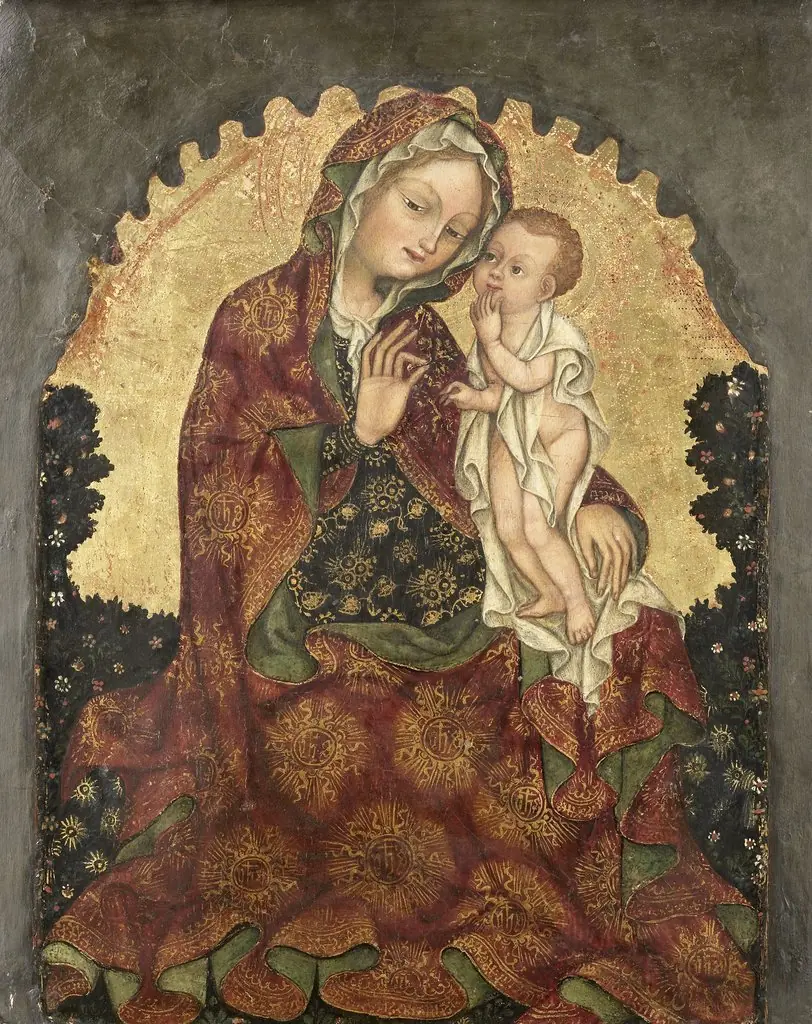 Madonna of Humility (Madonna dell'Umiltà)
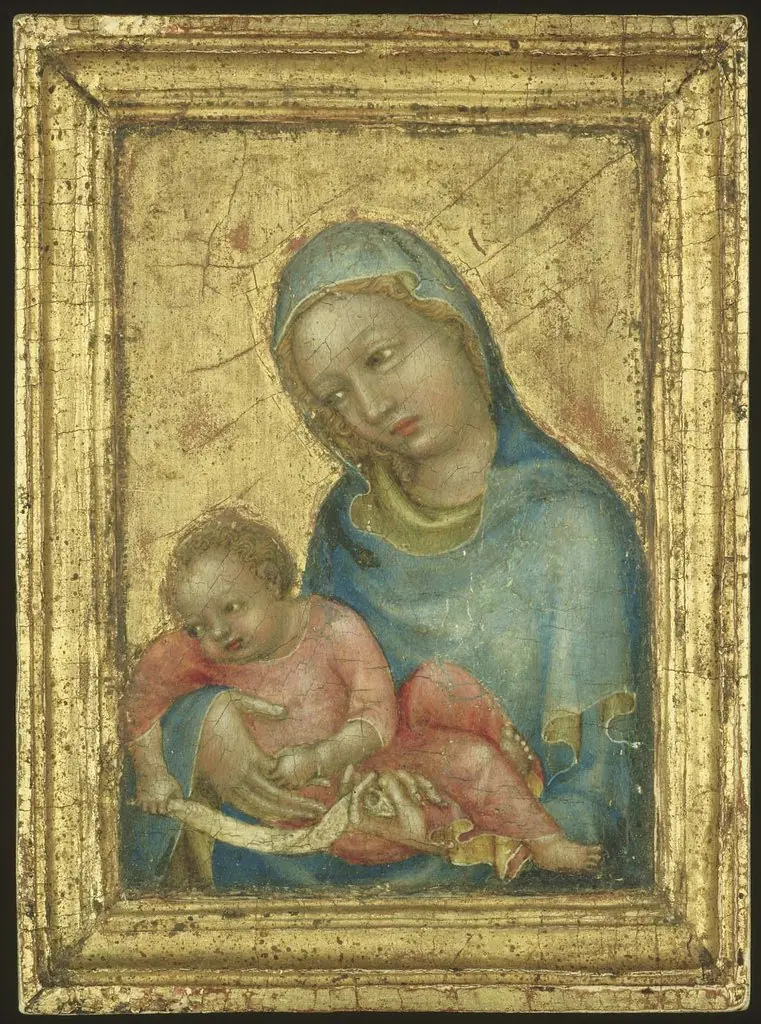 Virgin and Child
![Madonna of Humility, The Blessing Christ, Two Angels, and a Donor [obverse], by Andrea di Bartolo](https://artifactworldgallery.com/img/andrea-di-bartolo--madonna-of-humility-the-blessing-christ-two-angels-and-a-don--d37c382429905539-w320.webp) Madonna of Humility, The Blessing Christ, Two Angels, and a Donor [obverse]
Madonna of Humility, The Blessing Christ, Two Angels, and a Donor [obverse]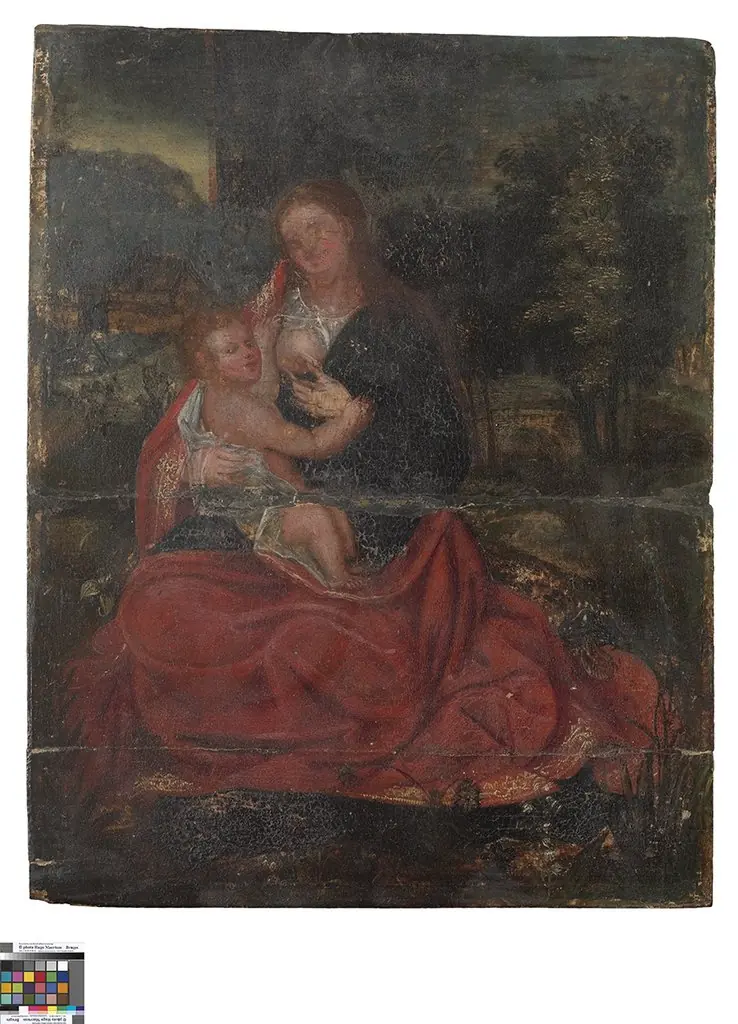 Madonna
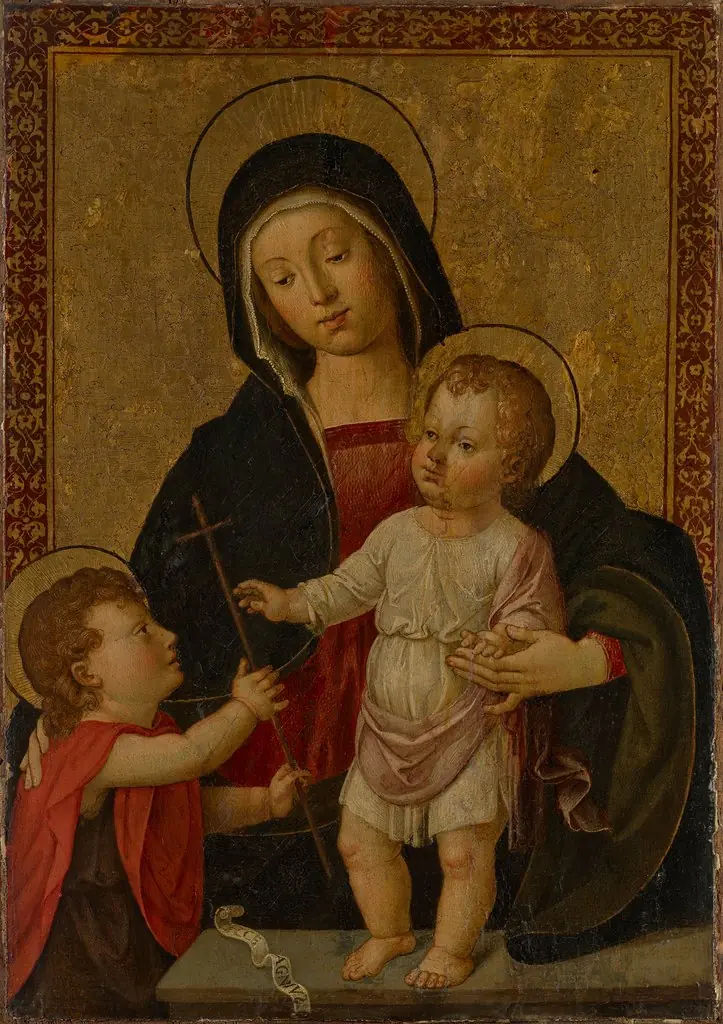 The Virgin and Child with the Young St. John