Artwork
Virgin and Child
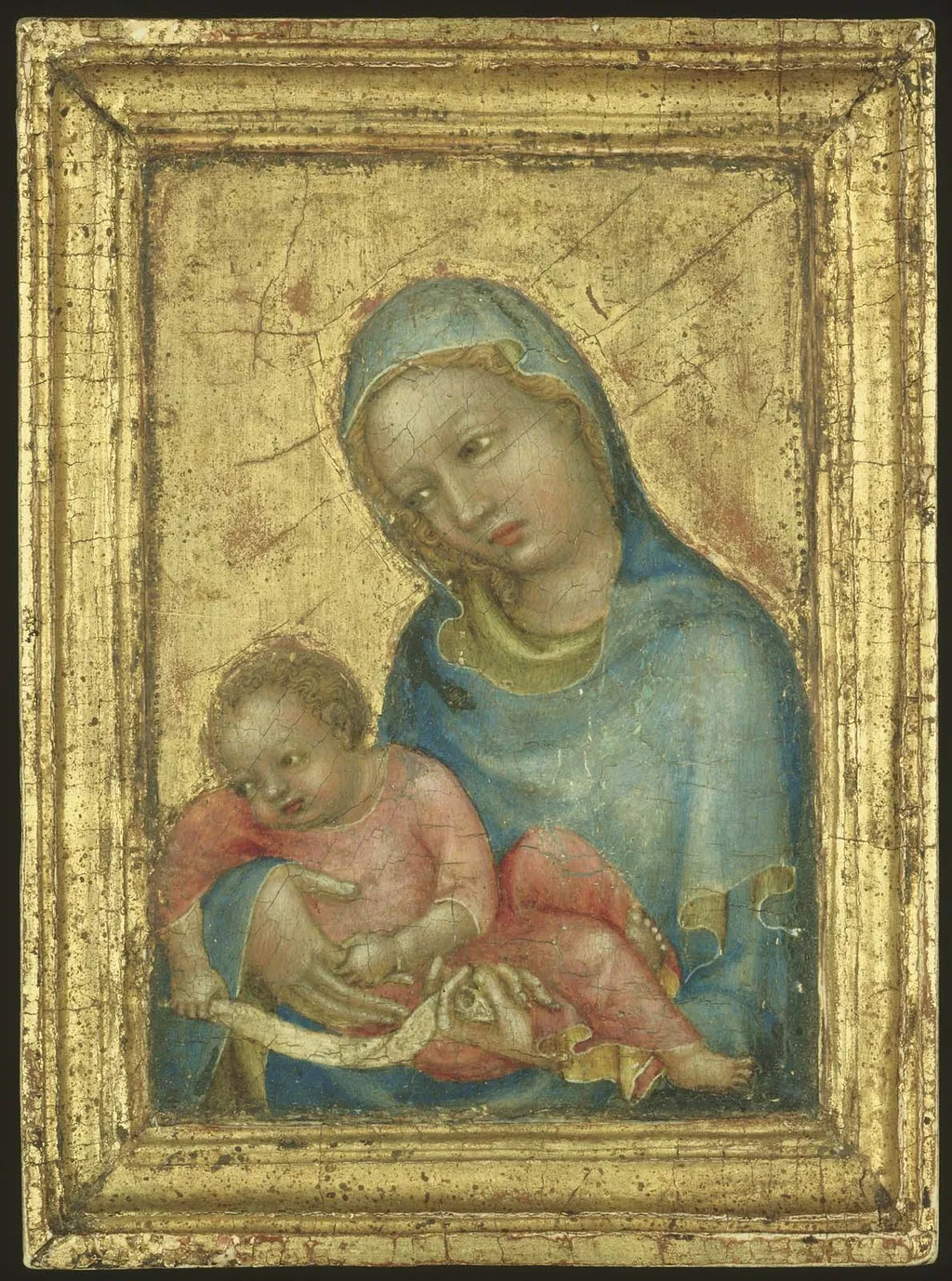
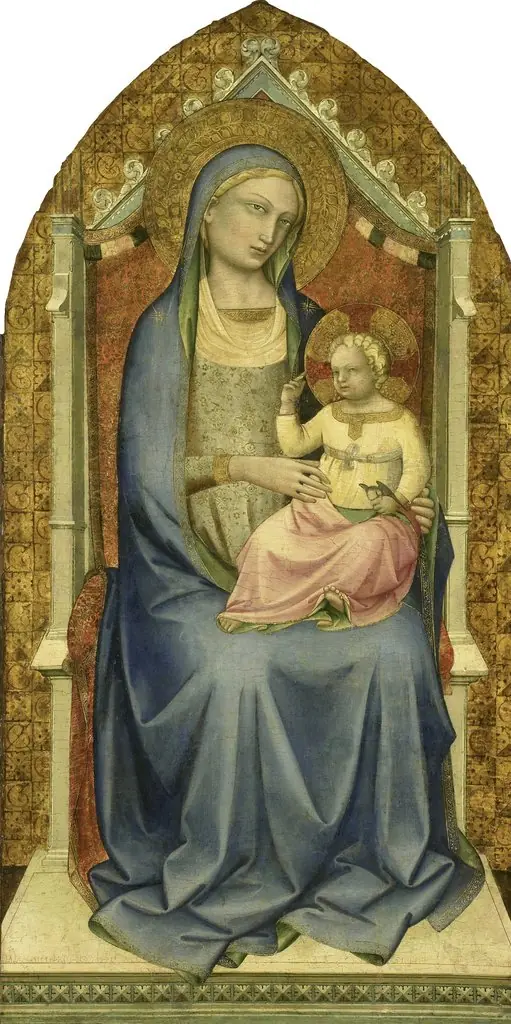
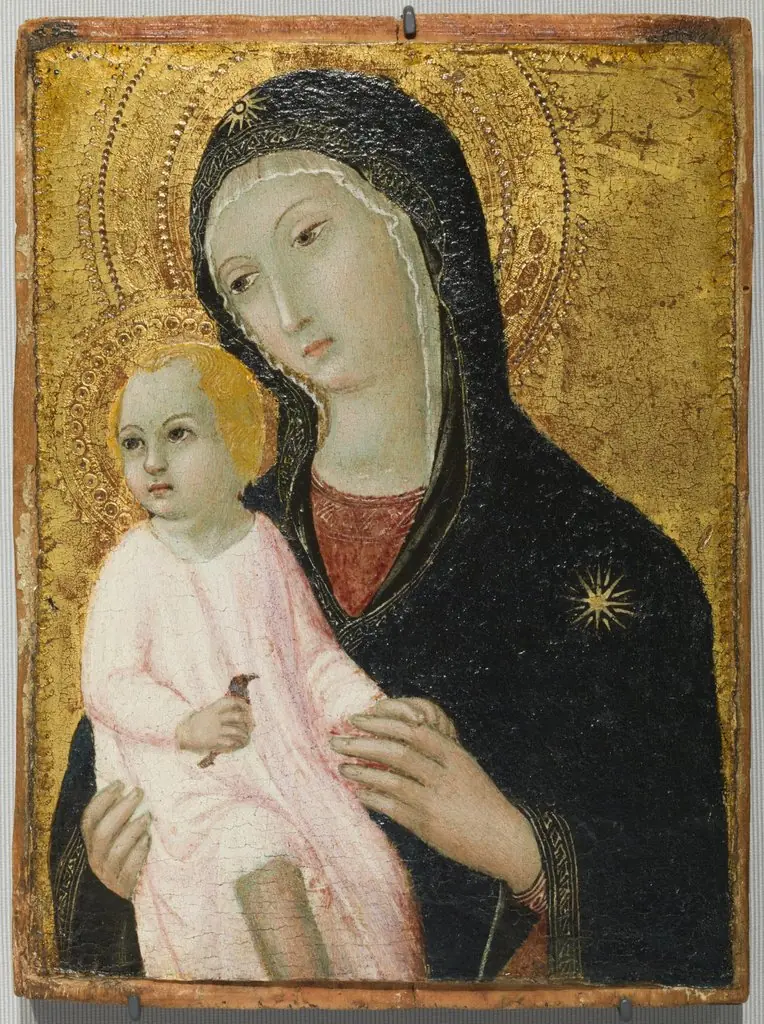
Virgin and Child is an unspecified painting by the Byzantine icon painting artist Unknown. It dates from 1350 and is held in the collection of the Museum of Fine Arts Boston.
About this work
Overview
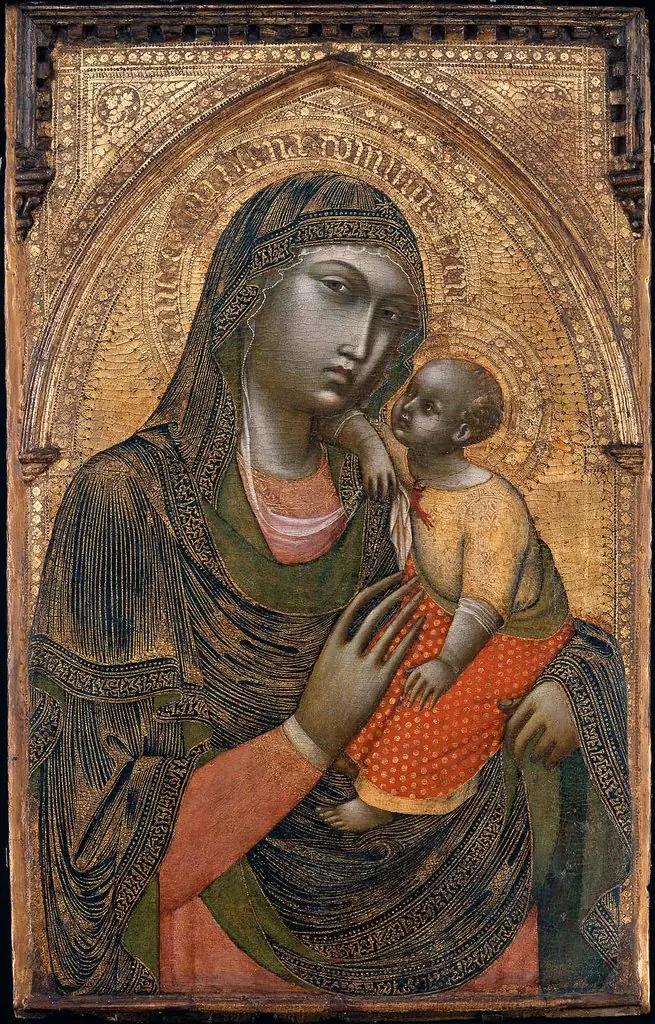
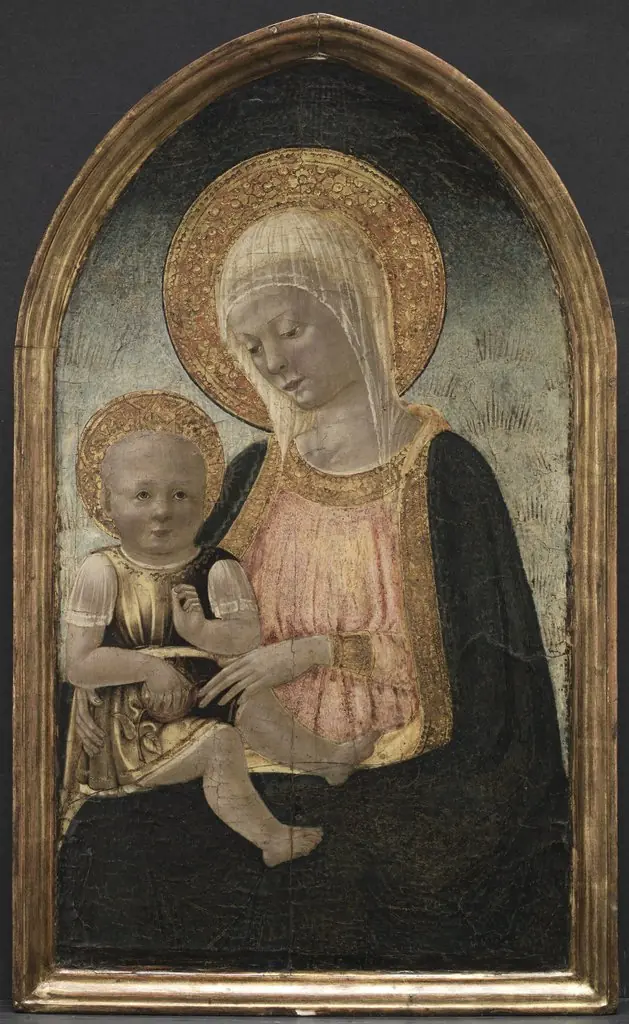
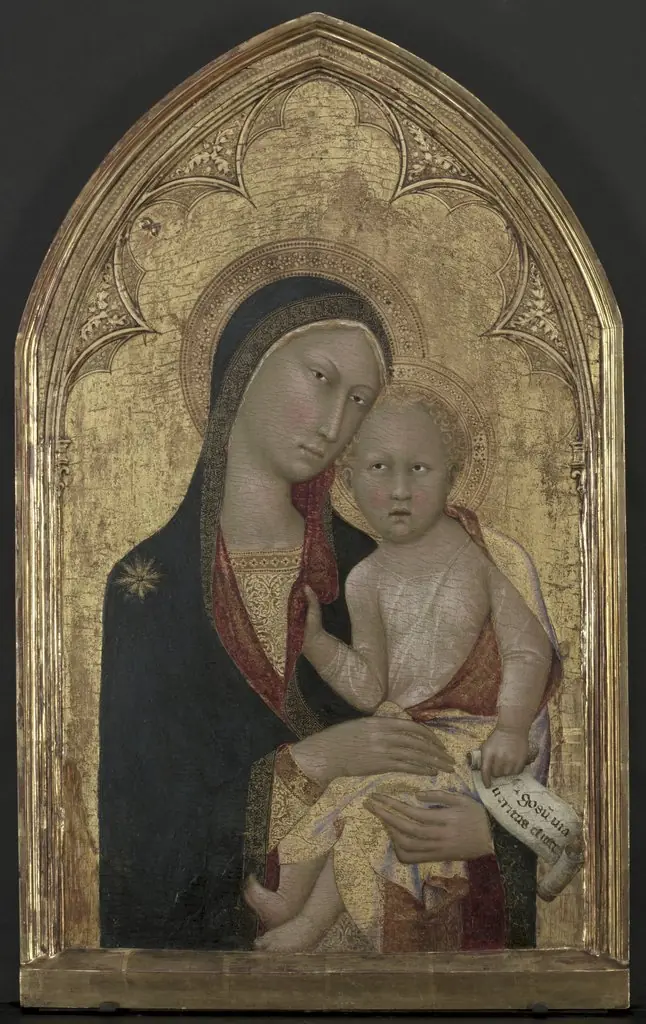
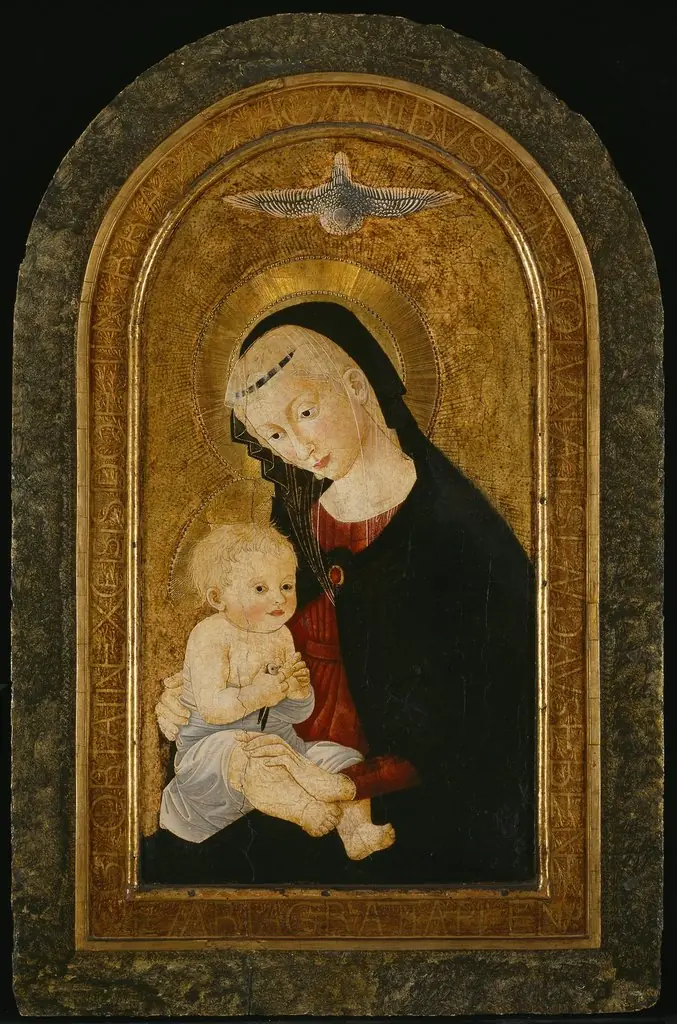
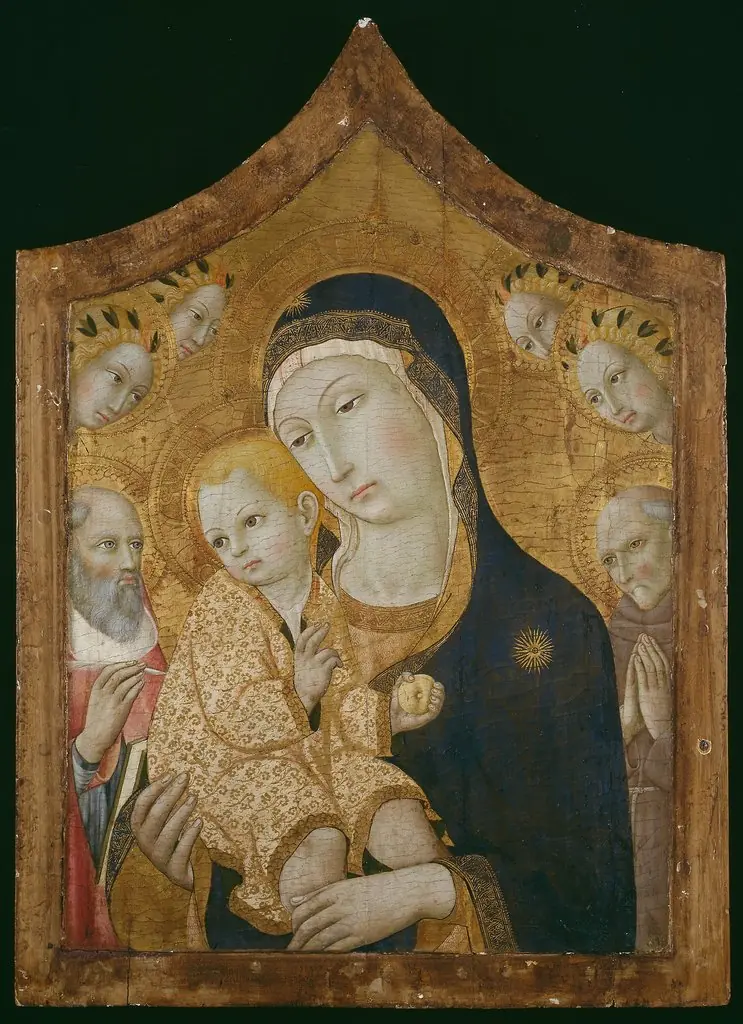
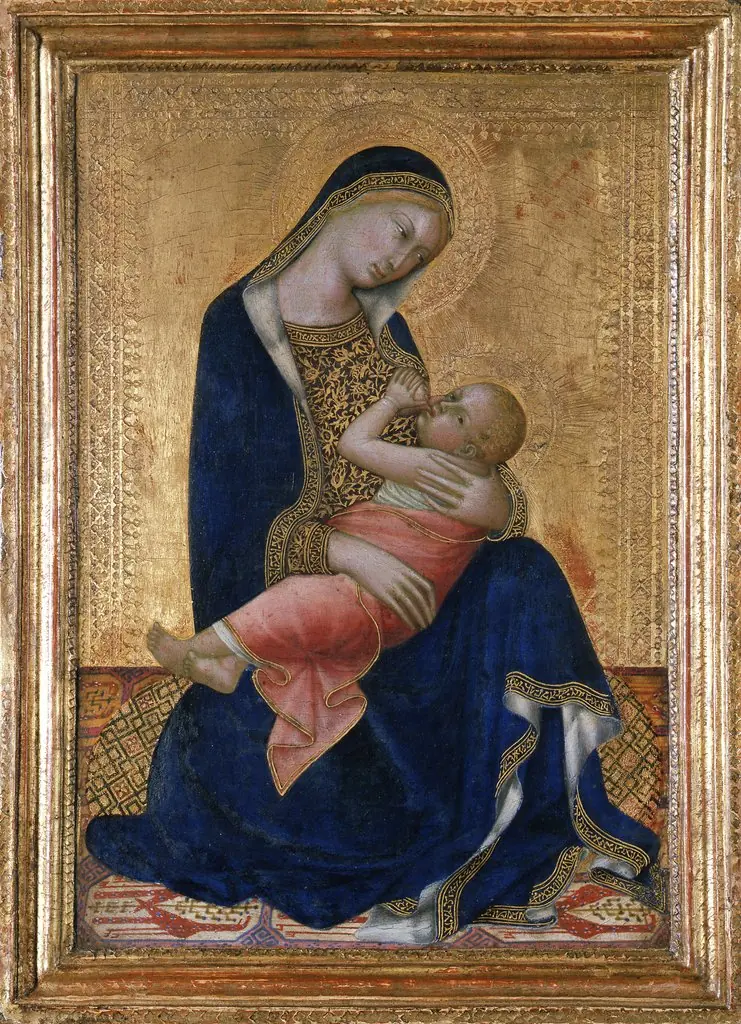
The work is a modestly sized panel painting depicting a seated female figure in a blue robe and veil, holding an infant dressed in pink and white garments. The child's hand extends toward the mother, creating a gentle interaction. The surface shows signs of age, with a cracked paint layer and a gold‑lined border framing the composition.
Subject & Meaning
The figures correspond to the traditional Christian iconography of the Virgin Mary and the Christ Child. The serene expression of the mother and the reaching gesture of the infant convey themes of devotion, maternal tenderness, and the incarnation, motifs that recur throughout medieval devotional art.
Technique & Style
Executed in tempera on wood, the painting employs a limited palette dominated by blues, pinks, and gold. The handling of the fabric suggests a careful modeling of folds, while the gold edging reflects the period’s use of precious materials to emphasize sacred subjects. The cracked varnish indicates extensive aging.
History & Provenance
Dating to the early 15th century, the panel is over six centuries old. Its provenance is not fully documented, but the gold‑trimmed frame and stylistic traits align it with devotional objects produced for private chapels or personal worship during the late medieval period.
Context
During the medieval era, images of the Virgin and Child were central to personal piety, often serving as focal points for prayer. Such small, portable works allowed lay believers to maintain a visual connection to the divine within domestic settings, reflecting broader trends in religious practice of the time.
Artist & collection

 Domestic Scene
 Giacomo and Cardinal Marco, investing Andrea, Abbot of San Zeno, with his Benefice
 The Nymph of Fontainebleau
 Portrait of a Woman
 Madonna and Child with Saints in the Enclosed Garden
 Venus and Minerva
 Family Group of Four on Sofa
 Wall painting from Room H of the Villa of P. Fannius Synistor at Boscoreale