Artwork
Woman Addressing a Peacock: Gujari Ragini of Megh, from a Ragamala
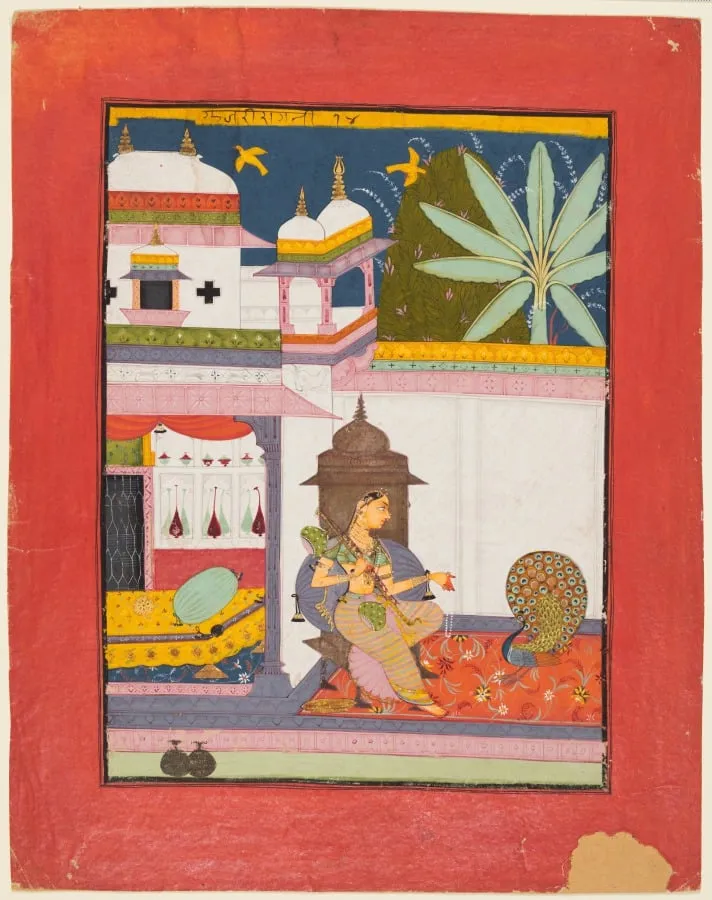
Woman Addressing a Peacock: Gujari Ragini of Megh, from a Ragamala is an unspecified painting by the Baroque artist Unknown. It dates from 1680 and is held in the collection of the Cleveland Museum of Art. This painting belongs to a Ragamala series, a visual system that links Indian musical modes to poetic and emotional states.
About this work
Overview
The composition reflects a fusion of lyrical emotion and symbolic imagery, characteristic of Rajput court painting traditions.
This painting belongs to a Ragamala series, a visual system that links Indian musical modes to poetic and emotional states. Each image in the set represents a raga through a scene of human or natural figures responding to its mood. Here, the Gujari Ragini is depicted as a woman in a red garment, seated on a throne outdoors, engaged in musical performance. The composition reflects a fusion of lyrical emotion and symbolic imagery, characteristic of Rajput court painting traditions.
Subject & Meaning
The woman embodies Gujari Ragini, a raga associated with longing and separation. Her music, played on the vina, expresses yearning for an absent beloved. The peacock, drawn to her melody, dances in response—a symbol of devotion and emotional resonance. The fluttering birds suggest movement and transience, reinforcing the theme of absence. The scene is not merely illustrative but evokes the inner state of the raga through symbolic interaction between figure and nature.
Technique & Style
Executed in opaque watercolor on paper, the painting features fine brushwork and flat, decorative planes of color. The woman’s red garment contrasts with the muted tones of the background, directing focus to her central role. The peacock’s feathers are rendered with delicate detail, while the architectural elements suggest a stylized pavilion rather than naturalistic space. The composition balances symmetry and subtle asymmetry, typical of Rajput miniature traditions that prioritize emotional expression over spatial realism.
History & Provenance
This work likely originated in the mid-17th century from a Rajput court, possibly Bundi or Raghogarh, known for their richly illustrated Ragamala series. Such paintings were commissioned by royalty or nobility to accompany musical performances or as objects of contemplation. The painting’s survival in good condition suggests it was carefully preserved in a royal collection, possibly as part of a larger album of musical imagery.
Context
Ragamala paintings emerged in North India as visual companions to devotional and courtly music traditions. They reflect a syncretic culture where poetry, music, and painting converged to express spiritual and emotional states. The depiction of animals responding to human music aligns with broader Indian aesthetic principles, where nature is seen as attuned to human feeling. This painting is one of many in a systematic visual lexicon meant to be experienced as a sequence.
Legacy
The Ragamala tradition influenced later Indian painting and remains a key reference in studies of Indian aesthetics. This work contributes to understanding how abstract musical concepts were made tangible through visual symbolism. While the specific artist is unknown, the style and iconography place it within a broader regional practice that sustained cultural memory through image and sound, bridging courtly entertainment and spiritual contemplation.
Artist & collection

 Domestic Scene
 Giacomo and Cardinal Marco, investing Andrea, Abbot of San Zeno, with his Benefice
 The Nymph of Fontainebleau
 Portrait of a Woman
 Madonna and Child with Saints in the Enclosed Garden
 Venus and Minerva
 Family Group of Four on Sofa
 Wall painting from Room H of the Villa of P. Fannius Synistor at Boscoreale
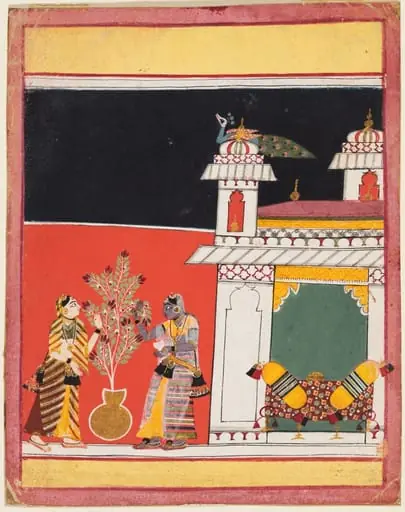 Two Women Pluck Flowers on a Terrace: Gunakali Ragini, from a Ragamala
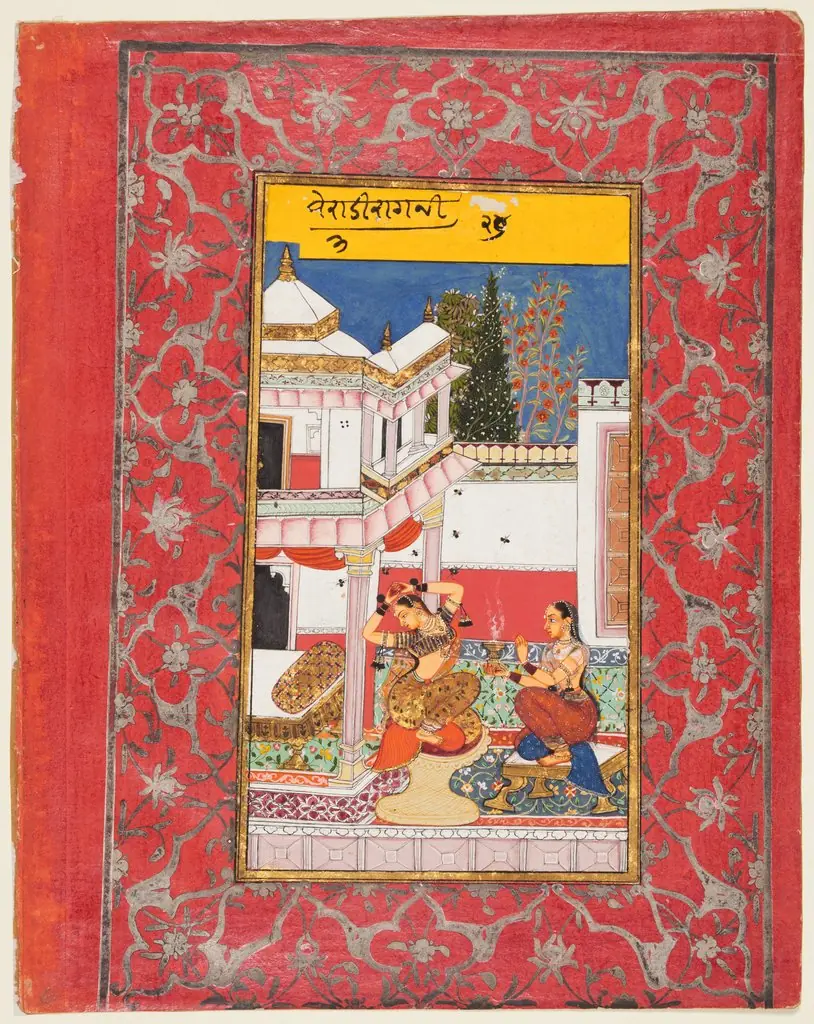 Woman Longing for Her Lover: Verati Ragini of Dipak, from a Ragamala
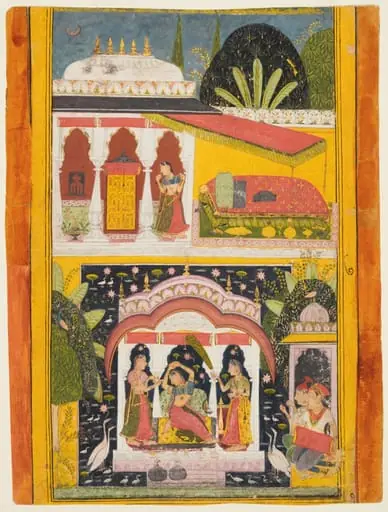 A Royal Woman in a Pavilion: Desavarari Ragini of Dipak, from a Ragamala
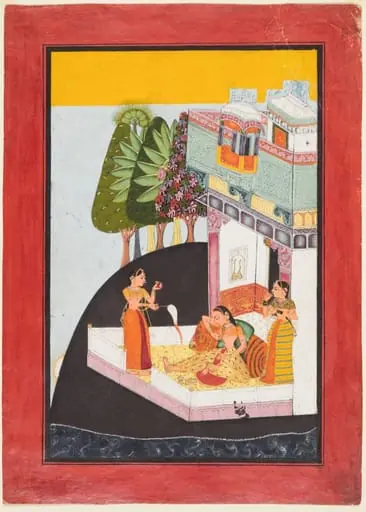 A Disconsolate Lady on a Terrace with Attendants
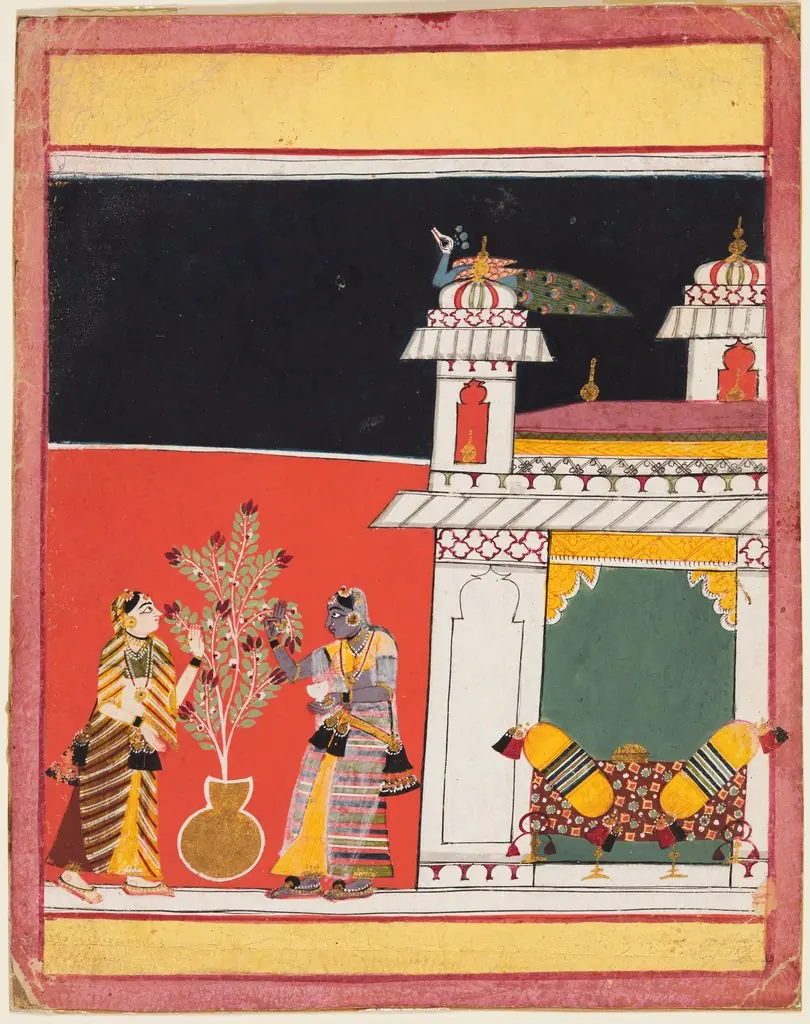 Two Women Pluck Flowers on a Terrace: Gunakali Ragini, from a Ragamala
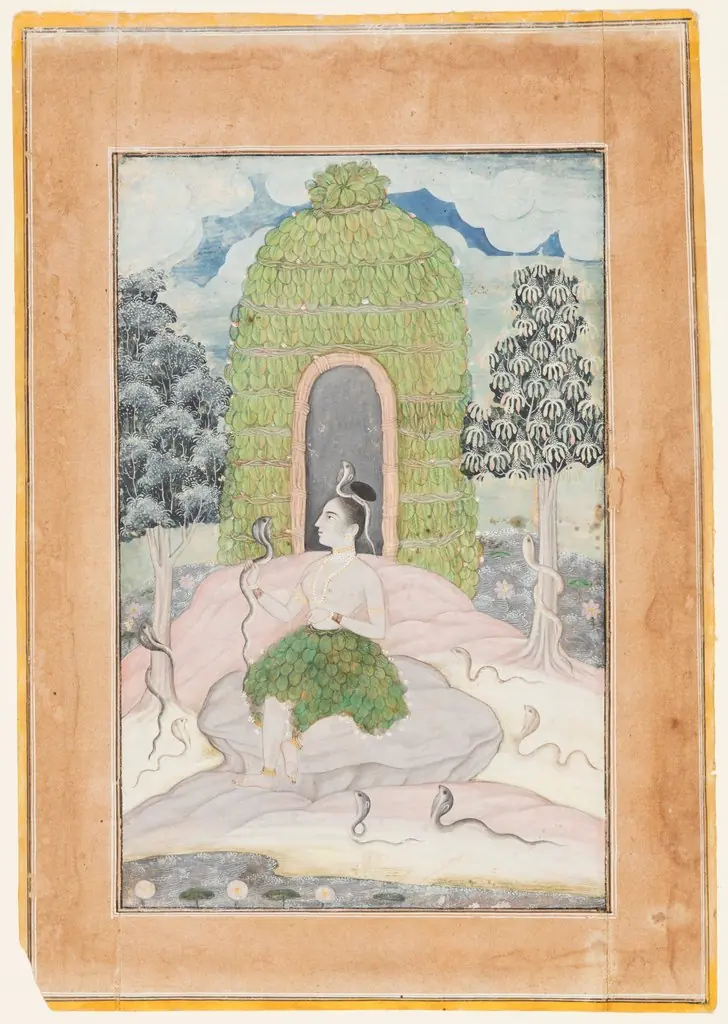 Ascetic Princess with Snakes in a Wilderness: Asavari Ragini, from a Ragamala
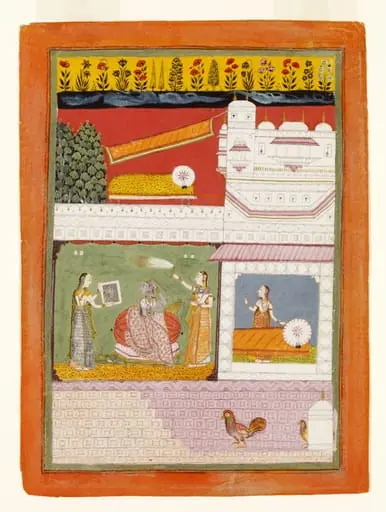 Vilaval Ragini