Artwork
Zing zhao lan
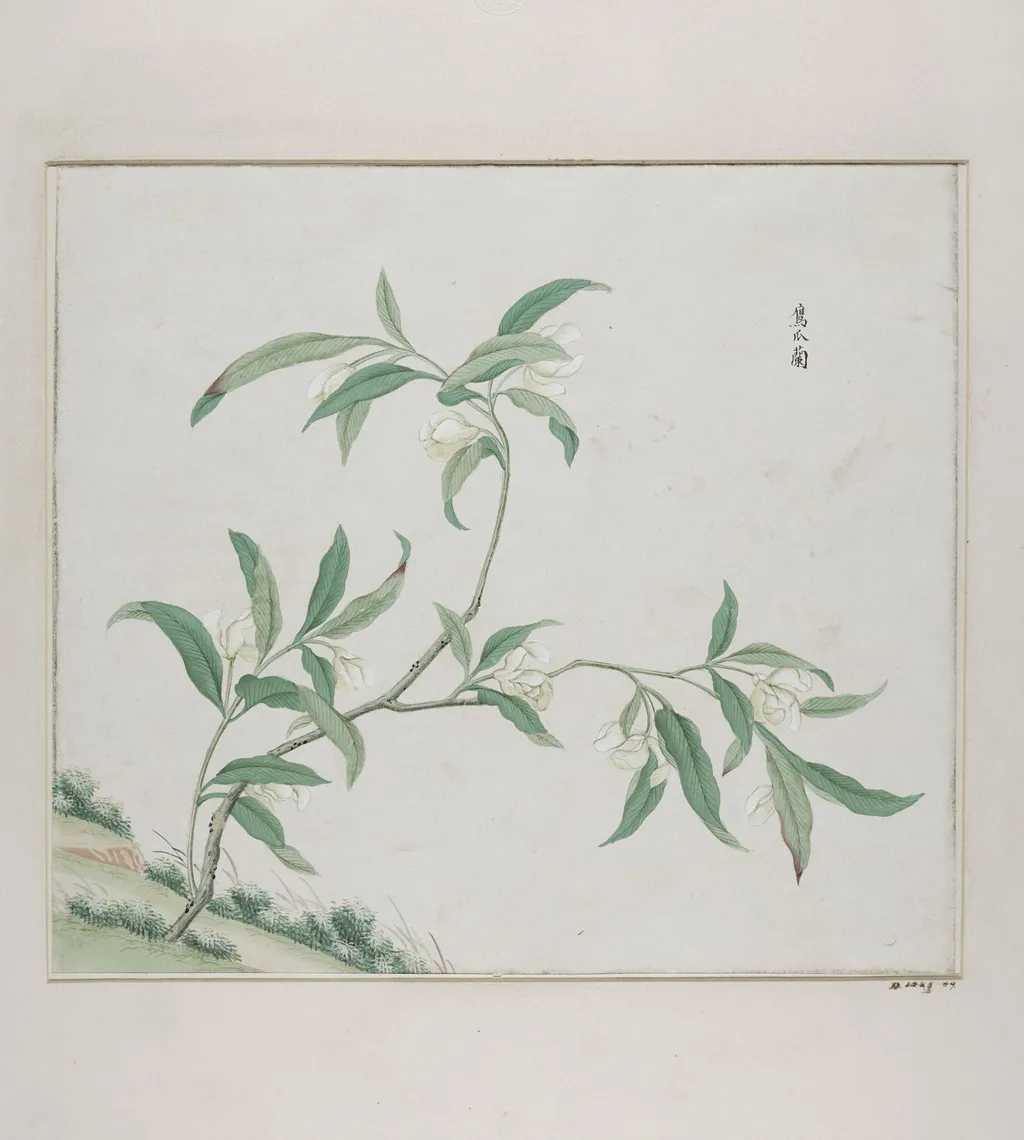
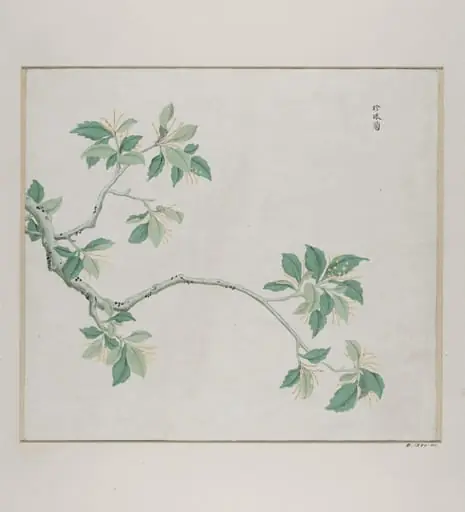
Zing zhao lan is a paint painting by the Rococo painting artist Unknown. It dates from 1780 and is held in the collection of the Victoria and Albert Museum. A watercolor painting from 1780 depicts a single branch with delicate foliage and blossoms, rendered in fine, precise brushwork.
About this work
Overview
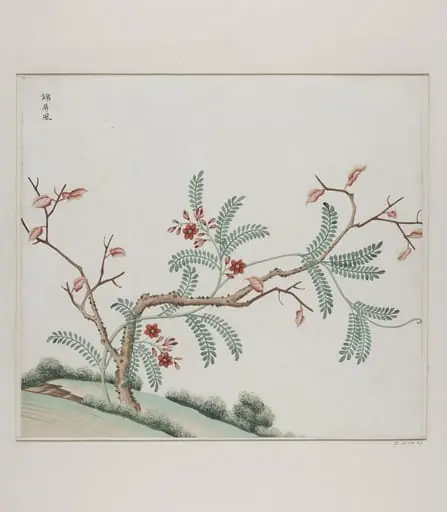
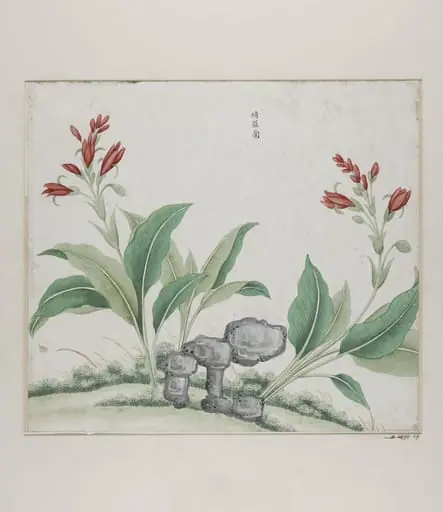
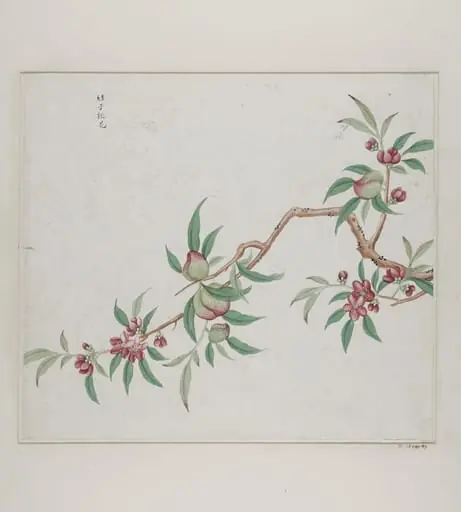
A watercolor painting from 1780 depicts a single branch with delicate foliage and blossoms, rendered in fine, precise brushwork. The composition is restrained, with no background detail beyond a pale wash that allows the subject to emerge clearly. The work is small in scale and executed with quiet precision, reflecting a tradition of botanical observation rather than dramatic expression.
Subject & Meaning
The plant portrayed is likely a species of orchid, possibly Yingzhao lan, known for its slender stems and clustered white blooms. In Chinese artistic tradition, such flowers symbolize refined elegance and quiet resilience. The absence of human or landscape elements focuses attention on the plant’s natural form, suggesting an appreciation for botanical purity and seasonal change.
Technique & Style
The artist employed fine, controlled lines to define leaf veins and petal edges, using translucent watercolor layers to suggest texture and light.
The artist employed fine, controlled lines to define leaf veins and petal edges, using translucent watercolor layers to suggest texture and light. Subtle gradations in green and pale gray convey depth without saturation. Brown accents along the branch hint at natural aging or bark texture. The technique prioritizes accuracy over ornamentation, aligning with scholarly botanical illustration practices of the period.
History & Provenance
The painting entered the collection in 1889 after being acquired from E. Parsons. Its presence in the Asia Department registers was confirmed through provenance research conducted in 2022, which traced its documented ownership back to the late 19th century. Prior to this, its origins remain undocumented, though its style suggests it may have been produced in southern China during the Qing dynasty.
Context
Created during the late 18th century, the work reflects a broader interest in natural history among literati and court artists in Qing China. While not part of the European Romantic movement, it shares with it a contemplative focus on nature’s details. Unlike Western botanical art, however, it avoids scientific labeling, favoring aesthetic harmony and implied meaning over taxonomic clarity.
Legacy
The painting contributes to a corpus of understated botanical works that bridge art and observation in East Asian traditions. Its preservation and documentation highlight ongoing efforts to recover and contextualize lesser-known objects from pre-modern collections. It remains a quiet example of how natural forms were studied and revered through disciplined, intimate representation.
Artist & collection

 Domestic Scene
 Giacomo and Cardinal Marco, investing Andrea, Abbot of San Zeno, with his Benefice
 The Nymph of Fontainebleau
 Portrait of a Woman
 Madonna and Child with Saints in the Enclosed Garden
 Venus and Minerva
 Family Group of Four on Sofa
 Wall painting from Room H of the Villa of P. Fannius Synistor at Boscoreale