Artwork
Doitsukokukan naibu kikai|The Interior Works of an Armed Japanese Battleship
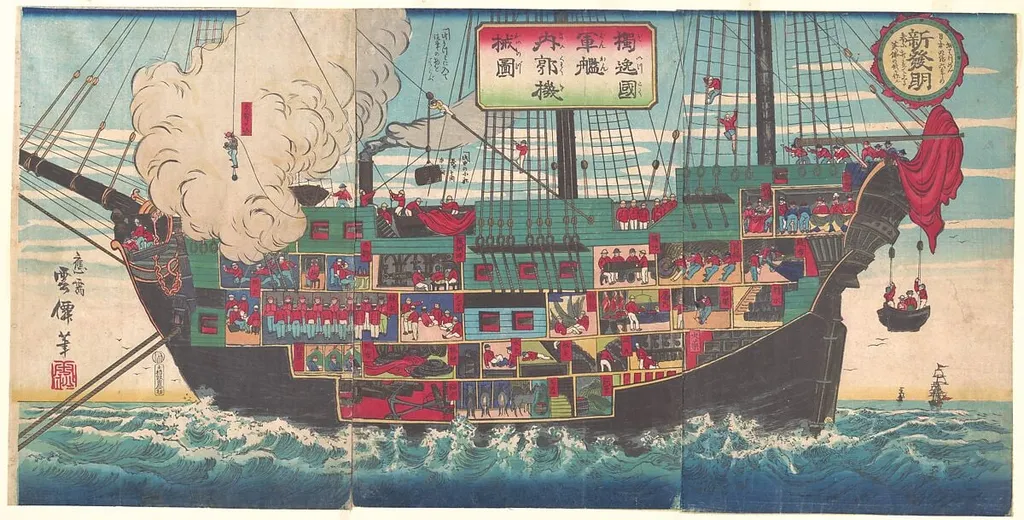
Doitsukokukan naibu kikai|The Interior Works of an Armed Japanese Battleship is an ink print by the Impressionist artist Unsen. It dates from 1874 and is held in the collection of the Metropolitan Museum of Art.
About this work
Overview
It is part of the collection at The Metropolitan Museum of Art, offering a rare visual record of Japan’s military modernization in the late 19th century.
Created in 1874 by the artist Unsen, this triptych of woodblock prints depicts the interior of a Japanese naval vessel during the early Meiji period. Rendered in ink and color on paper, the work captures the mechanical and human activity aboard a warship. It is part of the collection at The Metropolitan Museum of Art, offering a rare visual record of Japan’s military modernization in the late 19th century.
Subject & Meaning
The prints illustrate the inner workings of a battleship, emphasizing its functional architecture and the labor of its crew. Figures are shown attending to machinery, handling weapons, and managing supplies, while horses and large fans suggest logistical and ceremonial elements. The scene conveys order and discipline, reflecting Japan’s efforts to align its naval forces with Western military standards during rapid modernization.
Technique & Style
Unsen employed traditional ukiyo-e woodblock techniques with meticulous attention to detail. The composition spans three panels, allowing for an expansive view of the ship’s interior. Colors are restrained—blues, greens, and blacks dominate—enhancing the industrial atmosphere. Lines are precise, and spatial depth is suggested through layered decks and overlapping forms, balancing realism with the conventions of Japanese printmaking.
History & Provenance
Produced in 1874, the triptych emerged during a period of intense naval reform in Japan. It likely served as both documentation and propaganda, showcasing the nation’s technological progress. The work entered The Metropolitan Museum of Art’s collection in the 20th century, where it remains one of the few surviving visual records of early Meiji-era warship interiors.
Context
This print reflects Japan’s post-1868 transformation, as the country abandoned feudal military structures to build a modern navy modeled on Western powers. The depiction of a warship’s interior—rather than its exterior or battle scenes—highlights institutional pride in engineering and organization. Such images were part of a broader cultural shift toward documenting state-led industrialization.
Legacy
Unsen’s triptych stands as a valuable historical document, preserving details of naval architecture and crew life during Japan’s transition to a modern state. While not widely known outside specialized circles, it contributes to the understanding of how traditional art forms adapted to new subjects, bridging cultural heritage with technological change in the Meiji era.
Artist & collection

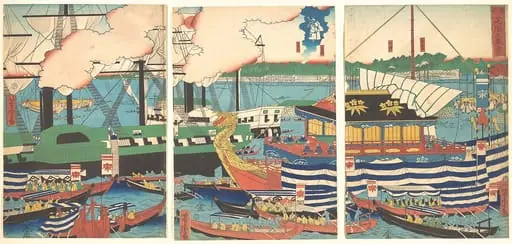 東都芝浦之風景|View of Shibaura, from the series Eastern Capital (Tōto, Shibaura no fūkei)
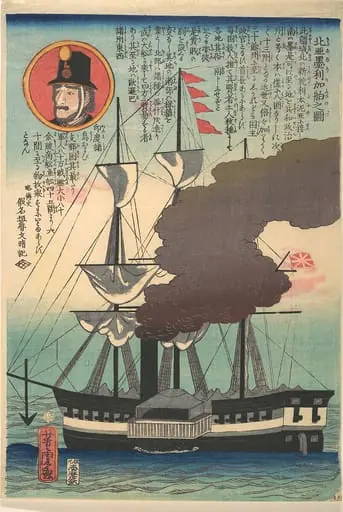 Kita Amerka fune no zu|North American Ship
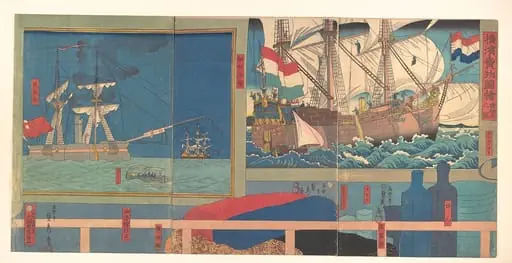 「横浜買物圖繒 唐物店之圖」|Curio Shop in Yokohama
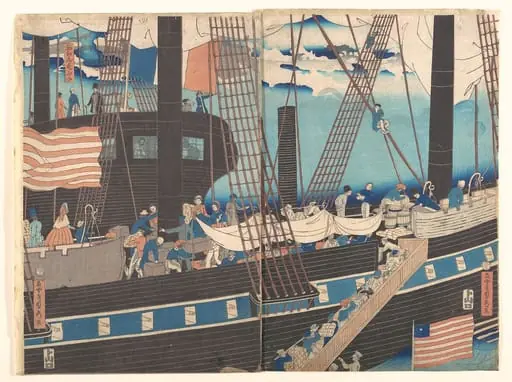 「横浜交易西洋人荷物運送之圖」|“Yokohama Trade: Westerners Loading Cargo”
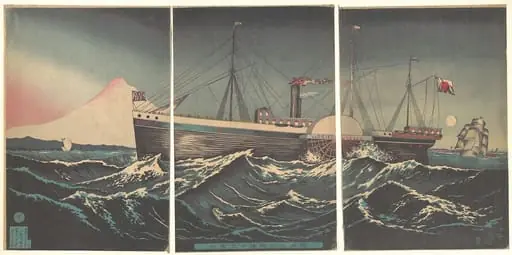 Untitled
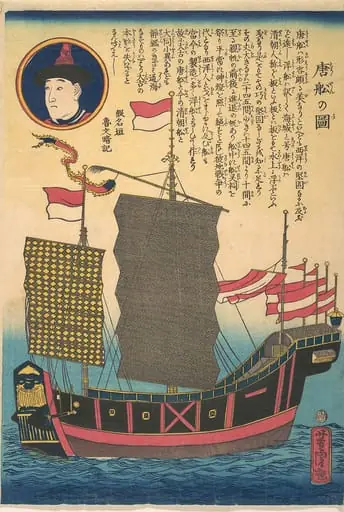 Tōsen no zu|Chinese Junk
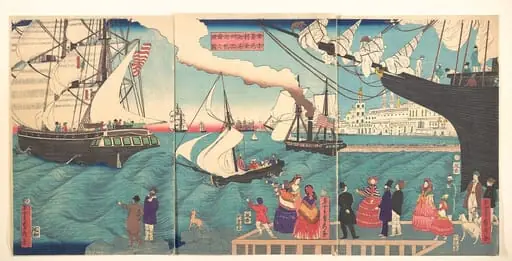 Untitled
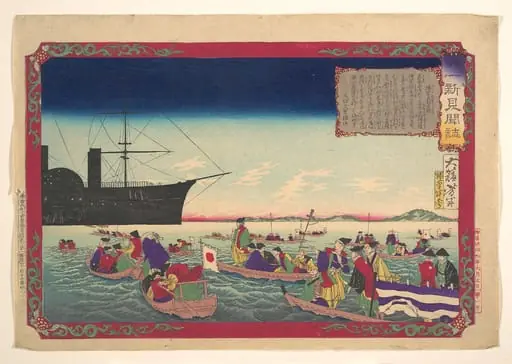 皇国一新見聞誌|Chronicle of the Imperial Restoration (Kōkoku isshin kenbunshi)
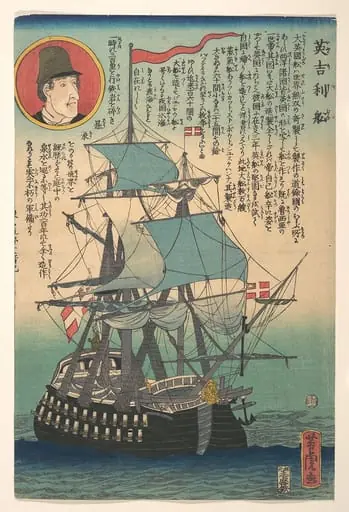 Igirisu fune|English Ship
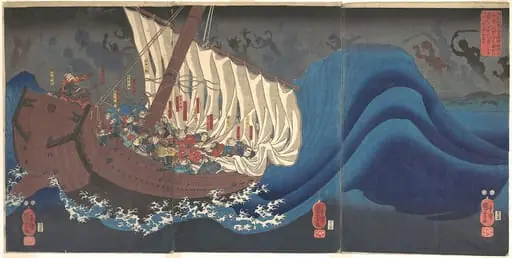 歌川国芳画 「大物の浦平家の亡霊」|Ghosts of the Taira at Daimotsu Bay