Artwork
江戸近郊八景之内 玉川秋月|Autumn Moon on the Tama River
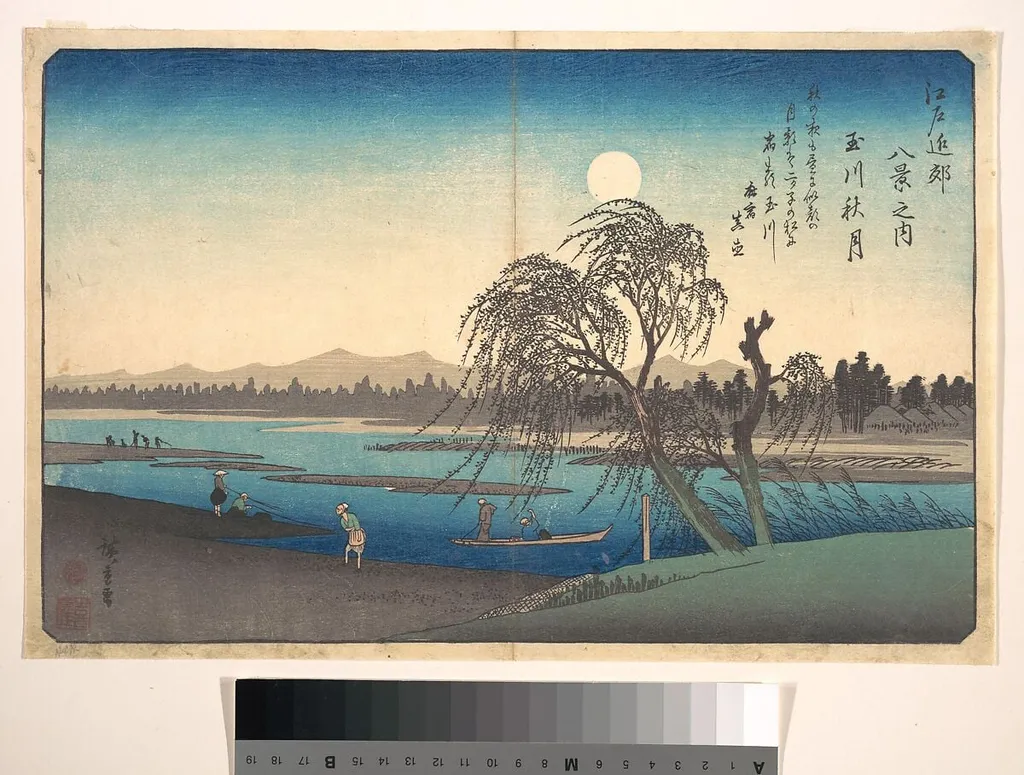
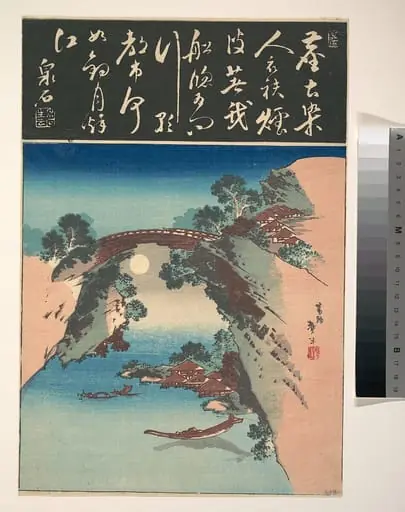
江戸近郊八景之内 玉川秋月|Autumn Moon on the Tama River is an ink print by the Romanticist artist Utagawa Hiroshige. It dates from 1838 and is held in the collection of the Metropolitan Museum of Art.
About this work
Overview
Created around 1838 by Utagawa Hiroshige, this woodblock print is one of eight scenes from a series portraying landscapes near Edo.
Created around 1838 by Utagawa Hiroshige, this woodblock print is one of eight scenes from a series portraying landscapes near Edo. Executed in ink and color on paper, it follows the horizontal format common to his landscape cycles. Unlike many ukiyo-e works focused on urban life, this piece centers on quiet natural settings, reflecting a broader shift in the genre toward contemplative, seasonal imagery.
Subject & Meaning
The scene depicts the Tama River at twilight, with a gnarled tree dominating the foreground and figures engaged in quiet fishing along the shore. The rising autumn moon casts a pale glow over distant hills, suggesting a moment of stillness and transition. The composition evokes solitude and the passage of time, aligning with traditional Japanese aesthetics that find beauty in impermanence and seasonal change.
Technique & Style
Hiroshige employed fine, controlled lines to define the tree’s twisted branches and the rippling water, using subtle gradations of ink to suggest depth and atmosphere. The pale blue sky and soft moonlight are rendered with minimal color, emphasizing tonal contrast over vibrancy. Cross-hatching and delicate washes create texture in the foliage and水面, demonstrating mastery of layering techniques unique to woodblock printing.
History & Provenance
The print was produced during Hiroshige’s peak period of landscape series creation, shortly after the success of his 'Fifty-Three Stations of the Tōkaidō.' It entered the collection of The Metropolitan Museum of Art through documented acquisitions in the early 20th century, where it remains part of their extensive holdings of Edo-period prints.
Context
In the 1830s, Edo’s growing middle class sought affordable art that reflected personal experience of nature and travel. Hiroshige’s series responded to this demand by transforming local rivers, mountains, and seasonal changes into accessible, emotionally resonant images. This work fits within a broader cultural interest in 'meisho'—famous places—where landscape became a vehicle for shared cultural memory.
Legacy
Hiroshige’s approach to landscape influenced later artists in Japan and abroad, including Impressionists who admired his compositional economy and atmospheric effects. While not widely celebrated in his lifetime as a revolutionary, his focus on quiet, everyday natural moments helped redefine ukiyo-e’s potential beyond entertainment, laying groundwork for modern Japanese printmaking.
Artist & collection
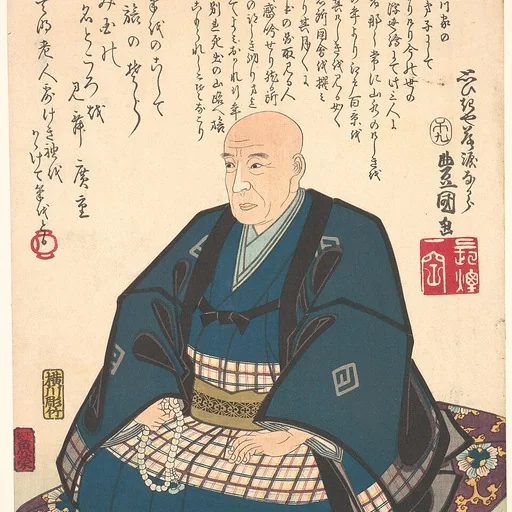
Artist
Utagawa Hiroshige (歌川 広重) or Andō Hiroshige (安藤 広重), born Andō Tokutarō (安藤 徳太郎; 1797 – 12 October 1858), was a Japanese ukiyo-e artist, considered the last great master of that tradition.

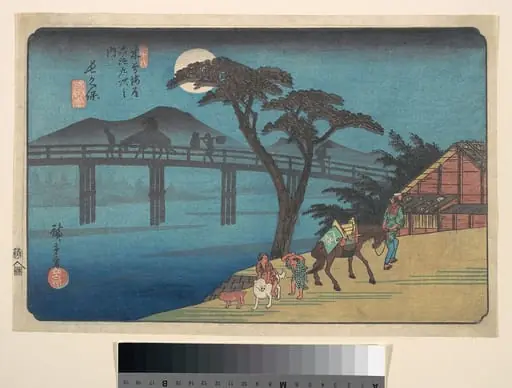 木曽海道六拾九次之内 長久保|Nagakubo Station
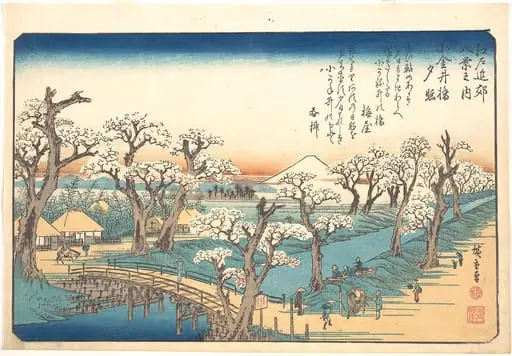 江戸近郊八景之内 小金井橋夕照|Evening Glow at Koganei Border
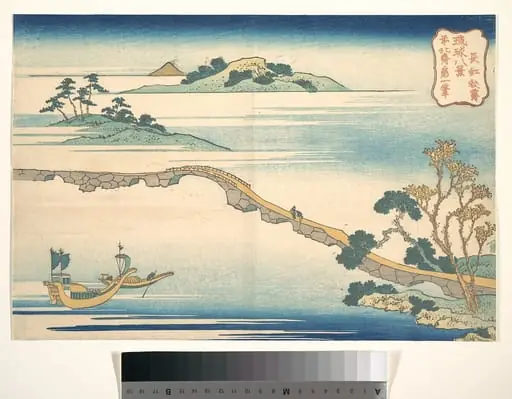 琉球八景 長虹秋霽|Autumn Sky at Chōkō (Chōkō shūsei), from the series Eight Views of the Ryūkyū Islands (Ryūkyū hakkei)
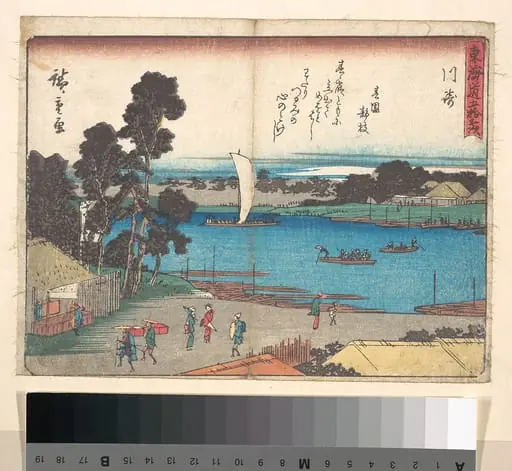 東海道五十三次 川崎|Kawasaki
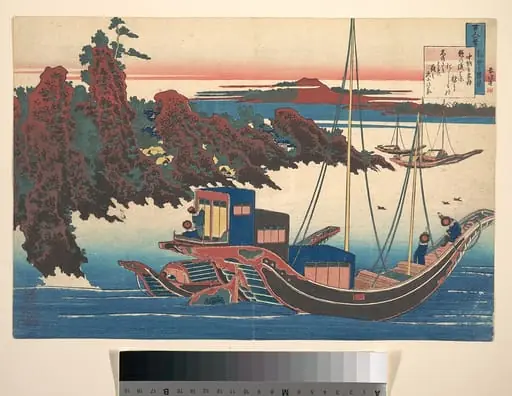 百人一首 乳母か縁説 中納言家持|Poem by Chūnagon Yakamochi (Ōtomo no Yakamochi), from the series One Hundred Poems Explained by the Nurse (Hyakunin isshu uba ga etoki)
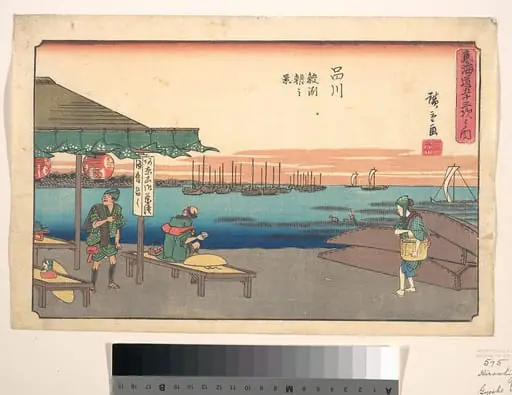 東海道五十三次之内 品川 鮫洲朝之景|Shinagawa Samesu Asa no Kei
 Untitled