Artwork
The Snowy Garden
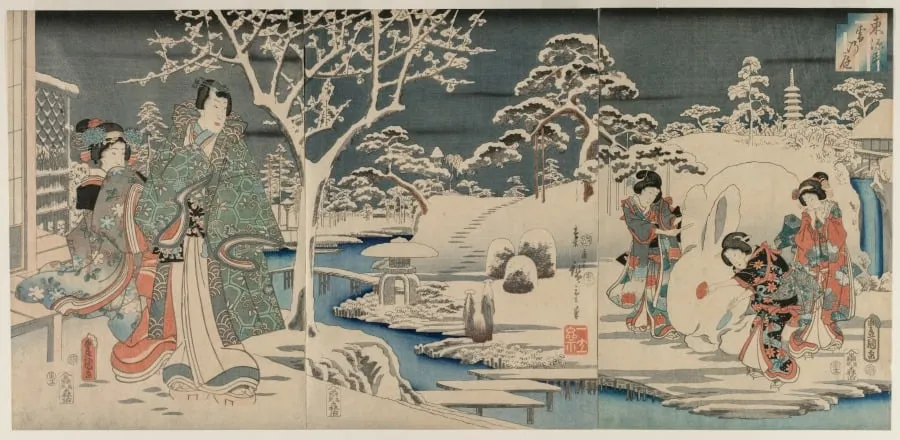
The Snowy Garden is a print by the Impressionist artist Utagawa Hiroshige. It dates from 1854 and is held in the collection of the Cleveland Museum of Art. This print is part of a series illustrating A Rustic Genji, a 19th-century manga-style adaptation of the classical Tale of Genji.
About this work
Overview
The work is a collaborative effort between two prominent ukiyo-e artists, each contributing distinct elements: one handled the figures, the other the landscape.
This print is part of a series illustrating A Rustic Genji, a 19th-century manga-style adaptation of the classical Tale of Genji. It captures a quiet winter moment in which three maidservants construct a large snow rabbit, while a man and woman observe nearby. The work is a collaborative effort between two prominent ukiyo-e artists, each contributing distinct elements: one handled the figures, the other the landscape. Both signed the piece, signaling a deliberate union of styles aimed at appealing to a wide audience.
Subject & Meaning
The scene draws from a popular literary parody that reimagines the Heian-era court tale in a more accessible, contemporary setting. The snow rabbit, a transient seasonal creation, evokes themes of impermanence and tender domesticity. The figures’ stillness amid the act of play suggests a pause in daily life, blending humor with quiet melancholy. The woman beside the male protagonist may hint at an intimate relationship, though her identity remains ambiguous, leaving room for viewer interpretation.
Technique & Style
The human figures and the snow rabbit were rendered by Utagawa Kunisada, known for his expressive, stylized forms and attention to costume and gesture. The background—snow-laden trees, soft sky, and distant architecture—was executed by Utagawa Hiroshige, whose delicate gradations and atmospheric perspective evoke a hushed winter stillness. The contrast between Kunisada’s bold lines and Hiroshige’s subtle tonal shifts creates a harmonious tension, enhancing the scene’s emotional depth without overt drama.
History & Provenance
Produced in the 1840s during the peak of ukiyo-e popularity, this print was part of a commercial series capitalizing on the enduring appeal of Genji narratives. The collaboration between Kunisada and Hiroshige was unusual but strategic, combining Kunisada’s strength in portraiture with Hiroshige’s mastery of landscape. Both artists signed the work, a rare practice that affirmed their joint authorship and elevated the print’s status among collectors of the time.
Context
A Rustic Genji emerged as a humorous, vernacular retelling of the aristocratic Tale of Genji, tailored to urban audiences who favored accessible storytelling. The print reflects the era’s fascination with blending classical literature with contemporary life, often through satire or domestic scenes. Winter motifs were common in ukiyo-e, symbolizing solitude and transience, while snow play offered a rare glimpse into informal, non-courtly behavior, making the scene both familiar and subtly subversive.
Legacy
This print stands as an example of how ukiyo-e artists adapted literary traditions to meet public taste through collaboration. Its dual authorship highlights the fluid boundaries between specialization and teamwork in Edo-period printmaking. Though not widely studied as a standalone work, it contributes to broader understandings of how classical narratives were reinterpreted in popular media, influencing later manga and illustrated storytelling traditions.
Artist & collection
Artist
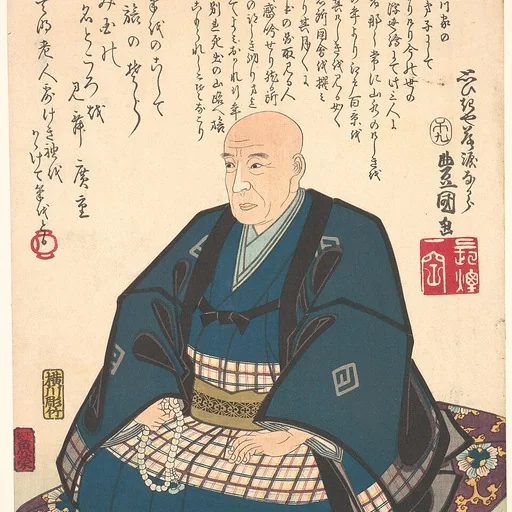
Utagawa Hiroshige (歌川 広重) or Andō Hiroshige (安藤 広重), born Andō Tokutarō (安藤 徳太郎; 1797 – 12 October 1858), was a Japanese ukiyo-e artist, considered the last great master of that tradition.

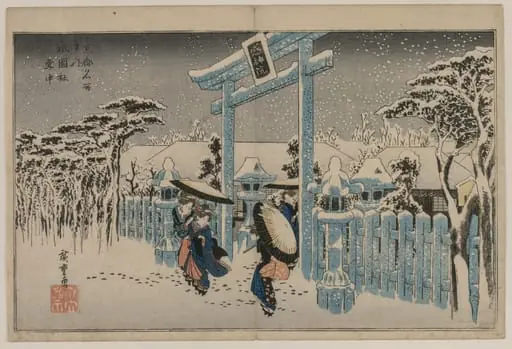 Snow at the Gion Shrine, from the series Famous Places in Kyoto
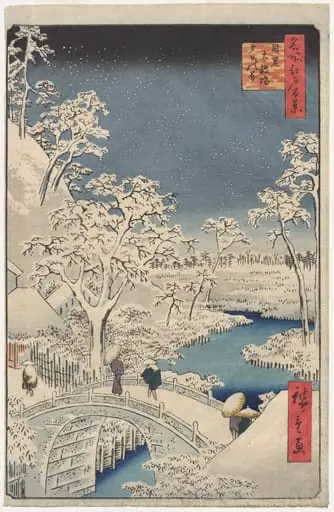 Meguro Drum Bridge and Sunset Hill, from One Hundred Views of Famous Places in Edo
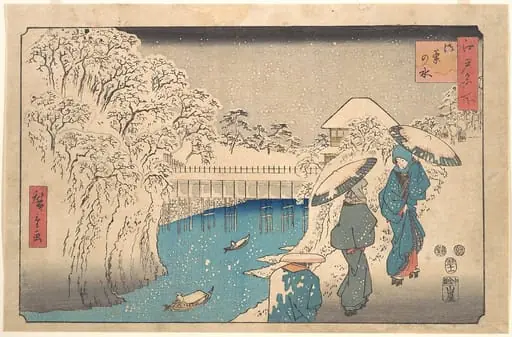 江戸名所 御茶の水|Meguro
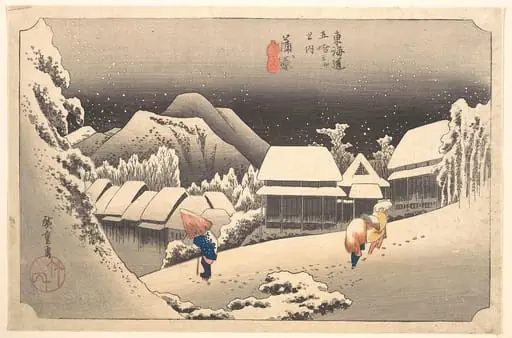 東海道五十三次之内 蒲原 夜の雪|Evening Snow
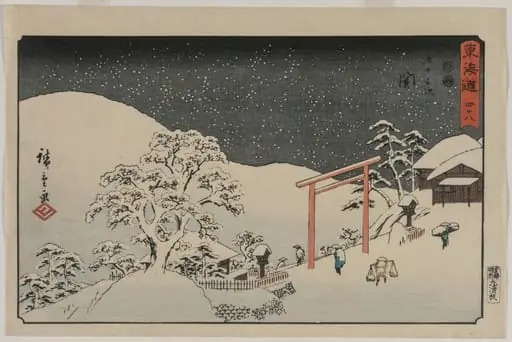 Seki, from the series The Fifty-Three Stations of the Tōkaidō
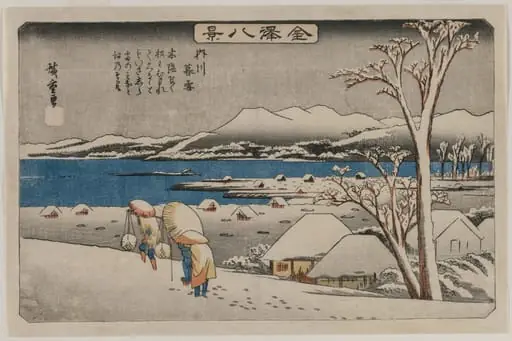 Evening Snow at Uchikawa, from the series Eight Views of Kanazawa
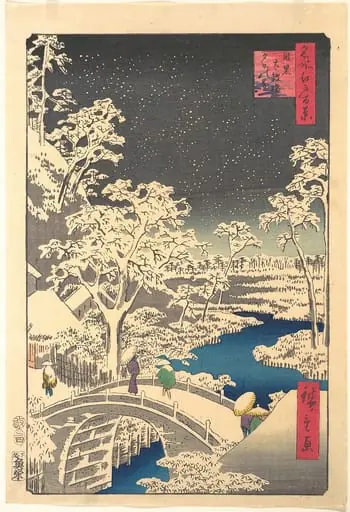 名所江戸百景 目黒太鼓橋夕ひの岡|Ochanomizu
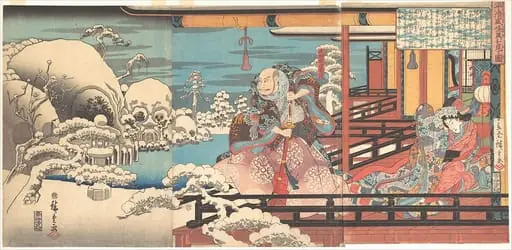 歌川広重画 「平清盛怪異を見る図」|Taira no Kiyomori's Spectral Vision
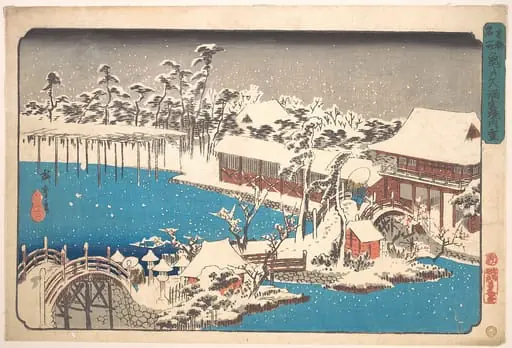 東都名所 亀戸天満宮境内雪|Kameido Tenmangu Keidai no Yuki
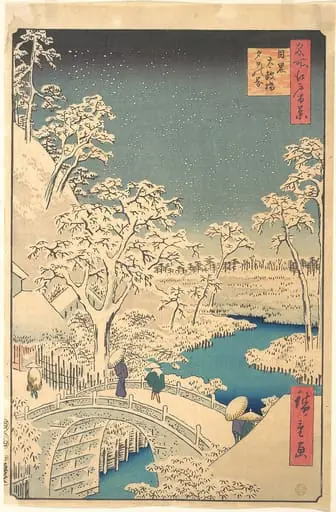 名所江戶百景 目黒太鼓橋夕ひの岡|Taiko Bridge, Meguro, on a Snowy Evening