Artwork
Ryugu Tamatori Hime no su|Recovering the Stolen Jewel from the Palace of the Dragon King
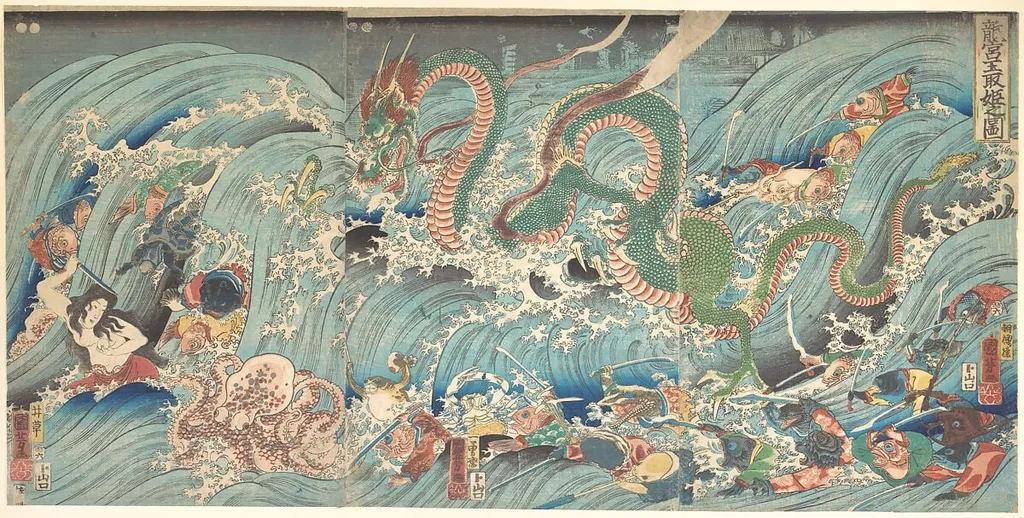
Ryugu Tamatori Hime no su|Recovering the Stolen Jewel from the Palace of the Dragon King is an ink print by the Baroque artist Utagawa Kuniyoshi. It dates from 1853 and is held in the collection of the Metropolitan Museum of Art.
About this work
Overview
It presents a dynamic confrontation between a human figure and a powerful sea creature within a fantastical underwater realm.
This triptych of woodblock prints, titled Recovering the Stolen Jewel from the Palace of the Dragon King (Ryugu Tamatori Hime no su), was created by Utagawa Kuniyoshi in 1853. Rendered with ink and color on paper, the artwork illustrates a dramatic episode from Japanese mythology, characteristic of Kuniyoshi's interest in heroic narratives. It presents a dynamic confrontation between a human figure and a powerful sea creature within a fantastical underwater realm.
Subject & Meaning
The print depicts the legendary Tamatori Hime, a diver who retrieves a precious jewel from the Dragon King's palace for Fujiwara no Kamatari's family. She is shown in a fierce struggle against a formidable dragon, which possesses multiple serpentine limbs, as she clutches the glowing jewel. The surrounding scene, populated by small aquatic life, emphasizes the otherworldly and perilous nature of her quest beneath the waves, highlighting themes of bravery and sacrifice.
Technique & Style
Kuniyoshi utilized the triptych format to expand the dramatic scope of this woodblock print. The vibrant colors stand out against the deep, swirling blues of the ocean, creating a visually striking contrast. The artist's distinctive style is evident in the dynamic composition, which emphasizes the powerful stance of the heroine and the aggressive posture of the dragon. This approach imbues the mythological scene with a sense of intense action and a dreamlike quality.
Context
Utagawa Kuniyoshi frequently explored themes of heroism, folklore, and the supernatural in his ukiyo-e prints. This work exemplifies his fascination with epic battles and encounters between humans and formidable creatures from Japanese legend, particularly sea monsters. Such bold and imaginative narratives resonated with the public during the Edo period, establishing Kuniyoshi as a prominent artist known for his dramatic and emotionally charged compositions.
Artist & collection
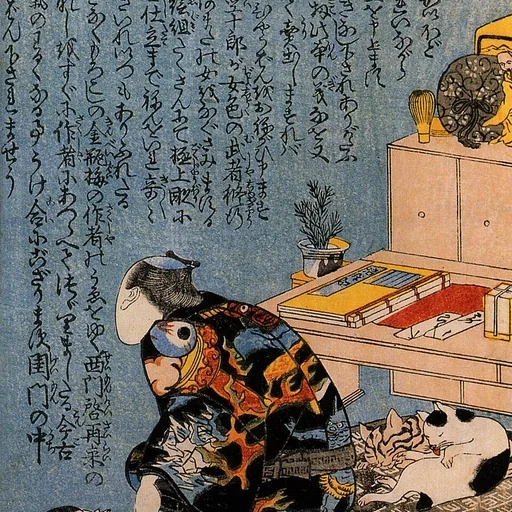
Artist
Kuniyoshi grew up in old Tokyo when the city was still called Edo. His dad ran a silk shop, but Kuniyoshi loved anything with pictures—scrolls, screens, comic books. He talked his way into the Utagawa school, a kind of…