Artwork
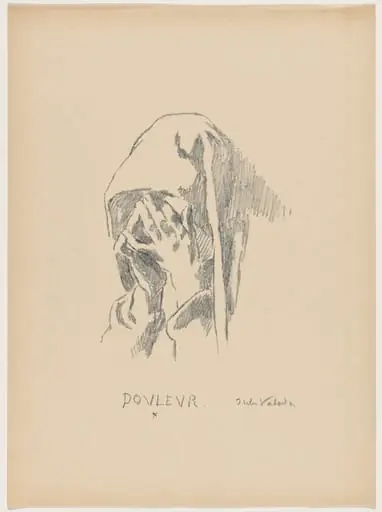
Douleur (Sorrow)
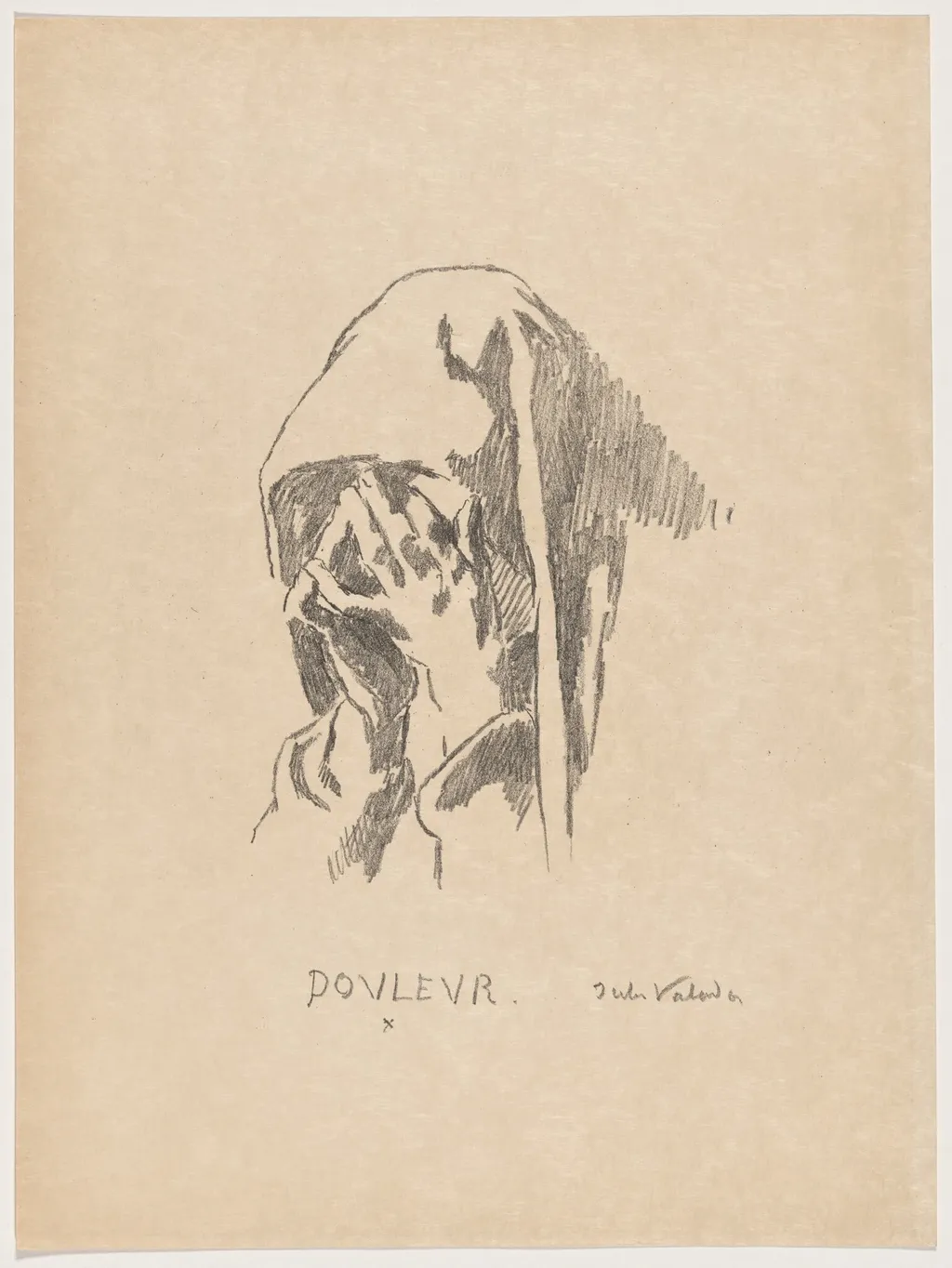
Douleur (Sorrow) is an ink print by the Impressionist artist Jules Emmanuel Valadon. It dates from 1895 and is held in the collection of the National Gallery of Art.
About this work
Overview
Created in 1895, Douleur (Sorrow) is a lithograph by Jules Emmanuel Valadon, executed in black ink on heavy Japan paper. The work belongs to the print medium and reflects the experimental spirit of late 19th-century graphic art. Its minimal composition and tactile surface distinguish it from more detailed contemporaneous prints, emphasizing emotional resonance over narrative clarity.
Subject & Meaning
The image presents a single, ambiguous form—curved, dark, and indistinct—suspended against a blank field. It resists clear identification as a human figure or abstract shape, instead evoking a sense of weight, isolation, or inner turmoil. The title suggests sorrow, but the visual ambiguity allows the emotion to exist independently of literal representation, inviting a more visceral response.
Technique & Style
Valadon employed lithography, a relatively new medium at the time, which allowed direct drawing on stone and rapid reproduction. The print’s rough, uneven lines suggest urgency or physical tremor, as if the artist’s hand conveyed emotion through gesture rather than precision. The stark contrast and sparse composition reflect a move away from detail toward expressive economy.
History & Provenance
Valadon, known for his intimate drawings and prints, produced Douleur in the mid-1890s, a time when printmaking was becoming a vehicle for personal expression.
The work emerged during a period when lithography was gaining traction among artists seeking alternatives to traditional engraving. Valadon, known for his intimate drawings and prints, produced Douleur in the mid-1890s, a time when printmaking was becoming a vehicle for personal expression. Its survival in limited numbers underscores its status as a private, experimental piece rather than a commercial product.
Context
Douleur aligns with broader shifts in late 19th-century art, where Impressionism’s focus on perception and Realism’s attention to everyday emotion converged in graphic works. Valadon’s stripped-down aesthetic anticipates Expressionist tendencies, even as it retains the observational grounding of Realism. The print reflects a moment when artists used new technologies to explore psychological depth with minimal means.
Legacy
Though not widely exhibited during Valadon’s lifetime, Douleur has since been recognized as an early example of emotional abstraction in printmaking. Its influence is subtle but present in later 20th-century artists who favored gesture over detail. The work remains a quiet testament to how limited visual means can convey profound interior states.
Artist & collection

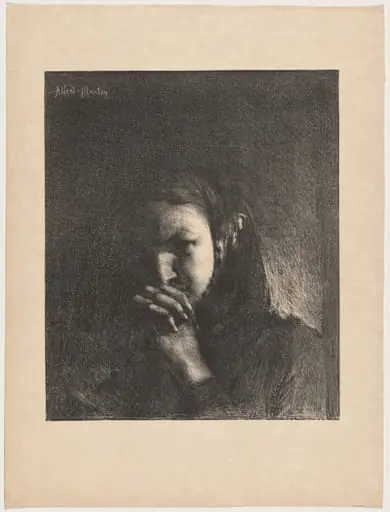 Mélancolie (Melancholy)
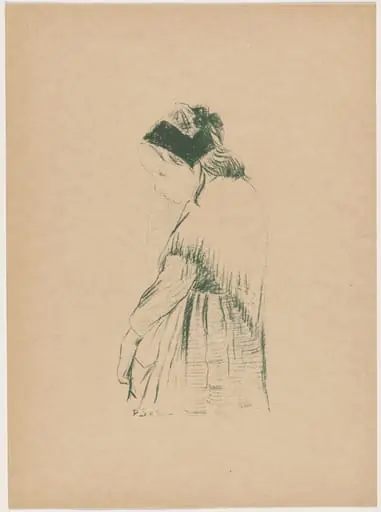 Souvenir de Bretagne
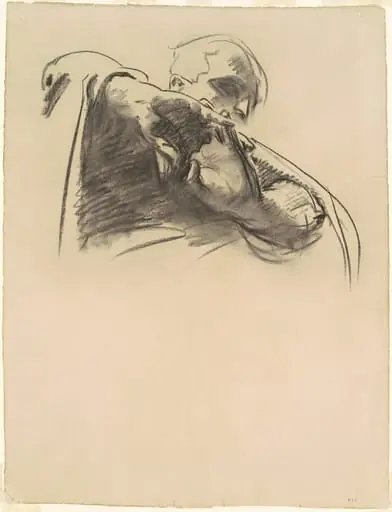 Study for "The Crucifixion and Death of Our Lord"
 Untitled
 The Silk Dress
 Study of a Seated Woman
 Souvenir de Bretagne
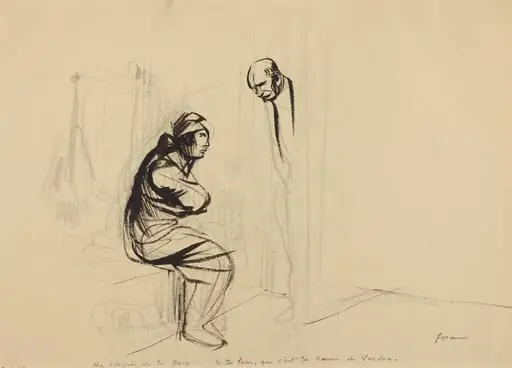 a) Au congres de la Paix (recto); b) Untitled (verso)
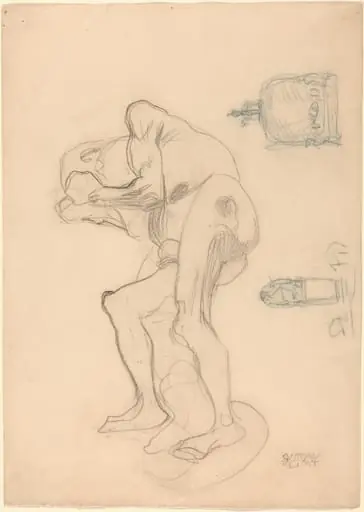 Study of a Nude Old Woman Clenching Her Fists, and Two Decorative Objects
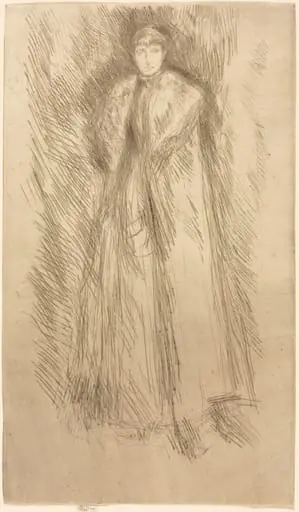 The Fur Cloak
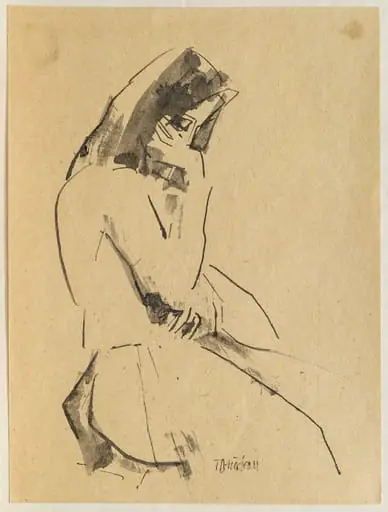 Contemplare
 Douleur (Sorrow)