Artwork
Mélancolie (Melancholy)
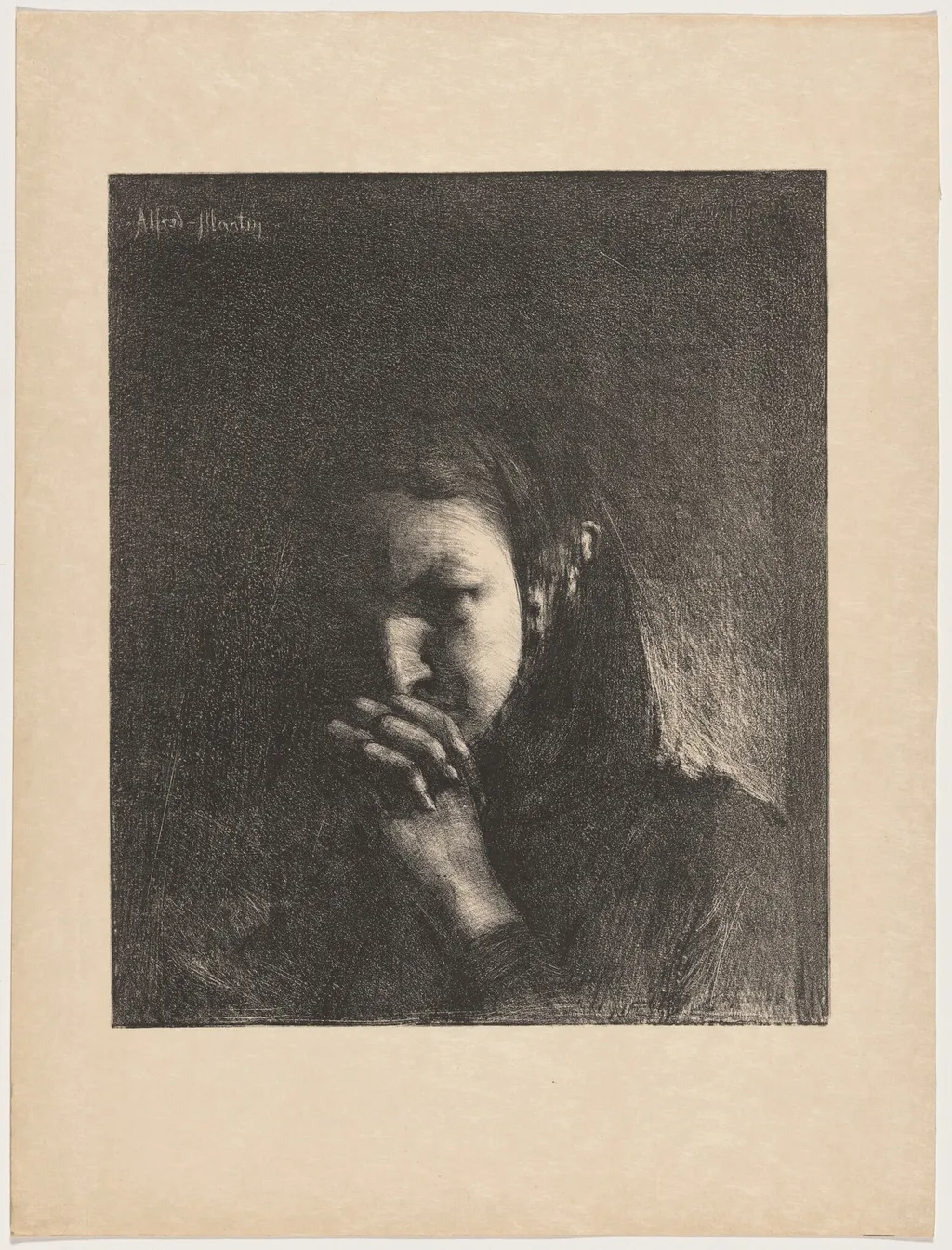
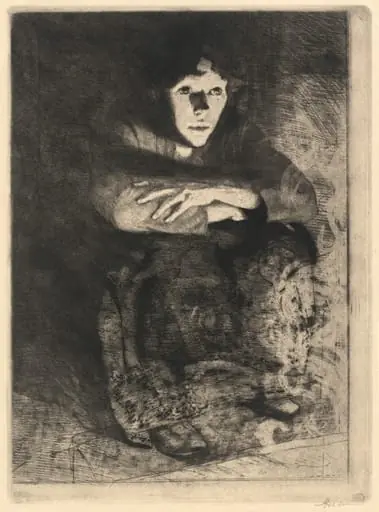
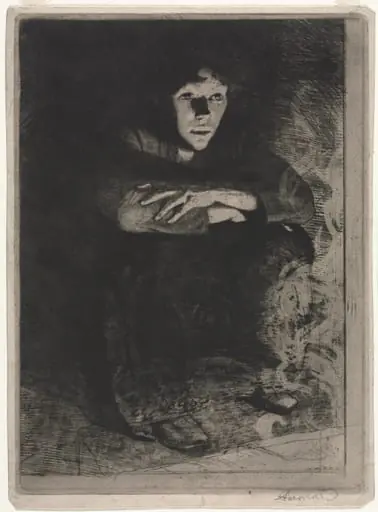
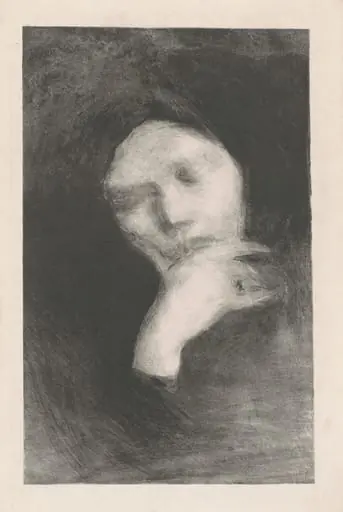
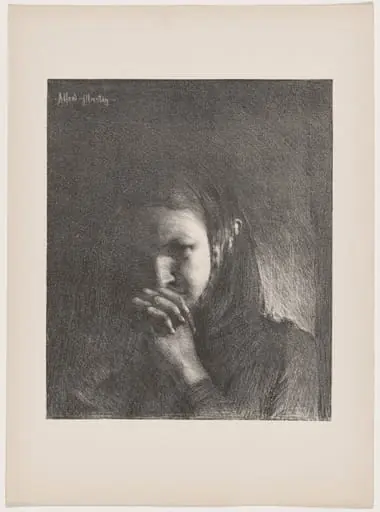
Mélancolie (Melancholy) is an ink print by the Impressionist artist Alfred-Nicolas Martin. It dates from 1895 and is held in the collection of the National Gallery of Art.
About this work
Overview
The work belongs to the printmaking tradition of the late 19th century, emphasizing tonal subtlety over bold contrast.
Created in 1895, Mélancolie is a lithograph by Alfred-Nicolas Martin, executed in black ink on heavy Japanese paper. The work belongs to the printmaking tradition of the late 19th century, emphasizing tonal subtlety over bold contrast. Its modest scale and restrained palette invite close observation, reflecting a quiet introspection common in artistic depictions of inner states during this period.
Subject & Meaning
The figure, seated and motionless, rests with hands pressed near the chin and head slightly inclined, suggesting contemplation or sorrow. The absence of narrative context or identifying features universalizes the emotion, framing it as a state of being rather than a specific event. The posture and stillness evoke solitude, inviting viewers to consider the weight of unspoken thought.
Technique & Style
Martin employed lithography to achieve soft gradations of gray through delicate line work and hatching. The use of heavy Japanese paper enhanced the ink’s absorption, yielding a matte, tactile surface. Backgrounds are left nearly blank, with shadows subtly defined to isolate the figure. The technique prioritizes emotional resonance over detail, reinforcing the intimacy of the scene.
History & Provenance
The print was produced in 1895 during a period when lithography was increasingly used by artists for personal, non-commercial projects. Martin, known for his drawings and prints, did not achieve widespread fame, and this work remains relatively obscure in public collections. Its survival in private hands suggests it was valued by a small circle of contemporaries rather than widely distributed.
Context
In late 19th-century France, depictions of melancholy reflected broader cultural interests in psychology and the inner life, influenced by emerging psychiatric discourse and Symbolist aesthetics. While not overtly literary or mythological, Mélancolie aligns with a trend toward psychological portraiture, where emotion is conveyed through posture and light rather than symbolism.
Legacy
Mélancolie endures as a quiet example of fin-de-siècle printmaking, illustrating how artists used accessible mediums to explore interiority. Though not widely exhibited or reproduced, it contributes to the understanding of how emotional states were visually articulated outside the dominant academic traditions of the time.
Artist & collection