Artwork
Leaving the Water (La sortie du bain)
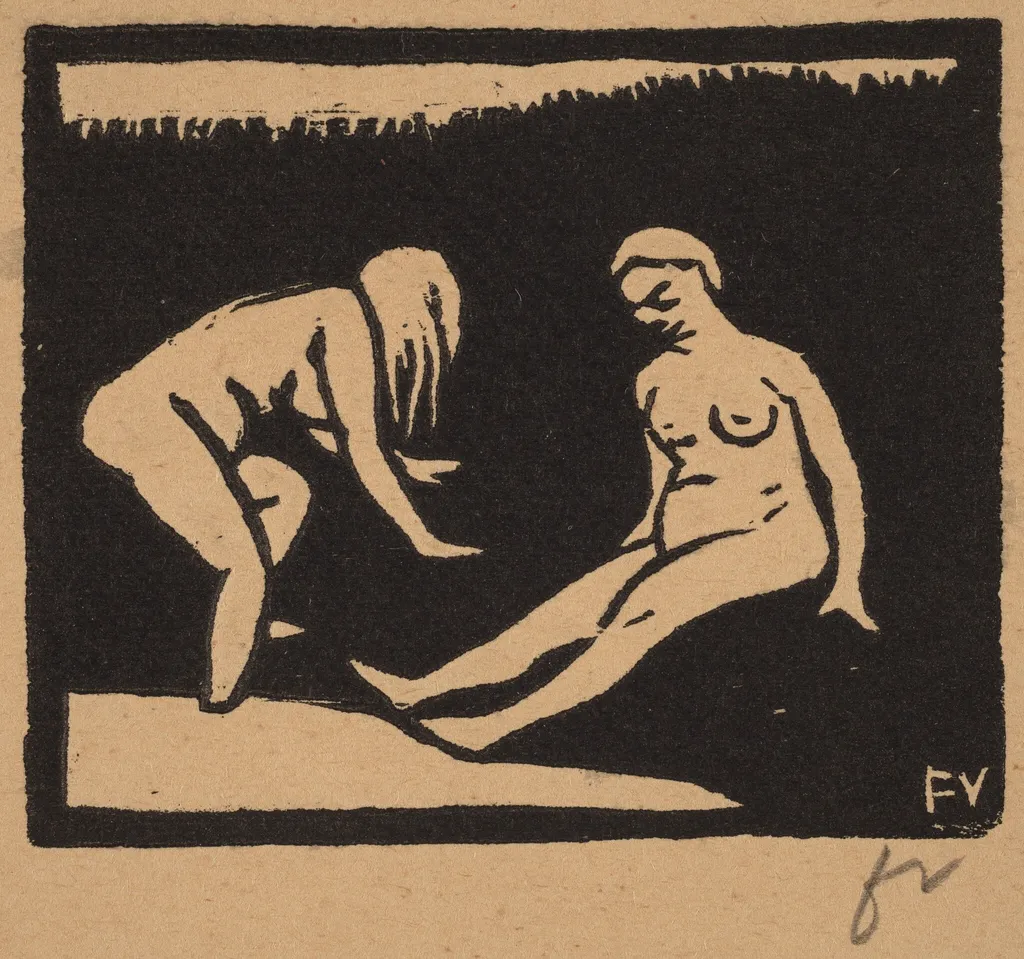
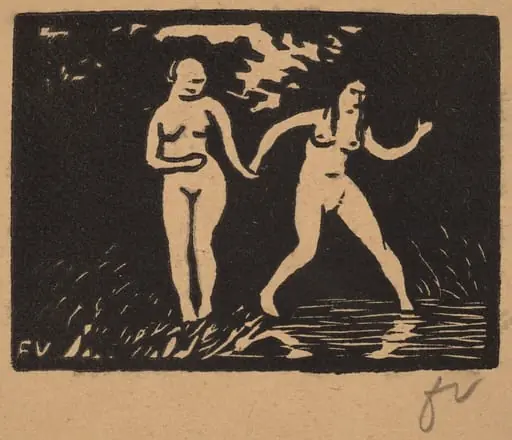
Leaving the Water (La sortie du bain) is an ink print by the Impressionist artist Félix Vallotton. It dates from 1893 and is held in the collection of the National Gallery of Art.
About this work
Overview
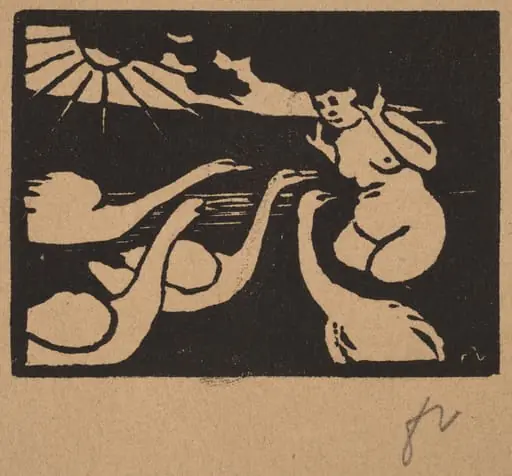
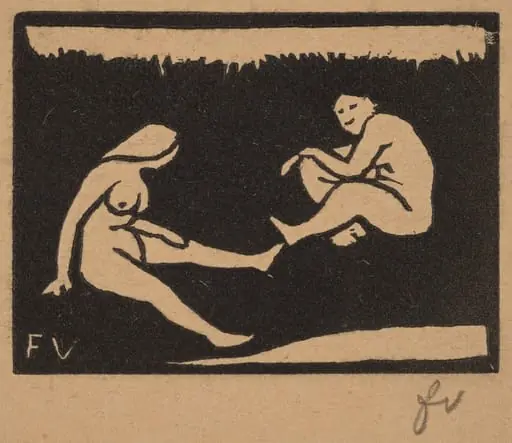
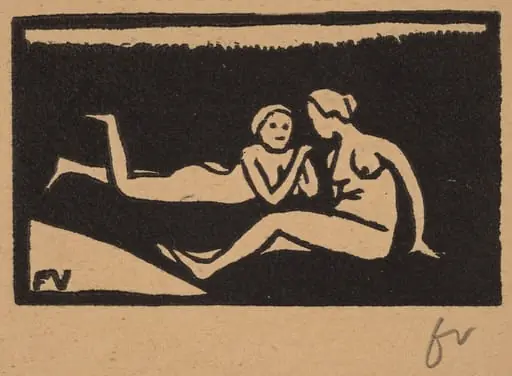
Félix Vallotton, a Swiss artist active in France, produced *Leaving the Water* in 1893 as a black woodcut on brown wove paper. The work belongs to his mature graphic phase, shaped by his association with Les Nabis and his interest in simplifying form. It exemplifies his shift from academic realism toward a flattened, linear aesthetic, using the woodcut medium to emphasize structure over texture.
Subject & Meaning
The scene portrays two nude figures in a dim interior, one bending to retrieve an item, the other seated with back turned, legs extended. The absence of narrative detail or emotional expression invites contemplation of private, unremarkable moments. Vallotton avoids idealization, presenting the human form with clinical detachment, aligning with his interest in the quiet tension of everyday life.
Technique & Style
Executed as a woodcut, the image relies on carved black shapes against the unprinted paper, eliminating gradation and detail. Vallotton’s bold, clean lines reduce the figures to essential contours, creating a graphic, almost abstract quality. The technique emphasizes flatness and contrast, reflecting his rejection of naturalistic shading in favor of structural clarity and rhythmic composition.
History & Provenance
Created in 1893, the print emerged during Vallotton’s most productive period in graphic arts, shortly after his involvement with Les Nabis. It was likely part of a series of intimate interior scenes he produced in the early 1890s. While specific early ownership records are sparse, the work is now held in major museum collections, reflecting its recognized place in late 19th-century printmaking.
Context
Vallotton’s woodcuts responded to broader shifts in European art, where artists sought alternatives to academic painting. Influenced by Japanese prints and the Nabis’ interest in decorative form, he embraced the woodcut’s potential for stark, modern expression. His work stood apart from Impressionist spontaneity, favoring controlled, almost impersonal compositions that mirrored urban alienation.
Legacy
Vallotton’s approach to woodcutting influenced later 20th-century printmakers who valued clarity and emotional restraint. His ability to convey psychological distance through minimal means helped redefine the medium’s expressive range. *Leaving the Water* remains a key example of how graphic techniques could convey modern subjectivity without sentimentality.
Own this work as a print
Artist & collection
Artist
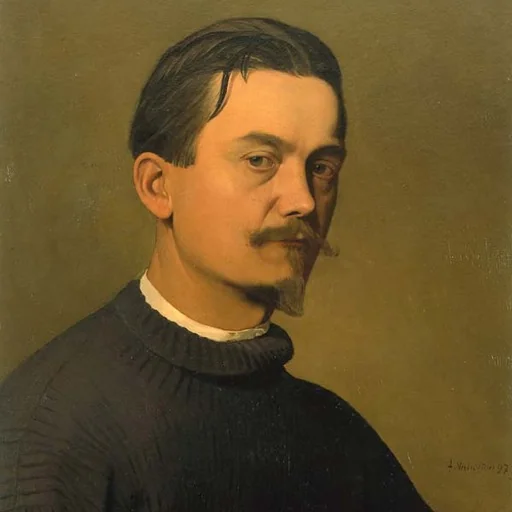
Félix Édouard Vallotton (French: ; December 28, 1865 – December 29, 1925) was a Swiss and French painter and printmaker associated with the group of artists known as Les Nabis.