Artwork
Doi cai în fața unor corturi. Pandant: Trei cai în fața unor corturi
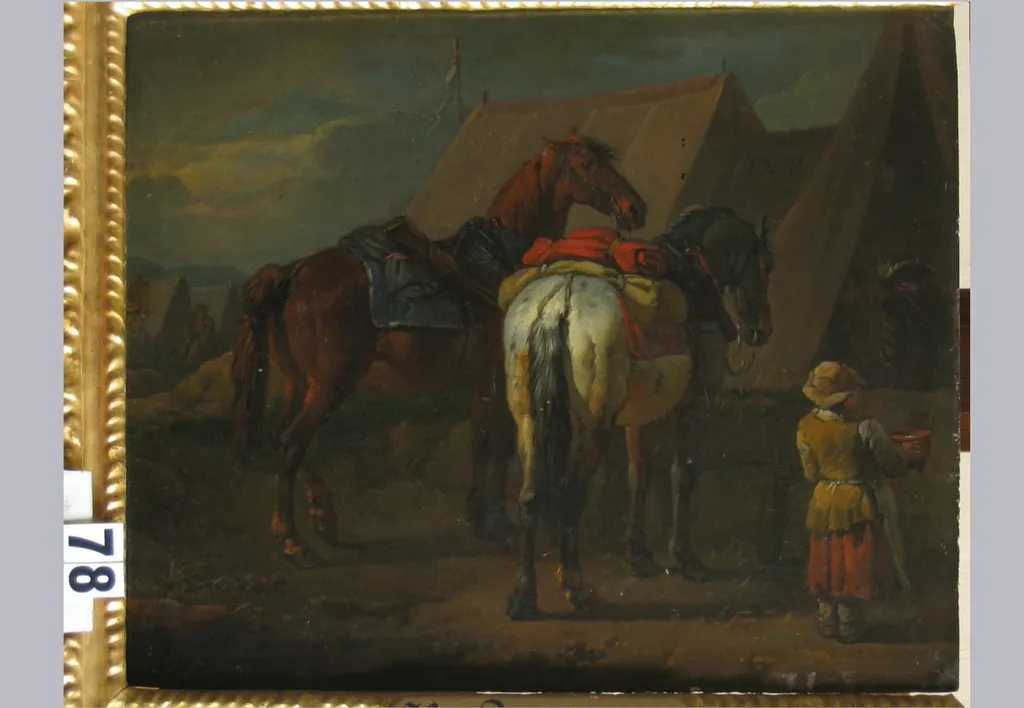
Doi cai în fața unor corturi. Pandant: Trei cai în fața unor corturi is an unspecified painting by the Barbizon school artist Pieter zis Standaart Van Bloemen. It is held in the collection of the Brukenthal National Museum. This painting depicts three horses tethered near two large, rudimentary tents.
About this work
Overview
The composition emphasizes stillness and quiet observation, with the horses as the central focus against a sparse, open landscape.
This painting depicts three horses tethered near two large, rudimentary tents. The animals are draped in thick blankets and red cloths, suggesting preparation for travel or ceremonial use. A figure in a yellow coat and red trousers stands nearby, holding a small object, possibly a hat or tool. The composition emphasizes stillness and quiet observation, with the horses as the central focus against a sparse, open landscape.
Subject & Meaning
The scene captures a moment of pause in a nomadic or military setting. The horses, carefully adorned and bound together, imply readiness for movement, while the tents suggest temporary shelter. The presence of a single attendant hints at care and routine, without overt drama. The work conveys dignity in everyday equestrian life, avoiding narrative spectacle in favor of quiet, observed reality.
Technique & Style
The artist renders the horses with precise anatomical attention, highlighting musculature and the texture of their coats under natural light. The blankets and cloths are rendered with tactile detail, their folds and sheen suggesting weight and material. The tents are simplified forms, rendered with loose brushwork that contrasts with the refined depiction of the animals, creating a visual hierarchy centered on the horses.
History & Provenance
The painting’s origins are tied to 17th-century Flemish traditions of animal and equestrian subjects. While the artist’s full identity is not confirmed, stylistic parallels point to the circle of Pieter van Bloemen, known for his detailed depictions of horses in outdoor settings. The work likely originated as part of a private collection, possibly commissioned for its realism and equestrian precision.
Context
In the late 1600s, depictions of horses in non-romanticized, everyday contexts gained traction among Flemish and Dutch artists. This painting reflects a shift from grand battle scenes to intimate studies of animal care and travel. The simplicity of the tents and the functional attire of the figure align with observations of military or pastoral life along trade routes in Central and Eastern Europe.
Legacy
The work contributes to a broader tradition of observational animal painting in Northern Europe, influencing later artists interested in equine anatomy and naturalistic settings. Though not widely exhibited, its quiet realism resonates within specialized collections focused on equestrian art. Its connection to Pieter van Bloemen’s circle underscores the enduring interest in horses as subjects of disciplined study rather than symbolic grandeur.
Artist & collection
Artist
Pieter zis Standaart Van Bloemen
Pieter van Bloemen painted lively scenes of horses and tents set against leafy backdrops, working in the late 17th to early 18th-century Flemish tradition.

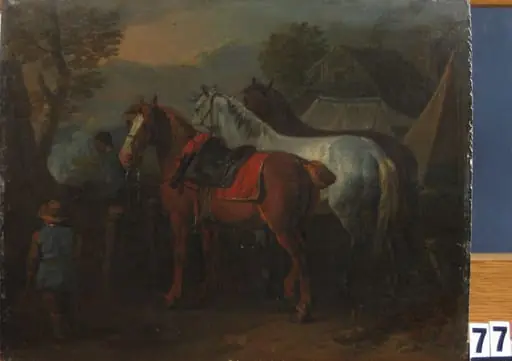 Trei cai în fața unor corturi. Pandant: Doi cai în fața unor corturi
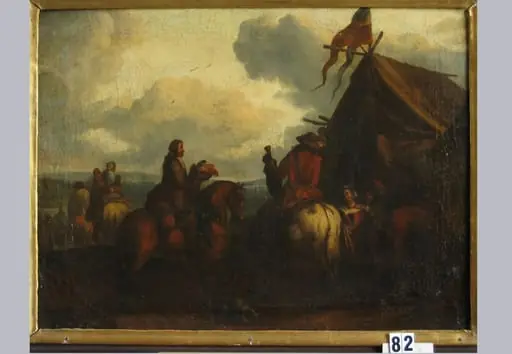 Cort de vivandieră cu drapel (în Reg. Inv.: Cort de cantinieri cu drapel). Pandant: Cort de vivandieră cu cunună de frunze (în Reg. Inv.: Cort de cantinier cu cunună de frunze)
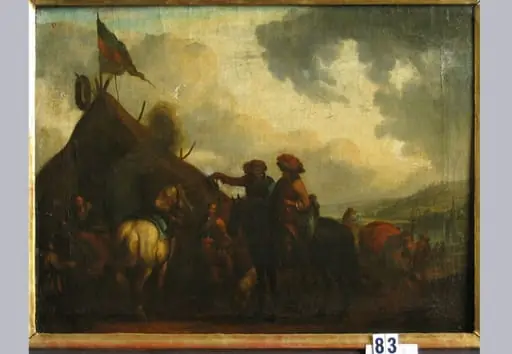 Cort de vivandieră cu cunună de frunze (în Reg. Inv.: Cort de cantinier cu cunună de frunze). Pandant: Cort de vivandieră cu drapel (în Reg. Inv.: Cort de cantinieri cu drapel).