Artwork
The Dutch Fleet in a Strong Breeze
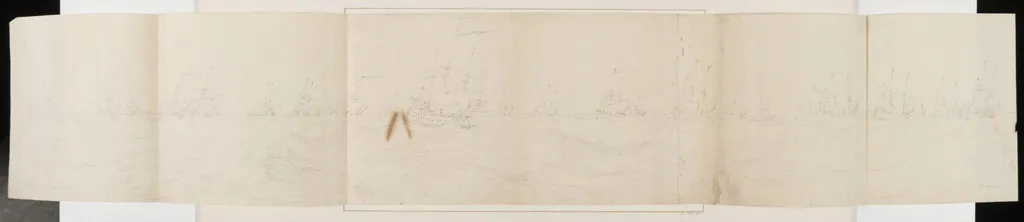
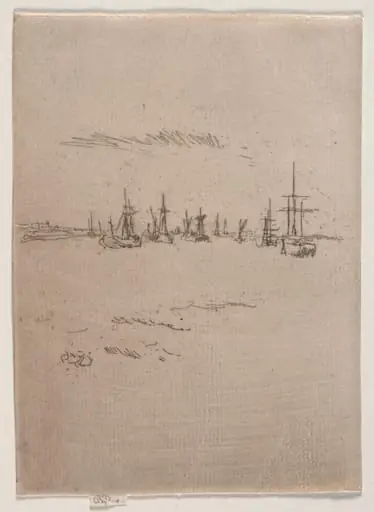
The Dutch Fleet in a Strong Breeze is a drawing by Willem van de Velde. It dates from 1650 and is held in the collection of the Victoria and Albert Museum.
About this work
Overview
Created around 1650 by Willem van de Velde the Younger, this delicate pencil drawing captures a fleet of Dutch ships navigating a gusty sea. Executed on a long, horizontal format, the work emphasizes motion and atmospheric conditions rather than individual vessel detail. Its restrained tonal range and fluid lines reflect the artist’s focus on the interaction between wind, water, and sail.
Subject & Meaning
The scene depicts a group of vessels responding to a strong breeze, their sails taut and rigging tautly adjusted.
The scene depicts a group of vessels responding to a strong breeze, their sails taut and rigging tautly adjusted. No single ship dominates; instead, the composition conveys collective movement and maritime discipline. The absence of human figures or dramatic narrative underscores a quiet reverence for the mechanics of seafaring, aligning with Dutch maritime culture’s emphasis on practicality and observation.
Technique & Style
Van de Velde employed light, precise pencil strokes to suggest the texture of wind-churned water and fluttering sails. Subtle cross-hatching and occasional darker accents define shadows and motion without heavy shading. The technique prioritizes clarity and rhythm over detail, allowing the viewer to perceive the force of the wind through the arrangement of lines rather than through rendered form.
History & Provenance
The drawing entered the collection of the Victoria and Albert Museum in the 19th century, likely as part of a broader acquisition of Dutch marine works. Its survival in good condition reflects its status as a study rather than a finished piece, valued for its technical insight into maritime observation practices of the mid-17th century.
Context
During the Dutch Golden Age, marine drawing flourished as both scientific record and artistic discipline. Artists like van de Velde were often commissioned by naval authorities or merchants to document fleet movements. This work exemplifies the era’s commitment to accurate depiction of natural forces, supporting navigation, trade, and naval strategy.
Legacy
Van de Velde’s approach influenced later marine artists through its emphasis on atmospheric realism and structural clarity. The drawing stands as a testament to the value placed on observational precision in Dutch art, bridging technical documentation and aesthetic restraint. Its legacy lies in its quiet authority as a record of how wind and water were understood and rendered by skilled draftsmen.
Artist & collection

Artist
Willem van de Velde the Elder was a Dutch Golden Age seascape painter, who produced many precise drawings of ships and ink paintings of fleets, but later learned to use oil paints like his son.

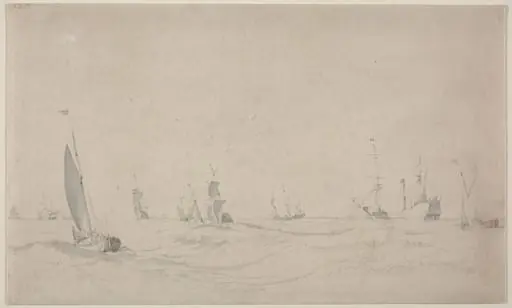 Shipping on a Rough Sea
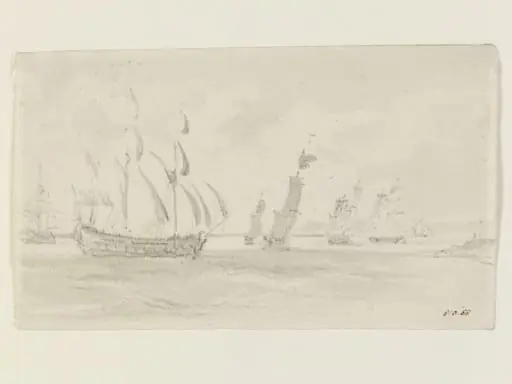 Shipping in a breeze in the Thames or the Medway
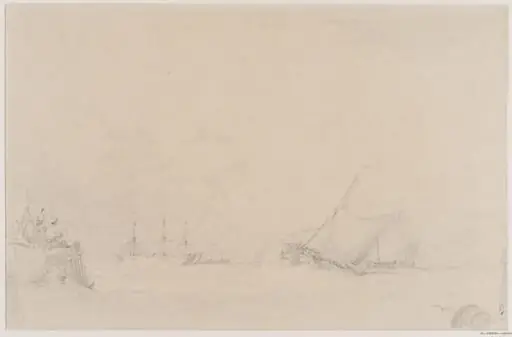 Lugger making for the mouth of a harbour
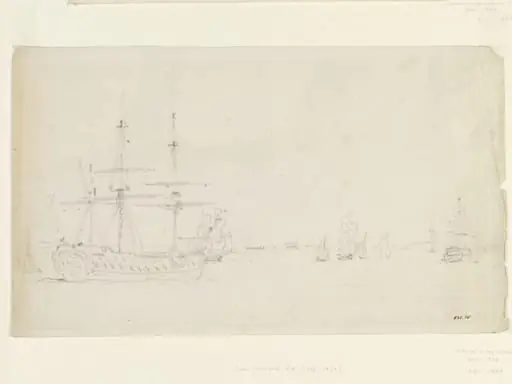 A ship at anchor and other shipping in the Thames
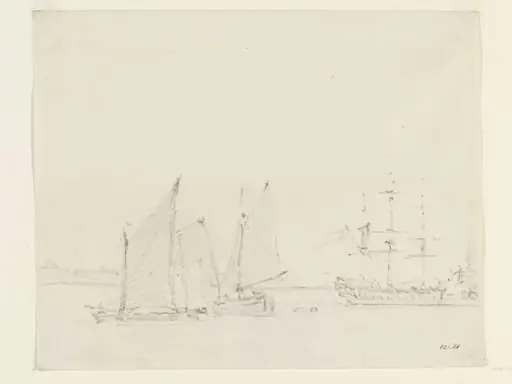 Shipping in the Thames
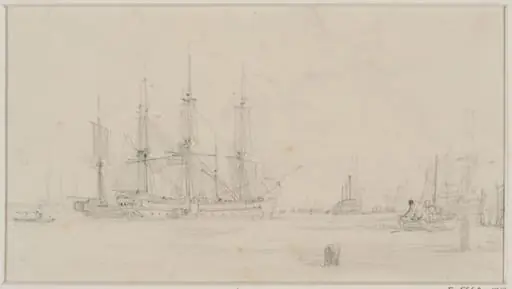 River Scene with hay-barge
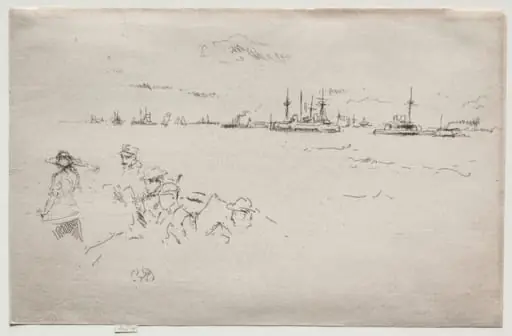 The Fleet: Monitors
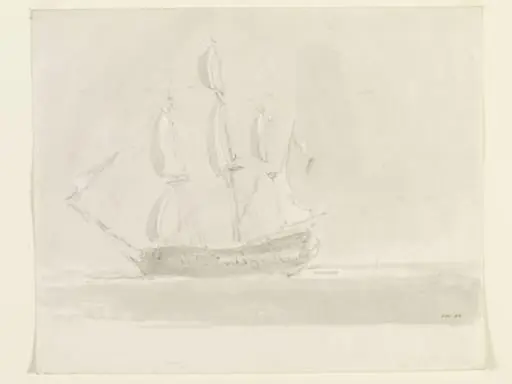 A ship under sail
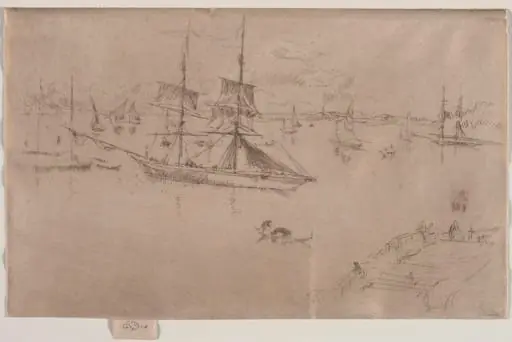 The Lagoon, Noon
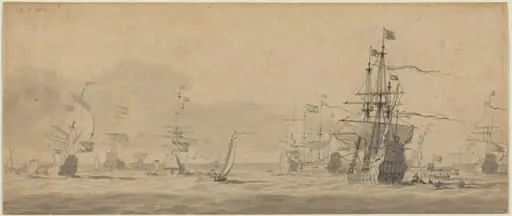 Marine
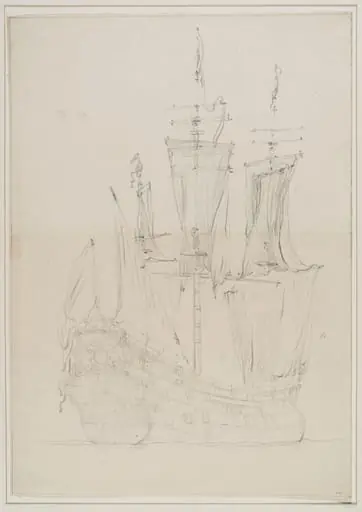 A Dutch Ship, possibly the Amsterdam; Quarter View, with the sails hanging loose
 Return to Tilbury