Artwork
Landscape Composition [recto]
![Landscape Composition [recto], by John Varley, graphite, 1810](https://artifactworldgallery.com/img/john-varley--landscape-composition-recto--80ef59031f3b86dc-w1024.webp)
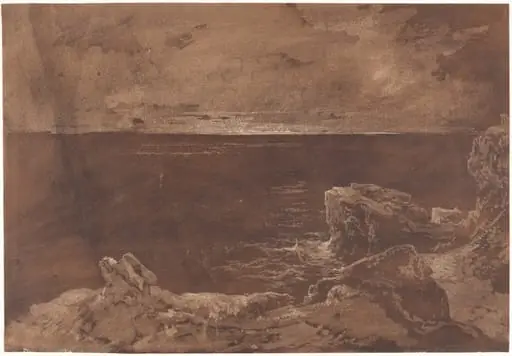
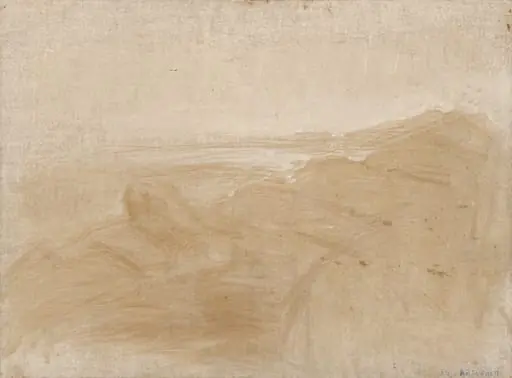
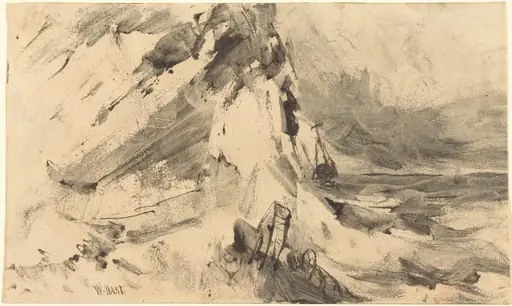
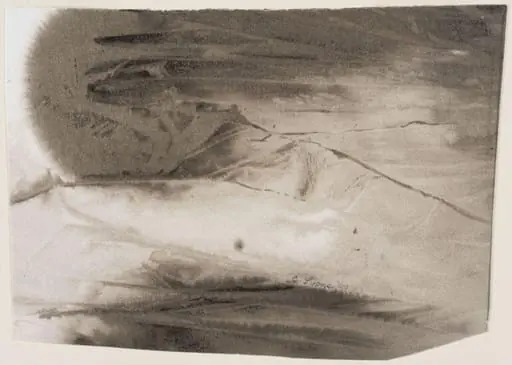
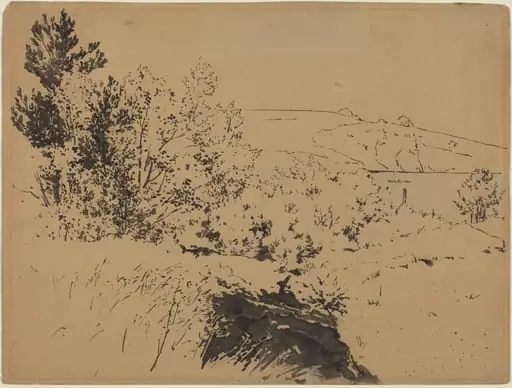
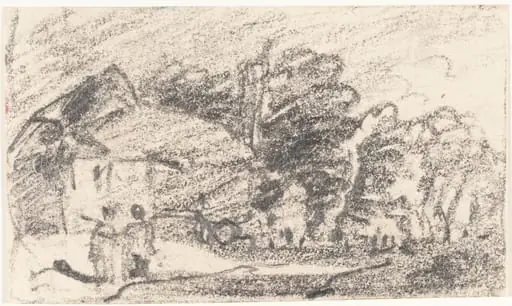
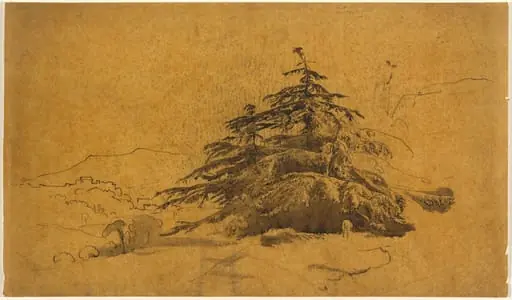
Landscape Composition [recto] is a graphite drawing by the Romanticist artist John Varley. It dates from 1810 and is held in the collection of the National Gallery of Art.
About this work
Overview
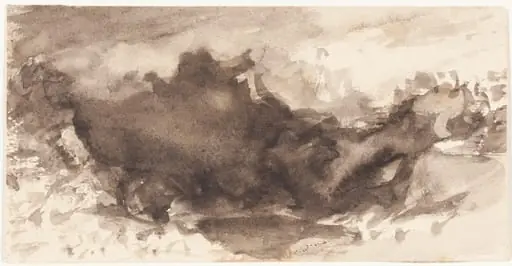
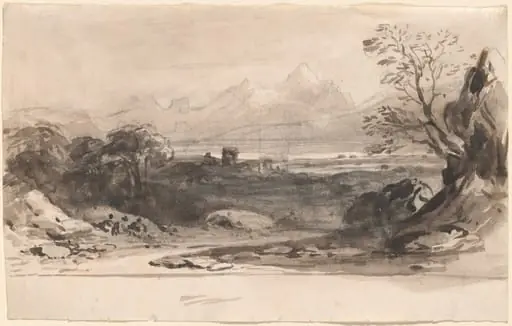
Created in 1810, this drawing by John Varley is executed in brush and brown wash over graphite on wove paper.
Created in 1810, this drawing by John Varley is executed in brush and brown wash over graphite on wove paper. It exemplifies his approach to landscape studies, emphasizing atmospheric suggestion over detailed finish. The work’s fragile, translucent layers and faint underdrawing reflect a practice rooted in observation and spontaneity, typical of English watercolorists of the era who valued immediacy in capturing natural forms.
Subject & Meaning
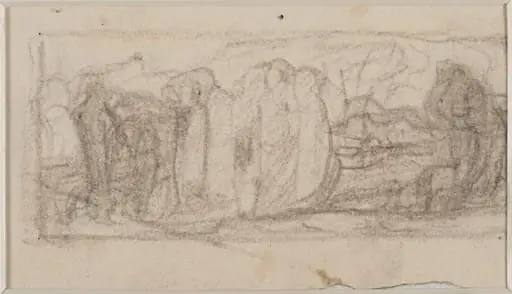
The composition suggests a distant, indistinct landscape—rolling hills, scattered trees, and a possible path—rendered with minimal definition. Rather than depicting a specific location, Varley evokes a mood of quiet contemplation. The ambiguity of forms aligns with Romantic sensibilities, where nature is not merely observed but felt, imbued with mystery and emotional resonance rather than topographical accuracy.
Technique & Style
Varley employed thin washes of brown ink over light graphite lines, allowing the paper’s texture to show through in places. This technique creates a sense of luminosity and atmospheric depth, with forms emerging from subtle tonal gradations. The sketchlike quality, deliberate in its incompleteness, prioritizes expressive gesture over precision, reflecting a preference for intuitive rendering over polished finish.
History & Provenance
This drawing originates from Varley’s active period in the early 1810s, when he was developing his distinctive watercolor style. Though its exact provenance before institutional acquisition is undocumented, it aligns with a body of works produced during his years as a teacher and exhibitor with the Society of Painters in Water Colours. Its preservation suggests it was valued as a study rather than a finished piece.
Context
Varley worked within a circle of artists and thinkers who sought to express inner experience through nature. His association with William Blake, though more prominent in later visionary drawings, reflects a broader cultural interest in the spiritual dimensions of landscape. This piece fits within a trend among British watercolorists to use minimal means to evoke emotional and poetic responses to the natural world.
Legacy
Varley’s approach influenced later generations of watercolorists who embraced sketch-like immediacy. His use of wash and graphite to suggest rather than define form became a model for conveying atmosphere over detail. While not widely known today, his methods contributed to the evolution of landscape drawing as a medium for personal expression rather than mere documentation.
Artist & collection
Artist
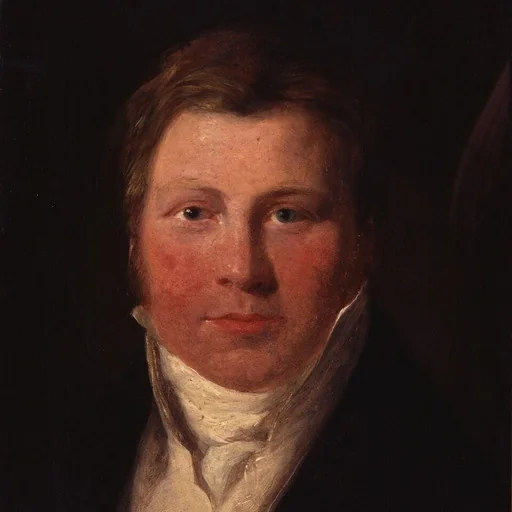
John Varley (17 August 1778 – 17 November 1842) was an English watercolour painter and astrologer, and a close friend of William Blake.

![Study of a Head in Profile [verso], by John Varley](https://artifactworldgallery.com/img/john-varley--study-of-a-head-in-profile-verso--3e16e84b6ceccae1-w320.webp)
![Two Studies of a Figure Holding a Basket [verso], by John Varley](https://artifactworldgallery.com/img/john-varley--two-studies-of-a-figure-holding-a-basket-verso--7e8aaeb3f643e9b3-w320.webp)