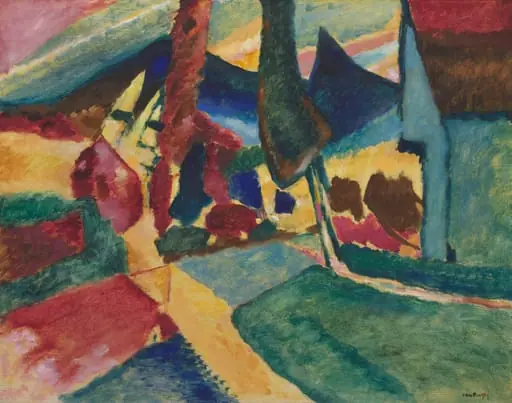
Artwork
Untitled
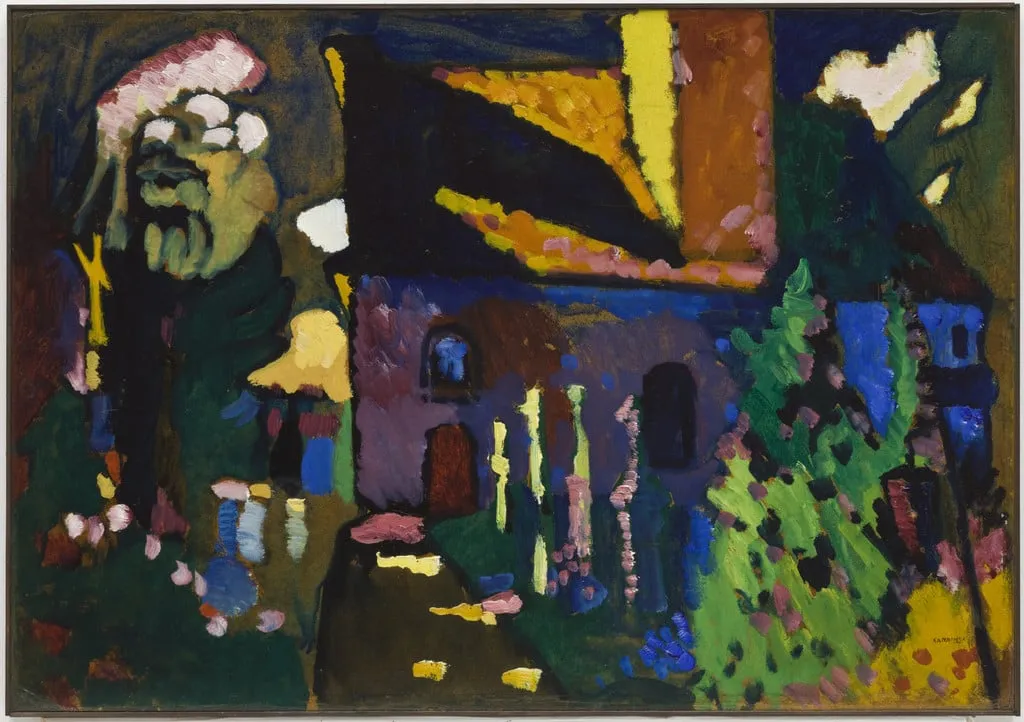
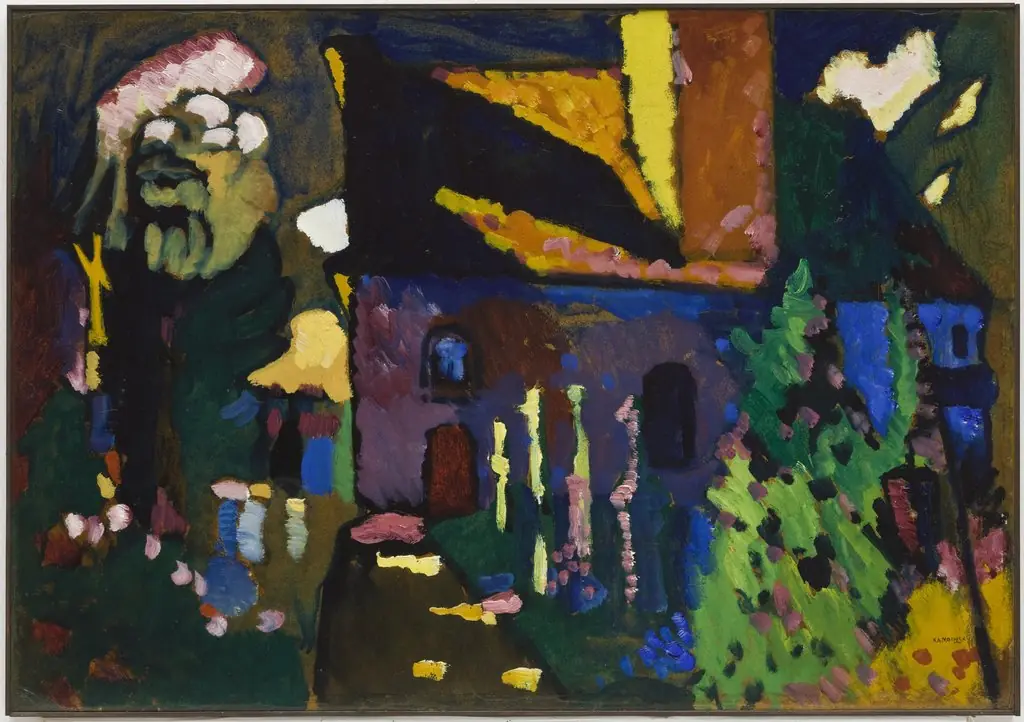
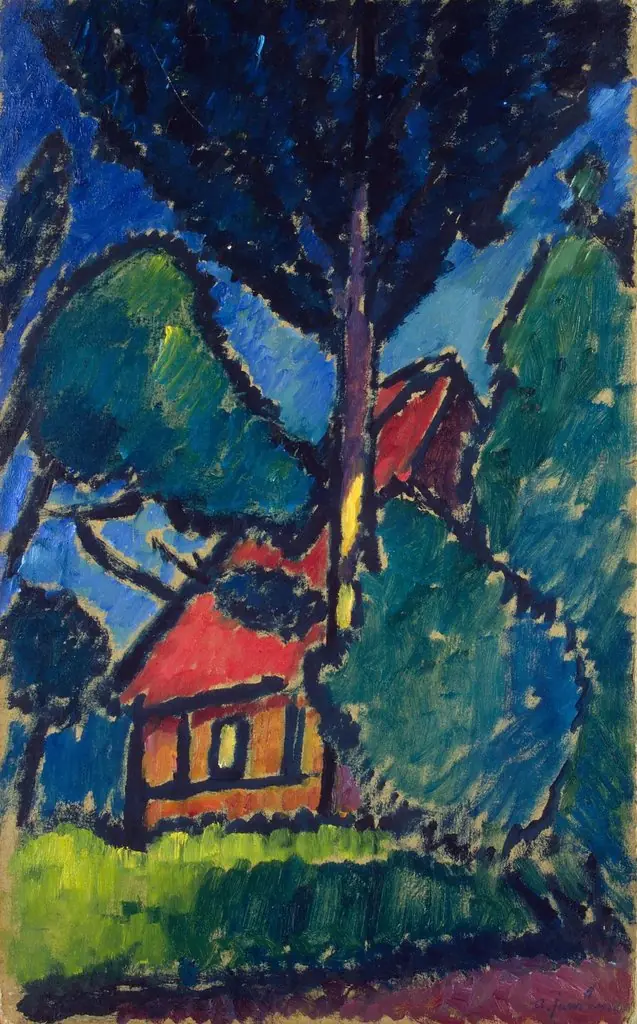
Untitled is an oil drawing by Wassily Kandinsky. It dates from 1909 and is held in the collection of the Museum of Modern Art.
About this work
Overview
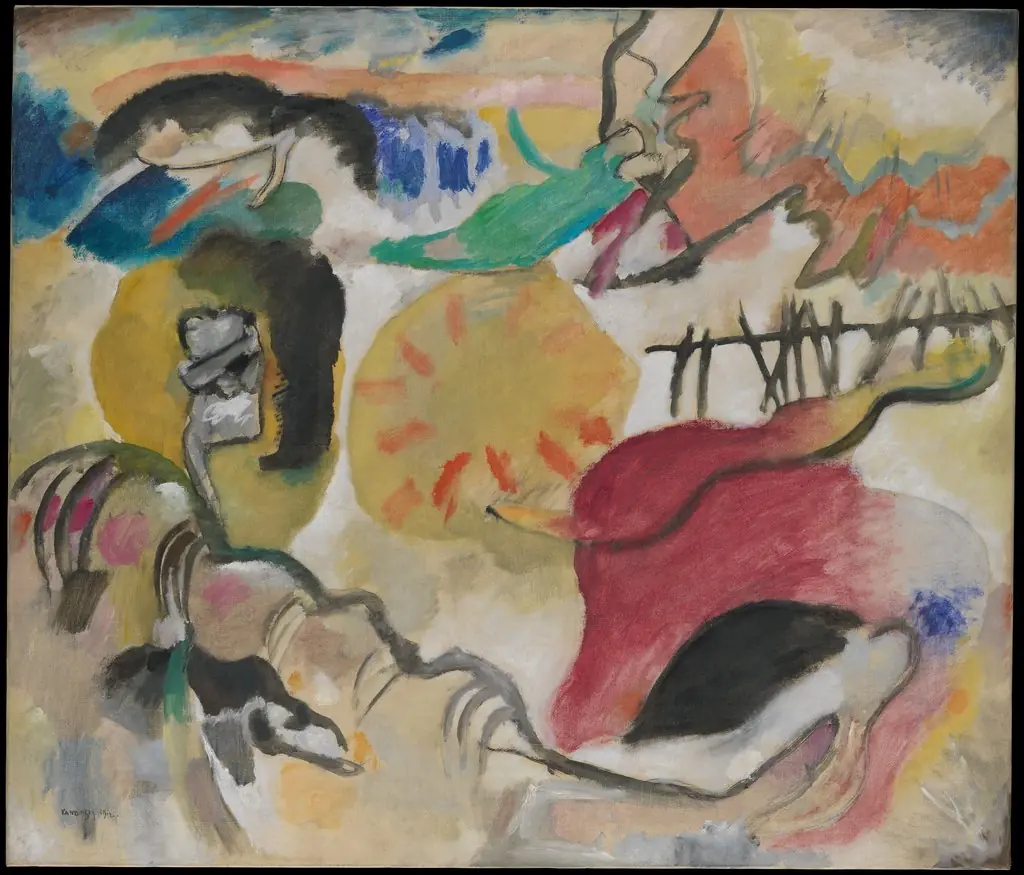
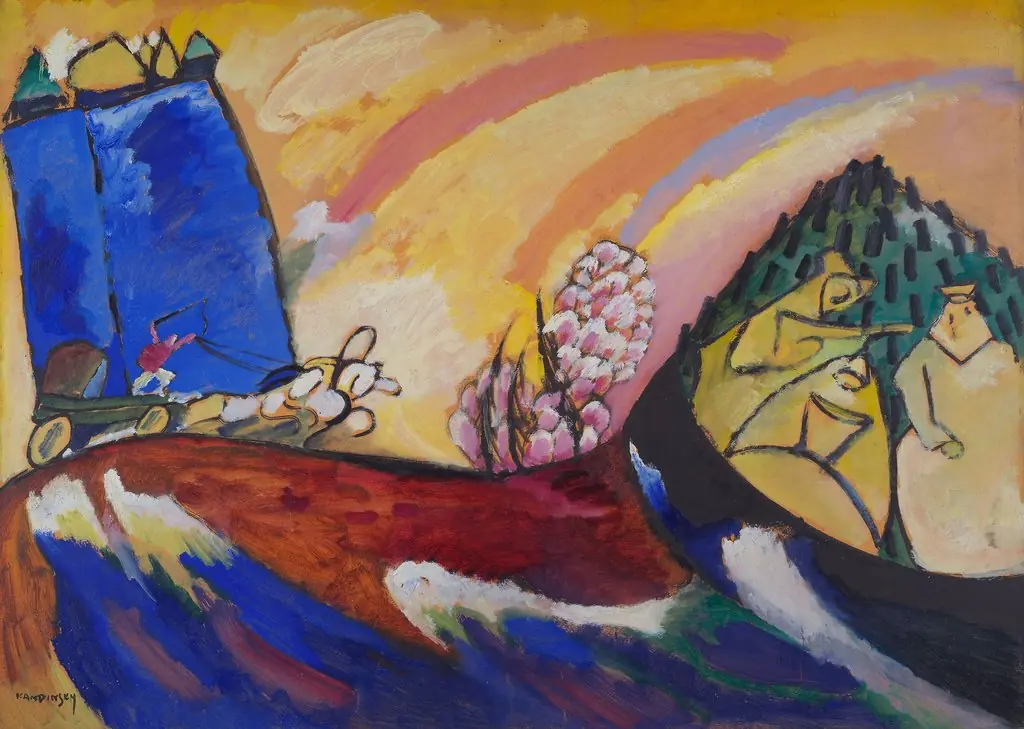
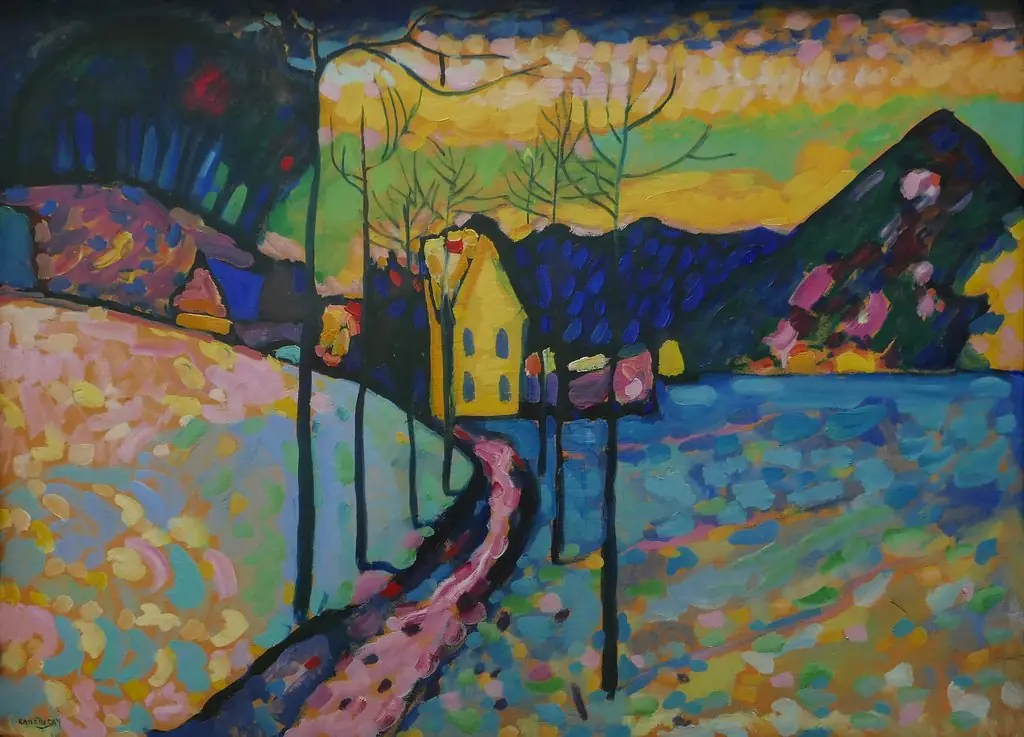
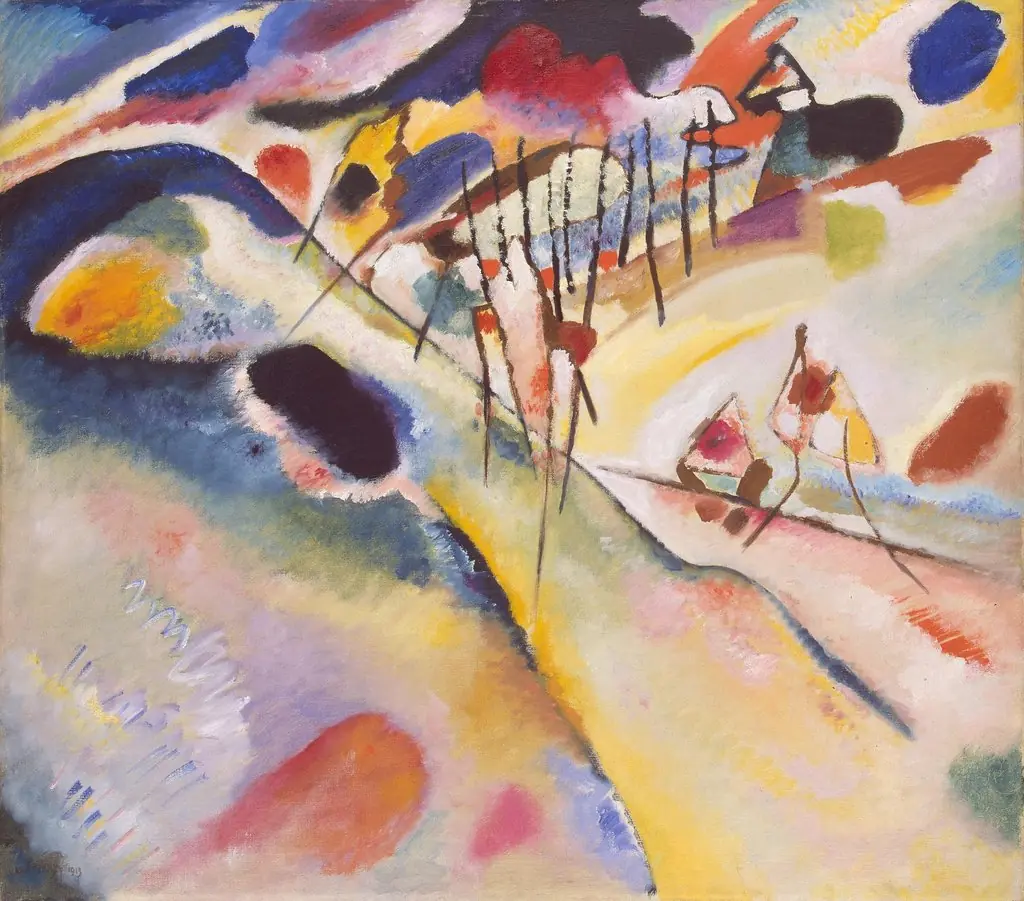
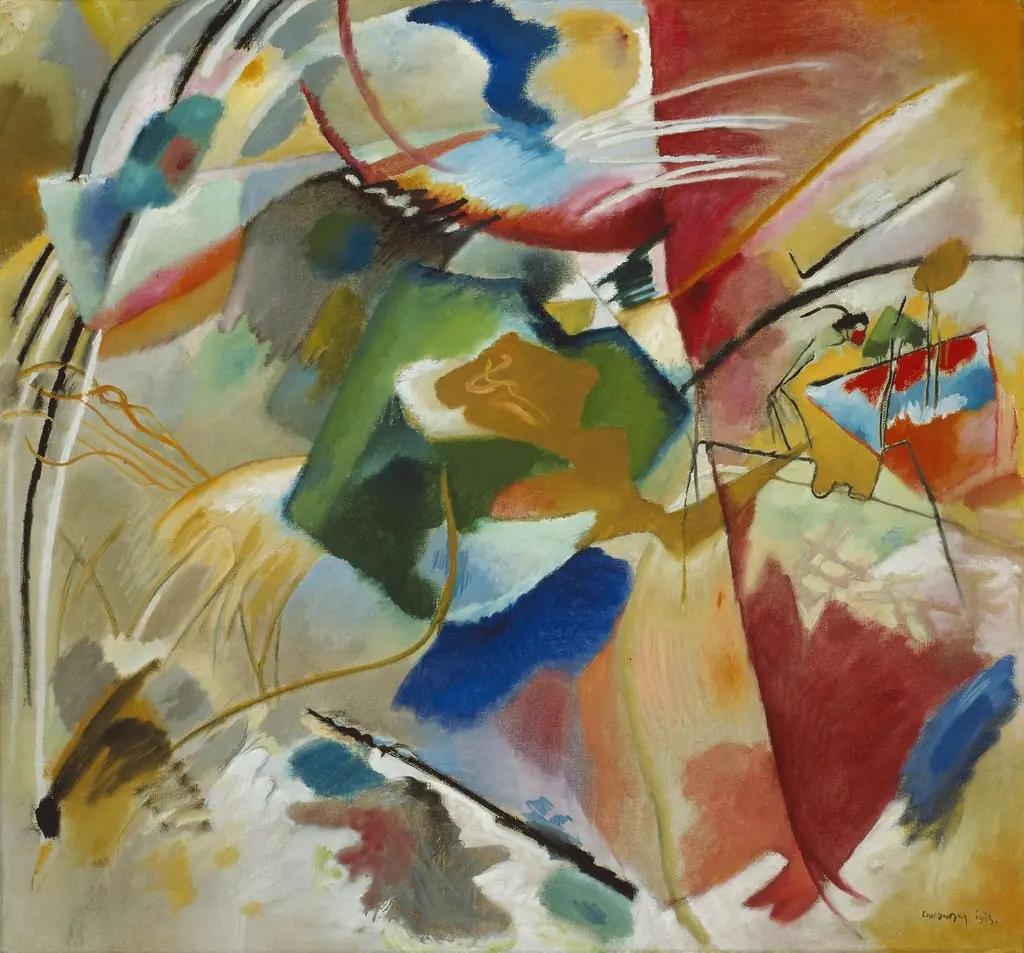
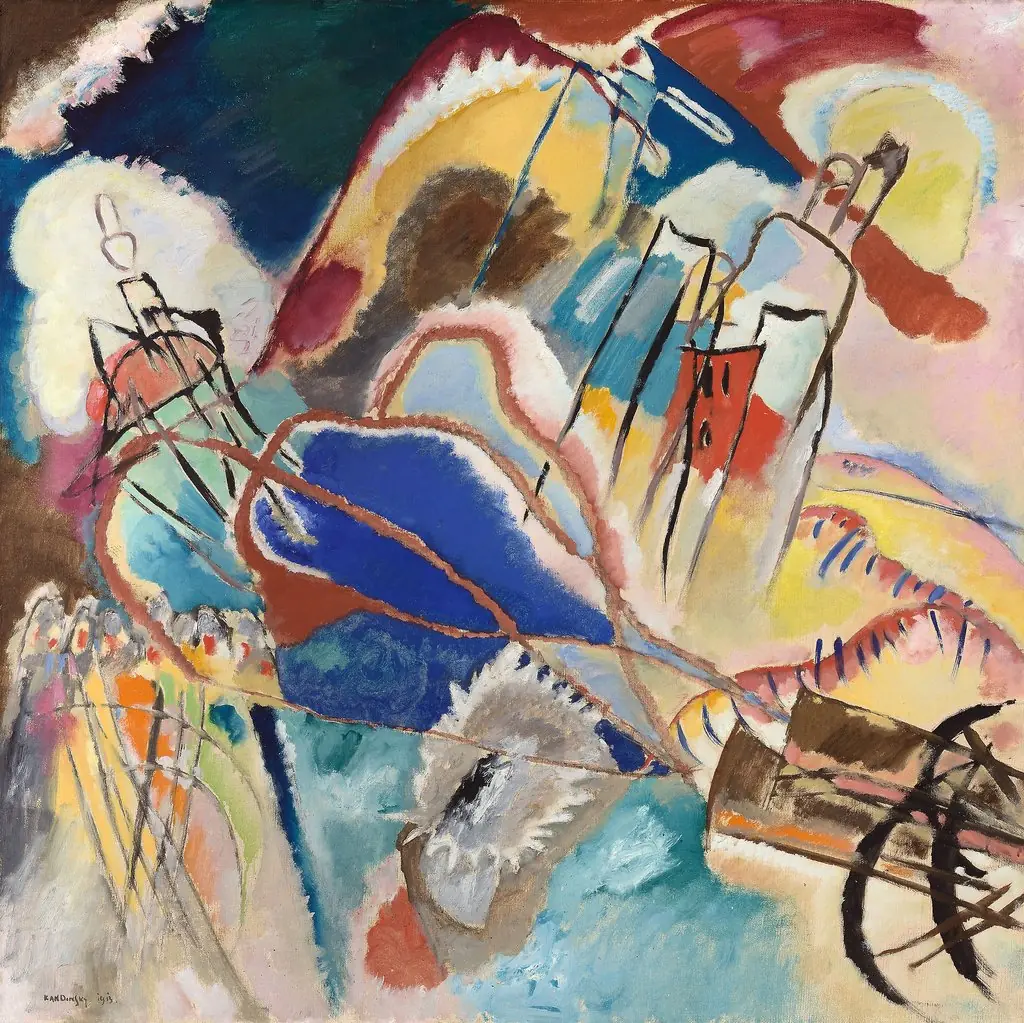
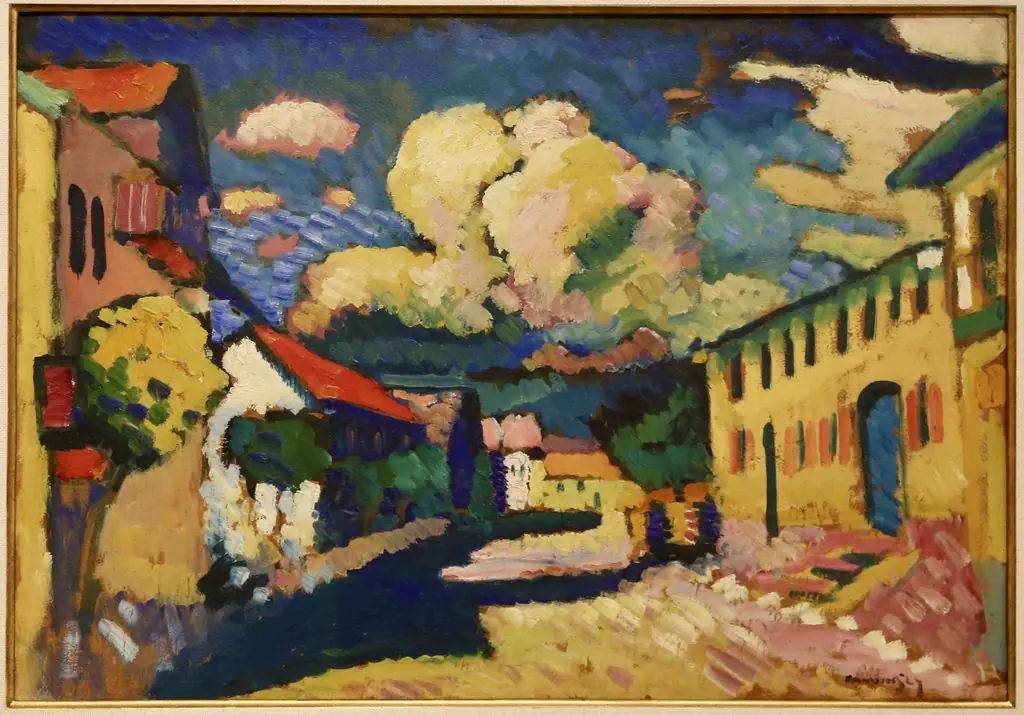
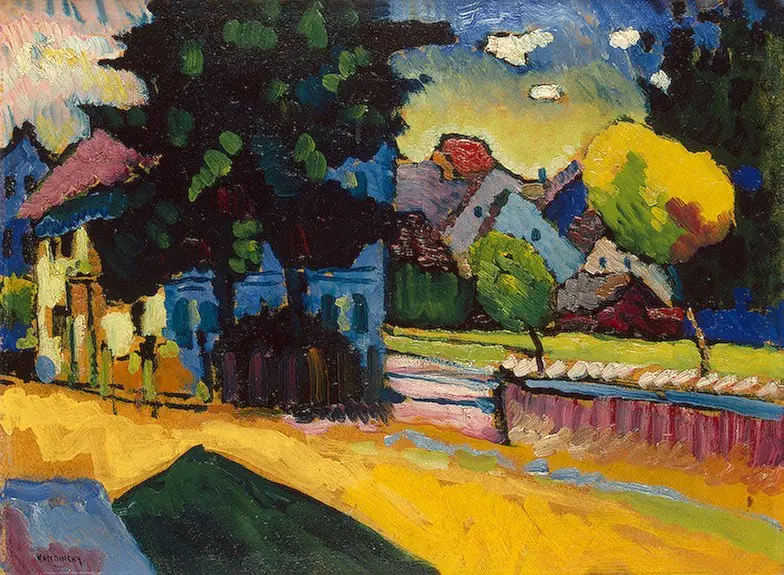
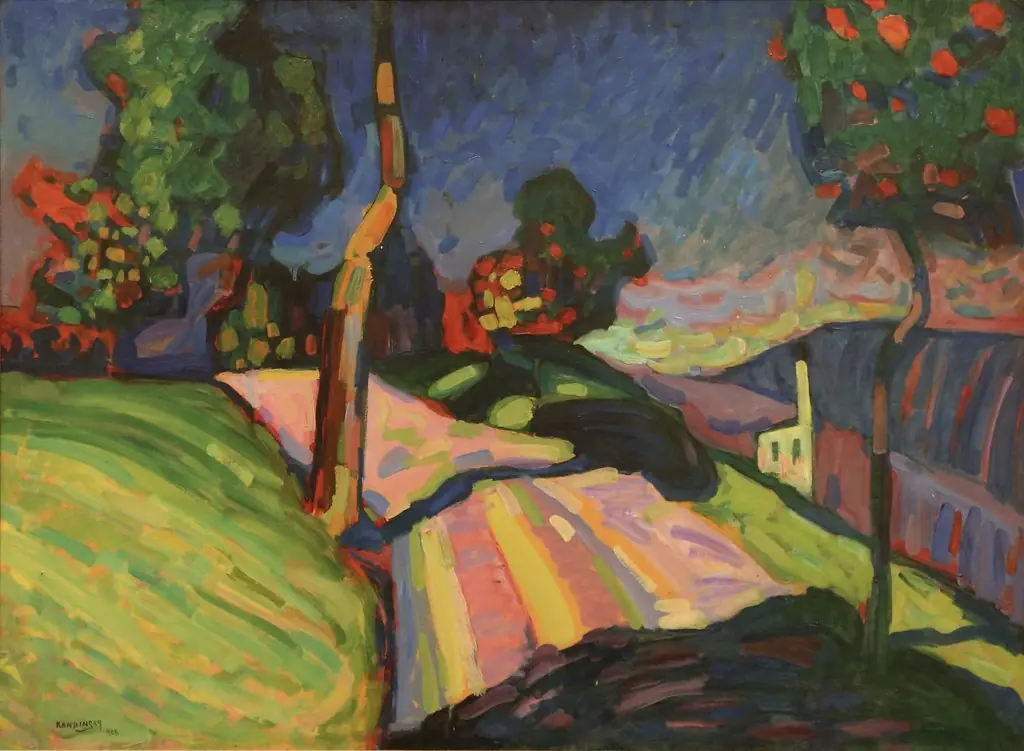
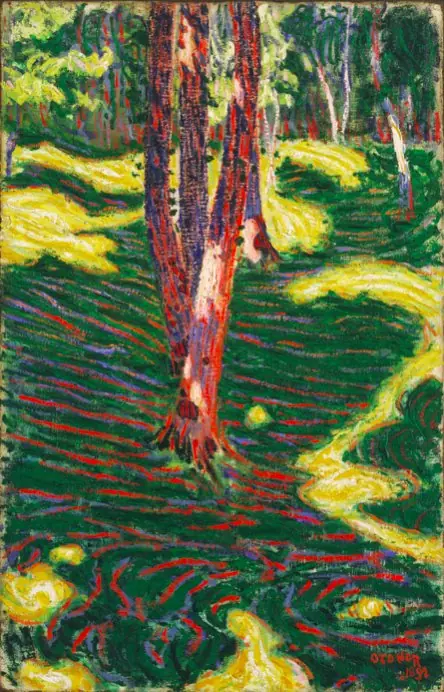
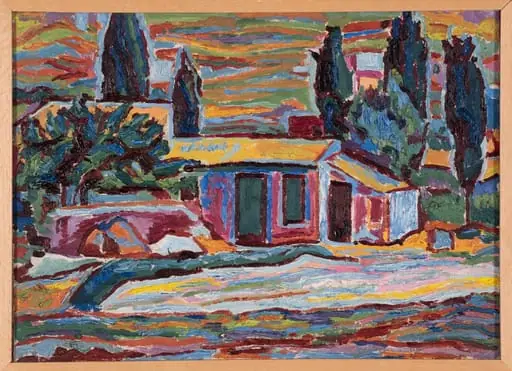
Created in 1909, this oil on board work by Vasily Kandinsky is an untitled piece that exemplifies the artist’s shift toward non‑representational composition. Executed during his Munich years, the painting combines vivid hues and dynamic forms, signaling a departure from conventional figurative painting toward a more abstract visual language.
Subject & Meaning
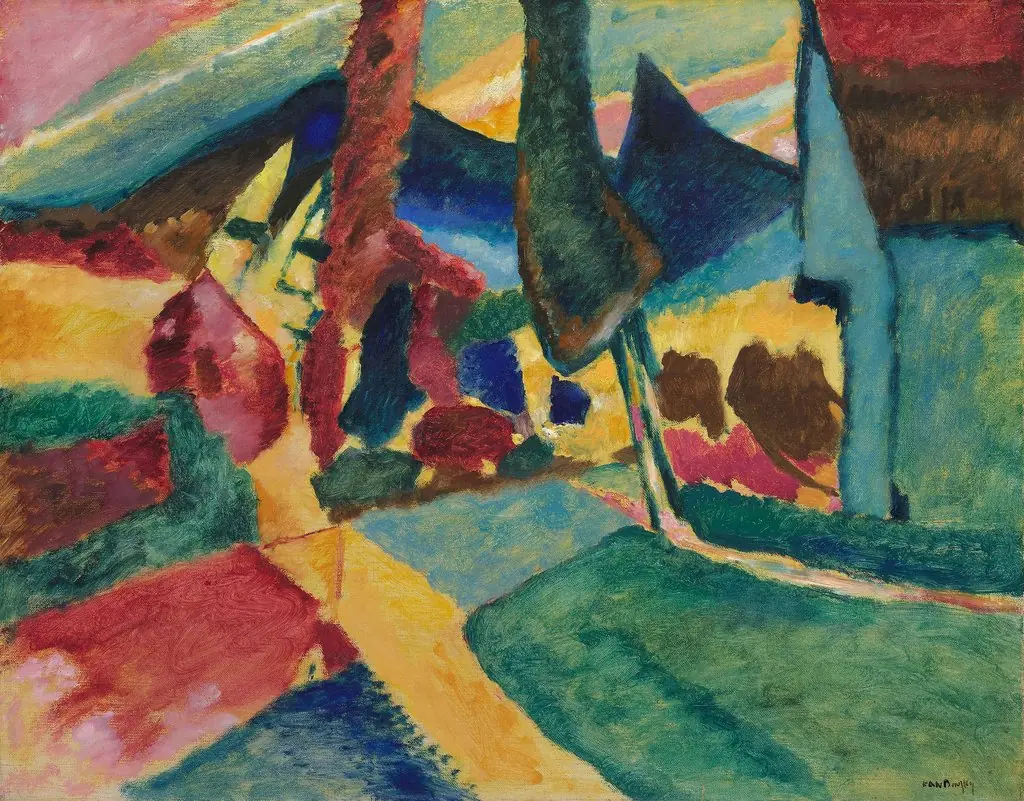
The composition juxtaposes a solitary figure in a white hat and dark attire against a somber background on the left, while a central architectural element with windows and a door is framed by stylized foliage. The surrounding field of interlocking greens, blues, and yellows suggests an energetic environment, inviting viewers to interpret the interplay of figure, structure, and nature as a study in visual rhythm.
Technique & Style
Kandinsky employs bold, gestural brushstrokes that emphasize surface texture and color contrast. The oil medium on a rigid board allows for saturated pigments and sharp edges, while the abstracted shapes reveal an early exploration of the formal qualities that would later define his contribution to abstraction.
History & Provenance
At the time of its creation, Kandinsky was active in Munich’s artistic circles, having studied under Anton Ažbe and later at the Academy of Fine Arts. He was also teaching and collaborating with fellow painter Gabriele Münter, a partnership that influenced his experimental approach during this period.
Context
The work emerges from the late Belle Époque, a phase when Munich served as a hub for avant‑garde ideas. Kandinsky’s interest in color theory and the spiritual potential of form aligns with broader movements toward abstraction in early twentieth‑century Western art.
Artist & collection
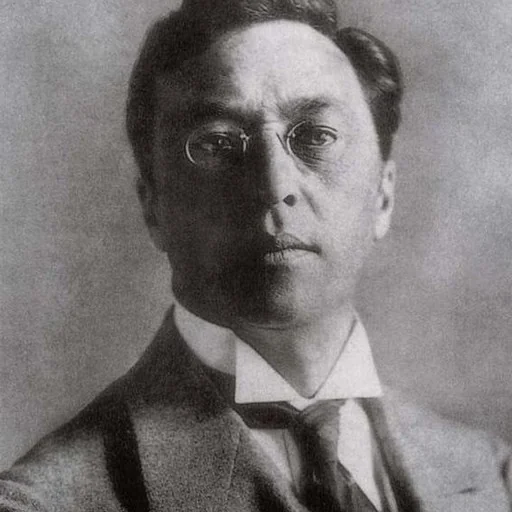
Artist
Wassily Wassilyevich Kandinsky (16 December 1866 – 13 December 1944) was a Russian painter and art theorist active in Germany during the late Belle Époque and Interwar eras.