Artwork
Untitled
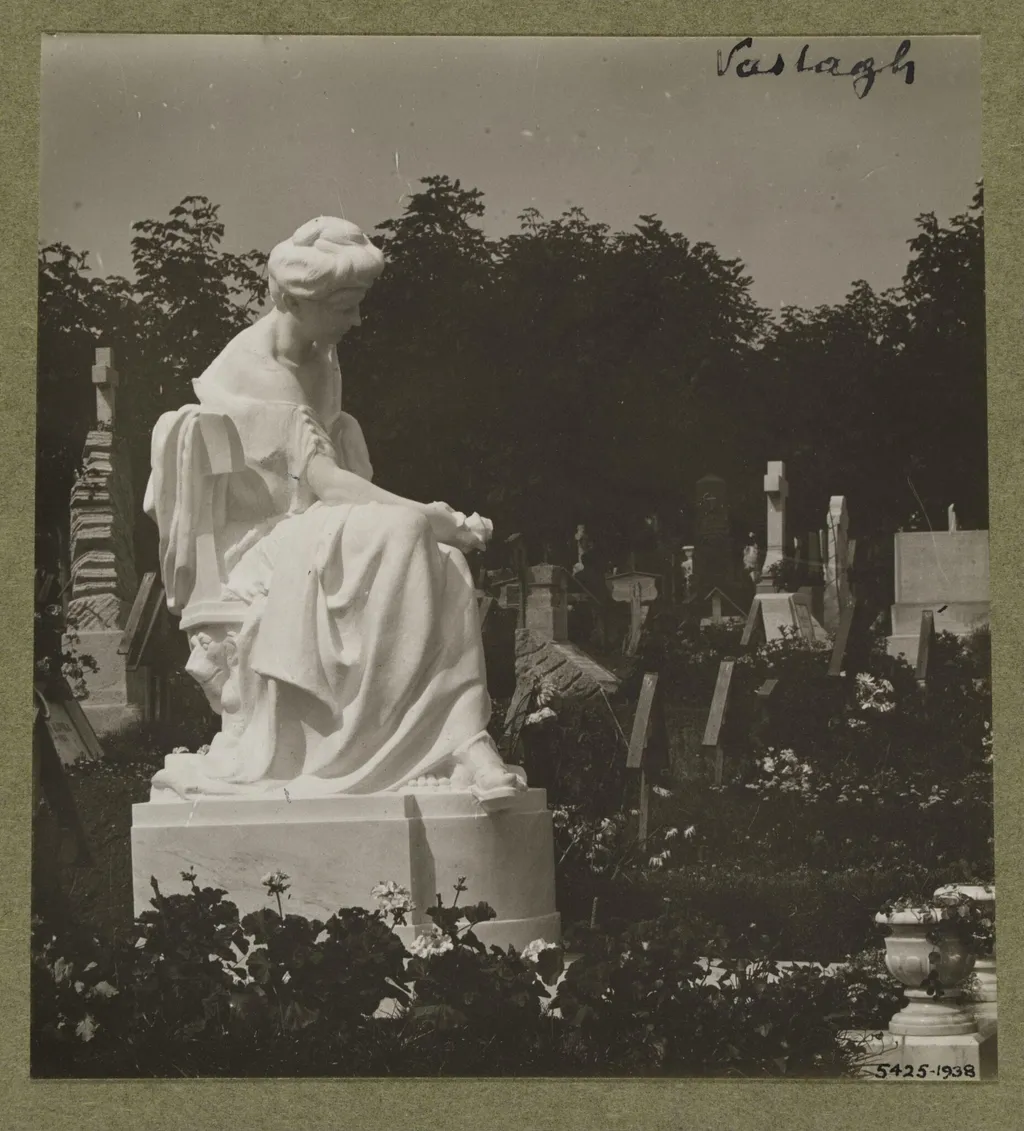
Untitled is a photographic photography by Georges Vastagh. It is held in the collection of the Victoria and Albert Museum.
About this work
Overview
It forms part of a larger archive of materials he assembled, later bequeathed to the Archive of Art and Design in 1938.
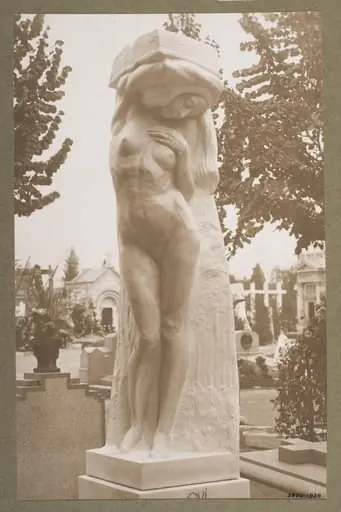
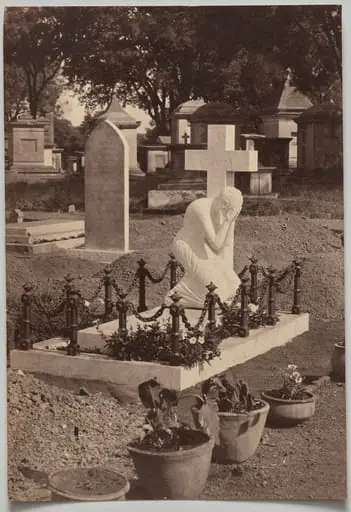
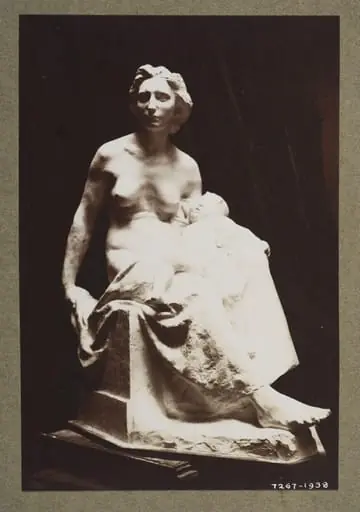
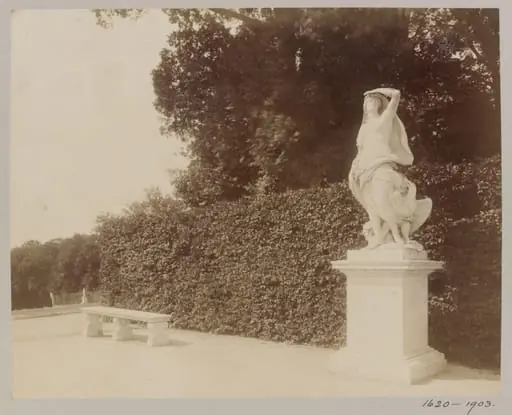
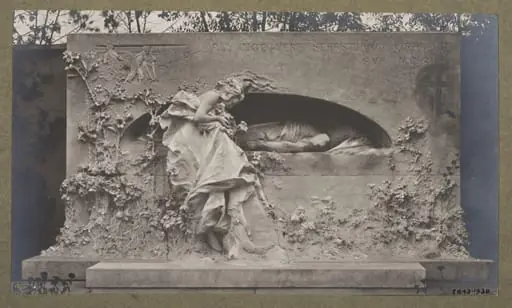
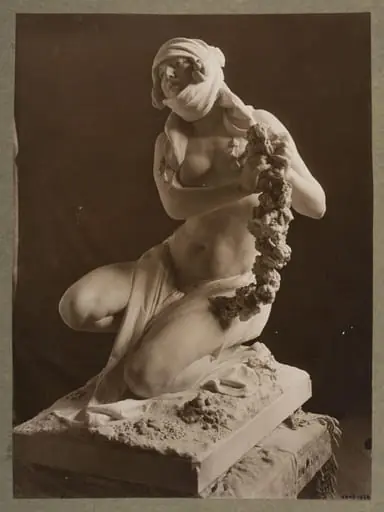
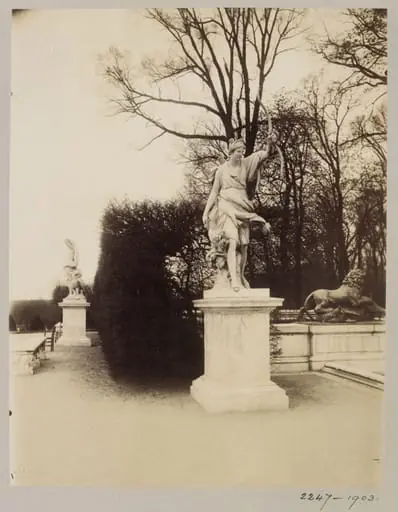
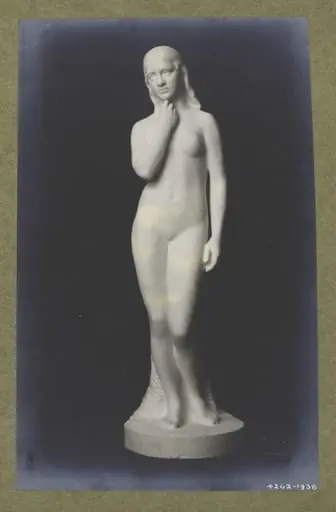
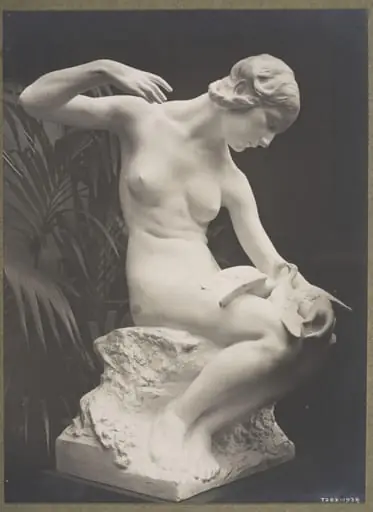
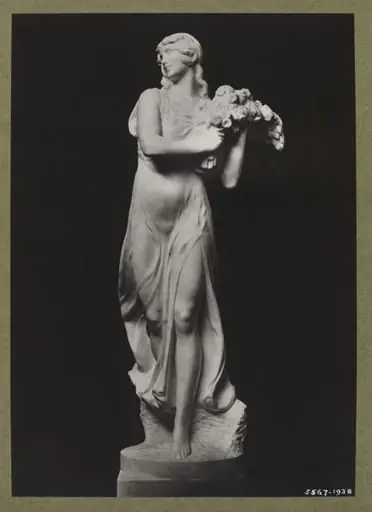
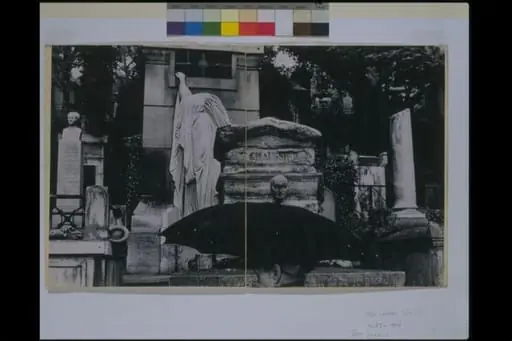
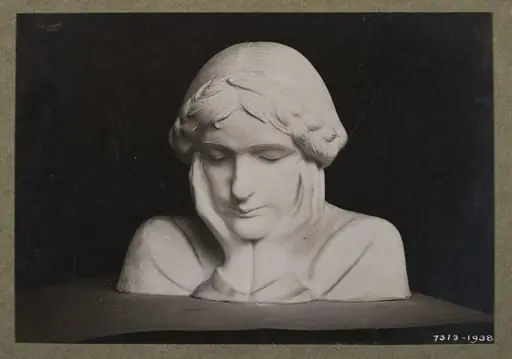
This black-and-white photograph, mounted on green card, was submitted in response to a 1920s survey distributed by William Kineton Parkes, a writer and collector with an interest in sculpture. It forms part of a larger archive of materials he assembled, later bequeathed to the Archive of Art and Design in 1938. The image captures a sculptural figure in a cemetery setting, preserved as documentary evidence rather than fine art.
Subject & Meaning
The photograph depicts a seated funerary statue draped in long, flowing robes, one arm resting on a knee, the other holding a scroll. Positioned on a pedestal among rows of gravestones and crosses, the figure exudes stillness and solemnity. The presence of flowers at its base suggests ongoing remembrance. The scroll may symbolize legacy or spiritual text, reinforcing the statue’s role as a memorial to the deceased.
Technique & Style
Rendered in monochrome with visible grain, the photograph reflects early 20th-century photographic practices. The composition is straightforward, framing the statue centrally against a backdrop of graves, with no theatrical lighting or staging. The handwritten name 'Vastagh' in the corner indicates it was likely a personal or studio print, possibly sent by the sculptor in direct response to Parkes’s inquiry.
History & Provenance
The image entered the Archive of Art and Design through William Kineton Parkes’s personal collection, donated upon his death in 1938. Parkes had solicited photographs and responses from sculptors across Britain to document contemporary practices. This photograph, among hundreds of submissions, was preserved as a record of how sculptors presented their work to scholars and collectors.
Context
In the 1920s, public interest in memorial sculpture remained strong, particularly in cemetery art. Parkes’s survey sought to map trends in funerary design during a period of transition between traditional and modernist approaches. This image reflects a conservative, symbolic style still prevalent in commemorative works, contrasting with emerging avant-garde trends in sculpture at the time.
Legacy
The photograph survives not as a celebrated artwork but as an archival artifact, offering insight into how sculptors documented and communicated their creations. Its inclusion in a scholarly collection underscores the value placed on material evidence in art historical research. Today, it contributes to understanding the social and aesthetic norms of early 20th-century memorial practices.
Artist & collection
Artist
We don’t know much about Georges Vastagh—no birth date, no bio, just a name and a quiet photograph.