Artwork
Paris Umbrella
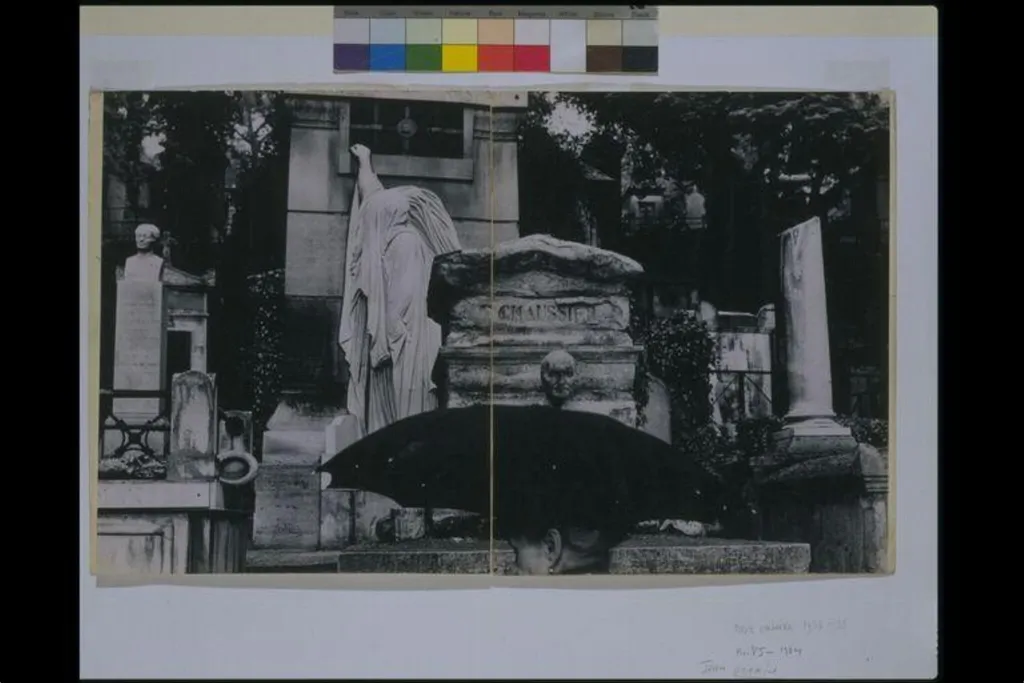
Paris Umbrella is a photographic photography by John Deakin. It dates from 1954 and is held in the collection of the Victoria and Albert Museum.
About this work
Overview
Taken in the early 1950s after Deakin’s departure from Vogue, the image is one of the few surviving examples from a body of work largely lost to time.
This black-and-white photograph by John Deakin captures a quiet moment in a Parisian cemetery, featuring a sculpted figure atop a tomb, partially obscured by an inverted umbrella. Taken in the early 1950s after Deakin’s departure from Vogue, the image is one of the few surviving examples from a body of work largely lost to time. Its unadorned composition and grainy texture reflect a documentary impulse, distinct from the artistic ambitions of the era.
Subject & Meaning
The image centers on a weathered funerary statue, its form softened by time and partially shielded by a discarded umbrella. The tomb bears the name 'Chaussier,' the only legible text, grounding the scene in a specific, forgotten individual. Surrounding elements—a dog, a broken vase, scattered gravestones—suggest neglect and the quiet persistence of memory. The umbrella, inverted and out of place, introduces an element of human intervention, perhaps accidental, that disrupts the solemnity of the site.
Technique & Style
Deakin employed a handheld camera and available light, resulting in a high-contrast, grainy image that emphasizes texture over clarity. The composition is unstructured, with no central focal point, allowing the viewer’s eye to wander across the uneven ground and fragmented details. The lack of formal framing or staging aligns with street photography’s observational ethos, prioritizing authenticity over aesthetic refinement.
History & Provenance
Created during Deakin’s brief period of independent street photography in Paris, the work was made after his tenure at Vogue and before his later association with the Soho art scene. Much of his early output was lost due to poor storage or deliberate destruction. This photograph endures as a rare artifact, preserved in institutional collections, offering insight into a phase of his career otherwise undocumented.
Context
In early 1950s Britain, photography was rarely regarded as fine art, especially when produced outside commercial or editorial contexts. Deakin’s work, made without institutional support or exhibition intent, existed on the margins of the art world. His Paris images, including this one, reflect a personal, almost clandestine engagement with urban decay and memorial space, contrasting with the dominant photographic trends of the time.
Legacy
Though largely overlooked during his lifetime, Deakin’s photographs, including this one, have since gained recognition for their unvarnished intimacy and historical resonance. The image stands as a quiet testament to the transience of memory and the overlooked spaces of urban life. Its survival underscores the fragility of photographic archives and the value of preserving ephemeral, non-commercial work.
Artist & collection

Artist
John Deakin was an English photographer, best known for his work centred on members of Francis Bacon's Soho inner circle.

 Untitled
 Grave of Dr. Falwasser, Neemuch (recto, left)
 Untitled
 Untitled
 Brompton Cemetery No. 3
 The Beauty of Death
 Sunlit Tomb, St. Davids Cathedral
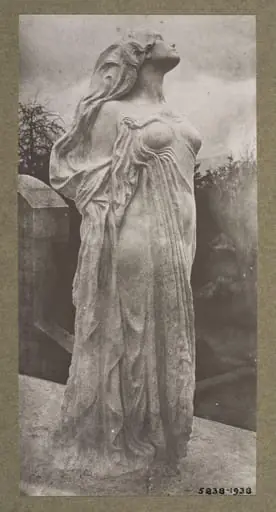 Untitled
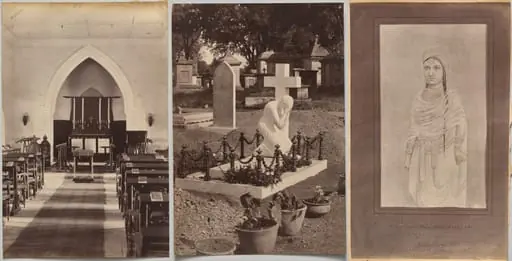 Interior of Church, Neemuch (recto, right); Grave of Dr. Falwasser, Neemuch (recto, left); Indian Lady 250 BC (verso, right)
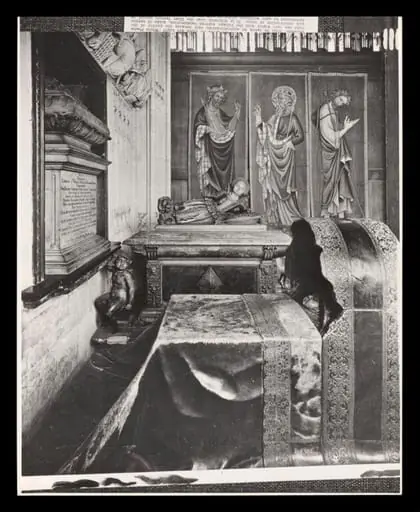 Church Interior with Sculptures
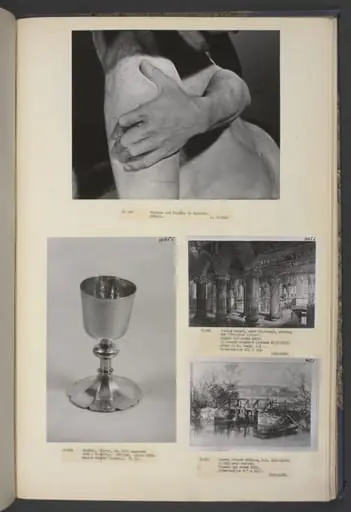 A Weir, near Oxford
 Study of a recumbent nude male figure