Artwork
Son and Donkey
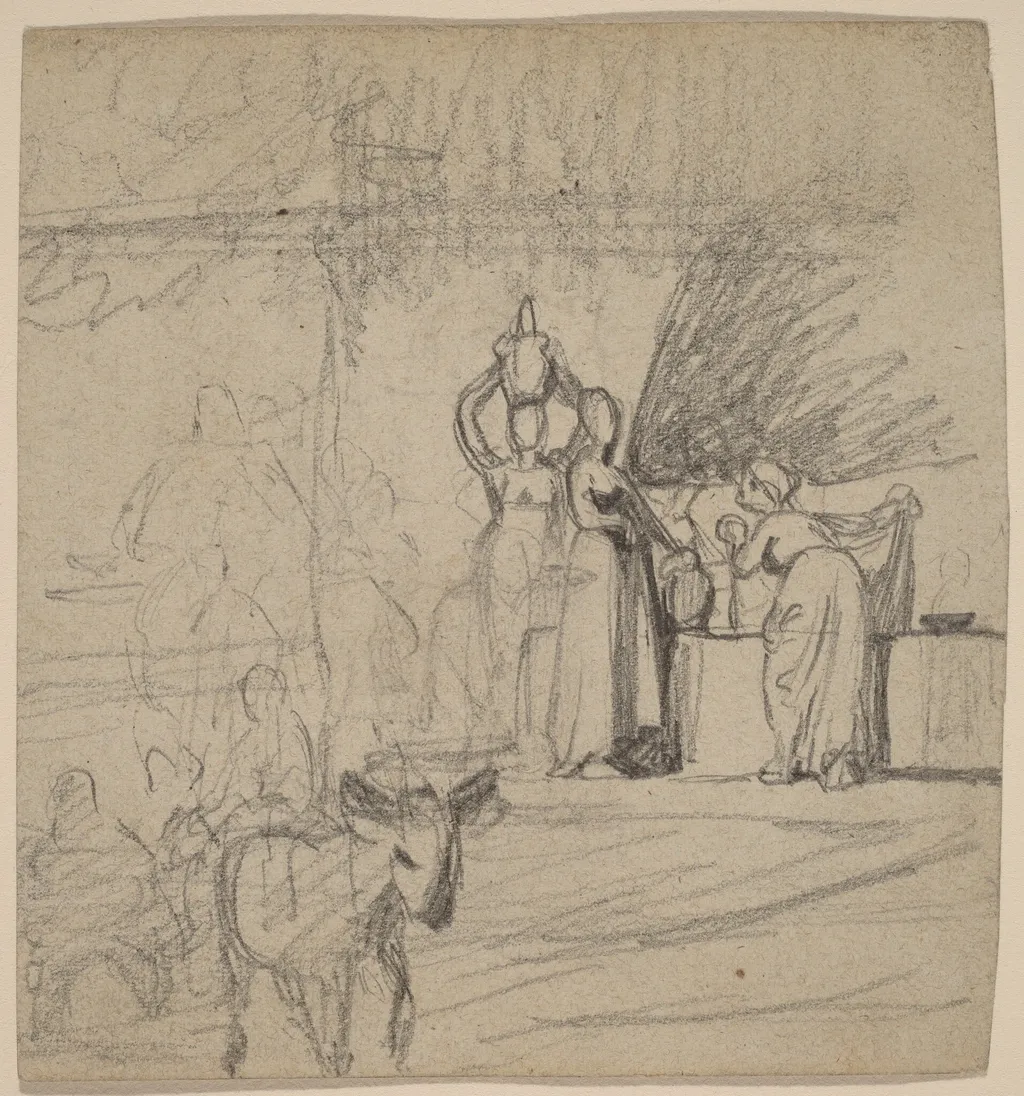
Son and Donkey is a graphite drawing by the Impressionist artist Elihu Vedder. It dates from 1859 and is held in the collection of the National Gallery of Art. Created circa 1859, this graphite drawing on wove paper presents a young boy seated on a donkey.
About this work
Overview
Created circa 1859, this graphite drawing on wove paper presents a young boy seated on a donkey. The composition is simple, with the figures occupying the central space and a faint suggestion of landscape in the background. The work reflects the early period of Elihu Vedder, an American artist later associated with Symbolist painting and illustration.
Subject & Meaning
The drawing portrays a child in a modest tunic, his expression calm, sharing a moment with a relaxed donkey whose ears are alert and eyes lowered. The quiet interaction suggests themes of innocence, companionship, and a pastoral simplicity that anticipates Vedder’s later interest in allegorical and symbolic narratives.
Technique & Style
Executed in graphite, the artist employs bold, confident lines combined with subtle shading to model form and convey texture. The loose, expressive handling of the medium on smooth wove paper creates a sense of depth while maintaining a delicate, intimate atmosphere. Minimal background marks hint at a landscape without distracting from the central figures.
History & Provenance
Elihu Vedder, born in New York City, produced this drawing before his rise to prominence as a Symbolist painter and illustrator of Edward FitzGerald’s translation of The Rubaiyat of Omar Khayyam. The work remains part of his early oeuvre, illustrating his skill in drawing and foreshadowing the thematic concerns that would define his later career.
Artist & collection

Artist
Elihu Vedder (26 February 1836 – 29 January 1923) was an American symbolist painter, book illustrator and poet from New York City.

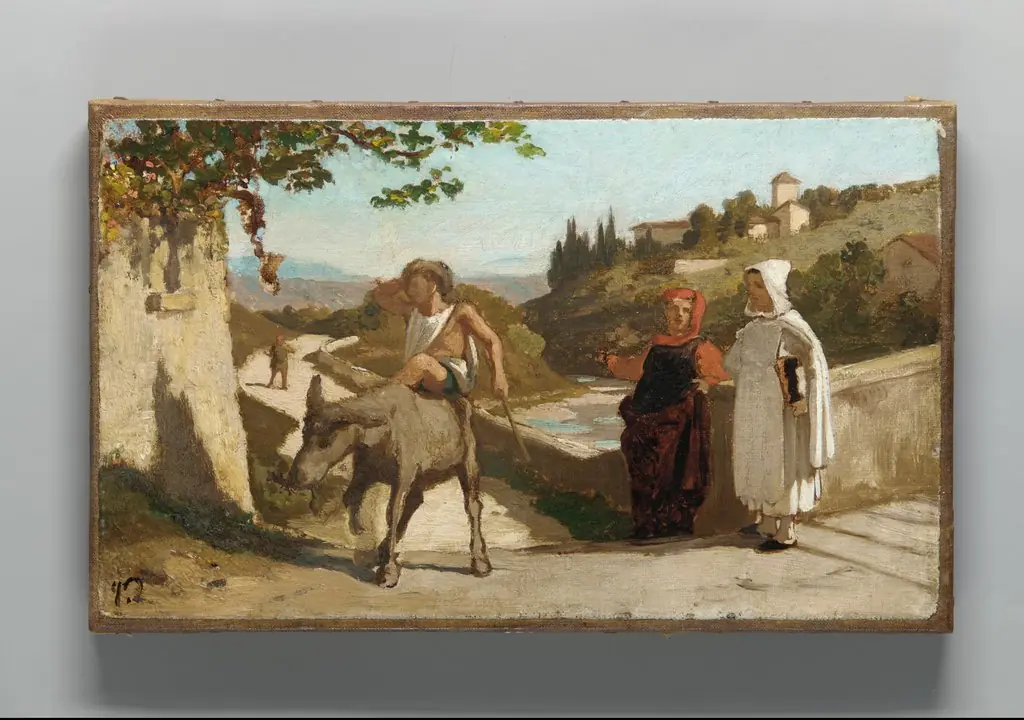 The Fable of the Miller, His Son, and the Donkey
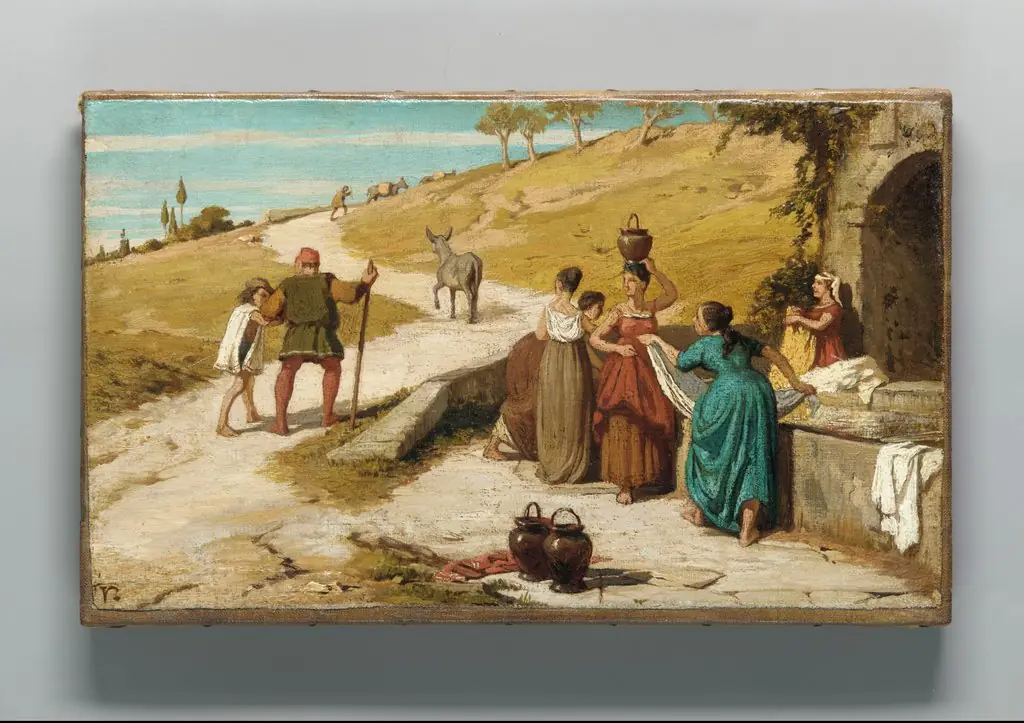 The Fable of the Miller, His Son, and the Donkey
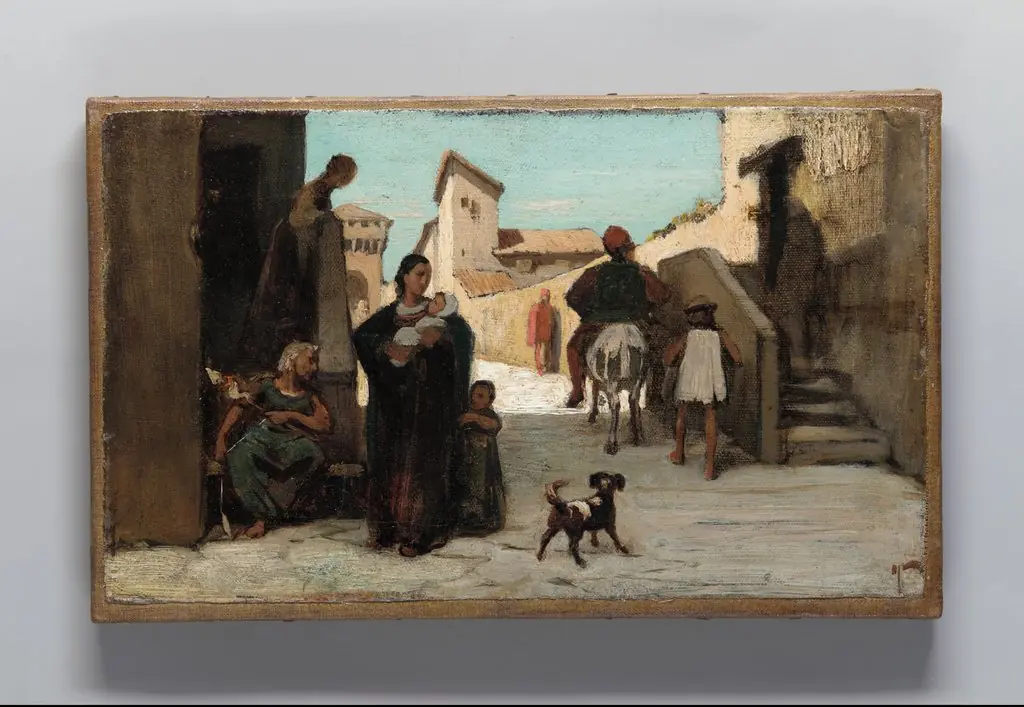 The Fable of the Miller, His Son, and the Donkey
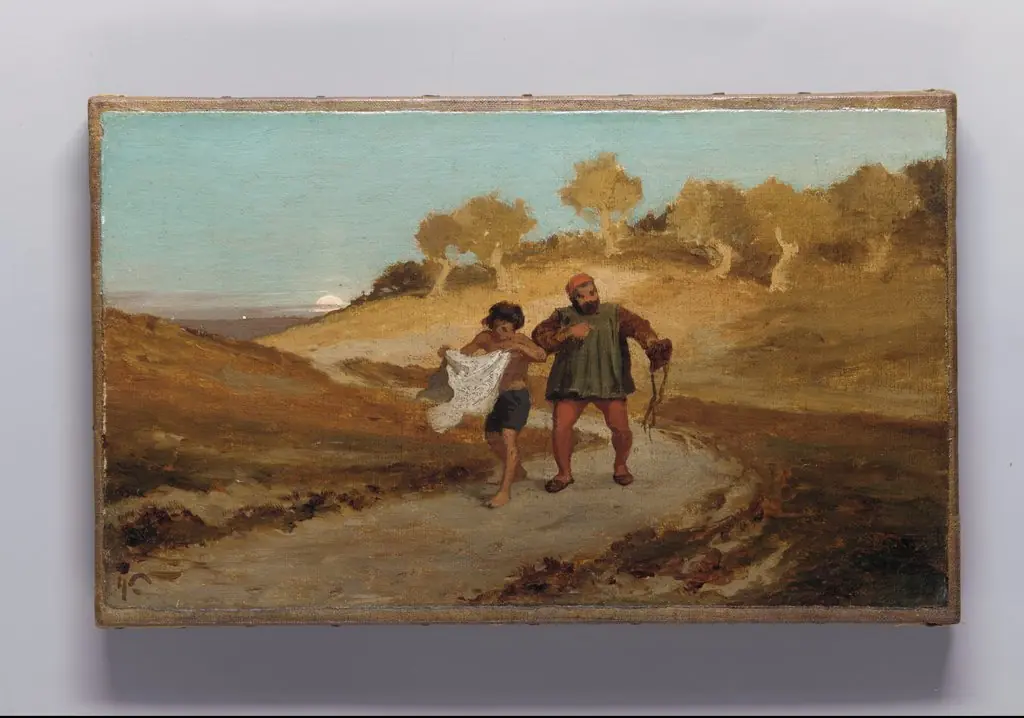 The Fable of the Miller, His Son, and the Donkey
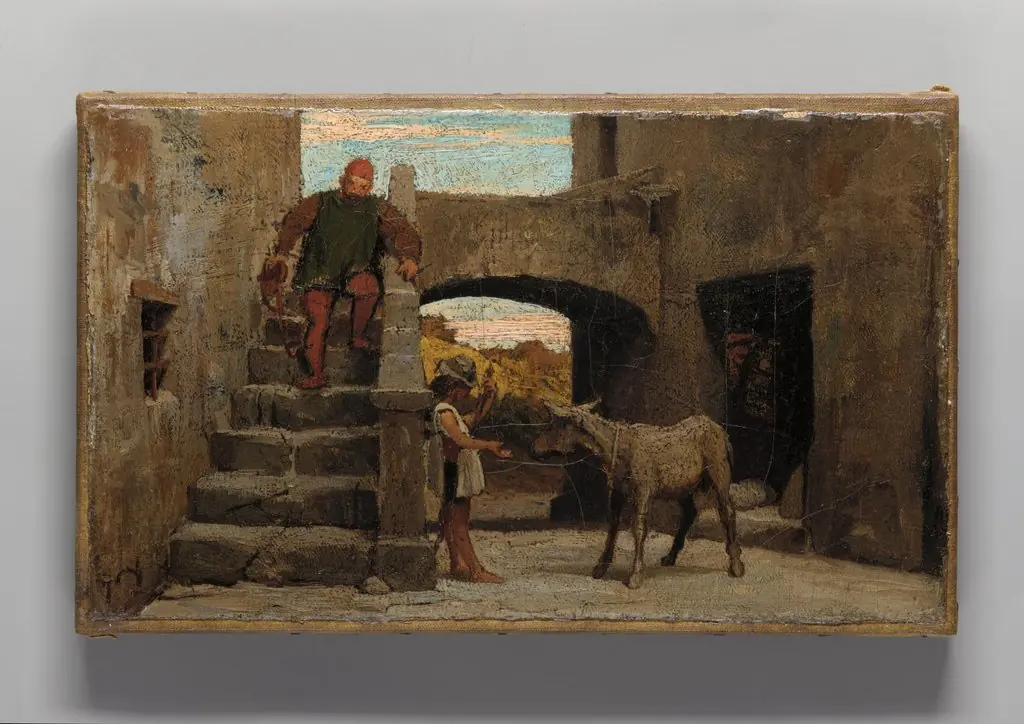 The Fable of the Miller, His Son, and the Donkey
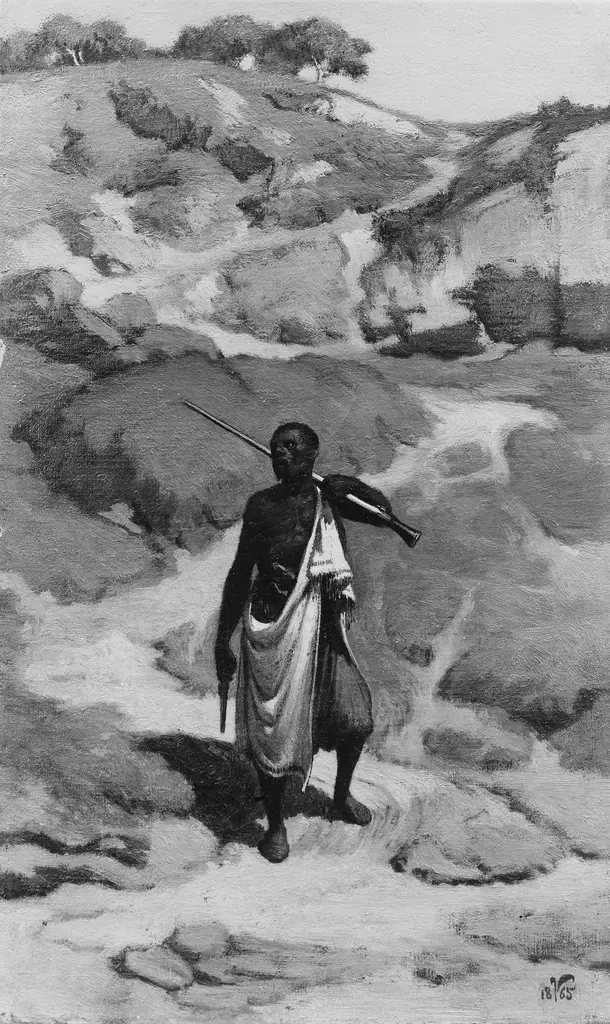 The African Sentinel
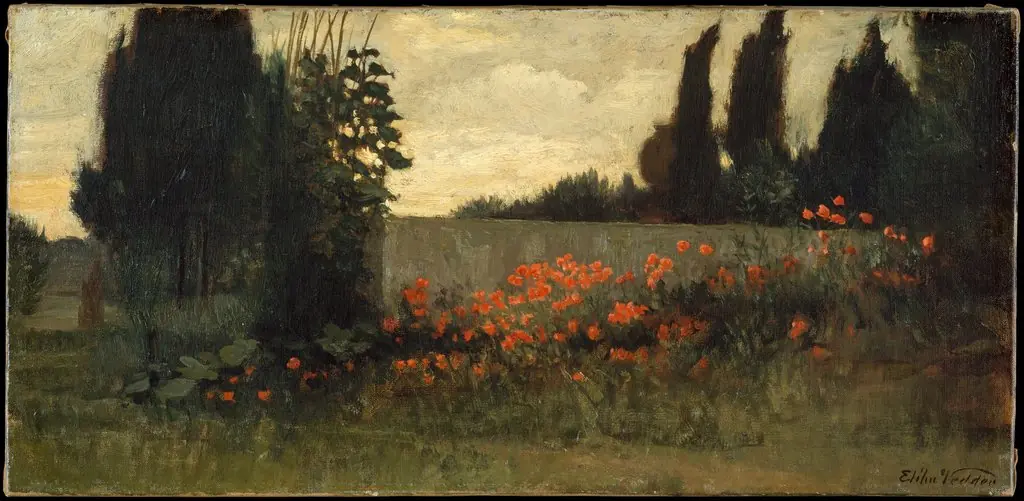 Cypress and Poppies
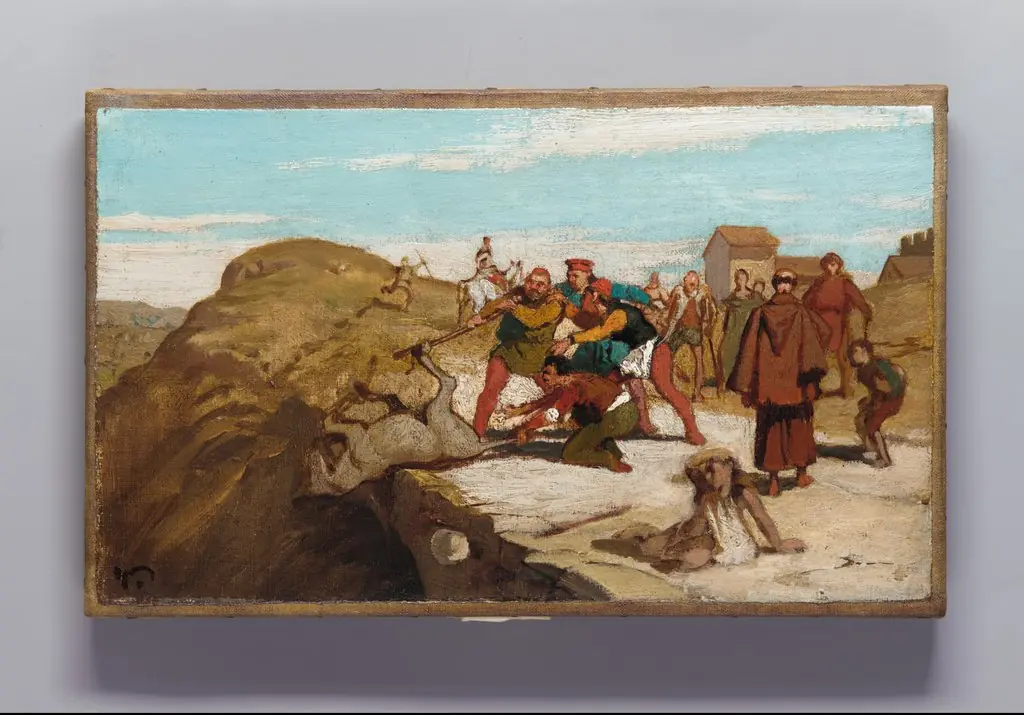 The Fable of the Miller, His Son, and the Donkey
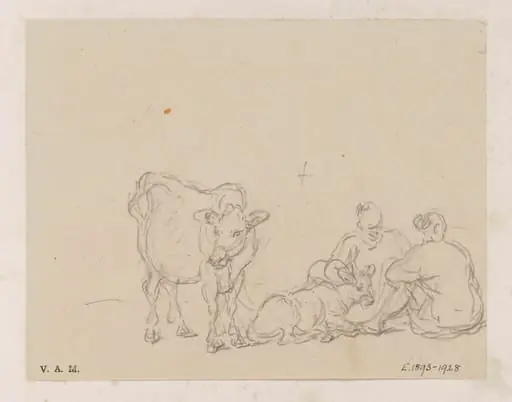 Two Chinese figures with two calves
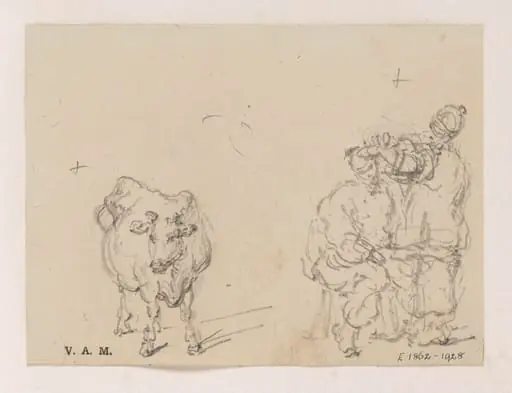 A Chinese barber and customer, and a cow
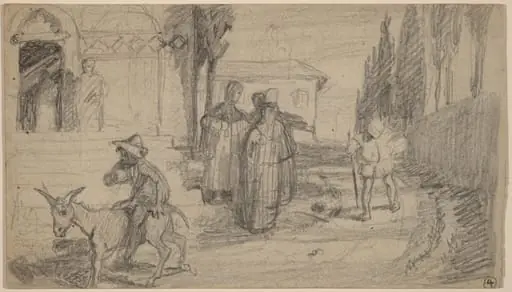 The Parable of the Miller and the Donkey
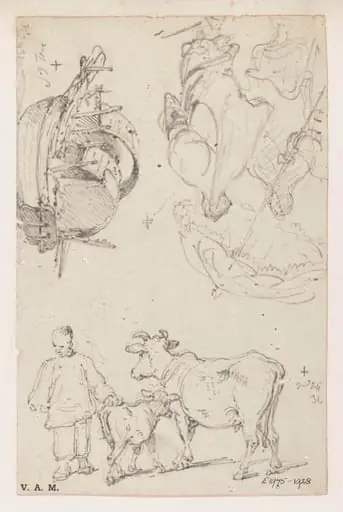 A cow and calf, a Tanka boat, and a Macanese woman and servant
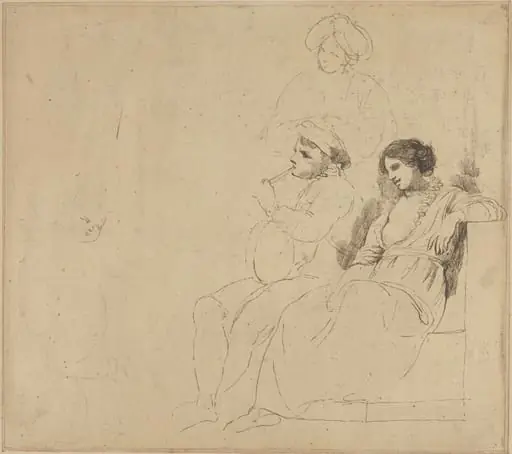 Study for "The Rustic Dancers"
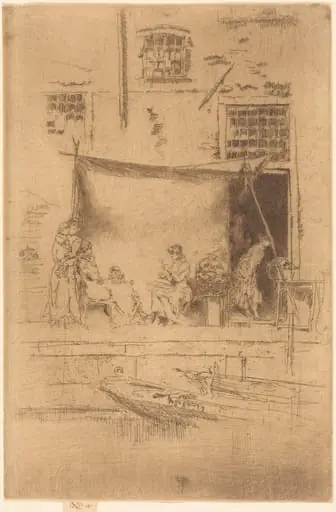 Fruit-Stall
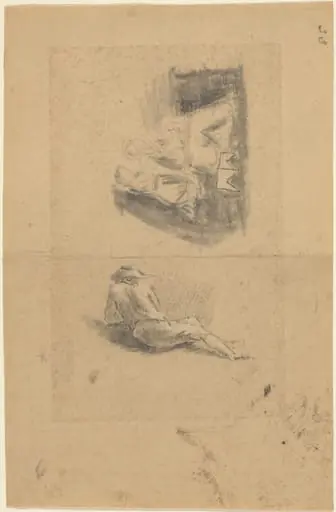 Reclining Man; Two Women
 The Rest on the Flight: Lightly Etched
 A Western woman seated by a mirror
 Father and Son