Artwork
La Crinoline-Abri
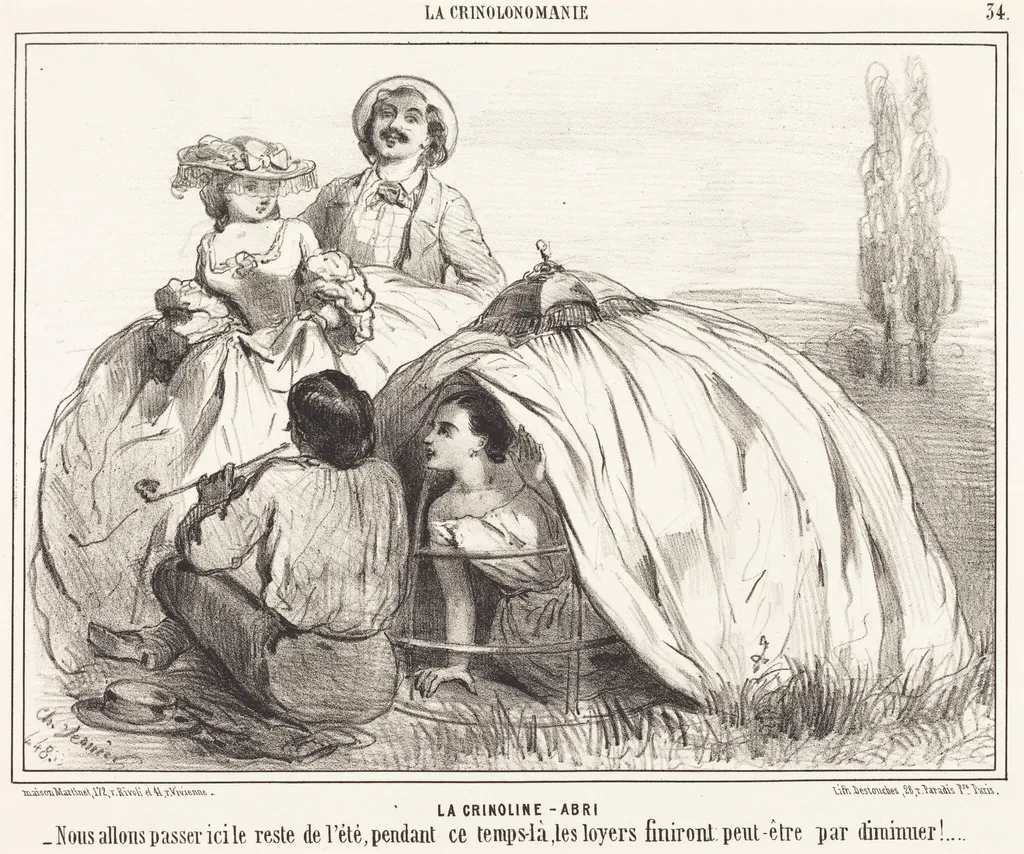
La Crinoline-Abri is an ink print by the Romanticist artist Charles Vernier. It dates from 1848 and is held in the collection of the National Gallery of Art.
About this work
Overview
La Crinoline-Abri is a lithograph created by Charles Vernier in 1848, depicting a scene of a family of four seeking shelter under a large umbrella.
Subject & Meaning
The print humorously highlights the impracticality of the crinoline, a wide skirt popular at the time, as it strains the capacity of the umbrella. The family's relaxed, slightly disheveled attire suggests a focus on everyday life and the challenges posed by contemporary fashion.
Technique & Style
Executed as a lithograph, the work showcases Vernier's use of this medium to capture nuanced details and textures, from the folds of clothing to the expressions of the family members.
History & Provenance
Created in 1848, the lithograph reflects the societal and fashion trends of mid-19th century Europe. Specific provenance details are not provided.
Context
La Crinoline-Abri situates itself within the tradition of 19th-century French lithography, which often commented on contemporary life and fashion. The crinoline, a symbol of middle-class status, is here portrayed in a humorous, relatable scenario.
Legacy
While specific legacy or direct influences of La Crinoline-Abri are not detailed, it contributes to the broader historical record of lithographic art commenting on everyday 19th-century European life and fashion.
Artist & collection


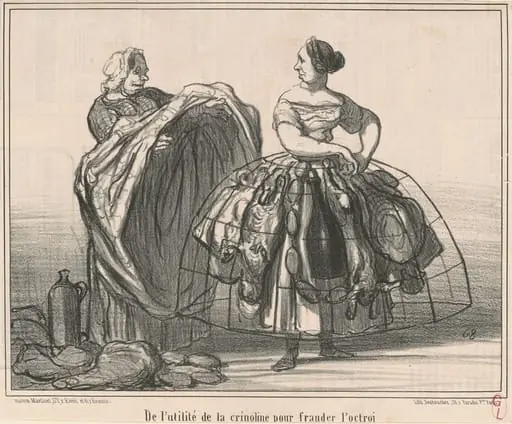 De l'utilité de la crinoline pour frauder l'octroi
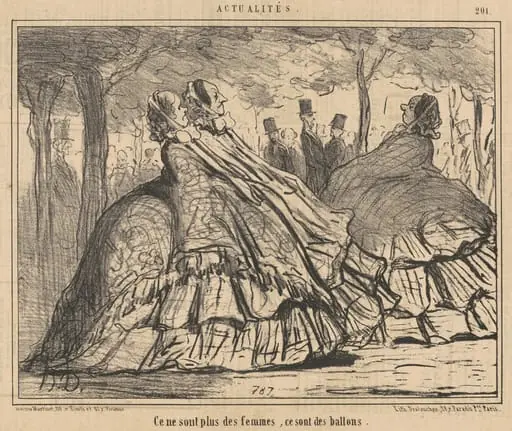 Ce ne sont plus des femmes, ce sont des ballons
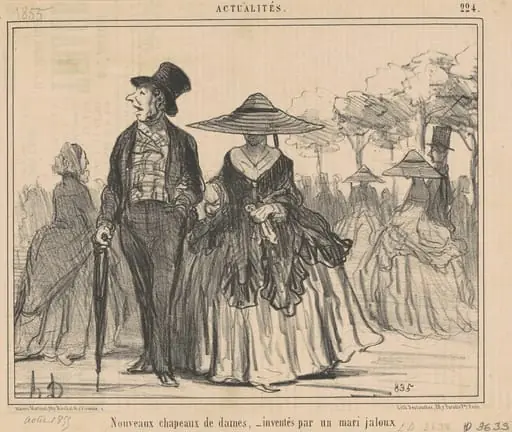 Nouveaux chapeaux de dames ...
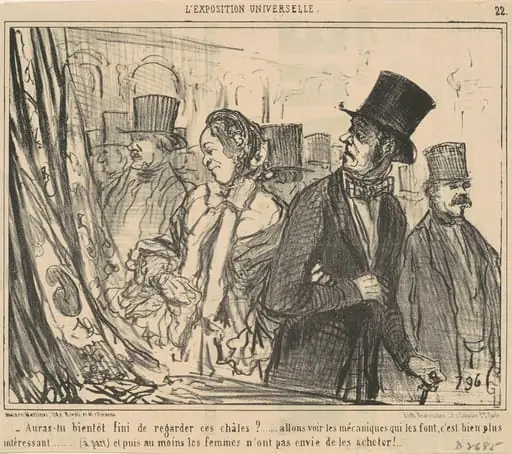 Auras-tu bientot fini de regarder ces chales?
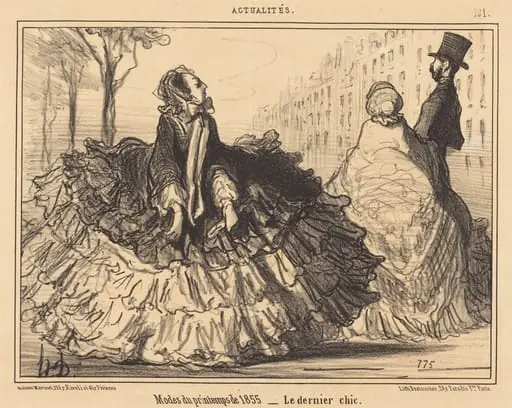 Modes du printemps de 1855
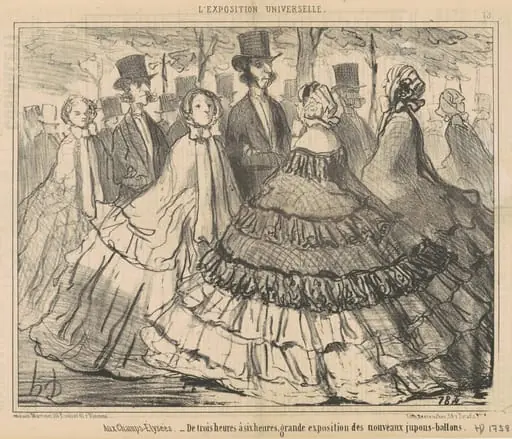 Aux Champs-Elysées...De trois a six heures
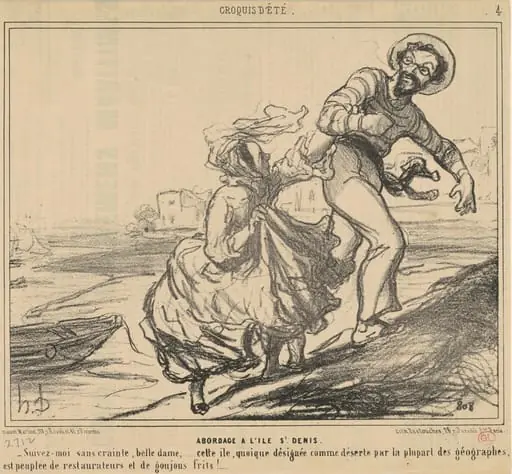 Abordage a l'ile Saint-Denis
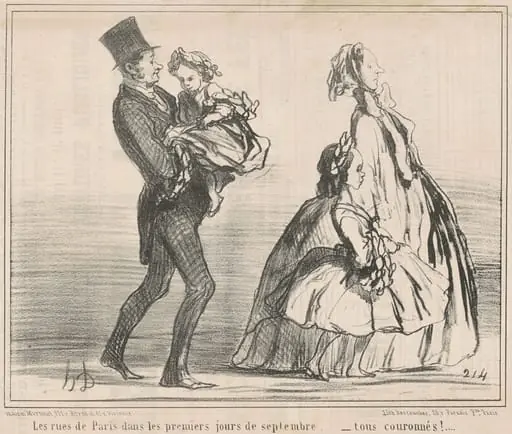 Le rues de Paris dans les premiers jours de Septembre ...
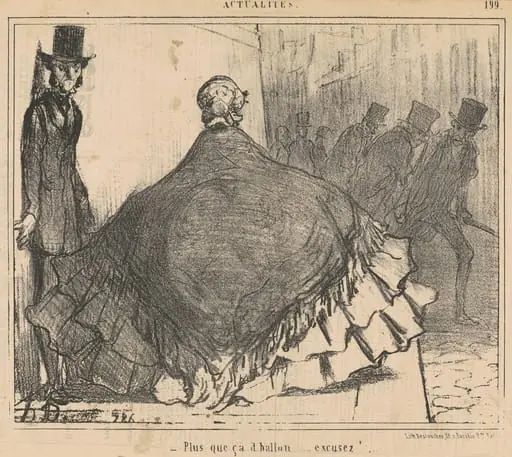 Plus que ca d'ballon ... Excusez! ...
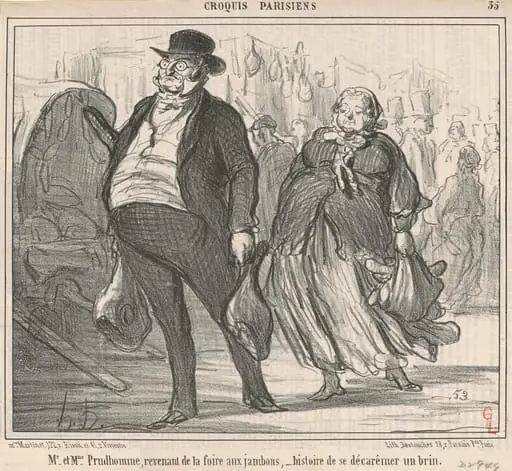 Mr et Mme Prudohomme revenant de la foire ...
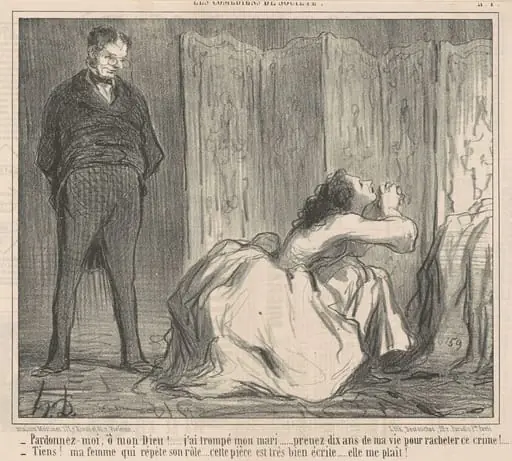 Pardonnez-moi, o mon dieu! ...
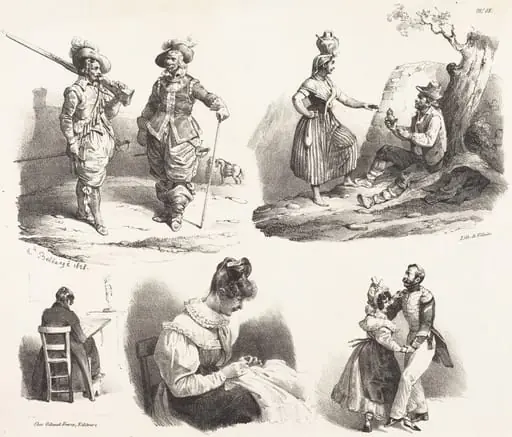 Five Vignettes