Artwork
Sitari
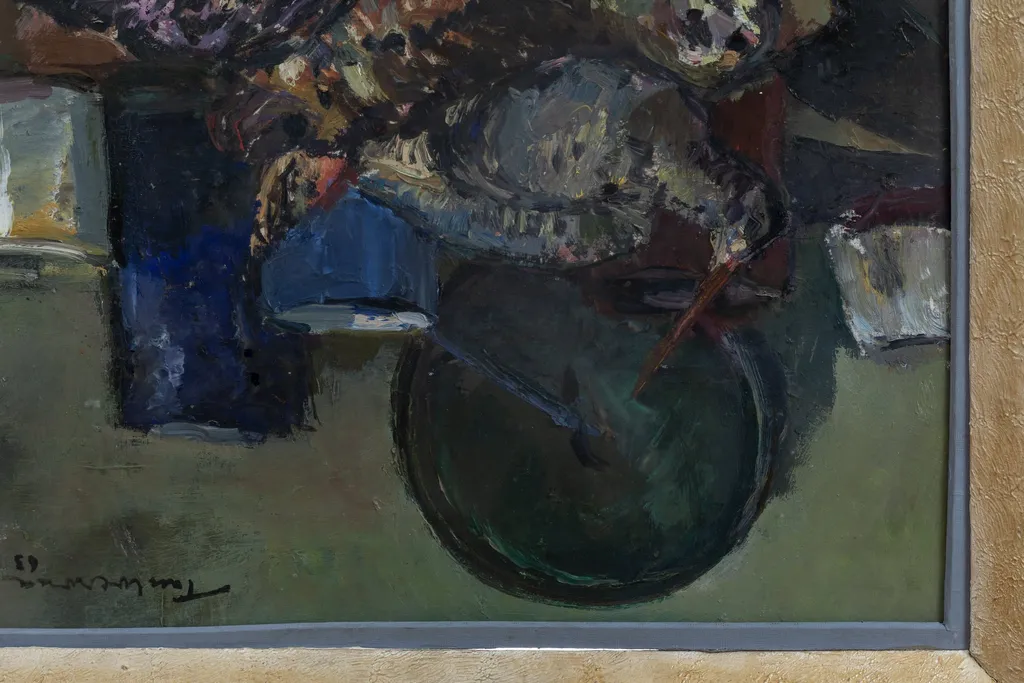
Sitari is a print by Paul Verona. It dates from 1931 and is held in the collection of the Moldova National Museum Complex.
About this work
Overview
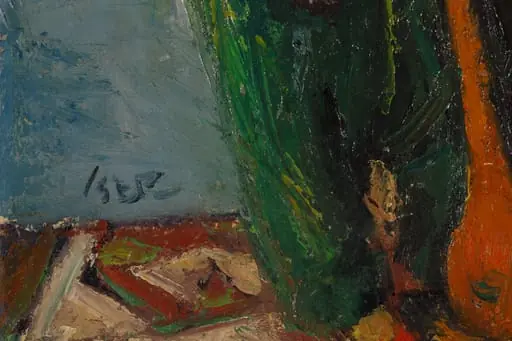
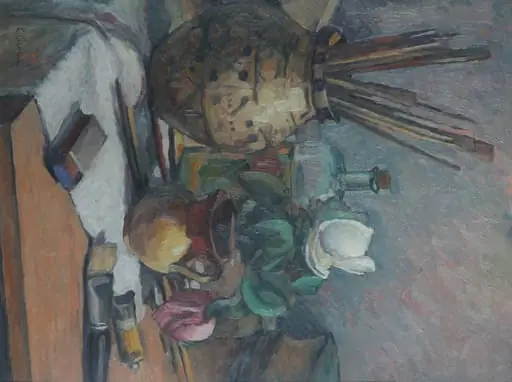
The composition centers on a dark, rounded object resembling a frying pan, with a brush propped against it, set upon a textured, greenish tabletop.
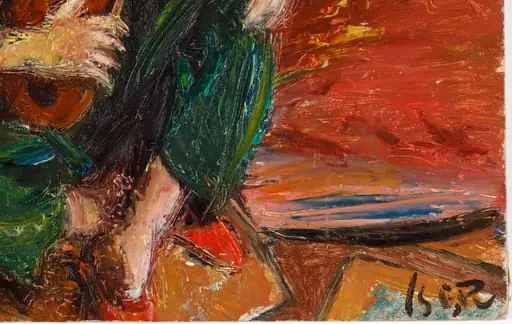
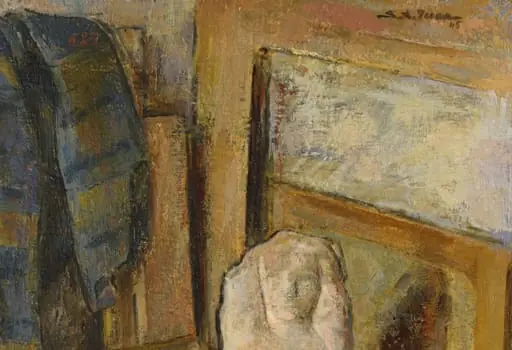
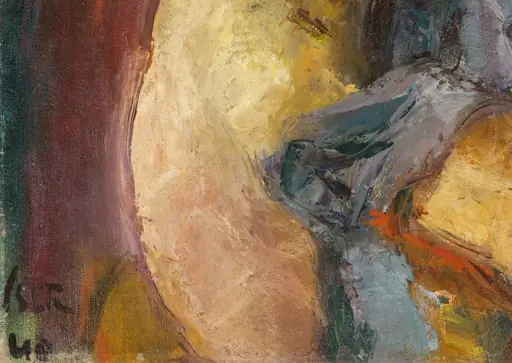
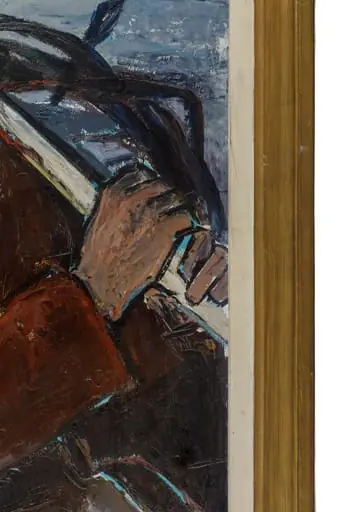
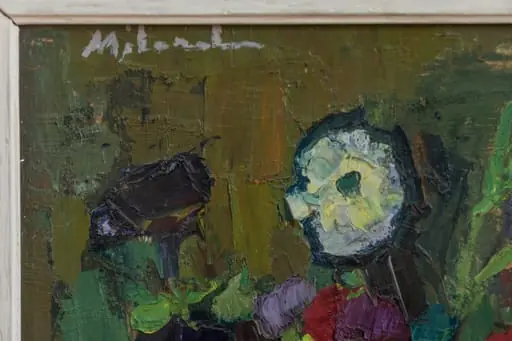
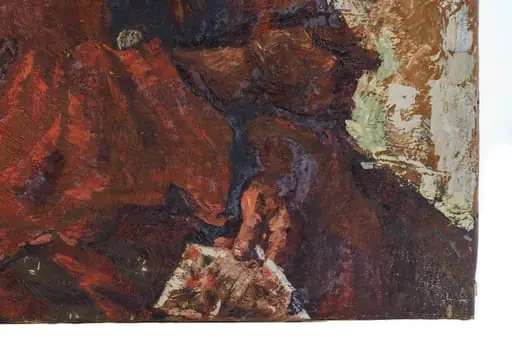
Paul Verona’s work titled Sitari, executed around 1931, presents a domestic interior rendered in oil on canvas. The composition centers on a dark, rounded object resembling a frying pan, with a brush propped against it, set upon a textured, greenish tabletop. Behind these items, a blue wall and an indeterminate heap of objects dissolve into loose, colorful strokes that suggest a rapid, gestural approach.
Subject & Meaning
The painting’s title, Sitari, alludes to a kitchen setting, yet the emphasis lies less on narrative detail than on the act of making. By foregrounding ordinary tools—a pan and a brush—Verona invites contemplation of the artist’s material practice, blurring the line between everyday objects and the creative process that transforms them.
Technique & Style
Verona employs a vigorous, impasto-like application, allowing brush marks to remain visible and the paint surface to retain a tactile quality. The palette combines saturated hues with muted, muddy tones, and the background is suggested through broad, overlapping strokes rather than precise rendering, reinforcing a sense of immediacy and experimental handling of medium.
History & Provenance
Created circa 1931, Sitari belongs to the early phase of Verona’s oeuvre, a period marked by exploration of spontaneous brushwork and everyday subject matter. While specific exhibition history is not documented, the work reflects broader interwar trends in European art that favored informal, sketch-like compositions over polished academic finishes.
Artist & collection
Artist
Paul Verona painted quiet Romanian landscapes in prints and textiles. His *Peisaj campestru* shows a rural road rolling into distant fields, while *Groapa Floreasca* stitches a city corner where a small hill meets an…