Artwork
Untitled
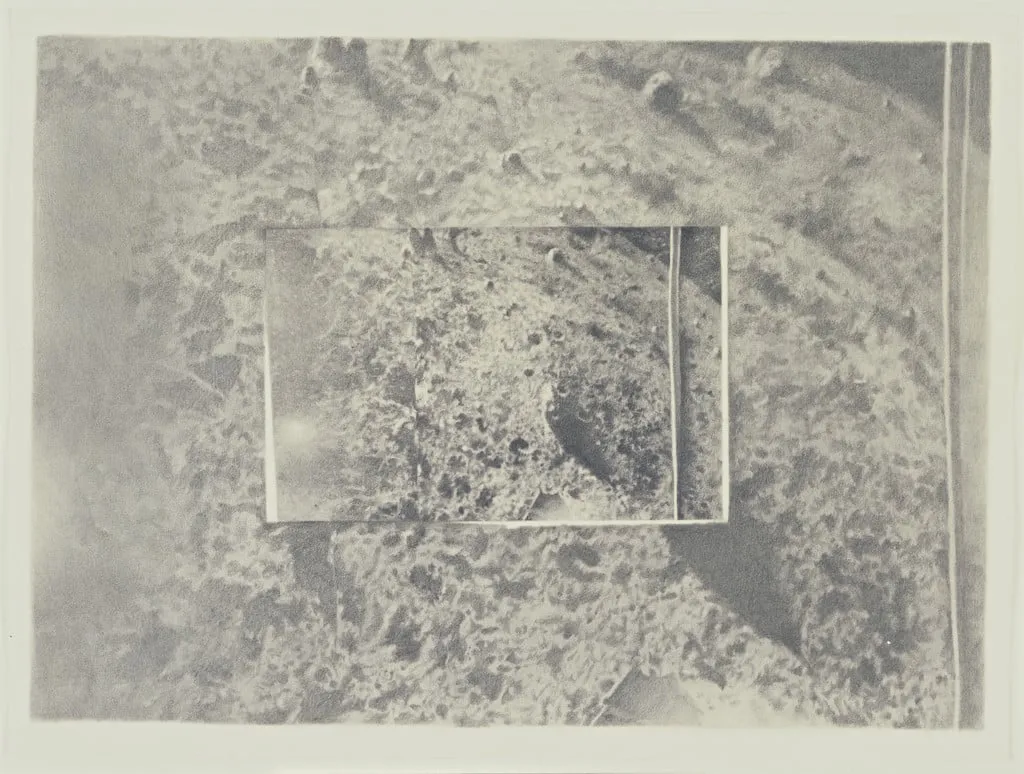
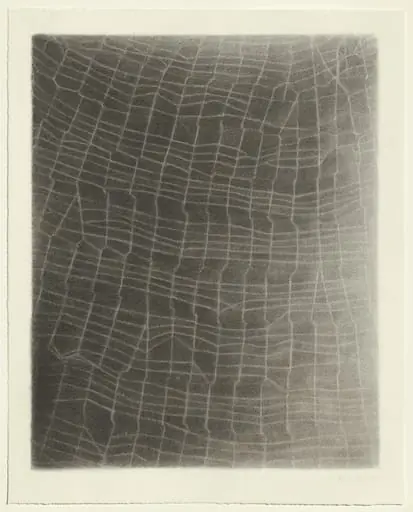
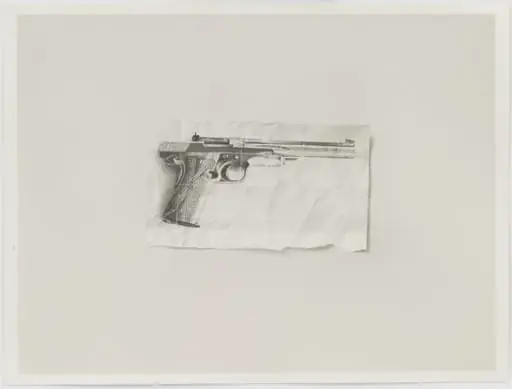
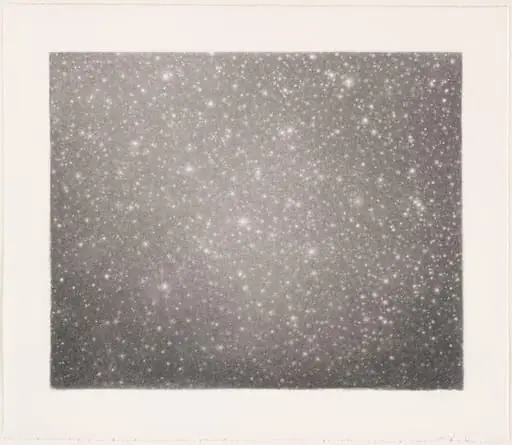
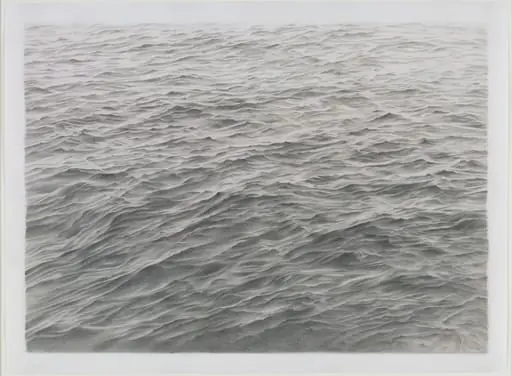
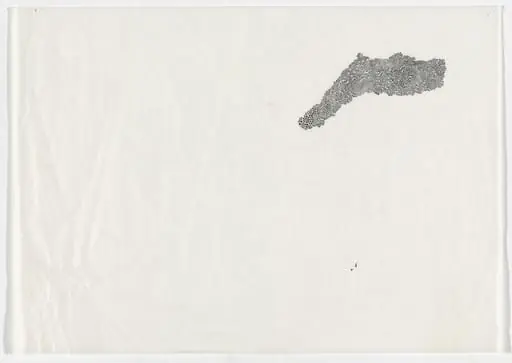
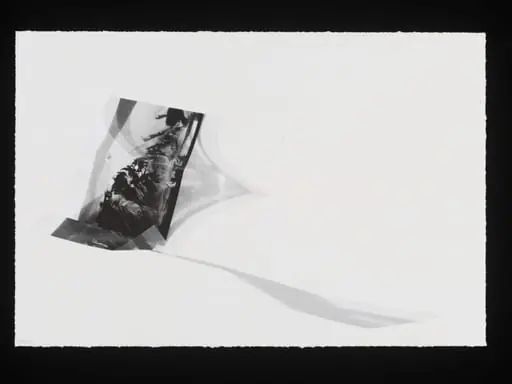
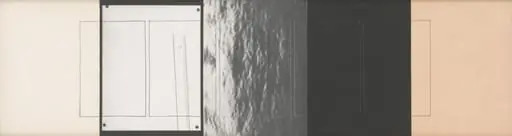
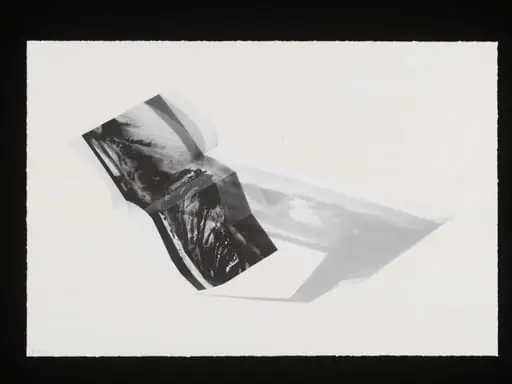
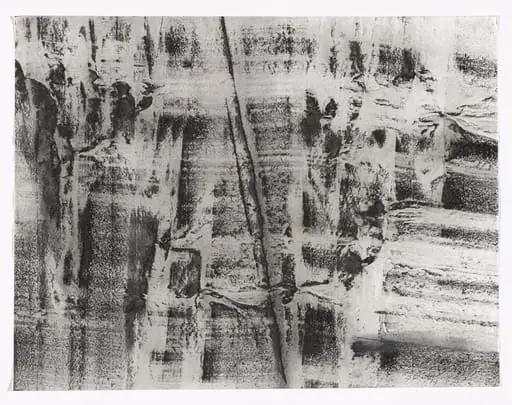
Untitled is an acrylic drawing by Vija Celmins. It dates from 1969 and is held in the collection of the Museum of Modern Art.
About this work
Overview
Created in 1969, this graphite drawing on acrylic-coated paper is part of Vija Celmins’s early exploration of surface and texture.
Created in 1969, this graphite drawing on acrylic-coated paper is part of Vija Celmins’s early exploration of surface and texture. The work rejects traditional subject matter, focusing instead on the abstract qualities of a heavily worked, monochromatic field. Its materiality—graphite applied over a textured ground—creates a tactile, granular surface that resists easy interpretation, aligning with Celmins’s interest in quiet, repetitive observation.
Subject & Meaning
The drawing does not depict a recognizable scene but isolates the visual experience of a rough, uneven surface. The central rectangular frame suggests a bounded field of attention, inviting scrutiny of minute marks and shifts in tone. Rather than representing nature, it evokes the physical sensation of erosion or weathering—offering a meditation on perception, scale, and the limits of representation through abstraction.
Technique & Style
Celmins applied graphite with extreme precision over an acrylic ground, which imparted a subtle, uneven texture to the paper. The surface is built through countless small, layered strokes—dots, scratches, and smudges—that create a dense, tactile field. The absence of color and the focus on tonal variation reflect her commitment to monochrome and the quiet intensity of hand-rendered detail, distancing the work from photographic realism while retaining its observational rigor.
History & Provenance
The work entered The Museum of Modern Art’s collection as part of its broader engagement with post-1960s drawing practices. It reflects Celmins’s transition from early experiments with photorealism toward more abstract investigations of surface. Though unsigned and undated in the traditional sense, its creation date is firmly established through archival records and the artist’s documented practice during her early years in New York.
Context
Made during a period when Minimalism and Conceptual art dominated the New York scene, Celmins’s work stood apart by emphasizing labor-intensive, hand-crafted surfaces over industrial or impersonal forms. Her focus on subtle, non-representational textures aligned with contemporaneous interests in perception and materiality, yet remained rooted in quiet, personal observation rather than theoretical discourse.
Legacy
This drawing exemplifies Celmins’s enduring influence on contemporary drawing practices, particularly in how it redefines the potential of graphite to convey texture without narrative. Its quiet intensity has inspired artists to reconsider the value of repetition, materiality, and the unseen labor behind seemingly simple surfaces, cementing her role in expanding the boundaries of drawing as a medium.
Artist & collection
Artist
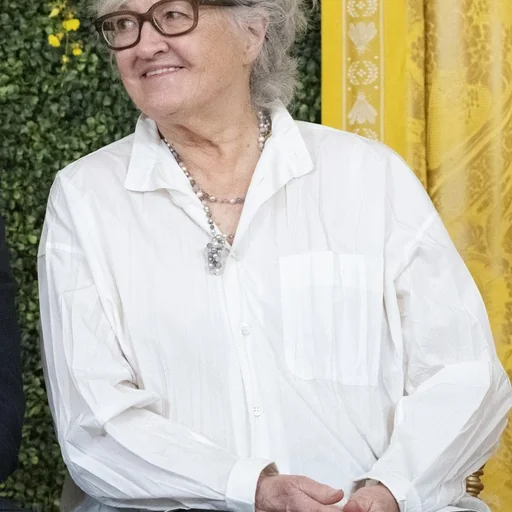
Vija Celmins ( VEE-yə SEL-məns; Latvian: Vija Celmiņa; Latvian pronunciation: ; born October 25, 1938) is a Latvian American visual artist best known for photo-realistic paintings and drawings of natural environments…