Artwork
Åens udløb
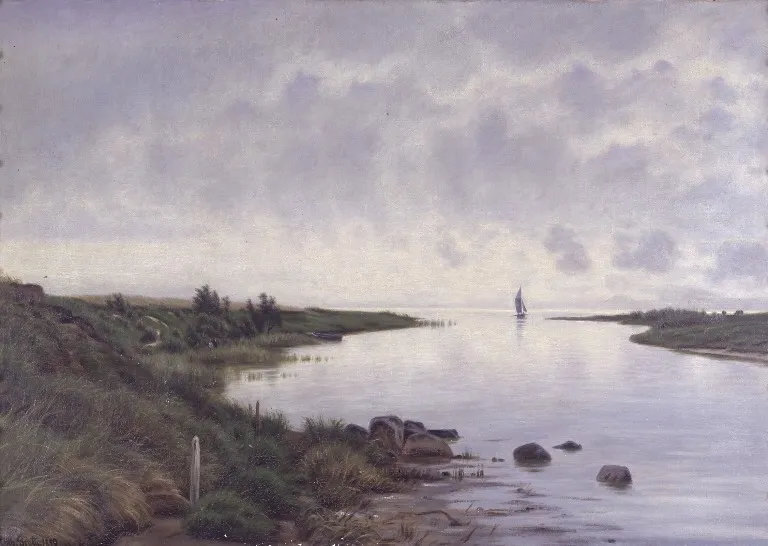
Åens udløb is an oil painting by the Post-Impressionist artist Vilhelm Groth. It is held in the collection of the Statens Museum for Kunst.
About this work
Overview
Its quiet composition and restrained palette reflect Groth’s interest in subtle natural harmony, avoiding dramatic effects in favor of understated observation.
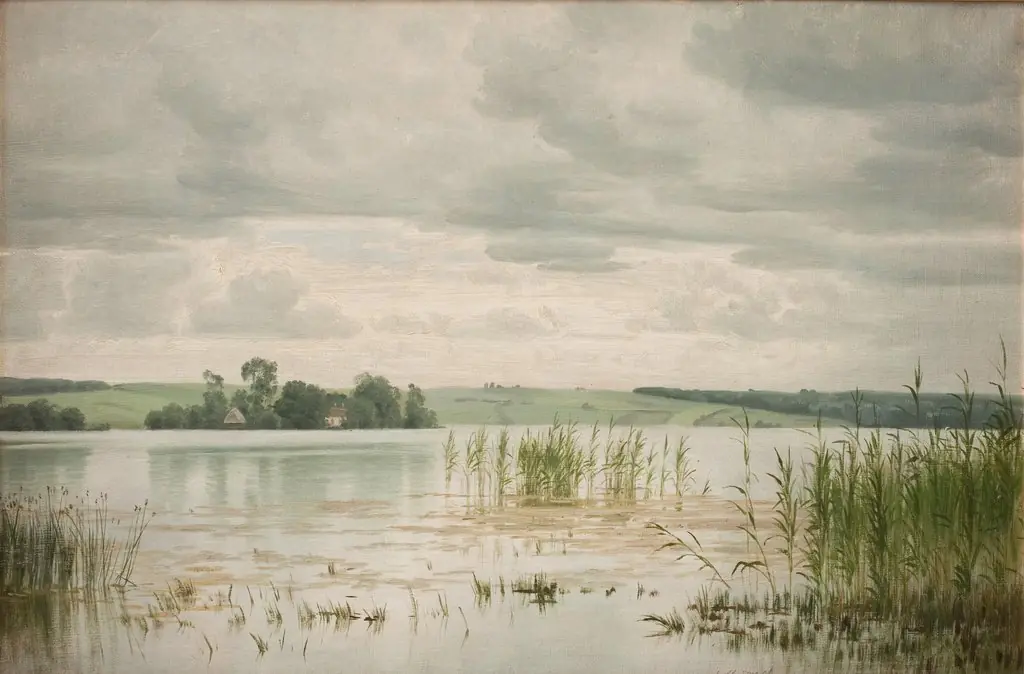
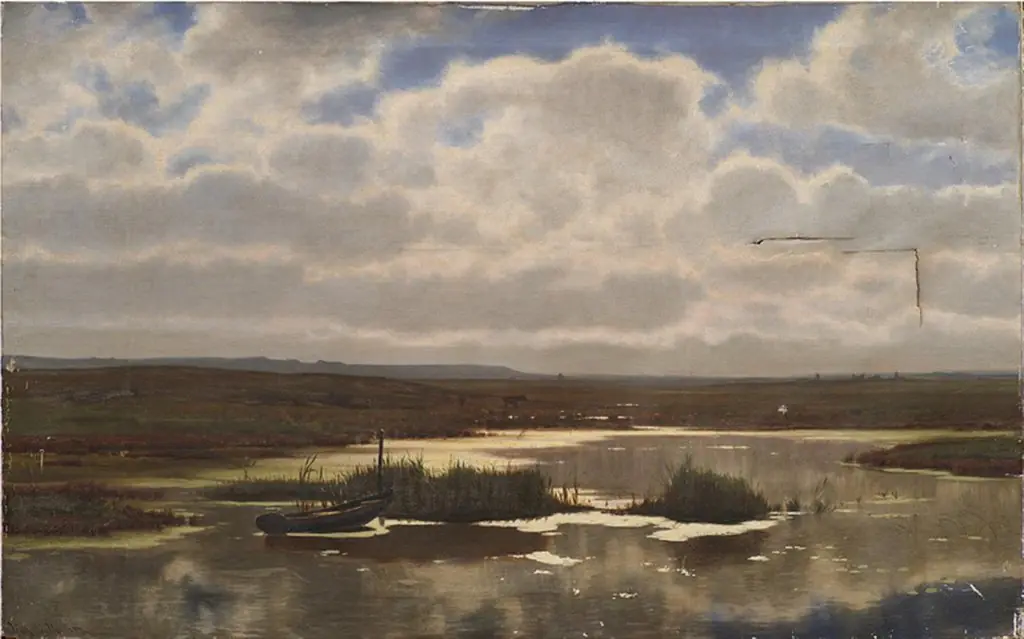
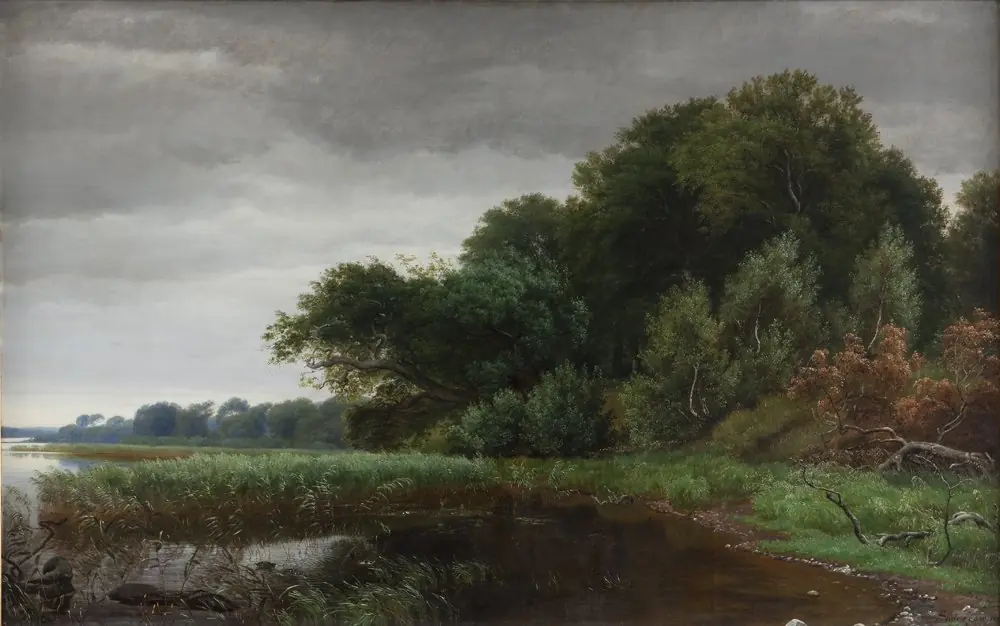
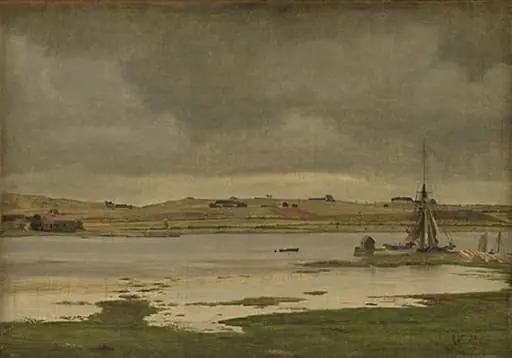
Åens udløb, painted in 1900 by Danish artist Vilhelm Groth, is an oil-on-canvas landscape depicting the mouth of a river as it meets a broader body of water. The work is part of the permanent collection at Statens Museum for Kunst in Copenhagen. Its quiet composition and restrained palette reflect Groth’s interest in subtle natural harmony, avoiding dramatic effects in favor of understated observation.
Subject & Meaning
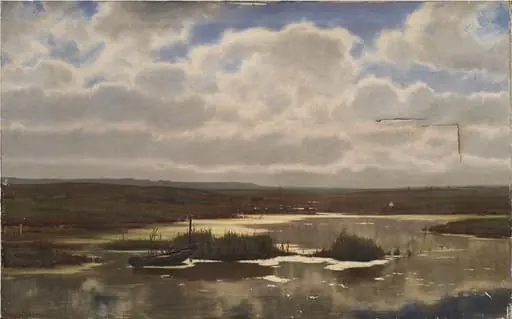
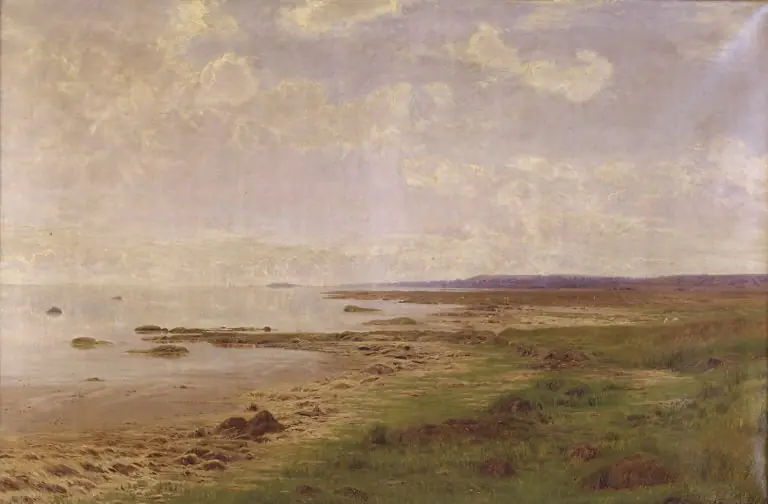
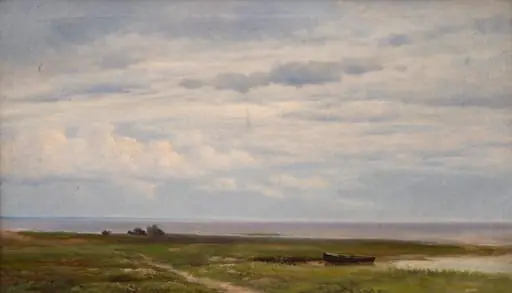
The painting captures a tranquil riverine scene where water, sky, and land converge. A single sailboat drifts gently along the current, suggesting human presence without disruption. The absence of figures or architectural elements emphasizes solitude and stillness. The work conveys a meditative quality, inviting contemplation of nature’s quiet rhythms rather than narrating a specific event or story.
Technique & Style
Groth employed soft brushwork and a muted tonal range to evoke atmospheric cohesion. The river’s surface mirrors the sky with delicate gradations, while foreground textures—grasses, stones—are rendered with loose, tactile strokes. Light is diffused and even, minimizing shadows to sustain a sense of calm. The composition is balanced yet unforced, with the river acting as a visual conduit between earth and heavens.
History & Provenance
Created in 1900, the painting entered the collection of Statens Museum for Kunst shortly after its completion. It was likely acquired during a period when Danish institutions were actively documenting national artistic output. No significant changes in ownership are recorded, and it has remained in public custody since its acquisition, consistently displayed as an example of early 20th-century Danish landscape painting.
Context
Groth worked during a time when Danish artists were moving away from romanticized nature toward more intimate, observational approaches. Åens udløb aligns with the broader trend of plein air painting and the influence of French Impressionism, though it retains a reserved, almost Nordic restraint. It reflects a cultural preference for quietude and natural authenticity over theatricality.
Legacy
While not widely reproduced, Åens udløb remains a representative example of Groth’s mature style and the Danish landscape tradition of the early 1900s. It contributes to scholarly understanding of how Danish painters interpreted everyday natural scenes with emotional restraint. The work continues to be referenced in studies of Nordic tonalism and the evolution of modern Danish art.
Artist & collection