Artwork
I lysthuset
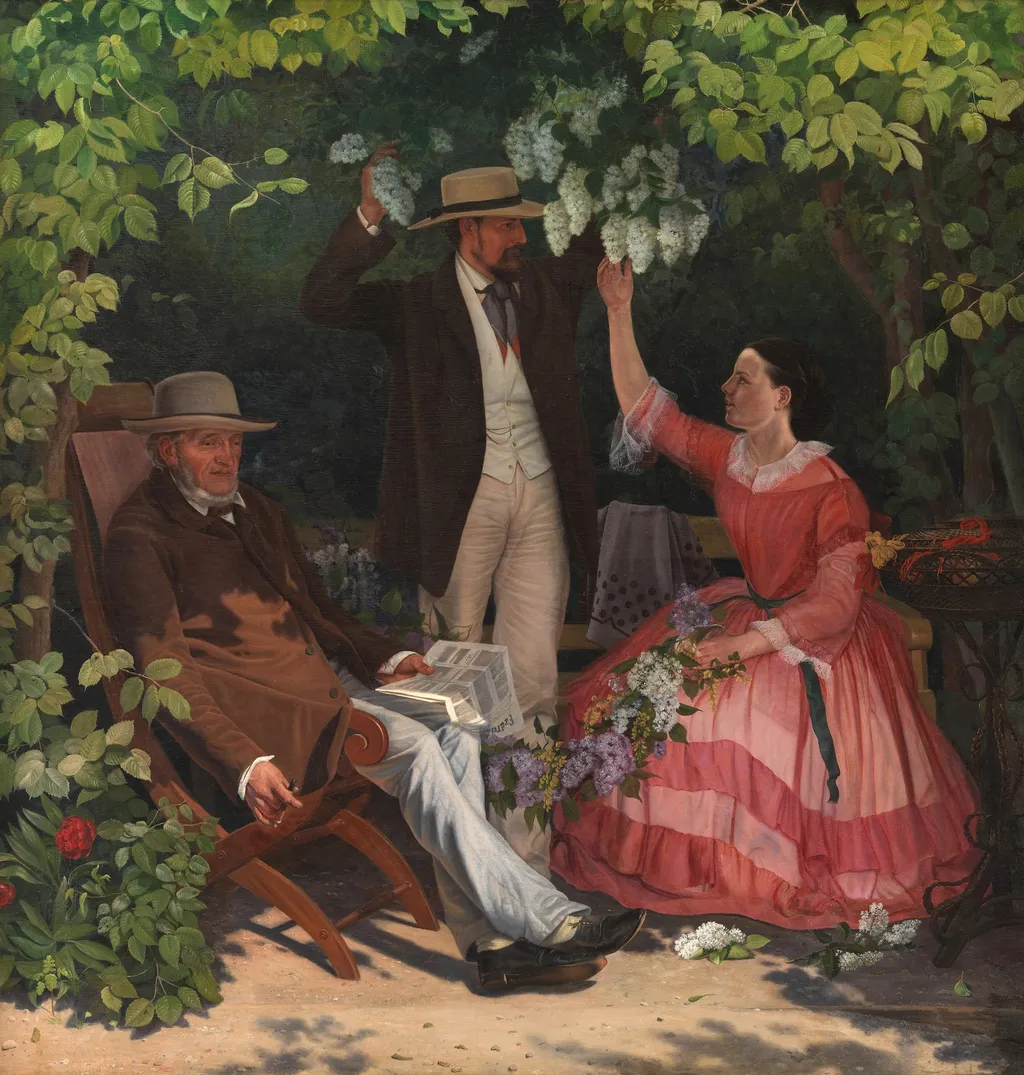
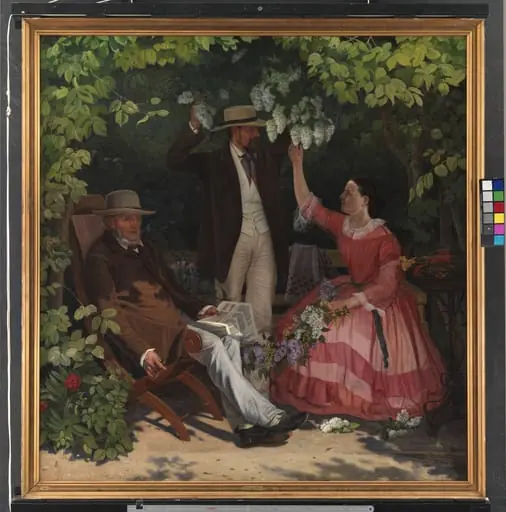
I lysthuset is an oil painting by Vilhelm Kyhn. It dates from 1858 and is held in the collection of the Statens Museum for Kunst.
About this work
Overview
As a Danish artist active during a transitional era in national art, he adhered to traditional modes of representation even as newer movements emerged.
Vilhelm Kyhn painted *I lysthuset* in 1858 using oil on canvas, capturing a quiet moment in a garden setting. As a Danish artist active during a transitional era in national art, he adhered to traditional modes of representation even as newer movements emerged. The work is part of the permanent collection at Statens Museum for Kunst, reflecting its significance within Denmark’s 19th-century pictorial heritage.
Subject & Meaning
The painting portrays a man and woman seated in a cultivated garden, their postures suggesting quiet companionship. Dressed in modest, period-appropriate attire, they are immersed in a natural setting rich with foliage and blossoms. The scene avoids narrative drama, instead emphasizing stillness and intimacy, aligning with the romantic ideal of nature as a refuge for personal reflection and emotional connection.
Technique & Style
Kyhn employed chiaroscuro to model forms through subtle shifts in light and shadow, enhancing the three-dimensionality of figures and foliage. Brushwork is precise yet unobtrusive, favoring tonal harmony over bold strokes. The composition is carefully balanced, with the figures anchored by dense plant life and soft atmospheric perspective, reinforcing the painting’s calm, contained mood without theatricality.
History & Provenance
Created in 1858, the painting entered the collection of Statens Museum for Kunst shortly after its completion. Kyhn, a respected figure in Danish art circles, maintained consistent stylistic principles throughout his career, resisting the shift toward realism and impressionism. The work’s preservation in a national institution underscores its role as a representative example of mid-century Danish landscape painting.
Context
Kyhn worked between the Danish Golden Age and the Modern Breakthrough, a period marked by evolving artistic ideals. While contemporaries began embracing urban subjects and looser brushwork, he remained committed to idealized nature and structured composition. His dedication to traditional methods positioned him as a conservator of established aesthetics amid growing artistic experimentation.
Legacy
Beyond his paintings, Kyhn played a key role in shaping Danish art education, establishing institutions that included opportunities for women artists—a progressive step for the time. Though his style did not define the future of Danish painting, his pedagogical contributions and consistent output helped sustain a generation of artists grounded in observational discipline and technical rigor.
Own this work as a print
Artist & collection
Artist
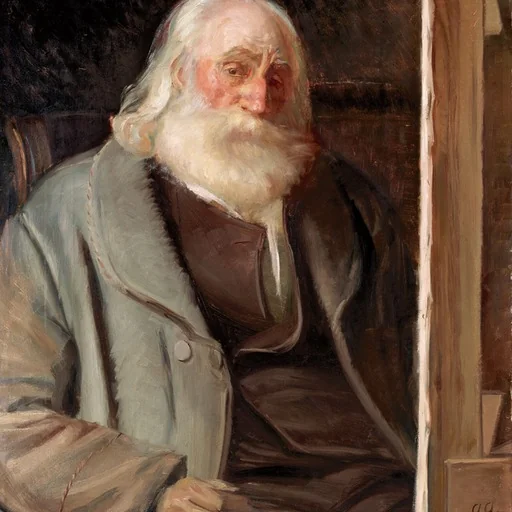
Peter Vilhelm Carl Kyhn (March 30, 1819 – May 11, 1903) was a Danish landscape painter who belonged to the generation of national romantic painters immediately after the Danish Golden Age and before the Modern Breakthrough.

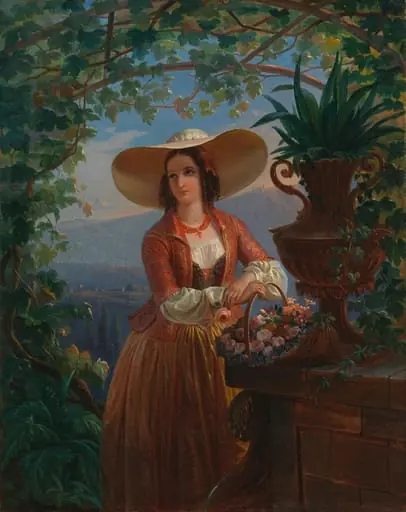 Italialainen kukkaistyttö
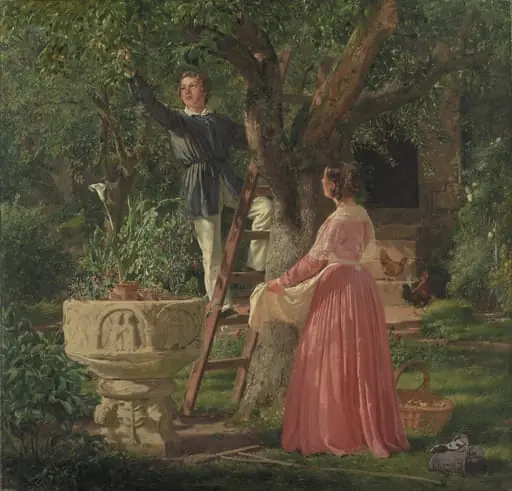 The Ancient Baptismal Font in the Garden
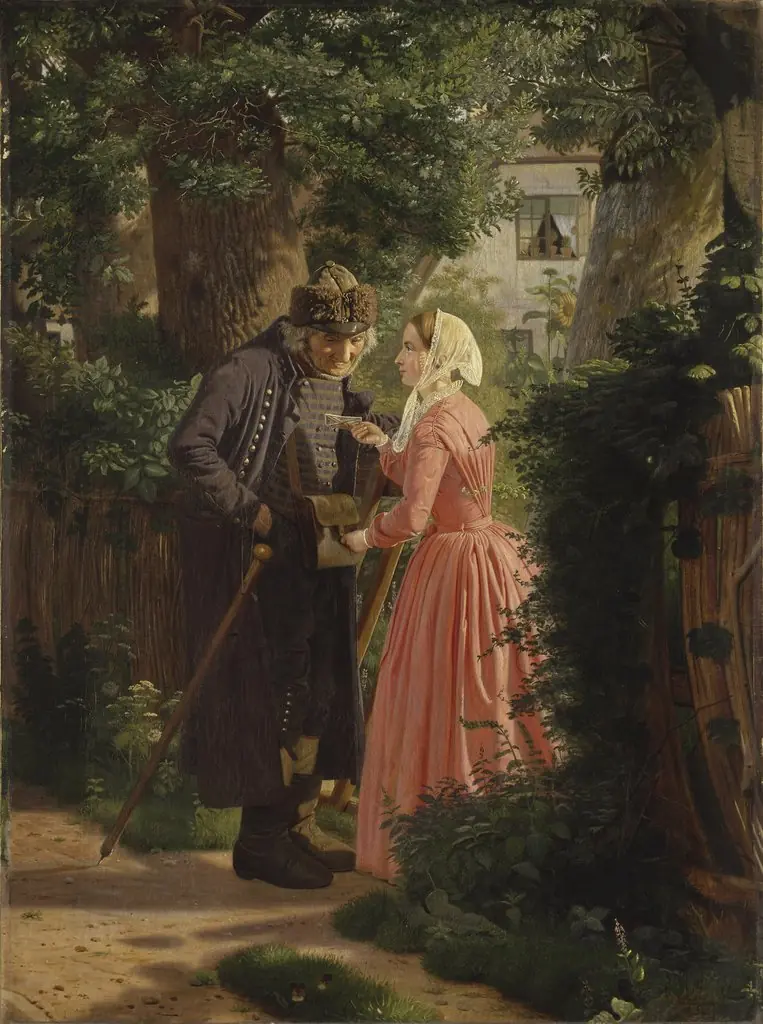 En ung pige beder landsbyens gamle postbud besørge et brev
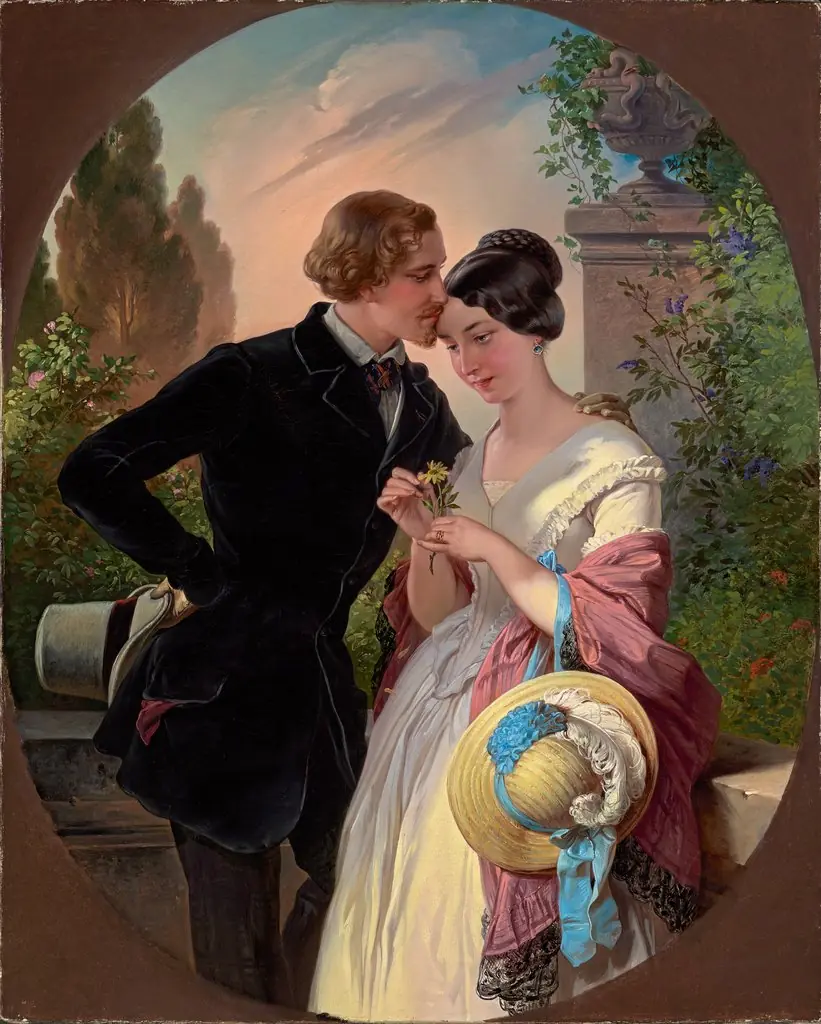 Faust und Gretchen im 19. Jahrhundert
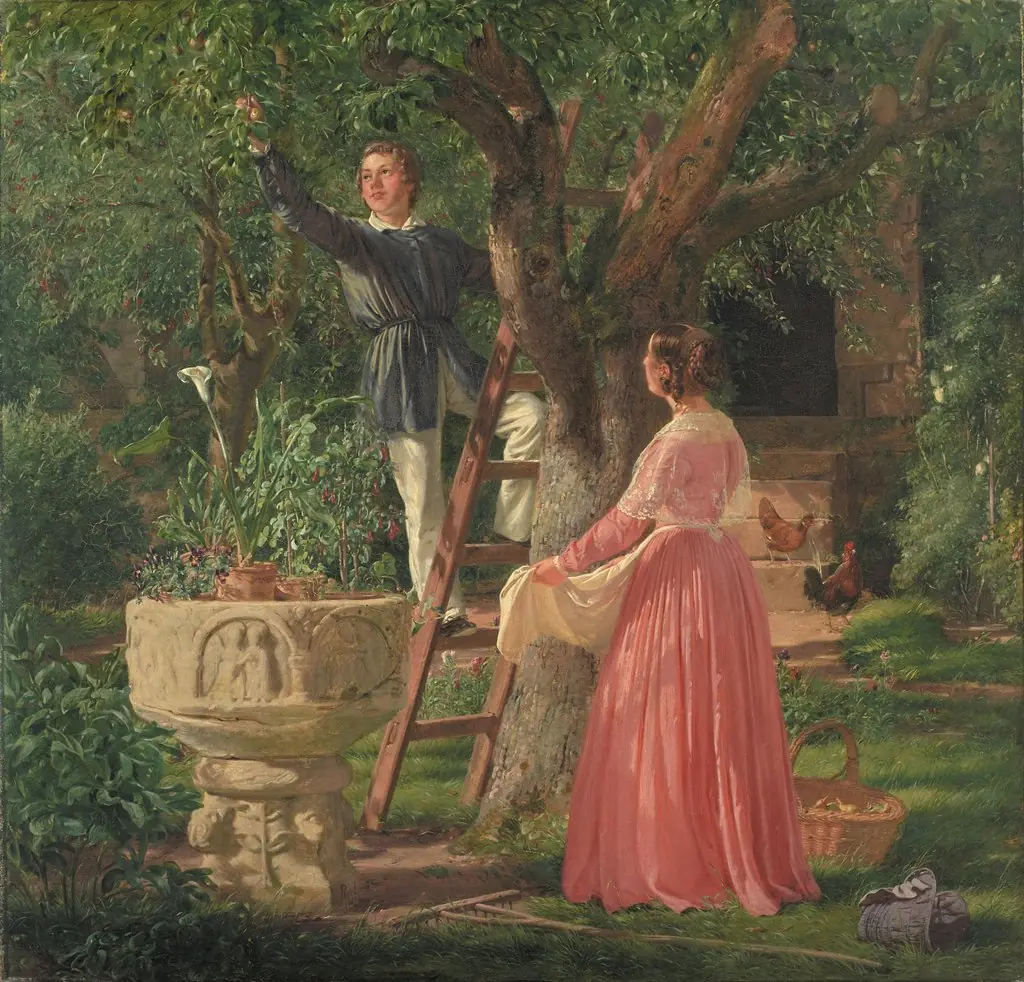 Haven med den gamle døbefont
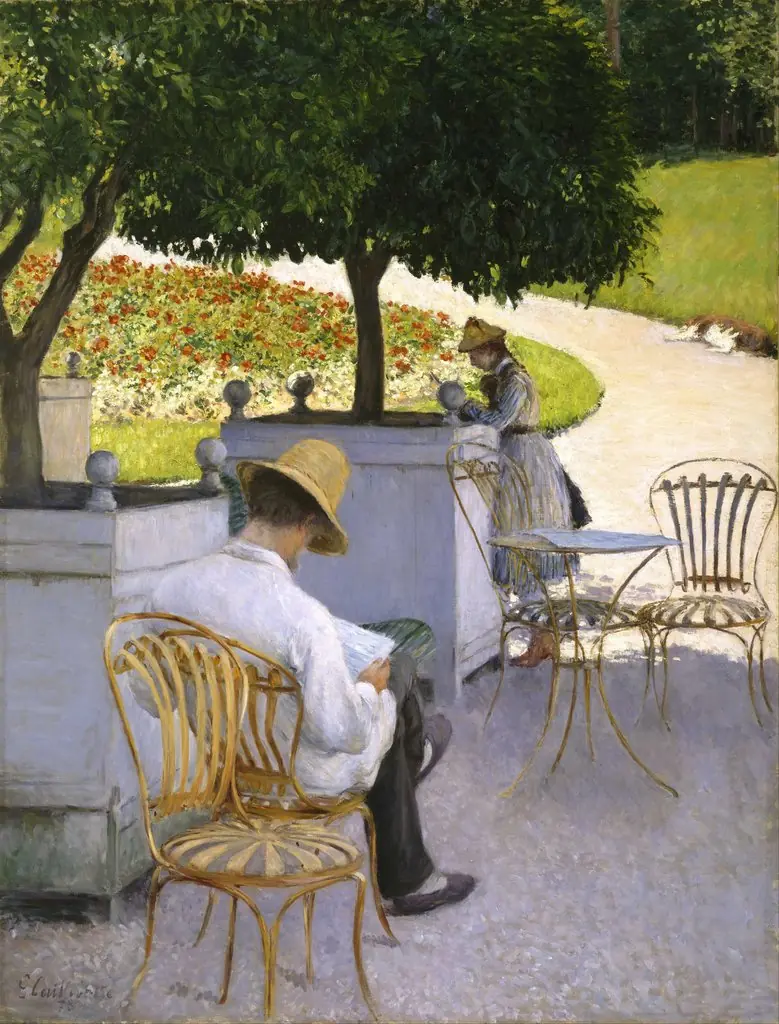 Les orangers
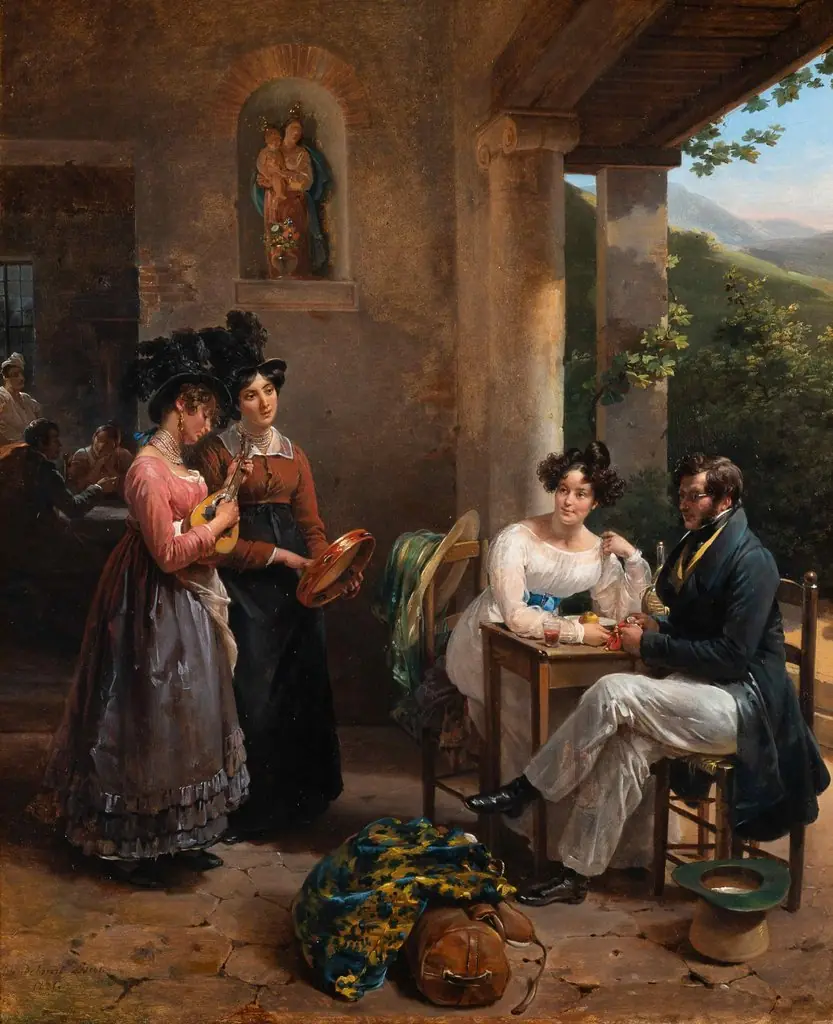 Self-Portrait of the Artist and Her Husband on Their Wedding Trip
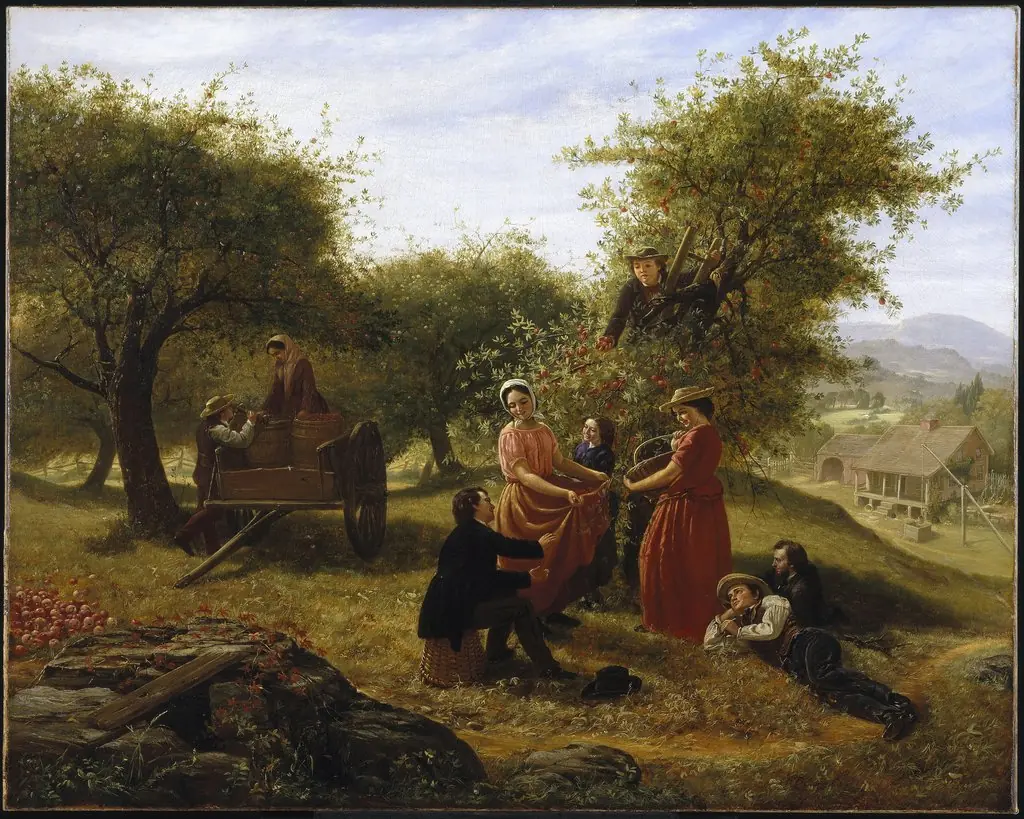 Apple Gathering
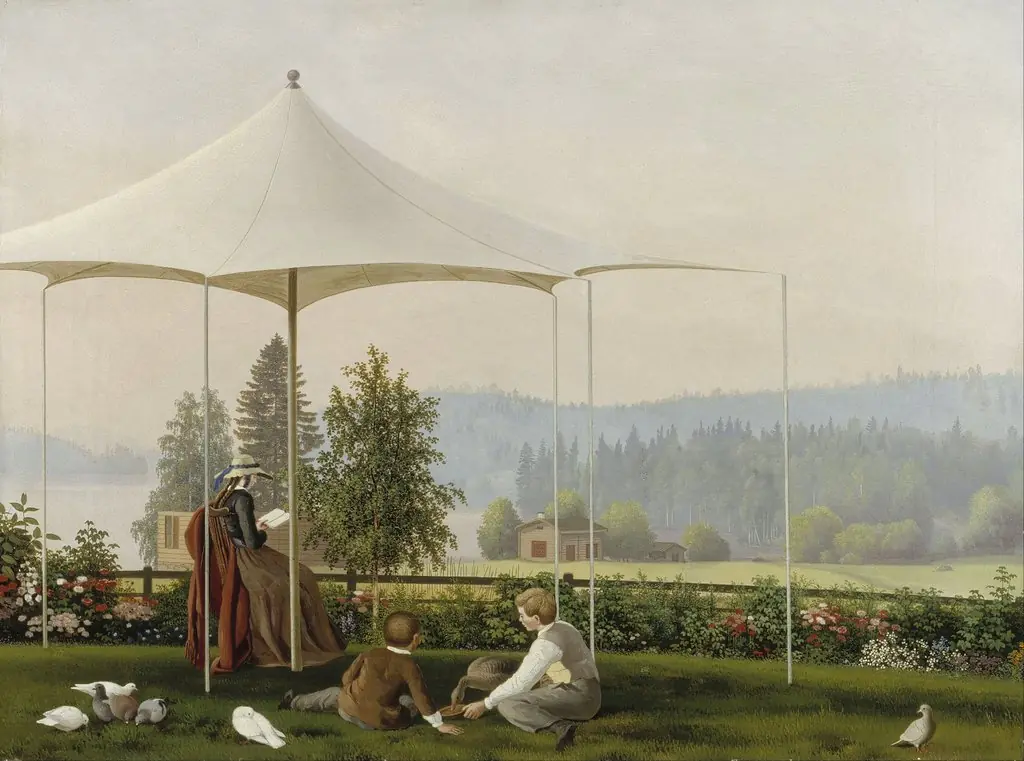 In the Garden of Haminalahti
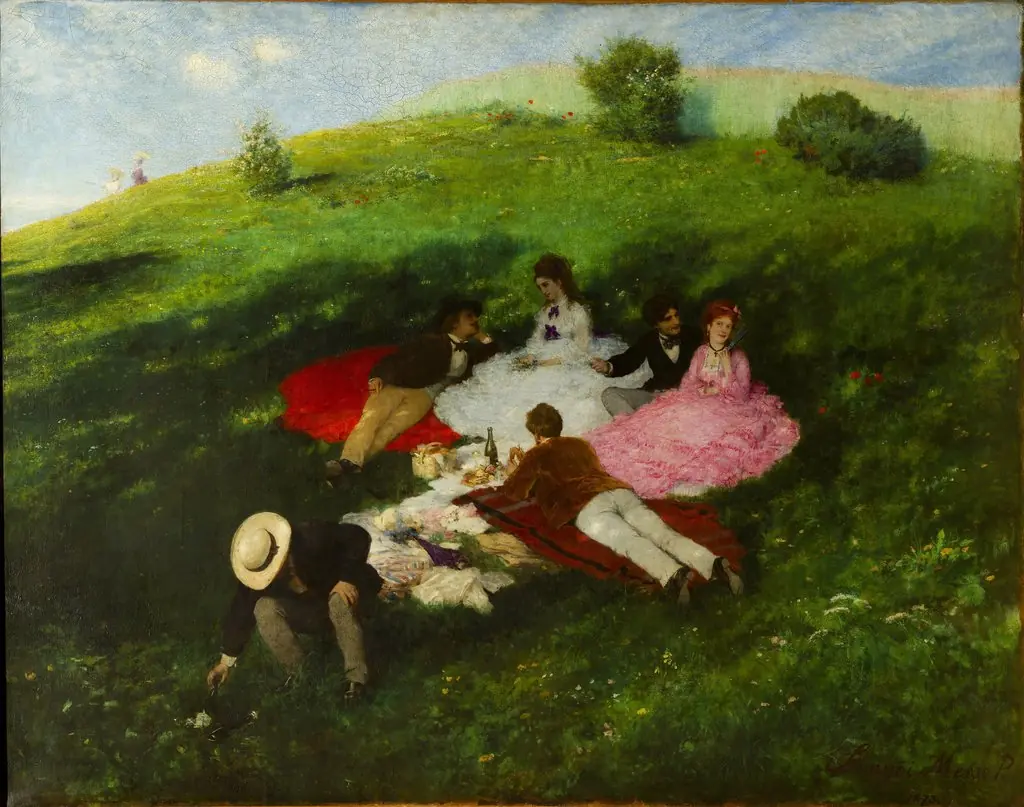 Picnic in May
 En ung pige beder landsbyens gamle postbud besørge et brev
 I lysthuset