Artwork
Landscape with Wheelbarrow
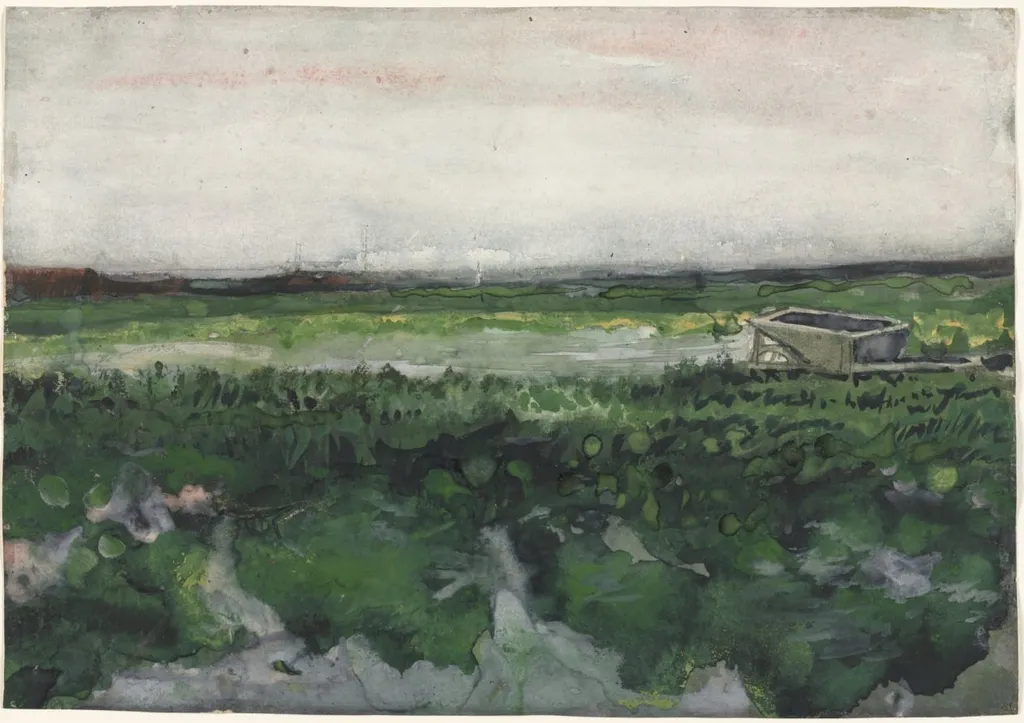
Landscape with Wheelbarrow is a drawing by the Impressionist artist Vincent van Gogh. It dates from 1883 and is held in the collection of the Cleveland Museum of Art.
About this work
Van Gogh painted this in 1883 while staying in Drenthe, a remote part of the Netherlands.
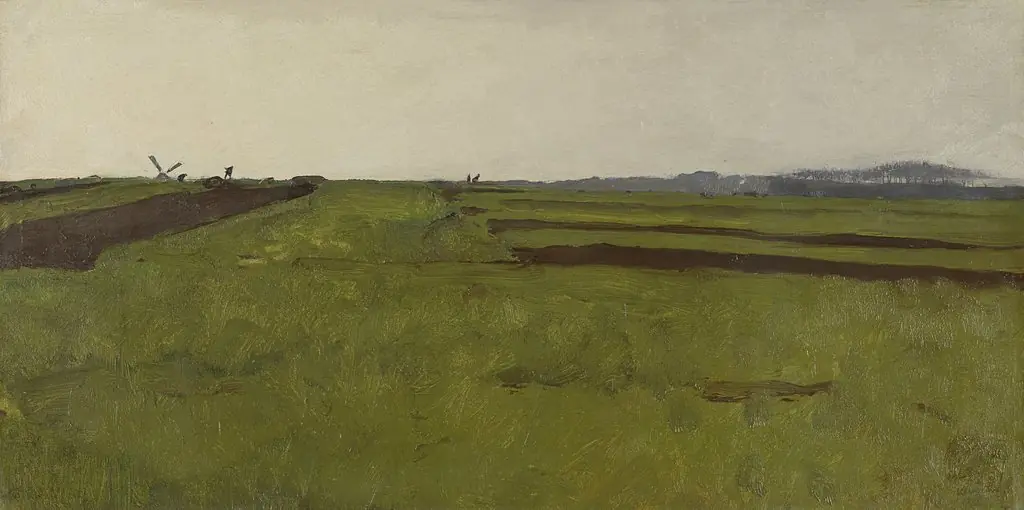
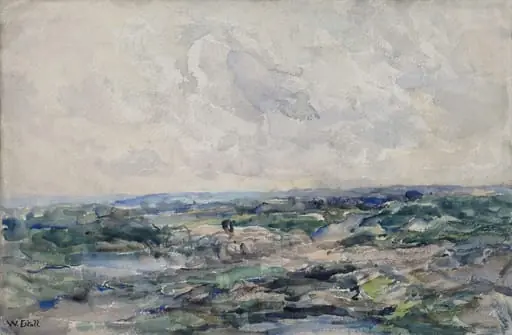
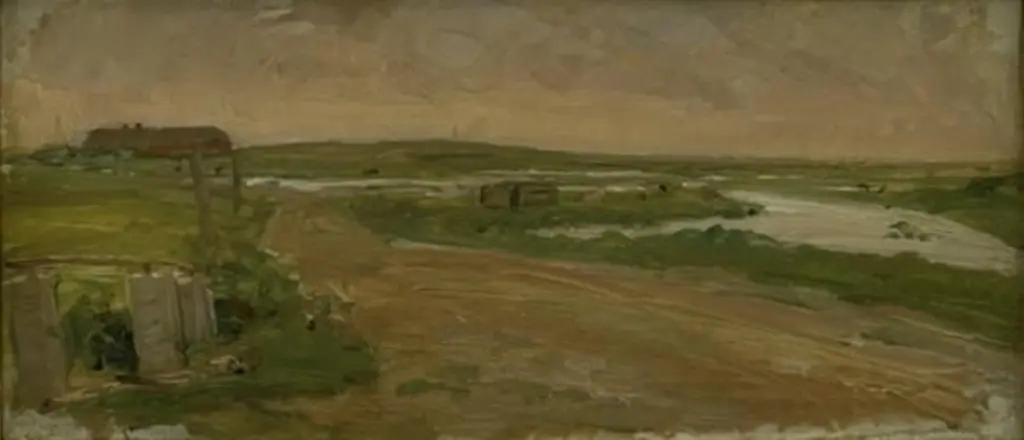
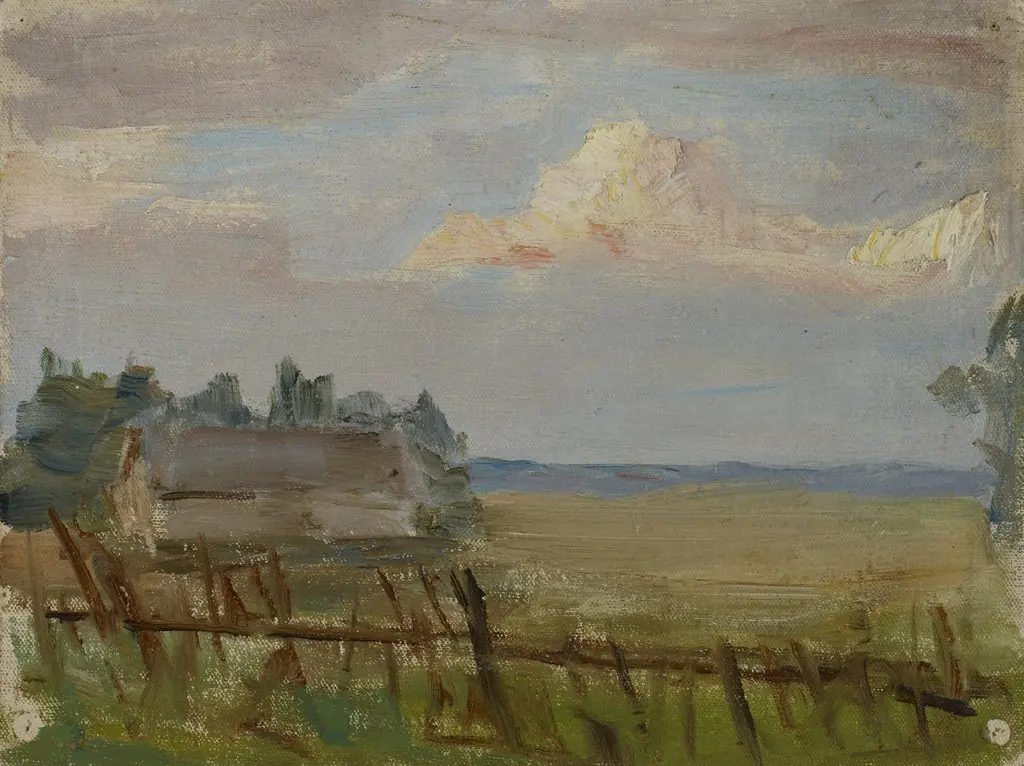
This painting shows a quiet Dutch field with a single wheelbarrow in the foreground. The sky takes up most of the canvas, heavy with clouds. The colors are cool—greens and blues, with a few warm accents.
Van Gogh painted this in 1883 while staying in Drenthe, a remote part of the Netherlands. He loved the empty, peaceful landscapes there. The wheelbarrow is small but stands out, like a quiet marker in all that space.
It’s a rare early work where he used muted tones. If you like this, check out The Cleveland Museum of Art to see more of his pieces.
Overview
Landscape with Wheelbarrow is a 1883 drawing by Vincent van Gogh, created during his stay in Drenthe, a rural northeastern region of the Netherlands. The work depicts a serene Dutch field with a prominent wheelbarrow in the foreground and a dominant, cloud-heavy sky.
Subject & Meaning
The subject is a peaceful, uninhabited heath landscape, with a small wheelbarrow serving as a subtle, grounding element amidst the vast, serene expanse. The scene embodies the tranquility and natural beauty that Van Gogh sought in Drenthe.
Technique & Style
Executed with a restrained palette of steely greens and cool blues, accented with warm hues in the evening sky, the drawing showcases Van Gogh's early mastery of capturing mood through muted, harmonious coloration.
History & Provenance
Created in September 1883, the drawing was made shortly after Van Gogh's relocation from The Hague to Drenthe, reflecting his response to the unindustrialized landscape's beauty.
Artist & collection
Artist
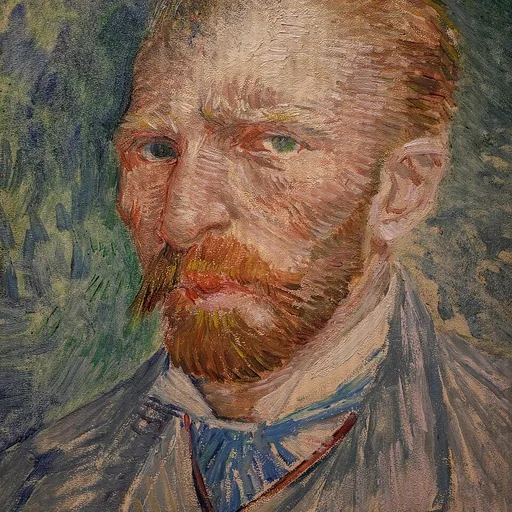
Vincent Willem van Gogh was a Dutch Post-Impressionist painter who is among the most famous and influential figures in the history of Western art.