Artwork
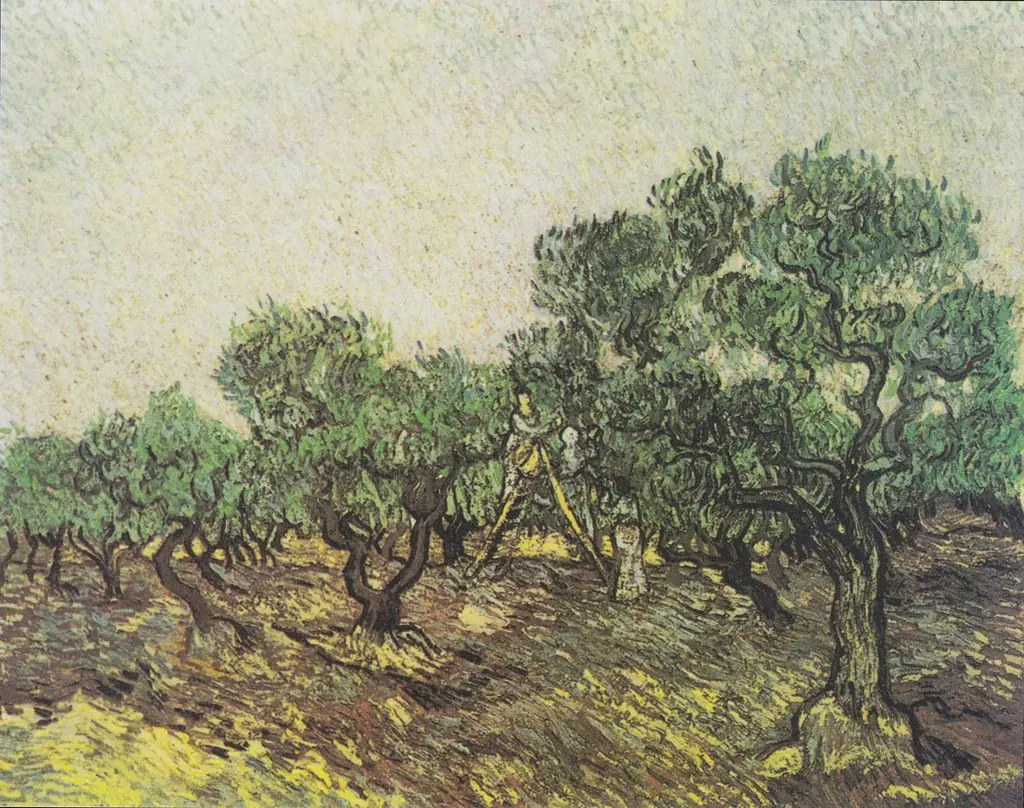
Olive Grove with Picking Figures
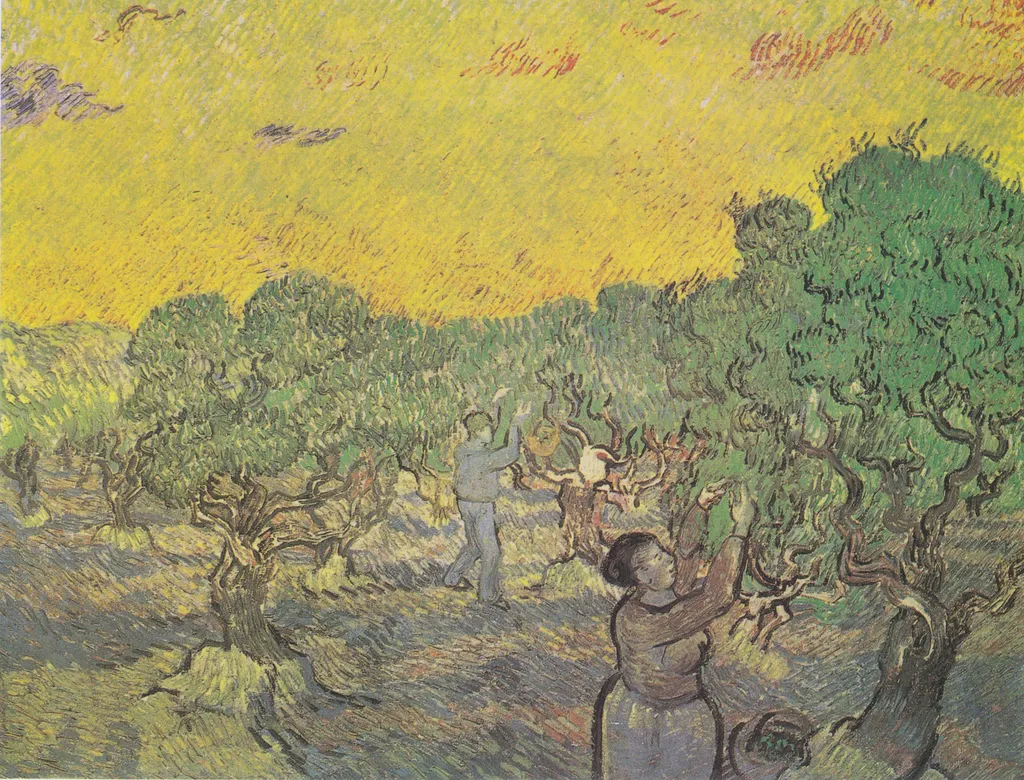
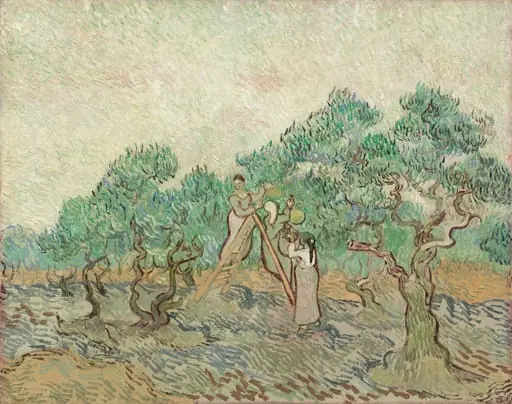
Olive Grove with Picking Figures is an oil painting by the Post-Impressionist artist Vincent van Gogh. It dates from 1889 and is held in the collection of the Kröller-Müller Museum.
About this work
Overview
Painted in 1889, Olive Grove with Picking Figures is an oil work by Vincent van Gogh depicting laborers harvesting olives in a southern landscape.
Painted in 1889, Olive Grove with Picking Figures is an oil work by Vincent van Gogh depicting laborers harvesting olives in a southern landscape. The painting is part of the Kröller-Müller Museum’s collection in the Netherlands. Van Gogh produced it during his stay at the asylum in Saint-Rémy, where he frequently turned to the surrounding countryside for subject matter, capturing quiet rural activity with intense emotional presence.
Subject & Meaning
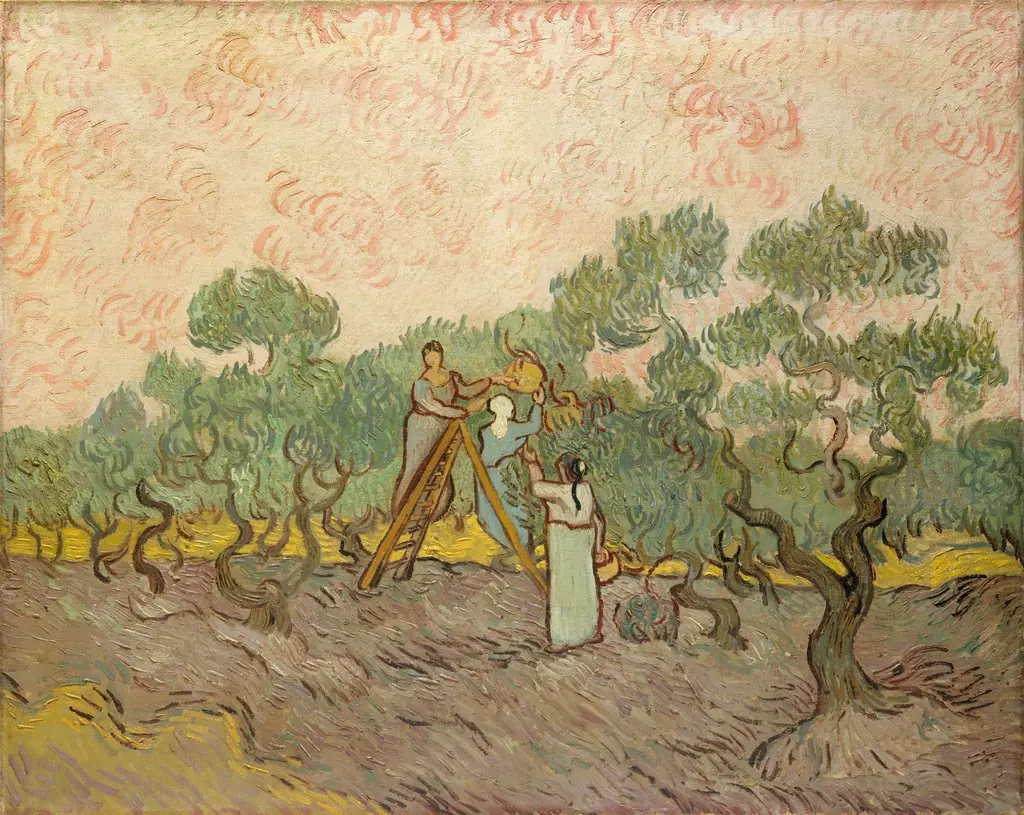
The scene portrays peasants engaged in the seasonal task of olive picking, a common agricultural practice in Provence. Van Gogh does not idealize the labor but presents it with dignity, emphasizing the rhythm of movement and connection to the land. The figures are small against the expansive grove, suggesting harmony between human effort and natural cycles, a recurring theme in his late works.
Technique & Style
Van Gogh applied thick, directional brushstrokes to convey texture and motion, particularly in the undulating forms of the olive trees. The sky and foliage are rendered in heightened hues—yellow-green and ochre—creating a vibrating atmosphere. The brushwork animates the scene, making the trees appear to sway, while the figures are rendered with simplified, almost sculptural forms, grounding the composition in physical reality.
History & Provenance
Created during Van Gogh’s voluntary confinement at Saint-Rémy, the painting was likely completed in late 1889. It entered the Kröller-Müller collection in the early 20th century through the acquisitions of Helene Kröller-Müller, who systematically gathered Van Gogh’s works. The painting has remained in the museum’s holdings since its acquisition, with no significant changes in ownership or condition.
Context
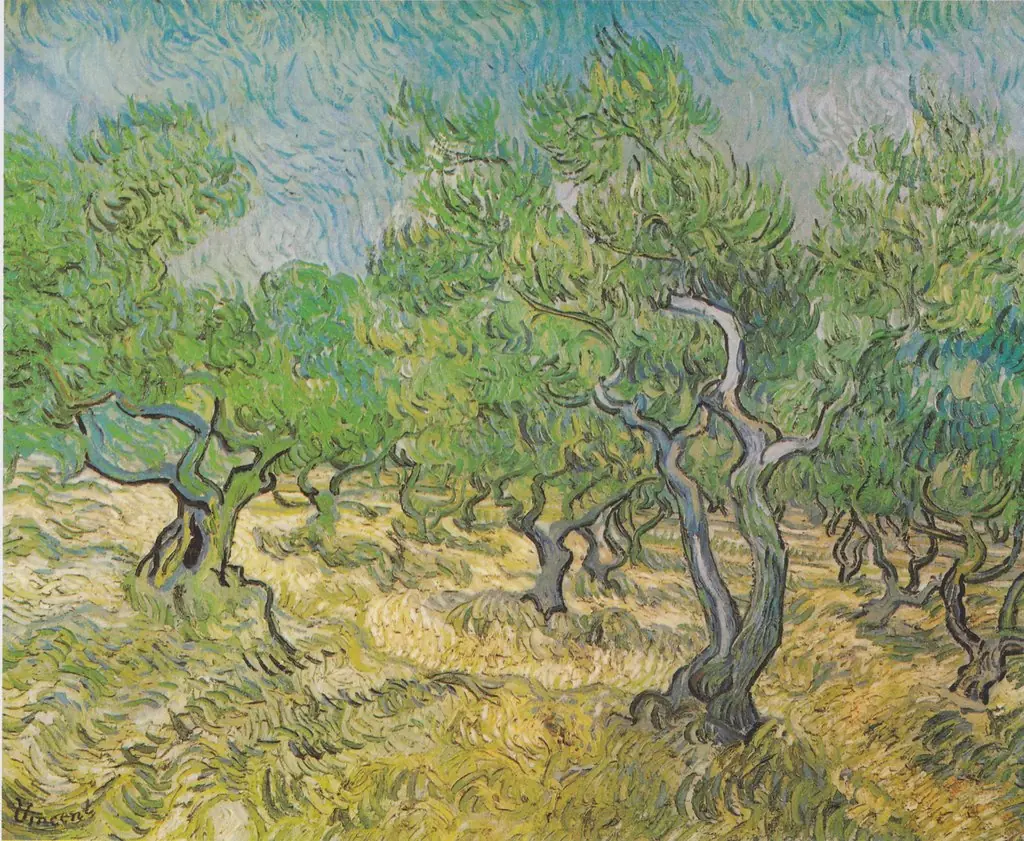
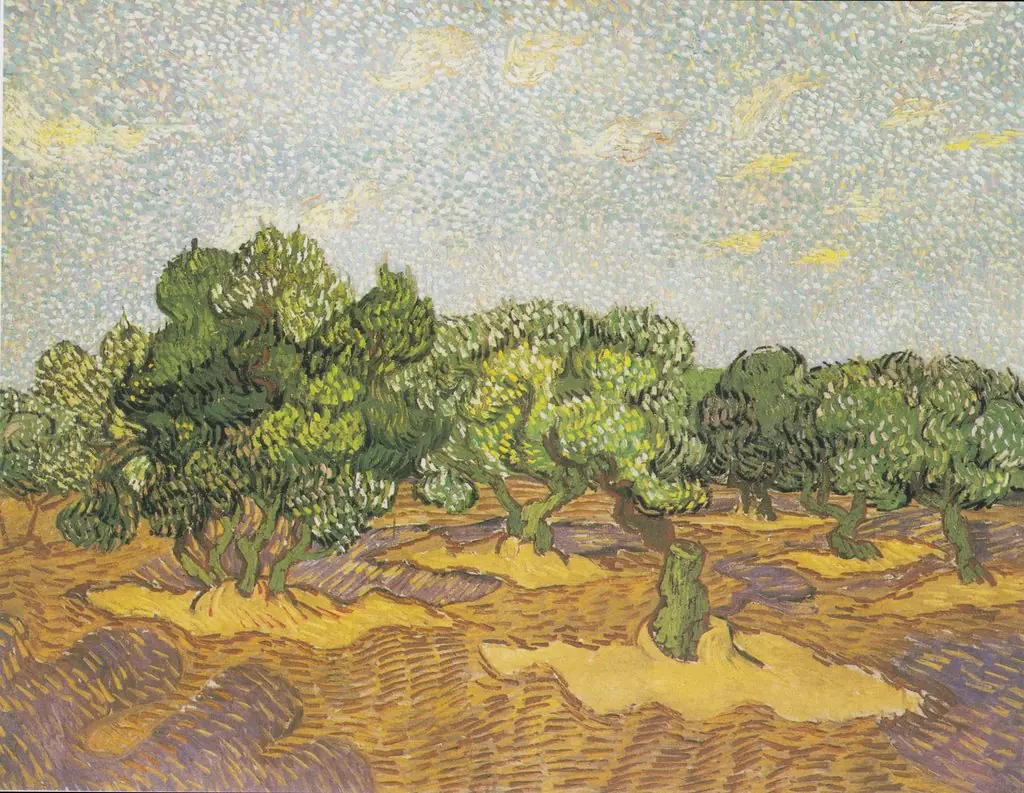
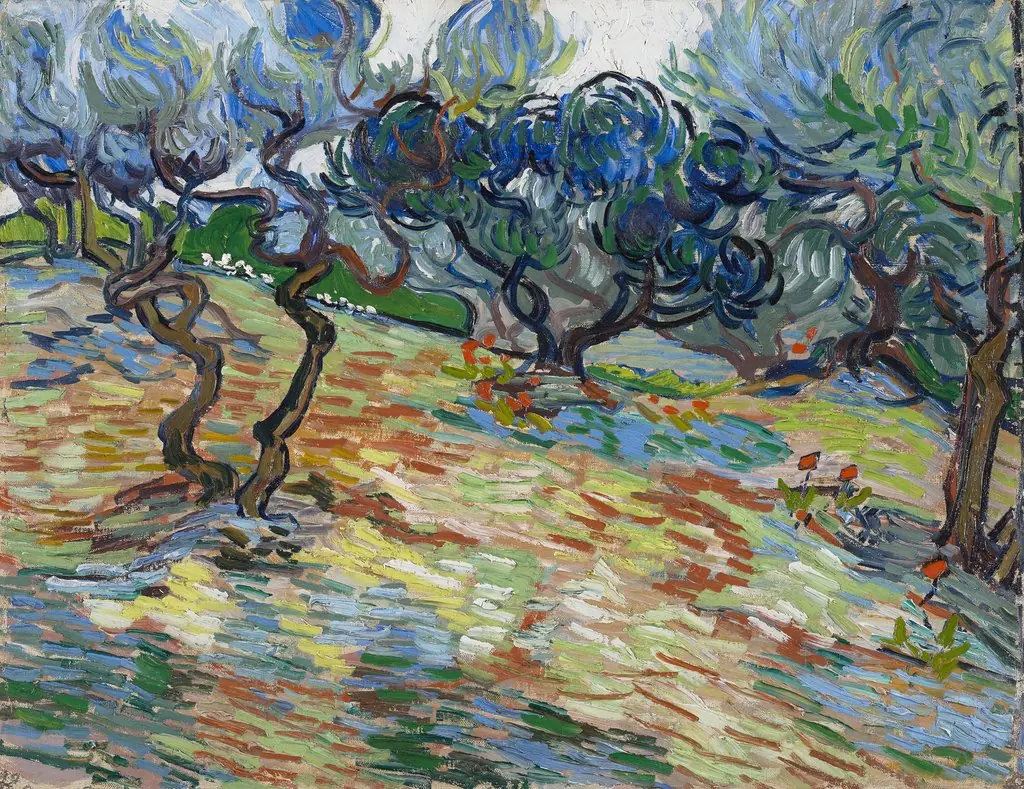
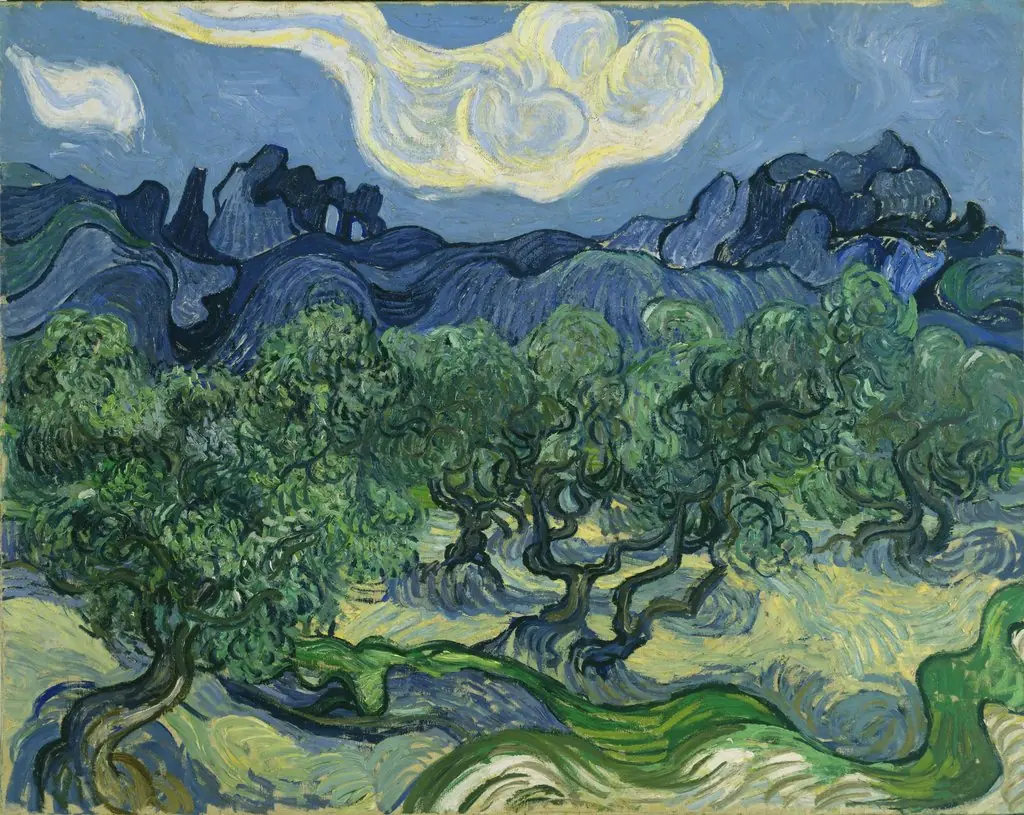
Van Gogh painted multiple olive grove scenes during his time in Saint-Rémy, drawn to the trees’ gnarled forms and symbolic resonance. These works coincided with his deepening interest in nature as a spiritual force. The olive grove, associated with endurance and resilience, may have offered him personal solace amid his psychological struggles, reflecting both observation and inner conviction.
Legacy
The painting contributes to the broader understanding of Van Gogh’s late style, where emotional intensity and formal innovation converge. It stands as part of a series that redefined landscape painting through expressive color and dynamic brushwork. While not widely exhibited, it remains a key example of his commitment to portraying rural life with sincerity and visual power.
Own this work as a print
Artist & collection
Artist
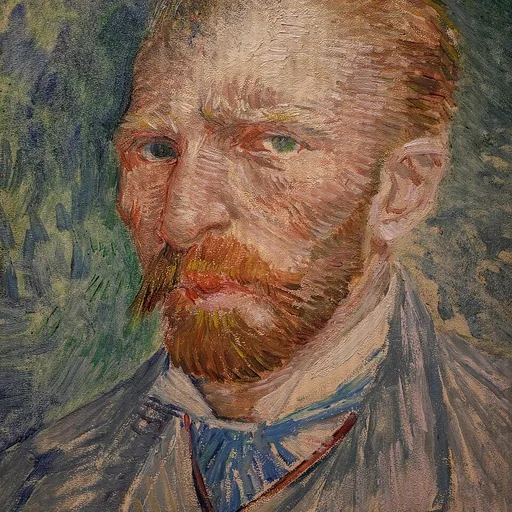
Vincent Willem van Gogh was a Dutch Post-Impressionist painter who is among the most famous and influential figures in the history of Western art.