Artwork
White House at Night
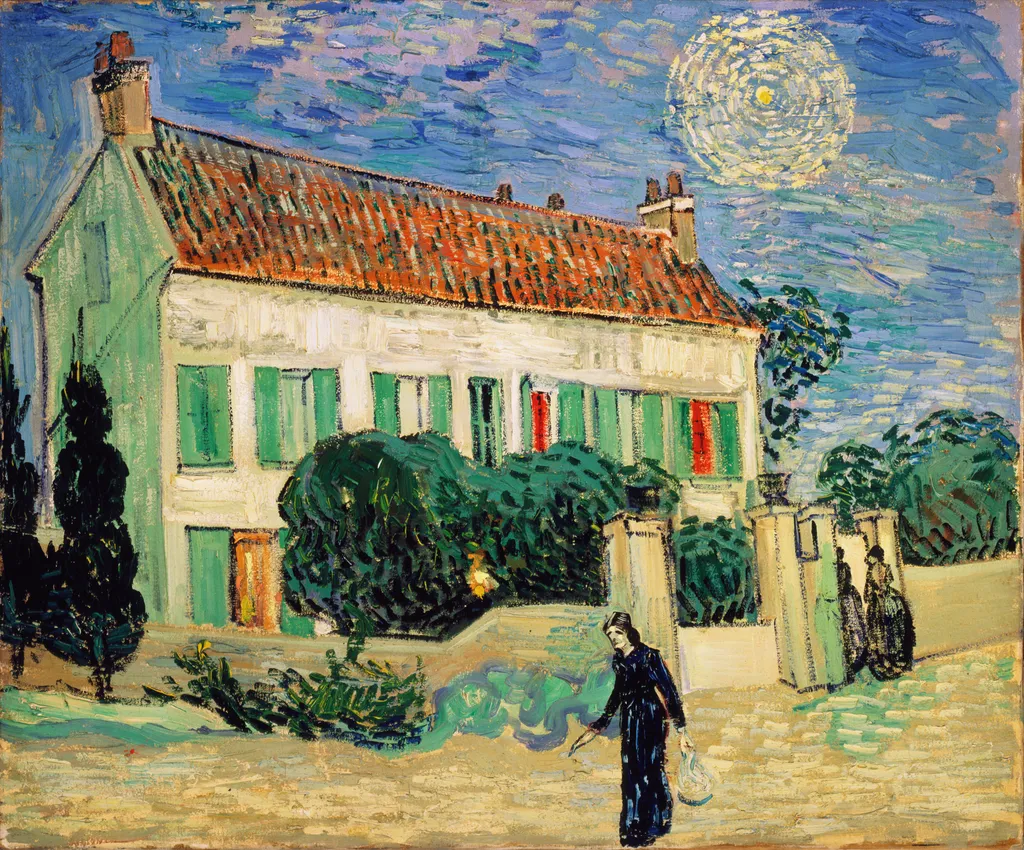
White House at Night is an oil painting by the Post-Impressionist artist Vincent van Gogh. It is held in the collection of the Hermitage Museum.
About this work
Van Gogh painted *White House at Night* in June 1890.
It shows a single house bathed in warm light at dusk.
This was his last work before he died six weeks later.
The small town of Auvers-sur-Oise in France inspired many of his late paintings.
This spot felt quiet yet full of color to him.
The brushwork hints at how quickly he worked those final days.
Next, look up Vincent van Gogh.
Overview
White House at Night is an oil painting by Vincent van Gogh, created on June 16, 1890, in Auvers-sur-Oise, France. This work, completed just six weeks before his death, depicts a solitary house under a twilight sky. It is currently housed in the Hermitage Museum in St. Petersburg. The painting offers a glimpse into the artist's final creative burst in the quiet French town.
Subject & Meaning
A prominent star in the sky, identified by astronomers as Venus, is often seen as a symbol of fate, conveying the artist's profound anguish during this period.
The painting portrays a single house illuminated by warm evening light. Interpreters suggest the work reflects Van Gogh's intense psychological state; the house's windows, rendered with striking red accents, have been likened to "alarming" eyes. A prominent star in the sky, identified by astronomers as Venus, is often seen as a symbol of fate, conveying the artist's profound anguish during this period.
Technique & Style
Created during Van Gogh's final weeks, the painting exhibits a dynamic brushwork that suggests the artist's rapid execution. The scene, set in the tranquil village of Auvers-sur-Oise, is imbued with a vibrant palette, capturing the warm glow of dusk. This expressive handling of paint and color characterizes his late works, reflecting both the visual richness of his surroundings and his urgent creative drive.
History & Provenance
The artwork's journey through the 20th century was complex. After being exhibited in Switzerland during the 1920s, it entered the private collection of German industrialist Otto Krebs, who kept his acquisitions, many of which were later deemed "degenerate art" by the Nazis, out of public view. Believed lost after World War II, the painting remained uncatalogued in the Hermitage archives for five decades before its public reappearance in 1995, as part of an exhibition of art recovered by the Soviets.
Context
Van Gogh completed this canvas in Auvers-sur-Oise, a village that inspired many of his final paintings. Astronomical analysis, based on the position of the depicted star, suggests the scene was captured around 8:00 PM. Researchers Donald Olson and Russell Doescher identified this celestial body as Venus, which shone brightly in the evening sky of June 1890, grounding the painting in a specific moment in time.
Own this work as a print
Artist & collection
Artist
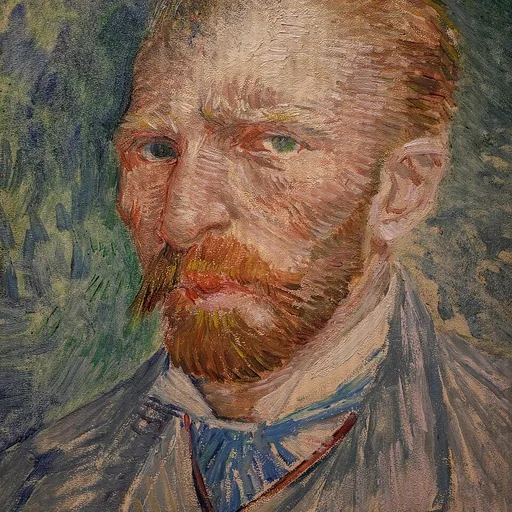
Vincent Willem van Gogh was a Dutch Post-Impressionist painter who is among the most famous and influential figures in the history of Western art.