Artwork
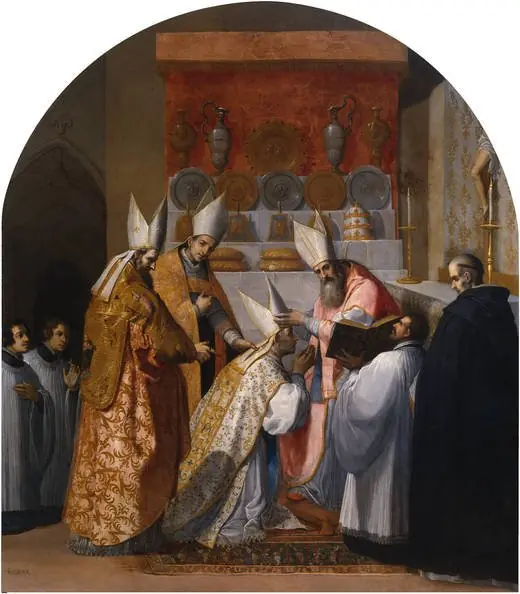
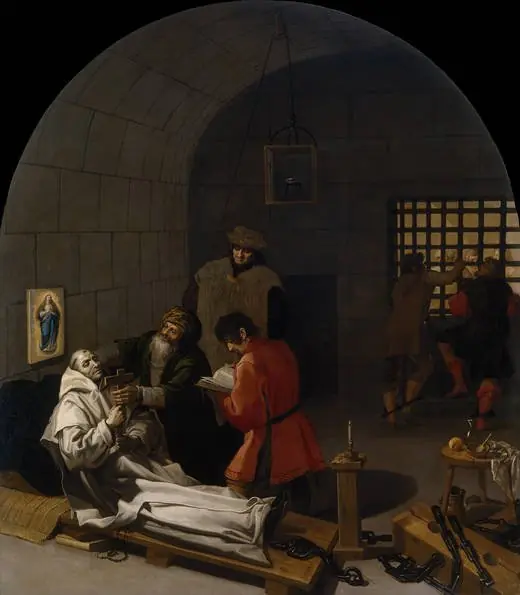
The Death of the Venerable Odón de Novara
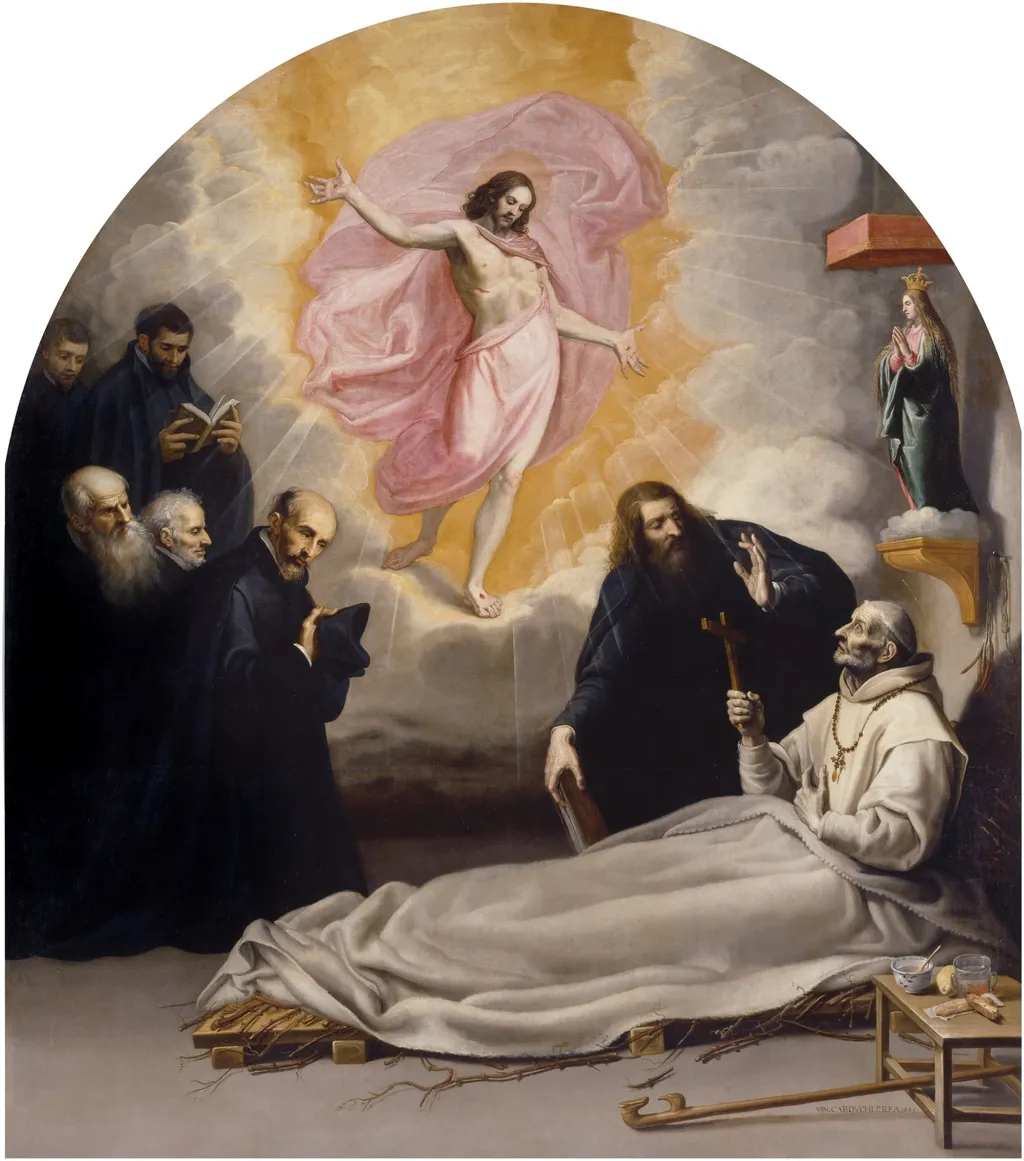
The Death of the Venerable Odón de Novara is an oil painting by the Early Baroque Italian artist Vincenzo Carducci. It dates from 1632 and is held in the collection of the Museo del Prado.
About this work
Overview
Vincenzo Carducci, an Italian painter active in Spain, completed *The Death of the Venerable Odón de Novara* in 1632. This oil painting exemplifies the early Baroque style, presenting a solemn scene centered on a dying figure surrounded by attendants. The work is currently housed in the collection of the Museo del Prado.
Subject & Meaning
The painting depicts a somber gathering around a man on his deathbed, identified as Odón de Novara. Several robed figures attend him, one holding a wooden cross, while a small table nearby holds a book and a bowl. Above the earthly scene, a luminous, outstretched figure hovers, suggesting a spiritual vision or divine presence accompanying the moment of transition.
Technique & Style
Carducci employed oil paint to create a dramatic and reverent atmosphere, characteristic of the early Baroque period. The artist utilized soft, focused illumination to highlight the central figures and imbue the scene with a sense of the sacred. This controlled use of light and shadow enhances the emotional intensity, drawing the viewer's attention to the spiritual significance of the event.
History & Provenance
Created by Vincenzo Carducci, an Italian artist who spent a significant portion of his career in Spain, this painting reflects the cross-cultural artistic exchange of the 17th century. Completed in 1632, *The Death of the Venerable Odón de Novara* has since become part of a prominent public collection, residing today at the Museo del Prado.
Artist & collection
Artist
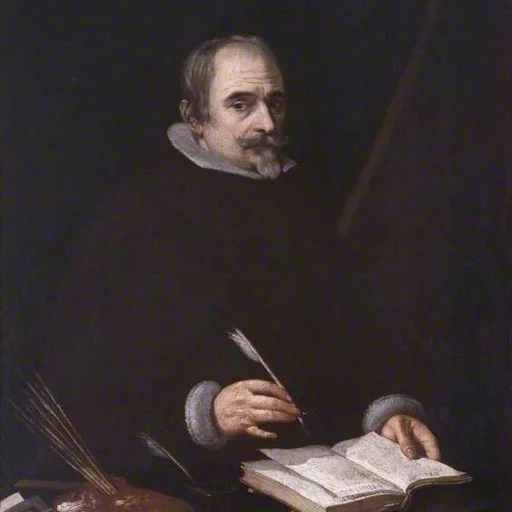
Vincenzio Carduccio (in Spanish, sometimes Vicencio or Vicente Carducho; 1576 or 1578–1638) was an Italian painter who spent his career in Spain.