Artwork
Natură moartă
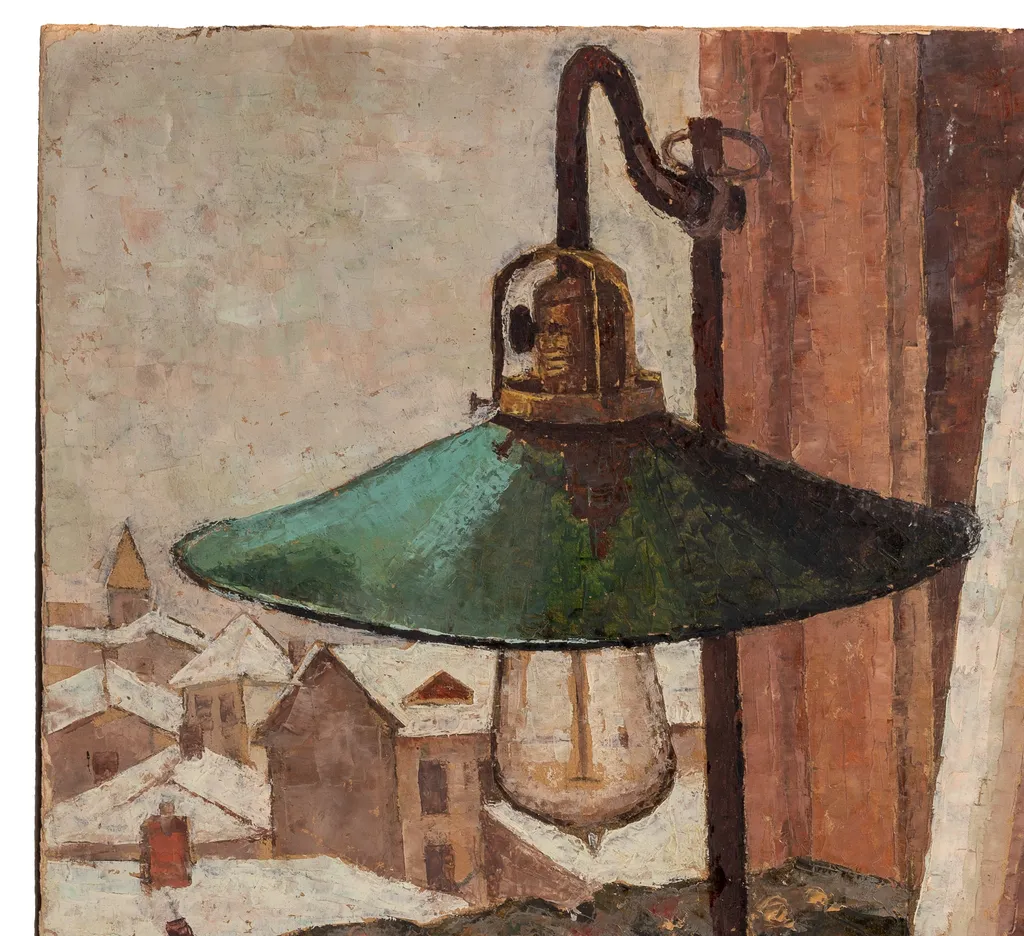
Natură moartă is a print by Viorescu Leon. It dates from 1850 and is held in the collection of the Moldova National Museum Complex.
About this work
Overview
Surface texture is emphasized through deliberate brushwork, suggesting a focus on material presence rather than narrative detail.
Created around 1850 by Viorescu Leon, this work presents a quiet, unadorned scene of rural winter life. A single green lantern hangs from a rusted hook, suspended above a modest structure on a snow-covered slope. The palette is restrained, dominated by pale grays, muted browns, and a washed-out green. Surface texture is emphasized through deliberate brushwork, suggesting a focus on material presence rather than narrative detail.
Subject & Meaning
The composition centers on an ordinary object—a lantern—rendered with subtle tension between stillness and implied motion. Its faintly suggested glow hints at human presence without showing it, evoking solitude and quiet endurance. The worn paint and weathered setting reinforce themes of time and decay, framing the lantern as both functional item and silent witness to the season’s stillness.
Technique & Style
Thick, tactile brushstrokes create a physical texture across the surface, particularly around the lantern and roofline, a technique associated with impasto. Colors are applied thinly in places, revealing underlying layers where paint has worn or faded. The handling avoids idealization; edges are soft, forms are simplified, and light is suggested rather than rendered with precision, aligning with a quiet, observational realism.
History & Provenance
The painting’s early history is undocumented, and its origins remain tied to regional artistic circles in the mid-nineteenth century. It was likely produced in a rural or provincial setting, given its subject matter and modest scale. No records of exhibition or ownership prior to the twentieth century have been confirmed, and its survival appears to be the result of private retention rather than institutional acquisition.
Context
In mid-1800s Eastern Europe, landscape and still-life subjects were gaining traction among artists seeking alternatives to academic history painting. Viorescu’s focus on humble, everyday objects reflects a broader shift toward intimate, localized observation. The work aligns with regional trends that valued quiet realism over grandeur, capturing the textures of daily life in a time of social and economic transition.
Legacy
Though not widely exhibited or reproduced, the painting contributes to a lesser-known strand of 19th-century Romanian art that prioritized atmosphere over spectacle. Its preservation offers insight into how ordinary scenes were rendered with emotional restraint, influencing later generations interested in the poetic potential of mundane subjects. It remains a quiet example of regional realism outside dominant artistic centers.
Artist & collection
Artist
Viorescu Leon made quiet, sharply observed prints of the Romanian countryside in the early 20th century.
 Colț de stradă - Tulcea
 Peisaj parizian
 Landscape: from the Acropolis area
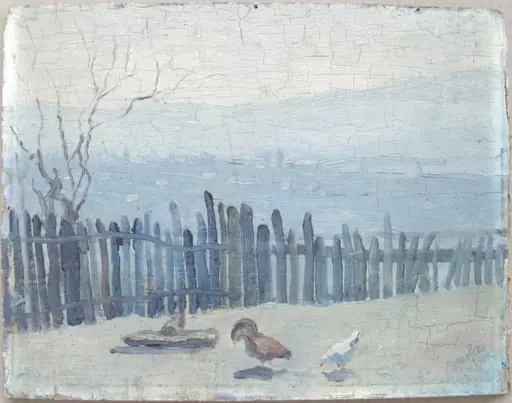 Gard dărâmat
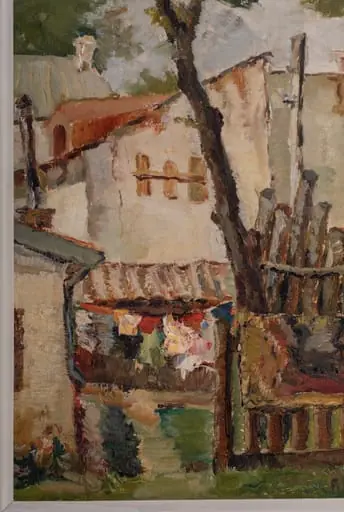 Curte în provincie, 1940
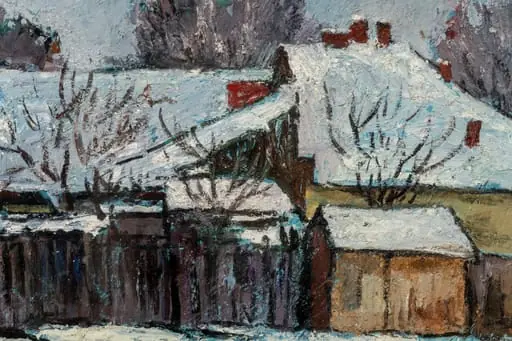 A bătut iarna la poartă
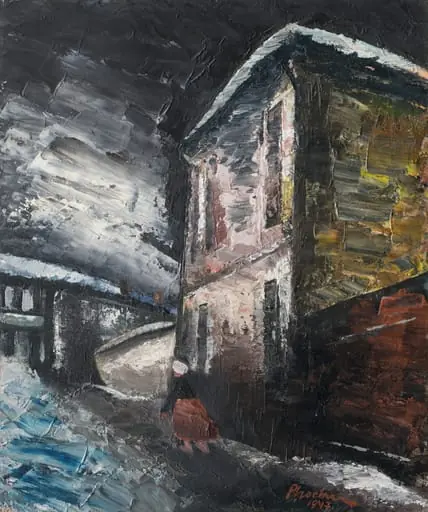 STRADĂ ÎN BUCUREȘTII VECHI
 Peisaj
 Landscape: from the Acropolis area
 Peisaj
 Vedere din București, iarna
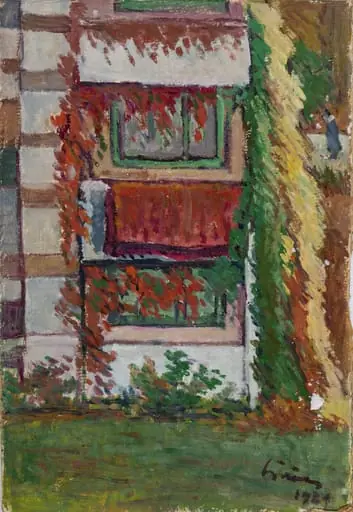 Un petic de iarbă în prim-plan, urmat de un detaliu dintr-un bloc de locuințe, un colț al acestuia cu geamuri și balcoane tăiate brusc în zona etajului al doilea, amplasat spre jumătatea din stânga a lucrării. În jumătatea din dreapta, pe lângă peretele blocului, este redată o vegetație abundentă care se „cațără”, colorată în verde, roșu, brun și ocru. Pe lângă balcoanele blocului alb-gri cu dungi brune se cațără o iederă roșie-ruginie; pe balconul etajului unu, un covor roșu-violet este atârnat afară. Hașurări și suprapuneri de culoare în redarea vegetației. Semnat și datat cu brun, dreapta jos: Craiu 1981.