Artwork
Forest
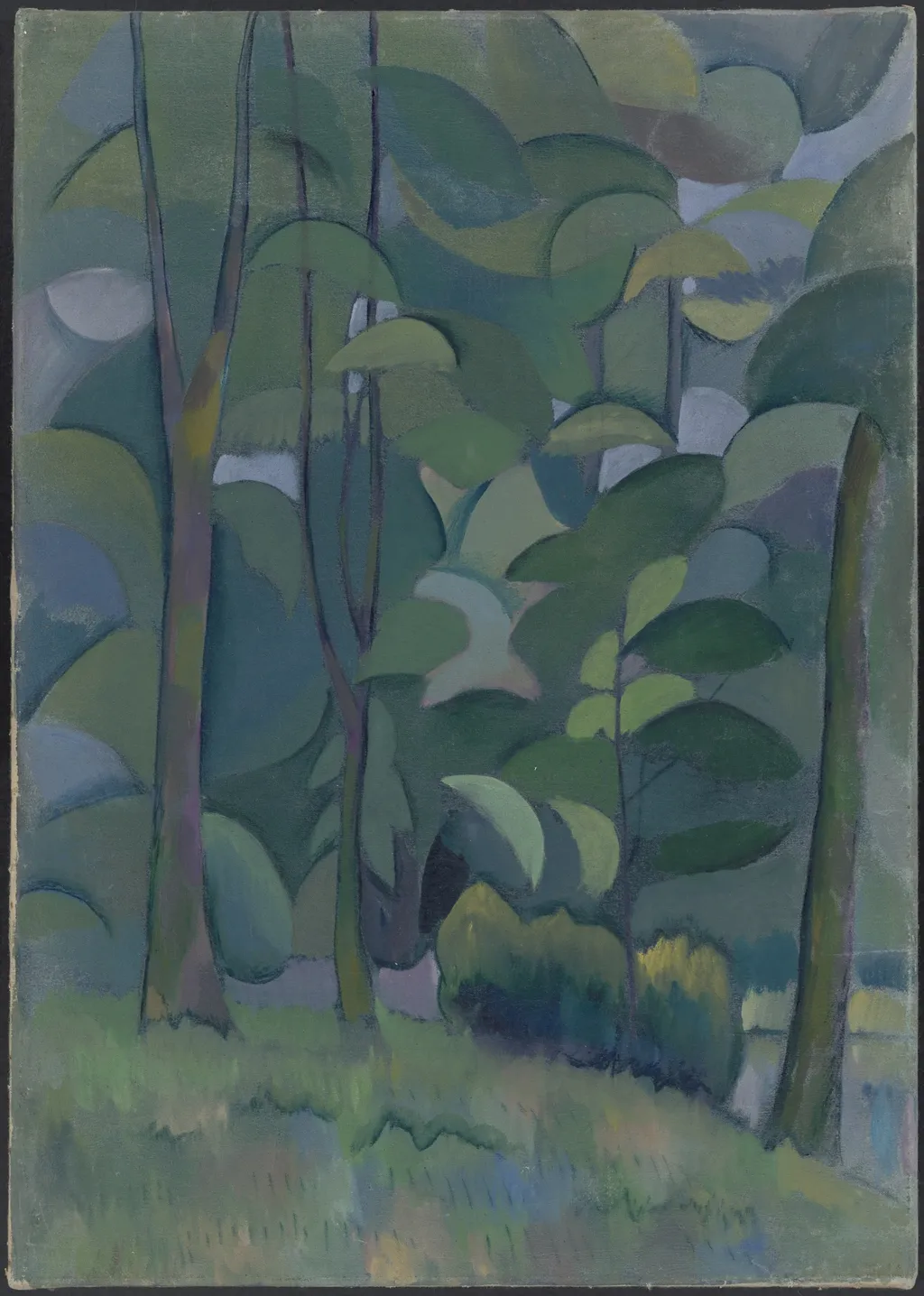
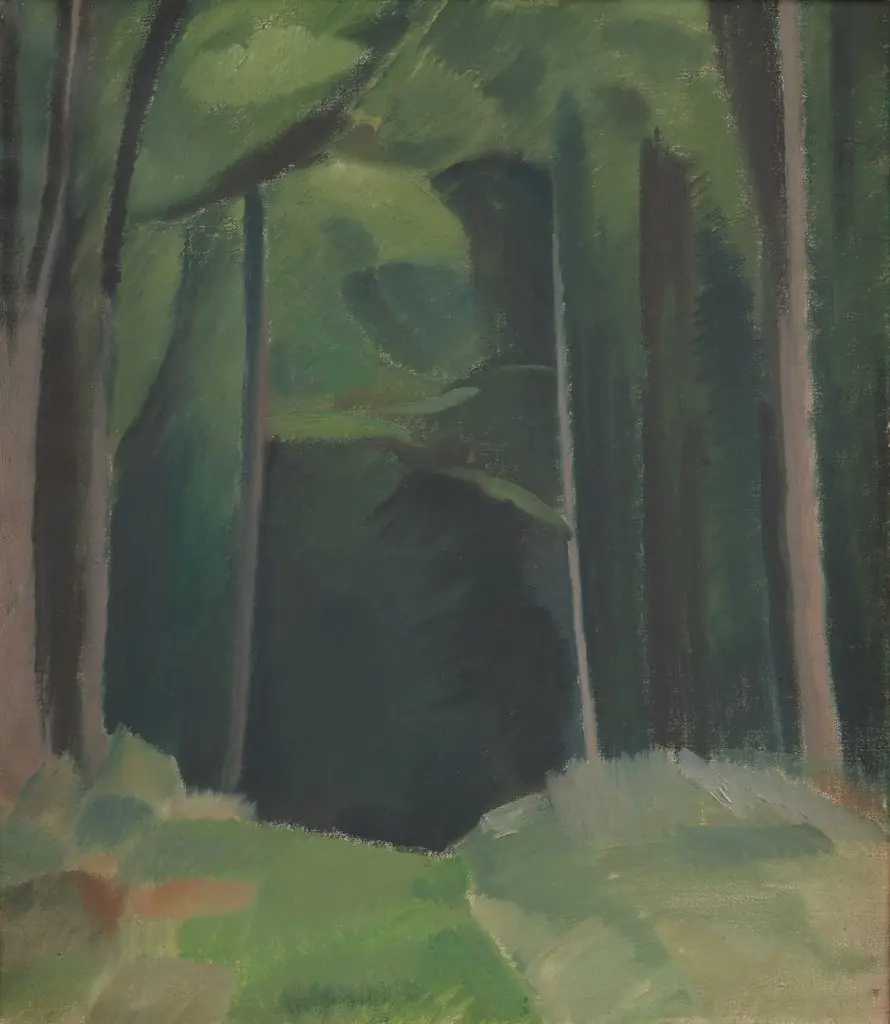
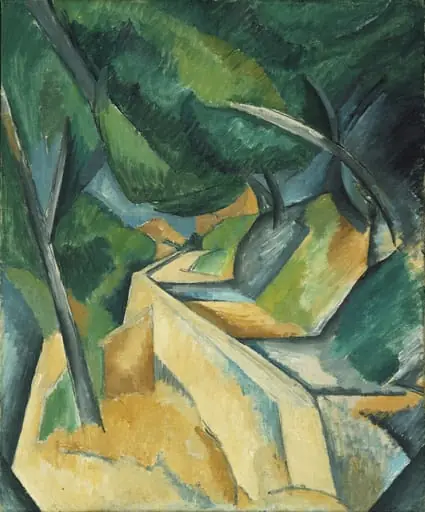
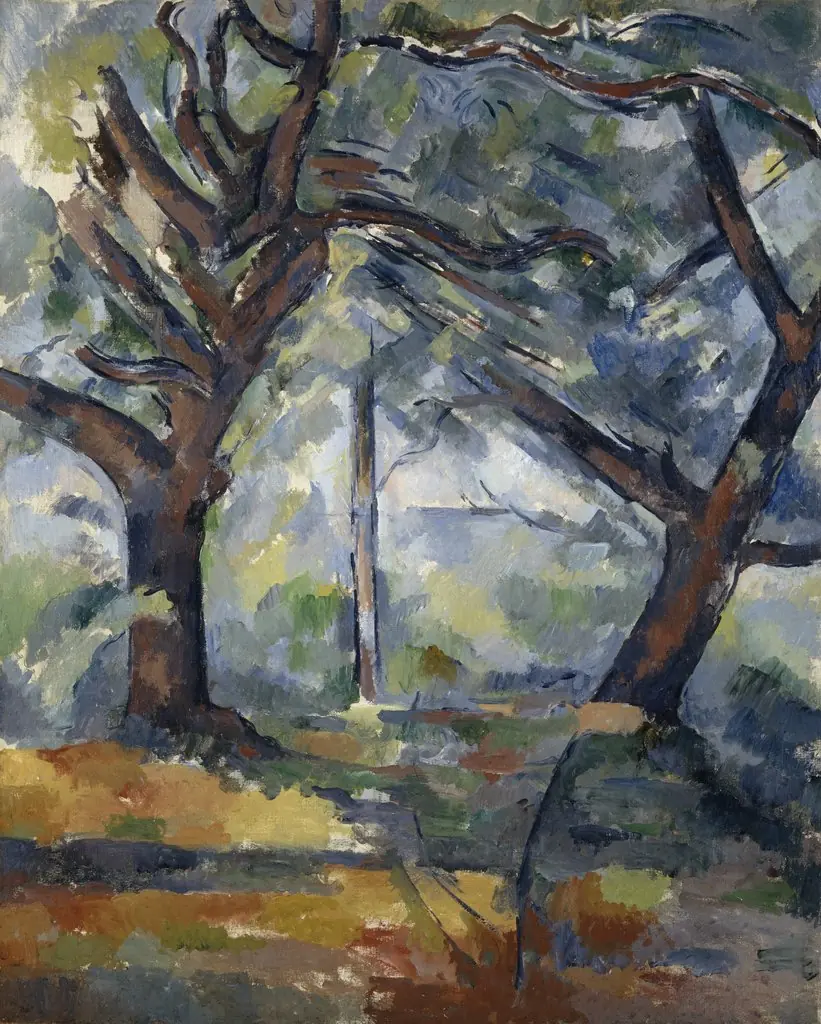
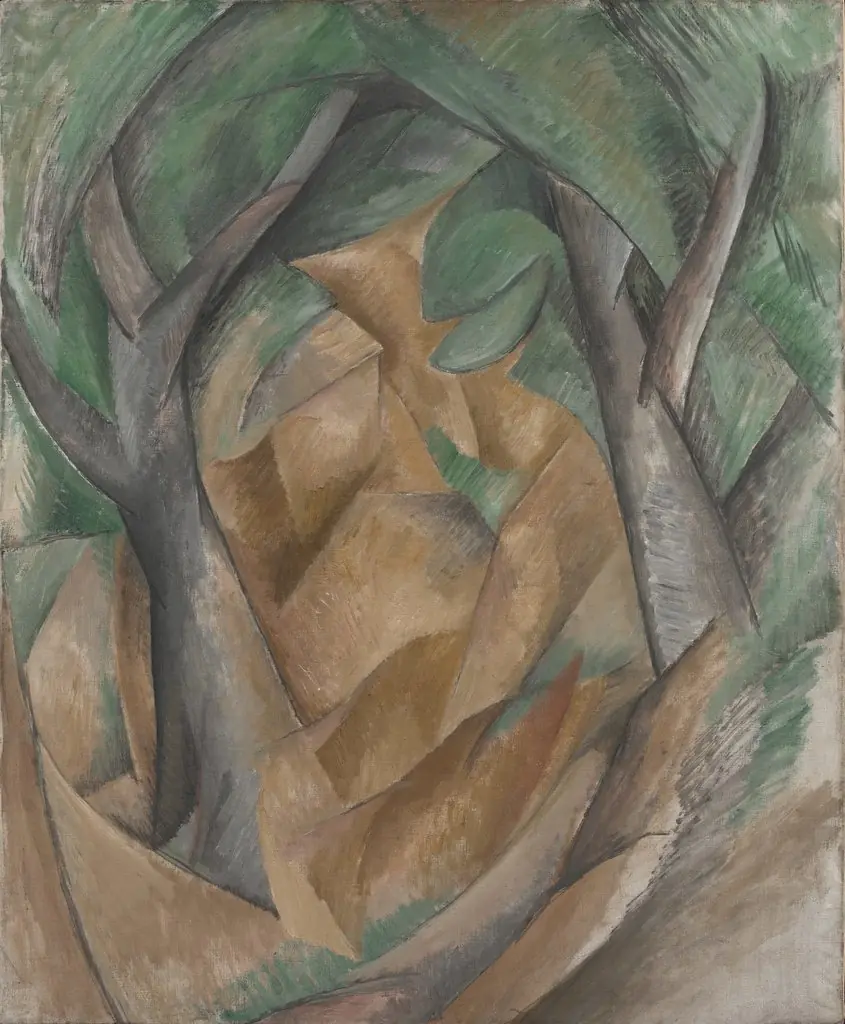
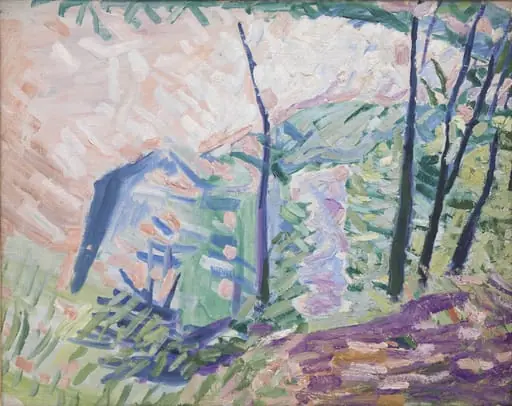
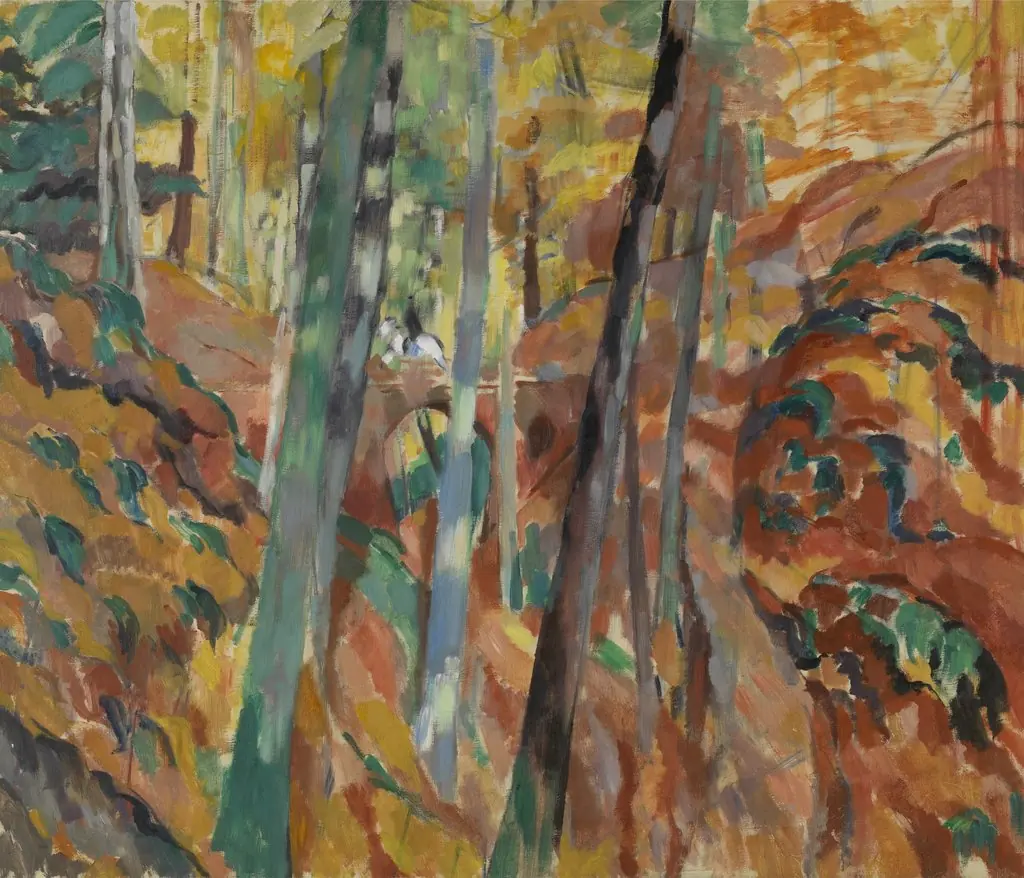
Forest is an oil painting by the Post-Impressionist artist Vladimir Baranov-Rossiné. It dates from 1909 and is held in the collection of the Royal Museum of Fine Arts Antwerp.
About this work
Overview
It resides today in the Royal Museum of Fine Arts Antwerp, reflecting early 20th-century European modernist experimentation.
Vladimir Baranov-Rossiné painted *Forest* in 1909 using oil on canvas. Though rooted in post-impressionist sensibilities, the work anticipates his later engagement with Cubo-Futurism. The painting captures a quiet woodland scene, rendered with layered brushwork and a restrained palette dominated by greens. It resides today in the Royal Museum of Fine Arts Antwerp, reflecting early 20th-century European modernist experimentation.
Subject & Meaning
The painting depicts a dense forest with tall, slender trees rising through overlapping foliage. No human figures or clear narrative are present; instead, the focus is on the quiet rhythm of nature. The interplay of light and shadow, suggested by gradations of green, evokes a calm, sun-dappled atmosphere. The absence of dramatic action invites contemplation rather than storytelling.
Technique & Style
Baranov-Rossiné applied oil paint with visible, deliberate strokes that build texture and volume. Layers of pigment create depth, with foreground trees rendered in richer, darker greens and background elements softened in lighter tones. The brushwork is neither fully impressionistic nor abstract, but a measured synthesis that emphasizes structure while preserving the organic feel of the natural world.
History & Provenance
Created during Baranov-Rossiné’s formative years in Europe, *Forest* predates his more radical avant-garde works. It was likely painted while he was active in Russia and France, before fully embracing Cubo-Futurist abstraction. The painting entered the Royal Museum of Fine Arts Antwerp’s collection in the 20th century, where it remains as part of its modernist holdings.
Context
In 1909, European artists were redefining representation beyond realism. Baranov-Rossiné’s *Forest* reflects this transition—retaining natural subject matter while experimenting with structure and surface. Though not yet aligned with the fractured forms of Cubism, the work shows an interest in spatial organization that would later define his avant-garde contributions.
Legacy
While *Forest* is not among Baranov-Rossiné’s most widely known works, it offers insight into his artistic evolution. It bridges his early naturalism with his later abstract innovations, illustrating how even seemingly traditional subjects could serve as laboratories for modernist ideas. The painting contributes to understanding the breadth of early 20th-century Russian and Ukrainian modernism.
Artist & collection
Artist
Vladimir Davidovich Baranov-Rossiné, also spelled Baranoff-Rossiné (Russian: Владимир Давидович Баранов-Россине; 13 January 1888, Velyka Lepetykha – January 1944, Auschwitz), born Shulim Wolf Leib Baranov, was a painter…