Artwork
The Big Trees
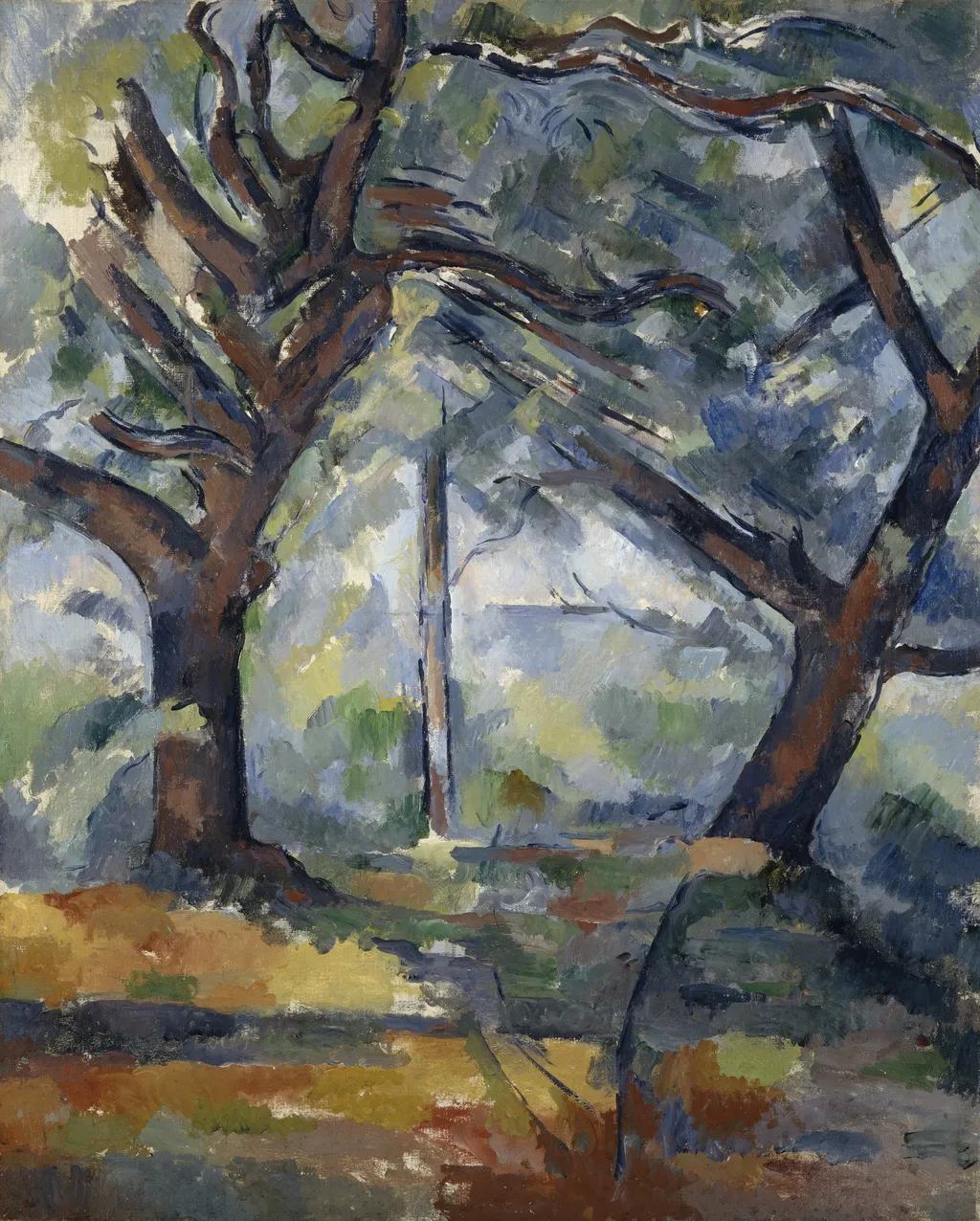
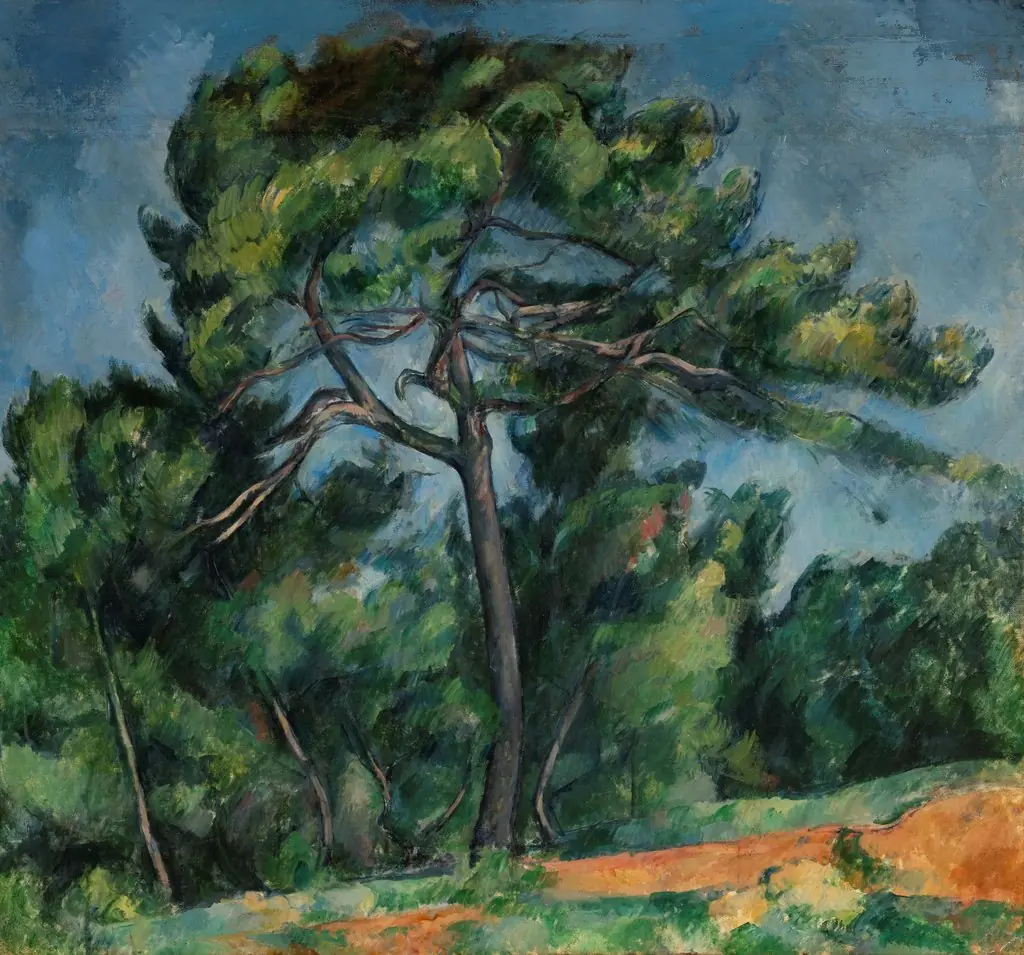
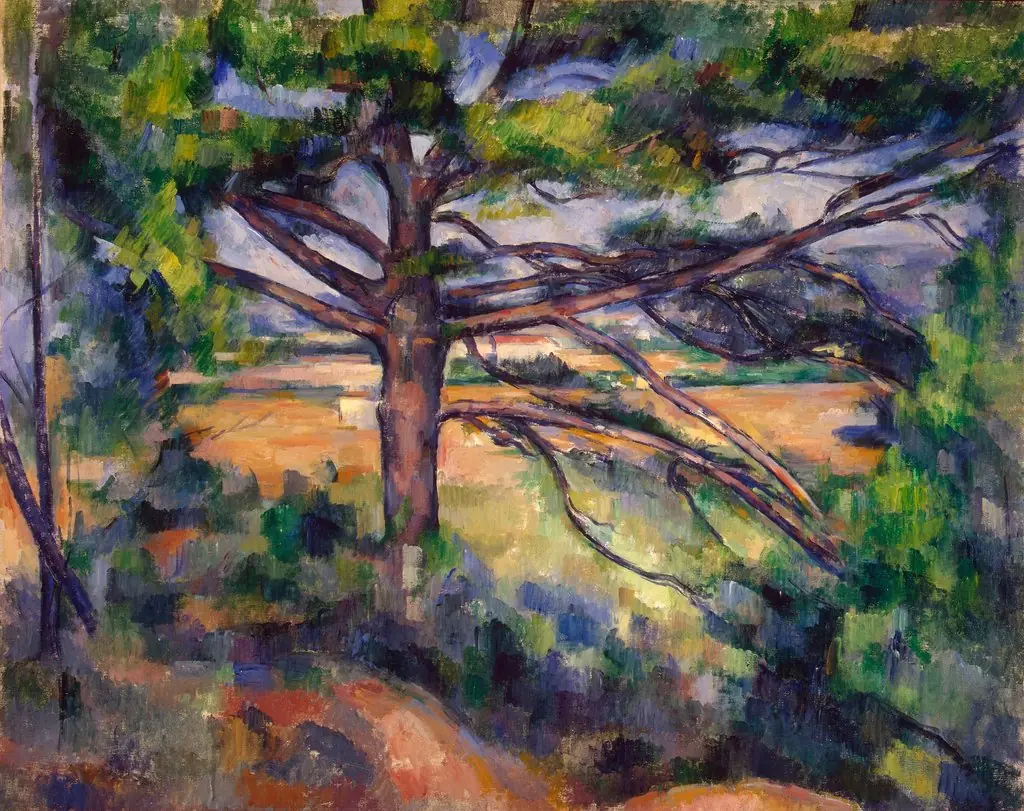
The Big Trees is an oil painting by the Post-Impressionist artist Paul Cezanne. It dates from 1904 and is held in the collection of the National Galleries Scotland.
About this work
Overview
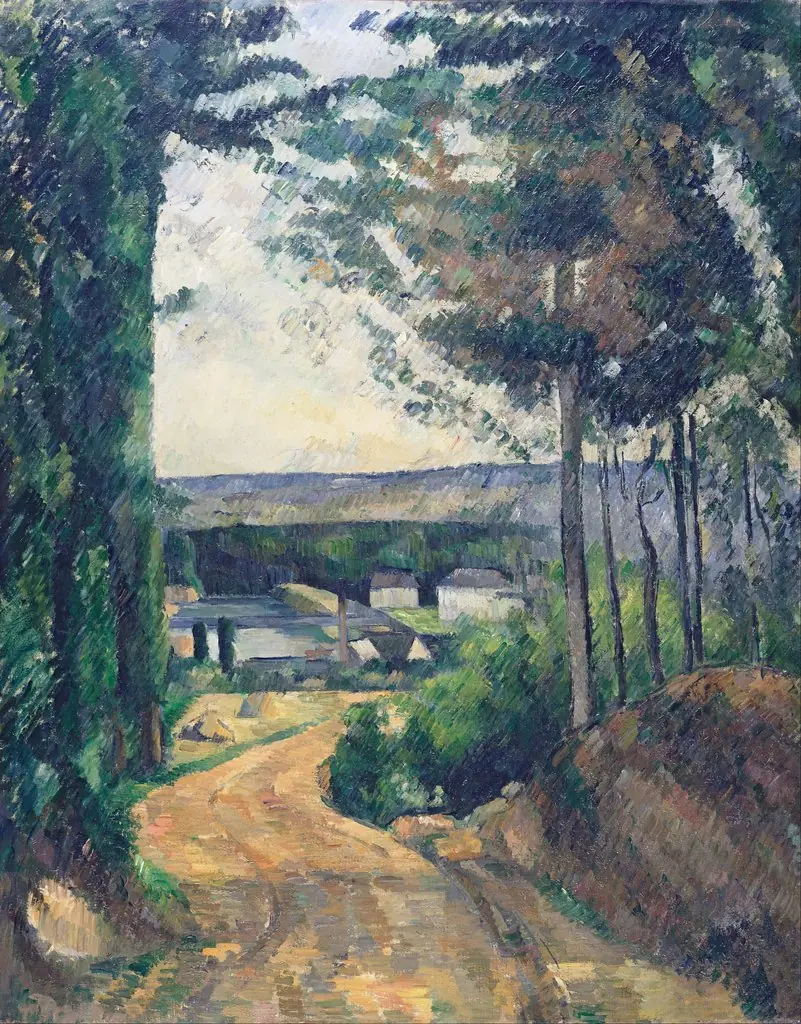
The Big Trees is a 1904 oil painting by Paul Cézanne, depicting a landscape dominated by two large trees in the foreground. Characterized by thick brushstrokes and a palette of browns, greens, yellows, and blues, the work exemplifies Cézanne's post-Impressionist style.
Subject & Meaning
The painting focuses on the structural presence of the two trees, using color and shading to convey depth, atmosphere, and volume. The deliberate contrast between lighter and darker sides of the trees suggests a play of light and shadow, enhancing their three-dimensionality.
Technique & Style
Cézanne employed thick, expressive brushstrokes and a muted yet expressive color scheme to move beyond Impressionism's emphasis on fleeting light effects. Instead, he emphasized geometric and structural interpretations of natural forms, bridging towards early Cubist principles.
History & Provenance
Created in 1904, The Big Trees is now part of the Scottish National Gallery's collection, reflecting its significance within Cézanne's oeuvre and post-Impressionist art movements.
Own this work as a print
Artist & collection
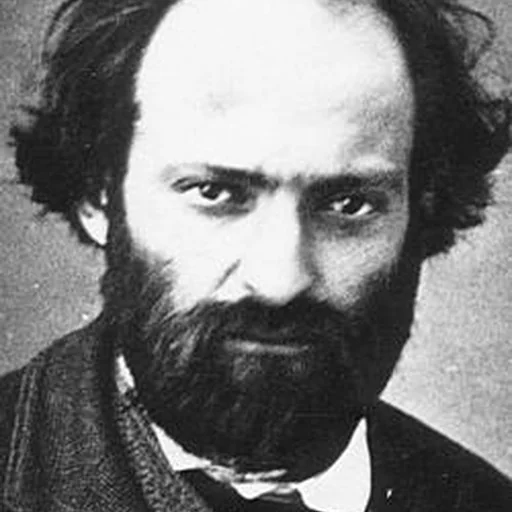
Artist
Paul Cézanne was born on January 19, 1839, in Aix-en-Provence, the son of a hatter turned wealthy banker.

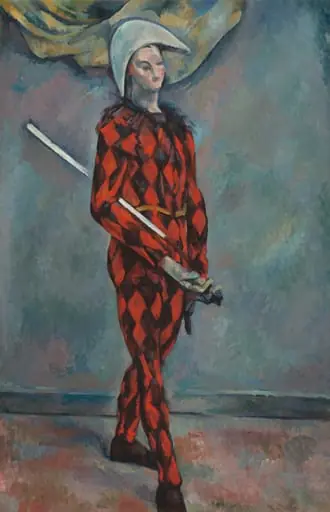 Harlequin
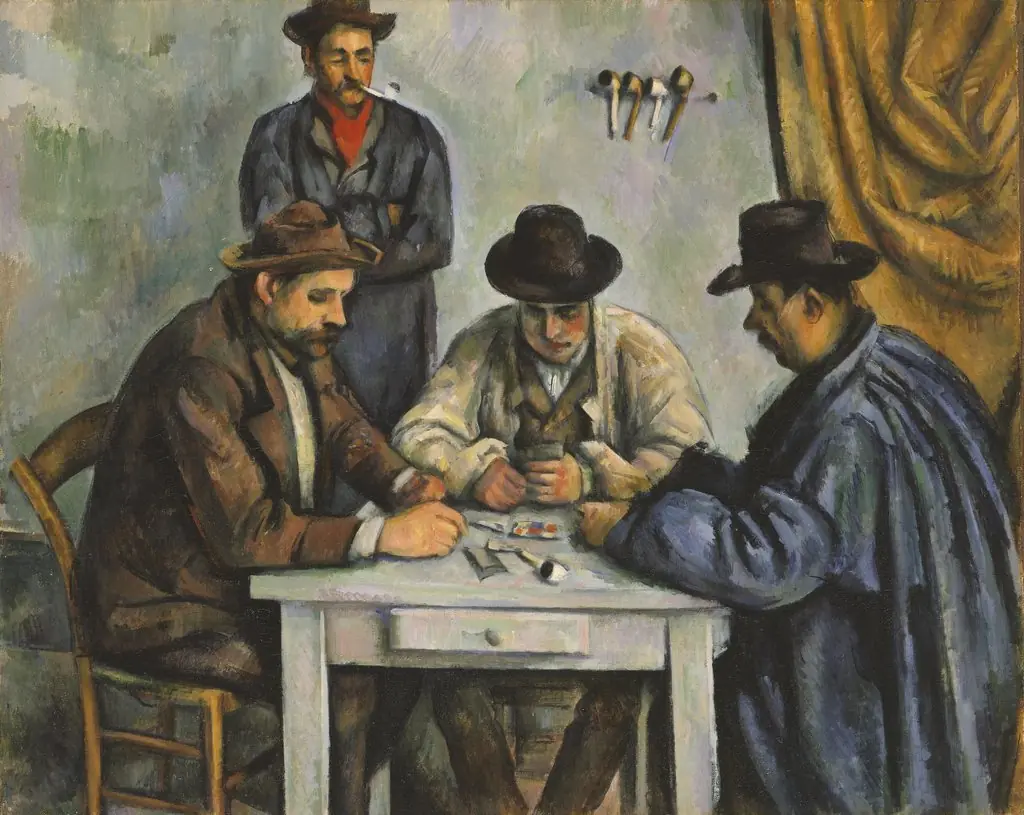 The Card Players
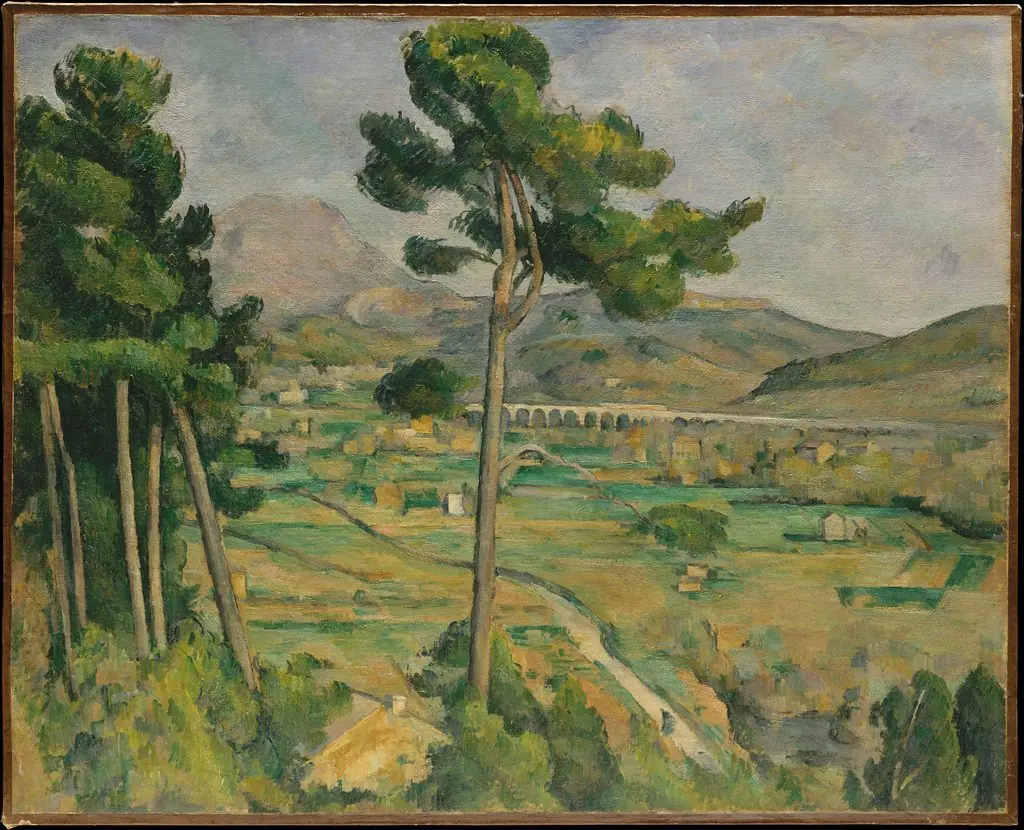 Mont Sainte-Victoire and the Viaduct of the Arc River Valley
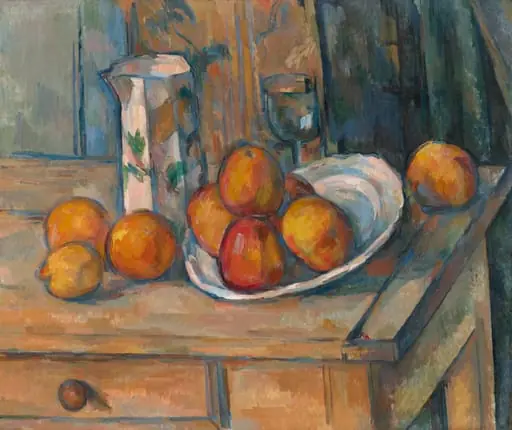 Still Life with Milk Jug and Fruit
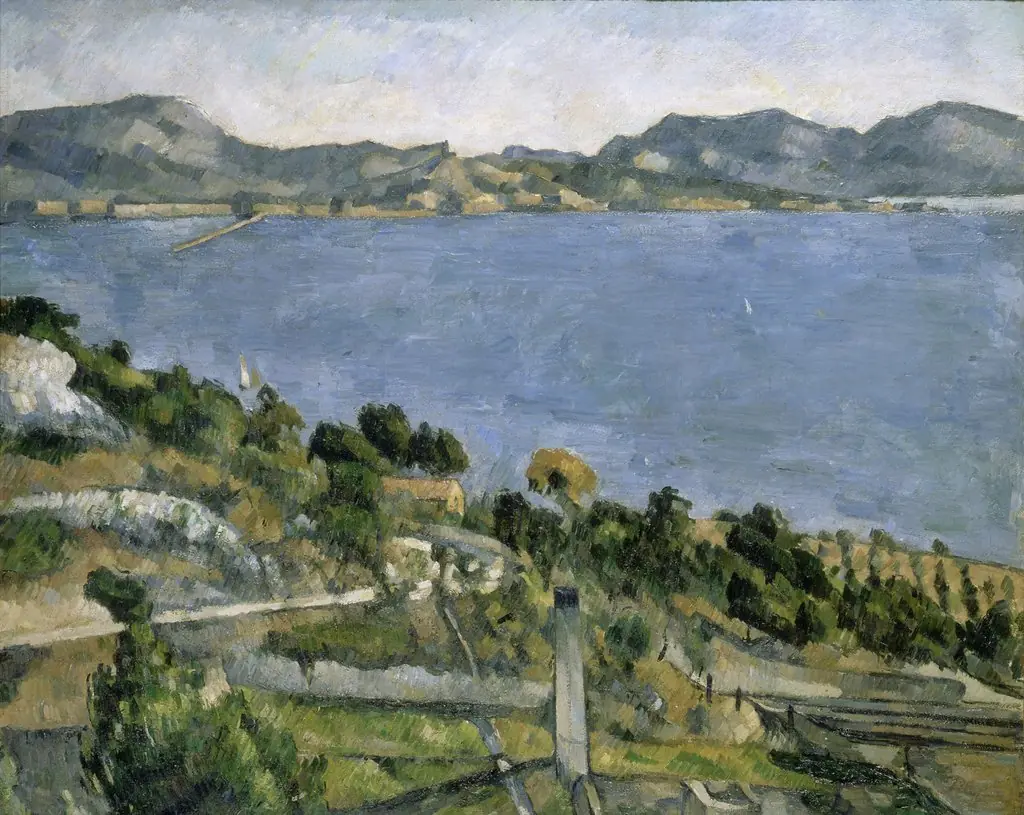 Le Golfe de Marseille vu de l'Estaque (The Gulf of Marseille Seen from L'Estaque)
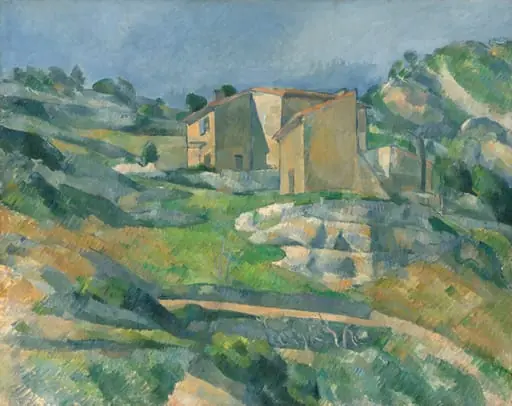 Houses in Provence: The Riaux Valley near L'Estaque
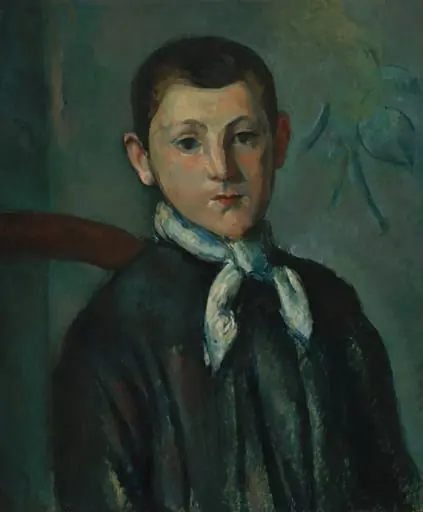 Louis Guillaume
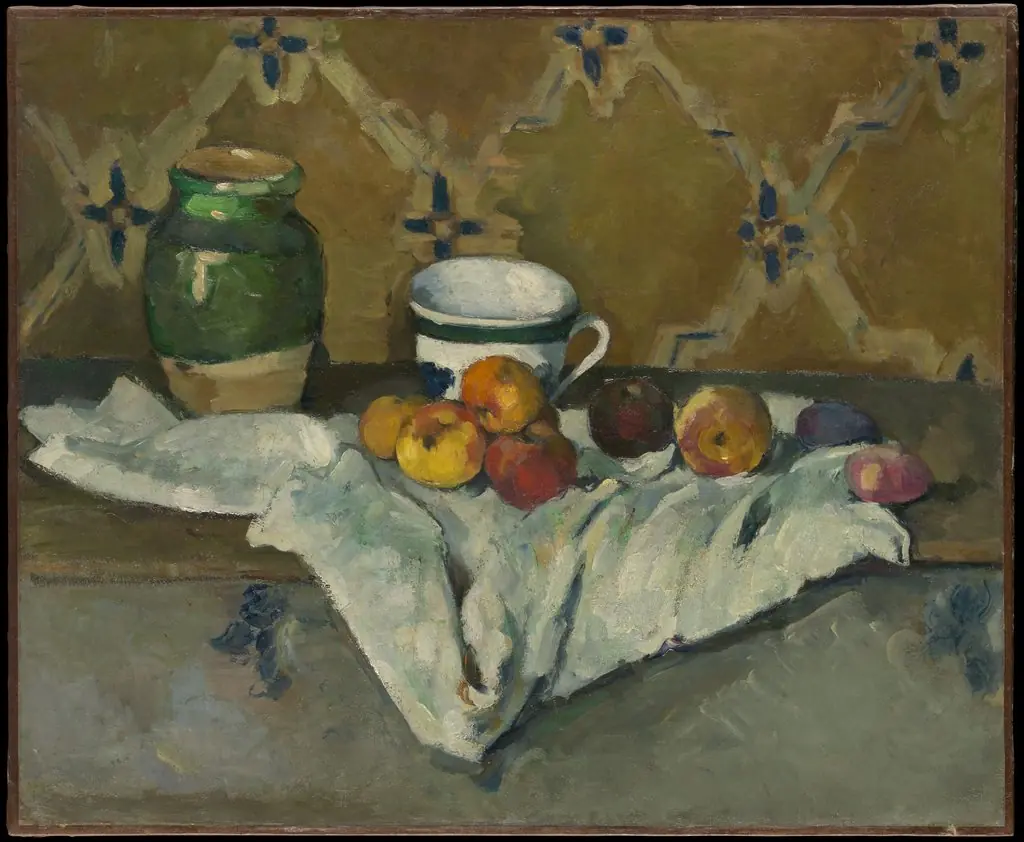 Still Life with Jar, Cup, and Apples