Artwork
Et un autre ange sortit du temple qui est au ciel, ayant lui aussi une faucille tranchante (And another angel came out of the temple which is in heaven, and he also having a sharp sickle)
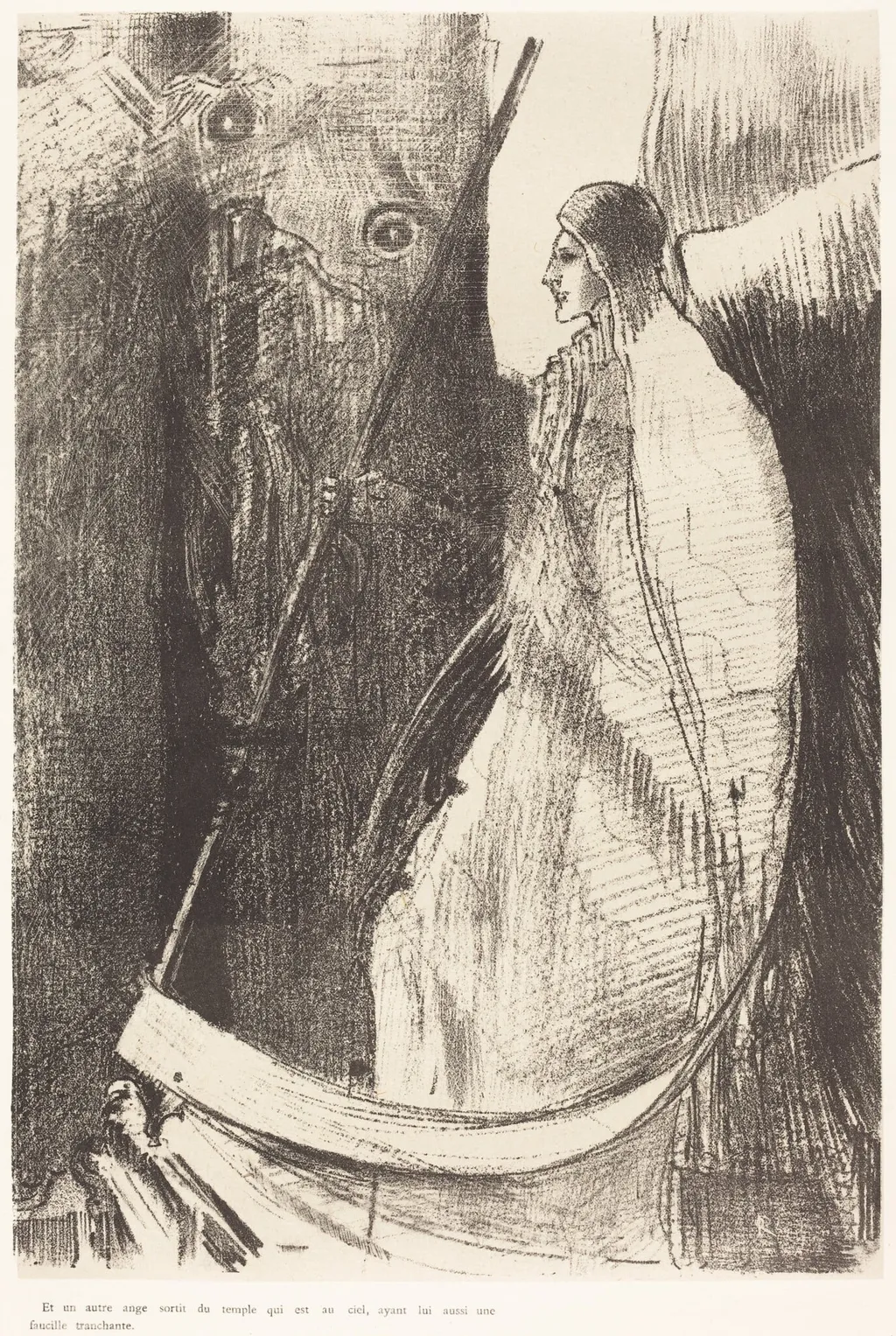
Et un autre ange sortit du temple qui est au ciel, ayant lui aussi une faucille tranchante (And another angel came out of the temple which is in heaven, and he also having a sharp sickle) is an ink print by the Impressionist artist Ambroise Vollard. It dates from 1899 and is held in the collection of the National Gallery of Art.
About this work
Overview
Vollard’s choice of lithography allowed for direct, expressive mark-making on stone, resulting in a work that feels immediate and gestural rather than polished.
Created in 1899, this lithograph by Ambroise Vollard is one of several religiously inspired prints produced during a period of intense experimentation with printmaking. The image draws from apocalyptic imagery in the Book of Revelation, depicting a moment of divine intervention. Vollard’s choice of lithography allowed for direct, expressive mark-making on stone, resulting in a work that feels immediate and gestural rather than polished.
Subject & Meaning
The scene illustrates a celestial figure emerging from a temple in heaven, holding a sharp sickle, as described in Revelation 14:17. A second robed figure stands nearby, hands raised near the face, possibly in awe or prayer. The composition suggests a moment of transition—divine judgment is imminent, yet the figures remain still, caught between revelation and action. The ambiguity in their expressions invites contemplation rather than narrative clarity.
Technique & Style
Vollard employed lithography, a process in which the image is drawn directly onto a limestone surface with greasy materials before being printed. The rough, uneven lines and dense shadows reflect a spontaneous, almost sketch-like approach. Dark areas dominate the background, isolating the figures in a void that heightens their symbolic weight. The texture of the strokes conveys urgency, as if the image was captured in a single, focused moment of creation.
History & Provenance
This print was made during Vollard’s early engagement with religious themes, preceding his more famous collaborations with artists like Cézanne and Picasso. It was likely produced for a private or limited circulation, as part of a small series exploring biblical visions. No public record of its early ownership exists, but it entered institutional collections in the 20th century as interest grew in Symbolist and print-based religious art.
Context
In late 19th-century France, artists increasingly turned to spiritual and mythological subjects as a counterpoint to industrial modernity. Vollard, though better known as a dealer, was also an active printmaker during this time, influenced by Symbolist aesthetics and the revival of etching and lithography. His religious prints reflect a broader cultural fascination with mysticism and the sublime, distinct from academic religious painting of the era.
Legacy
Though not widely exhibited during Vollard’s lifetime, this lithograph contributes to a lesser-known body of work that reveals his personal engagement with spiritual imagery. It stands as an example of how printmaking offered artists a direct, intimate medium for exploring theological themes outside the constraints of large-scale painting. Today, it is studied for its expressive line work and its place in the evolution of Symbolist print culture.
Artist & collection


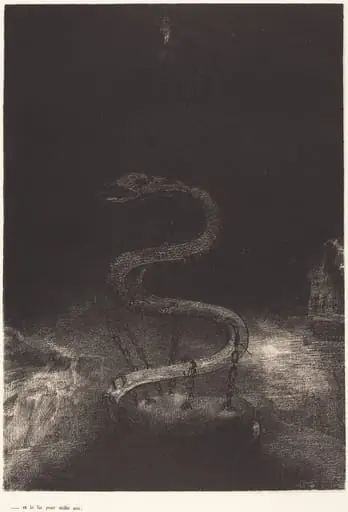 Et le lia pour mille ans (And bound him a thousand years)
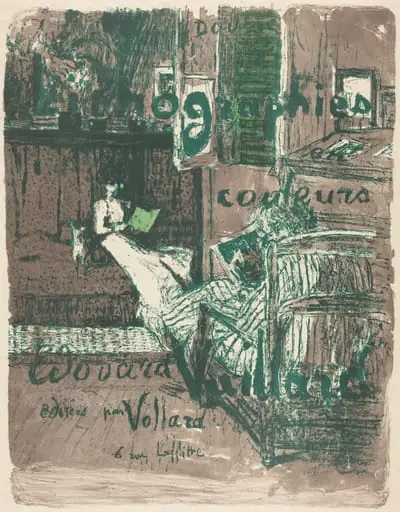 Cover for the Album "Paysages et intérieurs"
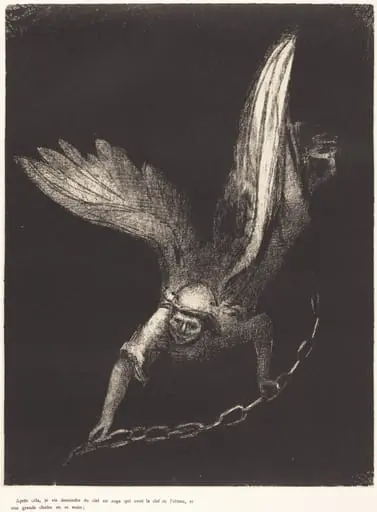 Apres cela je vis descendre du ciel un ange qui avait la clef de l'abime, et une grande chaine en sa main (And I saw an angel come down from heaven, having the key of the bottomless pit and a great chain in his hand)
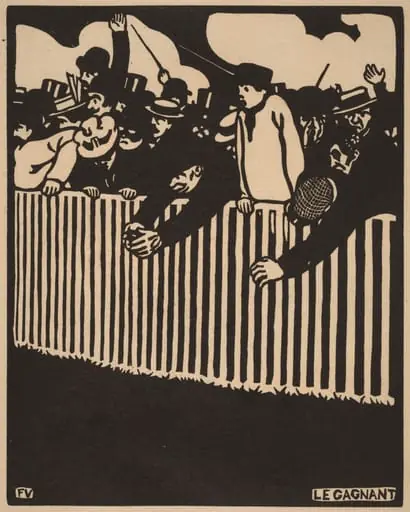 Le Gagnant (The Winner)
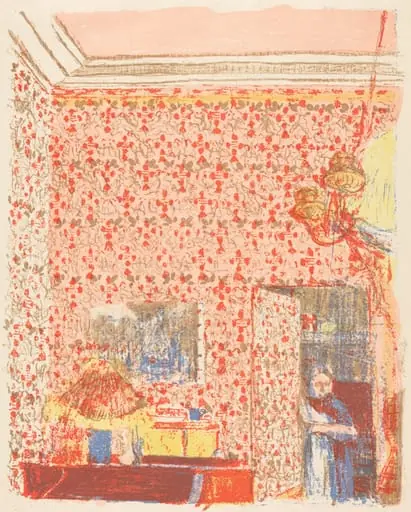 Interior with Pink Wallpaper I (Interieur aux tentures roses I)
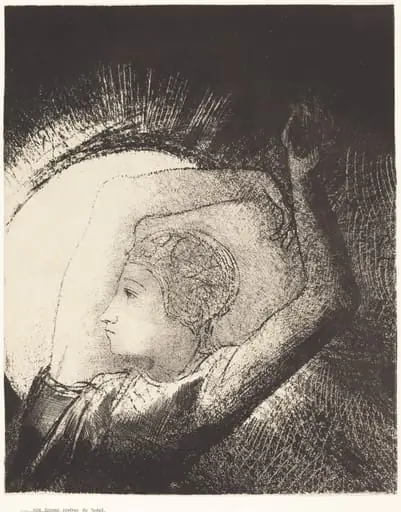 Une femme revêtue du Soleil (A woman clothed with the sun)
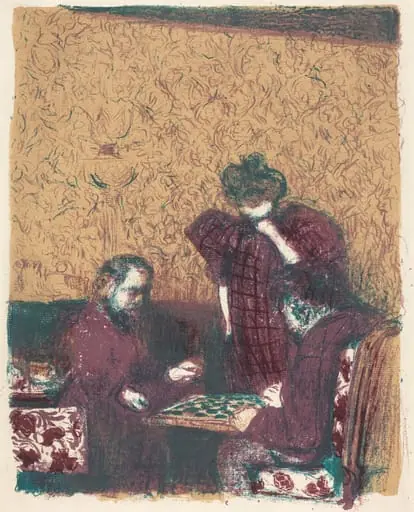 Game of Checkers (La partie de dames)
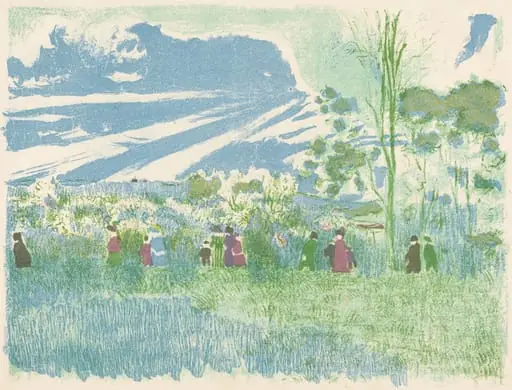 Across Country (A travers champs)
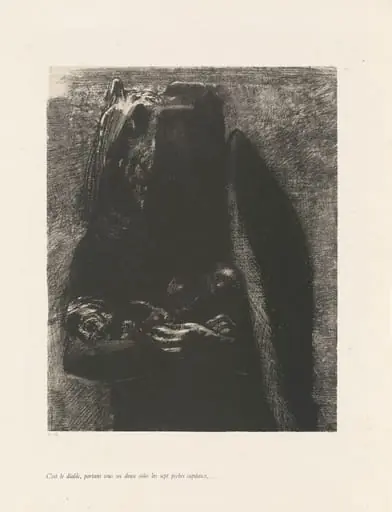 C'est le Diable
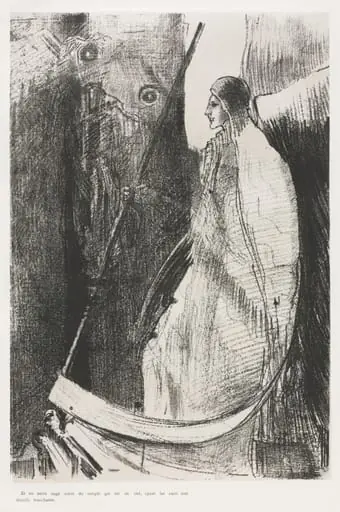 And Another Angel Came Out of the Temple which is in Heaven, and He also Having a Sharp Sickle
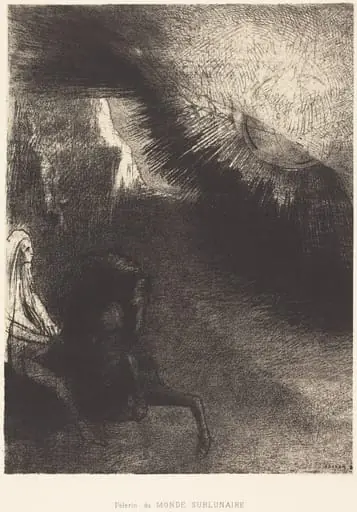 Pélerin du monde sublunaire (Pilgrim of the sublunary world)
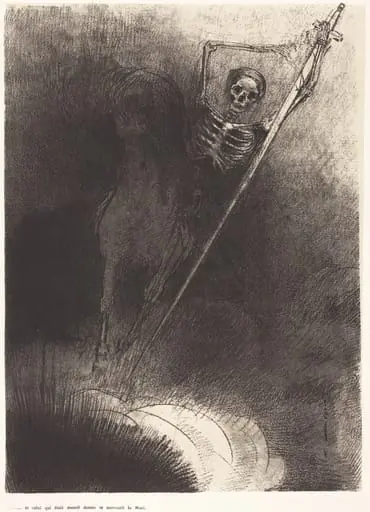 Et celui qui était monté dessus se nommait la Mort (And his name that sat on him was Death)
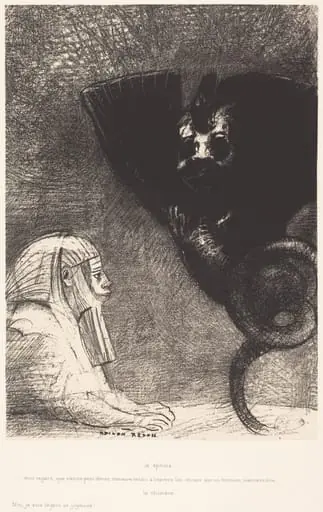 Le Sphynx...mon regard que rien ne peut devier, demeure tendu a travers les choses sur un horizon inaccessible. La Chimere: Moi,Je suis legere et joyeuse (The Sphinx: "My gaze, which nothing can deflect, passes through the things and remains fixed on an inaccessible horizon." The Chimera: "I am weightless and joyful")
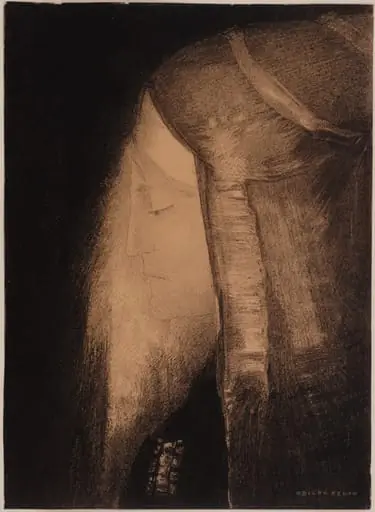 Untitled
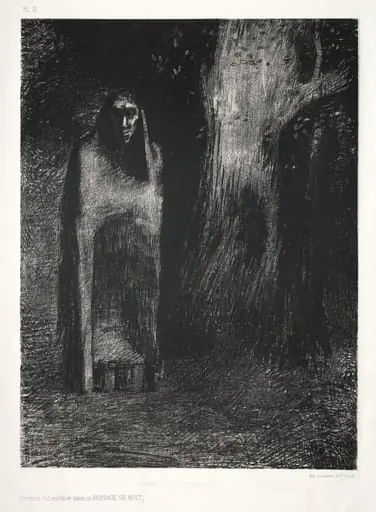 The Man Was Alone in a Night Landscape
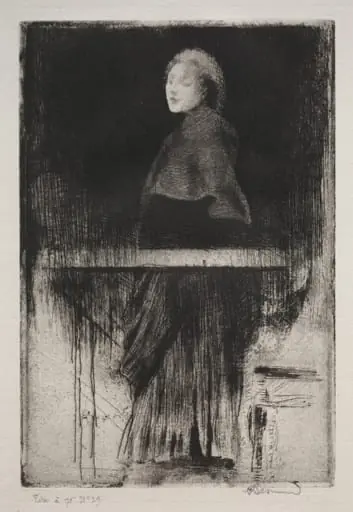 Woman with a Cape
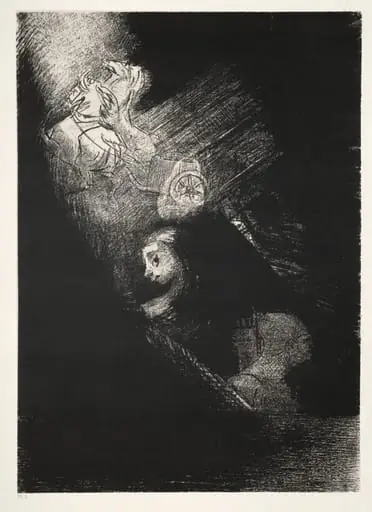 First a Pool of Water, Then a Prostitute, the Corner of a Temple, a Soldier's Face, a Chariot with Two White, Rearing Horses
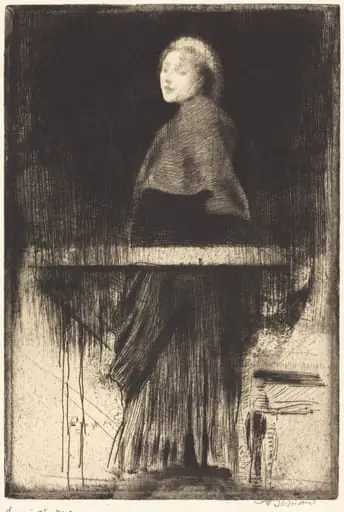 Woman in a Cape (La femme à la pèlerine)
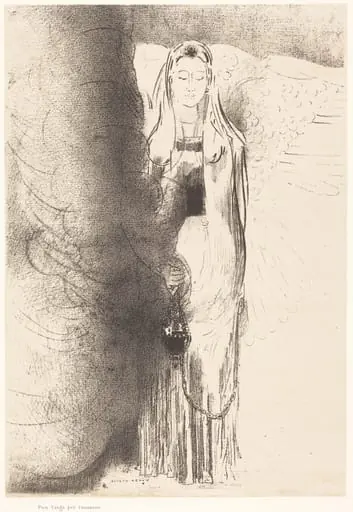 Puis l'ange prit l'encensoir (And the angel took the censer)
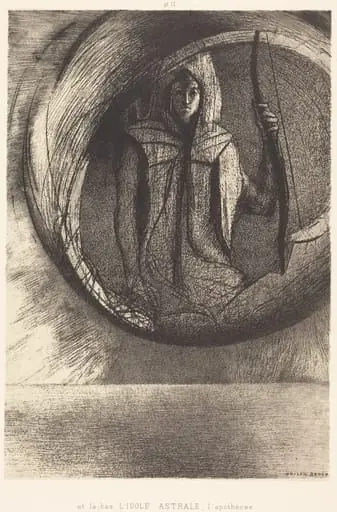 Et la-bas l'idole astrale, l'Apotheose (And beyond, the star idol, the apotheosis)