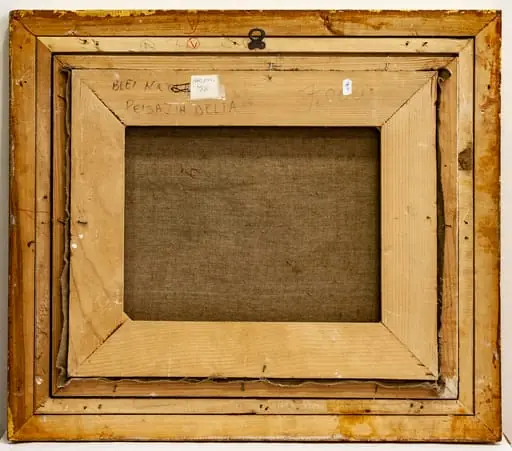
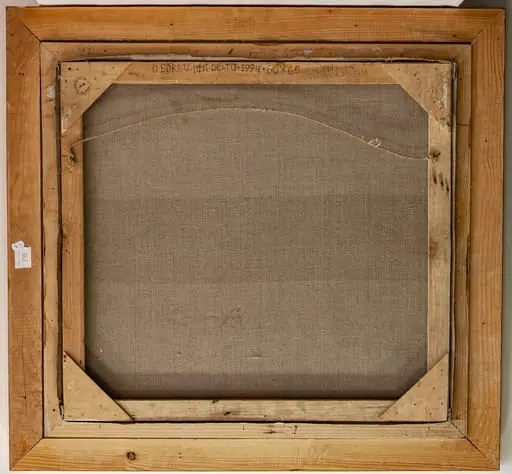
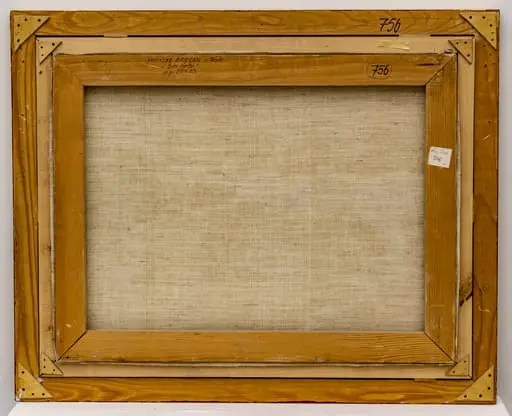
Artwork
Delta
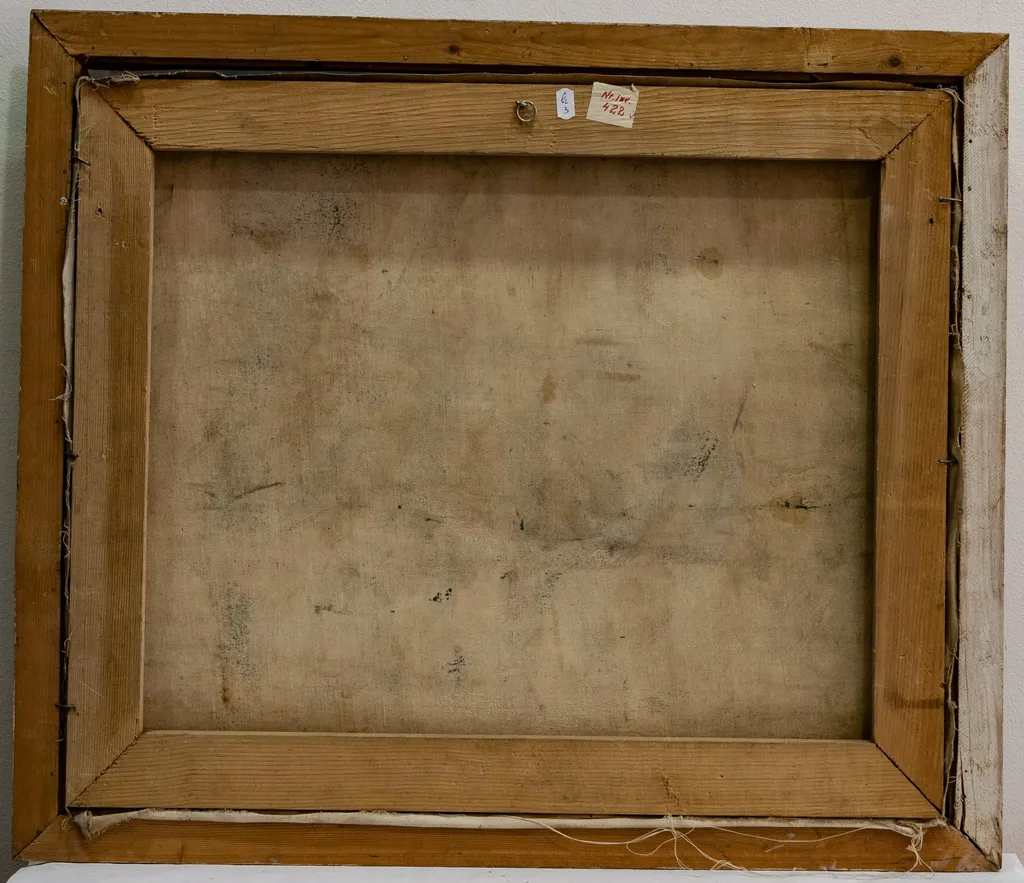
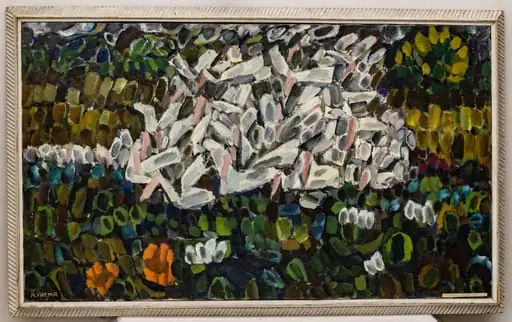
Delta is a print by Vremir Mircea. It dates from 1979 and is held in the collection of the Gavrila Simion Eco-Museum Research Institute Tulcea.
About this work
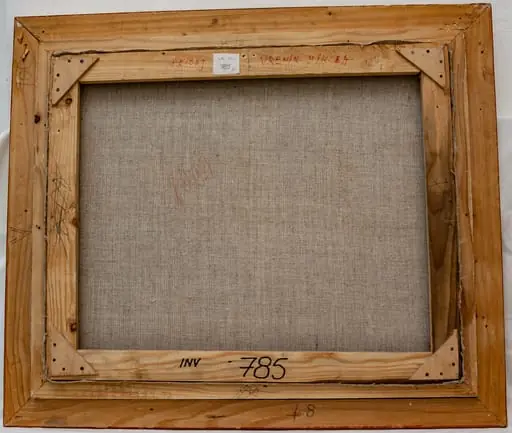
The canvas is pale with some faint smudges and dark spots, but nothing clear is painted on it.
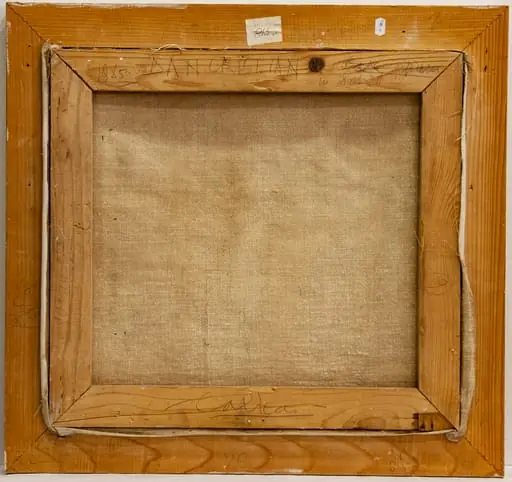
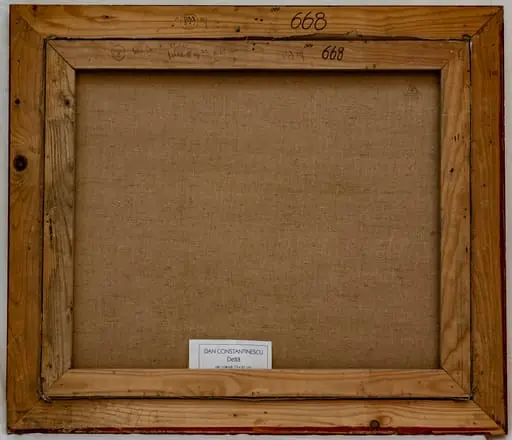
This is an empty wooden frame with a faded, blank canvas inside. The frame looks old and worn, with visible wear marks and a small label in the top corner. The canvas is pale with some faint smudges and dark spots, but nothing clear is painted on it.
The piece is titled *Delta* and was made in 1979 by the artist Vremir Mircea as a print. It’s held at the Museum of Ethnography, but it doesn’t fit neatly into any known art movement.
If you’re curious about how artists use blank spaces in their work, look into sfumato.
Overview
Delta, created in 1979 by Romanian artist Vremir Mircea, is a minimalist composition consisting of an aged wooden frame containing a nearly blank canvas. The work is part of the collection at the Museum of Ethnography. Its unadorned surface and weathered frame suggest an interest in absence, time, and material decay rather than traditional representation. Though labeled as a print, its physical form resists easy classification within established artistic categories.
Subject & Meaning
The work presents no figurative or symbolic imagery, instead emphasizing the frame and the canvas’s deterioration. The faint smudges and dark marks on the surface hint at prior handling or environmental exposure, inviting reflection on what remains when meaning is stripped away. The title Delta, referencing a river’s mouth or a point of transition, may suggest a space of erasure or convergence — a place where form dissolves into void.
Technique & Style
Mircea’s approach in Delta relies on the physicality of materials rather than applied pigment. The wooden frame shows signs of age — scratches, warping, and wear — while the canvas retains only traces of its original state. No brushwork or printing technique is visible; the work’s effect emerges from its state of neglect and the tension between structure and emptiness. This aligns with post-minimalist concerns but avoids formalist dogma.
History & Provenance
Delta entered the Museum of Ethnography’s collection shortly after its creation. Its acquisition suggests the institution’s openness to non-traditional objects that challenge conventional boundaries between art, artifact, and ephemera. No record of public exhibition or critical reception from the period survives, and the artist’s broader practice remains largely undocumented, contributing to the work’s enigmatic status.
Context
Created during Romania’s communist era, Delta’s silence and austerity may reflect the cultural constraints of the time, where overt expression was suppressed. Yet it also resonates with broader international tendencies in the late 1970s — such as conceptual art and monochrome practices — that questioned the necessity of image-making. Its placement in an ethnographic museum, rather than a fine arts institution, further complicates its interpretive framework.
Legacy
Delta has not been widely cited in art historical discourse, but its quiet presence continues to prompt questions about the limits of art objects. It invites viewers to consider the value of absence, the weight of material decay, and the role of context in shaping meaning. As such, it stands as a subtle, unresolved gesture within the broader history of late 20th-century Romanian art.
Artist & collection
Artist
Romanian landscape painter who left behind a small but striking trio of works. His 1979 print Delta maps a river delta in hard-edged planes of black and white. Peisaj shows a quiet village street under a flat sky, and…
Museum
Gavrila Simion Eco-Museum Research Institute Tulcea
Continue through works from the same source collection.