Artwork
A Gallery in the Gymnasium (Une galerie au gymnase)
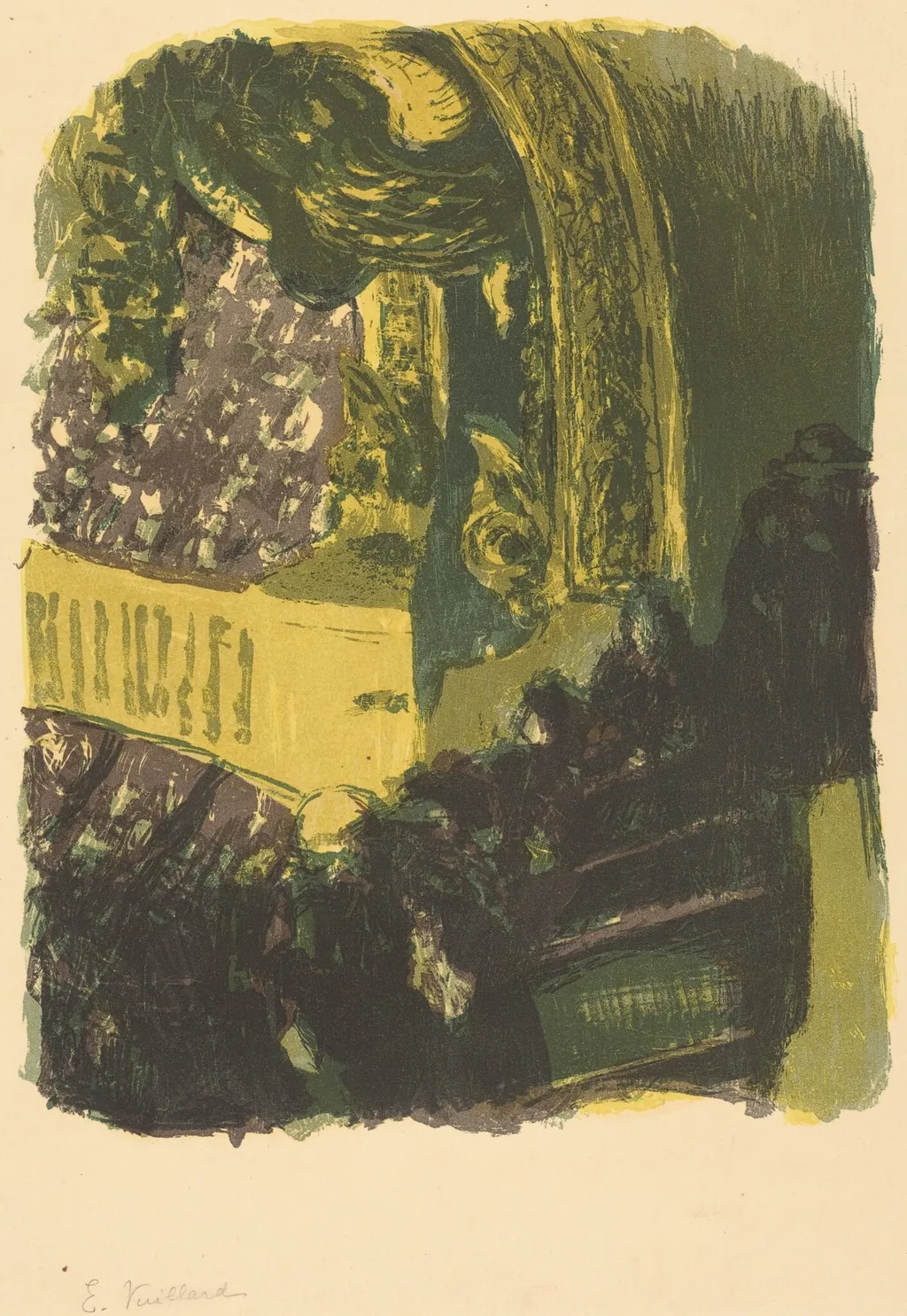
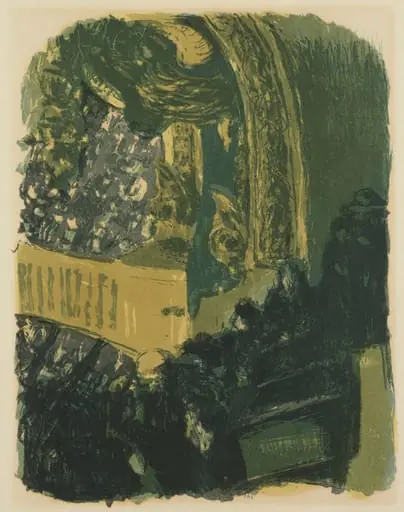
A Gallery in the Gymnasium (Une galerie au gymnase) is an ink print by Édouard Vuillard. It dates from 1900 and is held in the collection of the National Gallery of Art.
About this work
Overview
Created in 1900, *A Gallery in the Gymnasium* is a color lithograph by Édouard Vuillard, produced during his final years with the Nabis group.
Created in 1900, *A Gallery in the Gymnasium* is a color lithograph by Édouard Vuillard, produced during his final years with the Nabis group. The work captures a quiet interior space where visitors observe artworks mounted on a wall. Vuillard employed lithographic techniques to layer subtle hues of green and yellow, constructing a composed, intimate scene that emphasizes surface pattern over traditional perspective.
Subject & Meaning
The scene depicts spectators standing before a wall of framed paintings in what appears to be a public or institutional gallery. Figures are rendered as dark, simplified silhouettes, their identities obscured, suggesting anonymity and collective contemplation. The focus shifts from individual portraiture to the act of viewing itself, reflecting Vuillard’s interest in the quiet rituals of everyday life within enclosed spaces.
Technique & Style
Vuillard used color lithography to achieve flat, unmodulated planes of hue, aligning with the Nabis’ rejection of naturalism. The composition avoids chiaroscuro, instead relying on tonal contrasts and rhythmic patterns to suggest depth. Light is implied through shifts in color temperature rather than shading, echoing Japanese woodblock prints. The lithographic process allowed for delicate texture on the wall surface, enhancing the tactile quality of the scene.
History & Provenance
This print was made in 1900, near the end of Vuillard’s formal association with Les Nabis. It was likely produced as part of a limited edition, common among Nabis artists who sought to democratize fine art through printmaking. While specific early ownership records are sparse, the work entered public collections in the mid-20th century, recognized for its synthesis of decorative art and modernist sensibility.
Context
In early 20th-century Paris, galleries were becoming cultural hubs for the middle class. Vuillard’s depiction of such a space reflects broader societal shifts toward public access to art. His choice to render viewers as shadowy forms, rather than individuals, aligns with contemporary interests in psychological atmosphere over narrative. The work also responds to the rise of print culture and the Nabis’ mission to blur boundaries between fine and applied art.
Legacy
Though less known than Vuillard’s paintings, this lithograph exemplifies his contribution to modern printmaking. It influenced later artists exploring interiority and pattern, particularly in the transition from Symbolism to early modernism. The work remains a key example of how Nabis principles—flatness, color symbolism, and domestic intimacy—were adapted to the lithographic medium, expanding the possibilities of print as a serious artistic form.
Artist & collection

Artist
Jean-Édouard Vuillard (French: ; 11 November 1868 – 21 June 1940) was a French painter, decorative artist, and printmaker.

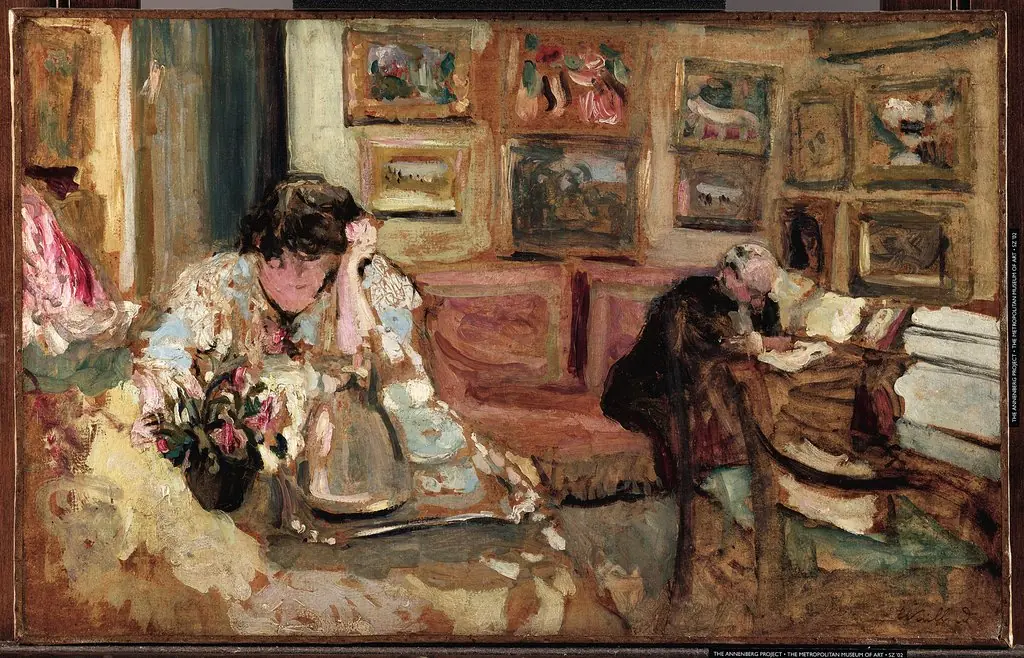
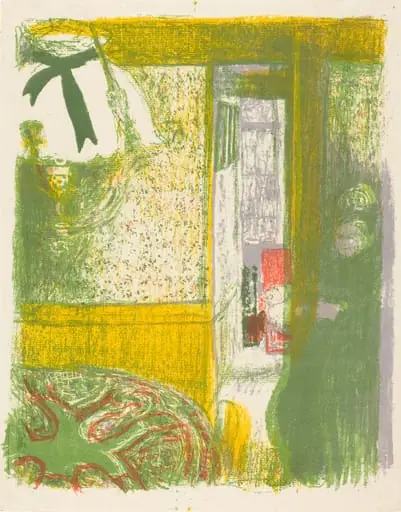 Interior with Hanging Lamp (Interieur à la suspension)
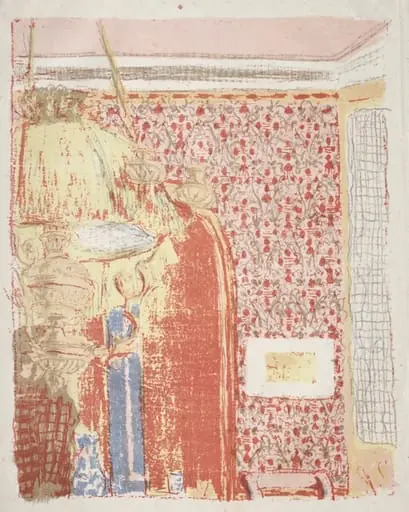 Interior with Pink Wallpaper II
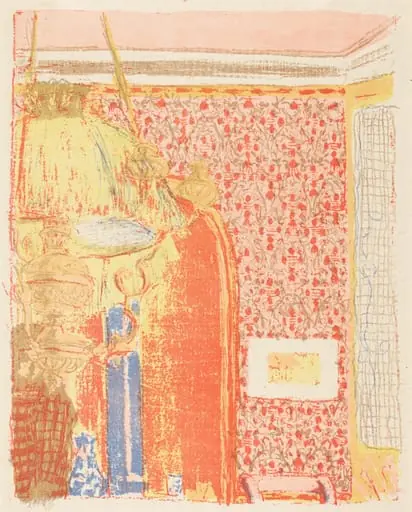 Interior with Pink Wallpaper III (Interieur aux tentures roses III)
 Untitled
 Untitled
 Still Life
 Stage Set Consisting Of Painted Panels, Fabrics, And Fans
 Untitled
![Mahna no Varua Ino (The Demon Speaks) [verso], by Paul Gauguin](https://artifactworldgallery.com/img/paul-gauguin--mahna-no-varua-ino-the-demon-speaks-verso--4d5371963e3166cc-w320.webp) Mahna no Varua Ino (The Demon Speaks) [verso]
Mahna no Varua Ino (The Demon Speaks) [verso] Interior with Pink Wallpaper I (Interieur aux tentures roses I)
 Dressmaker (La Couturière)
 A Gallery at the Gymnasium