Artwork
Mahna no Varua Ino (The Demon Speaks) [verso]
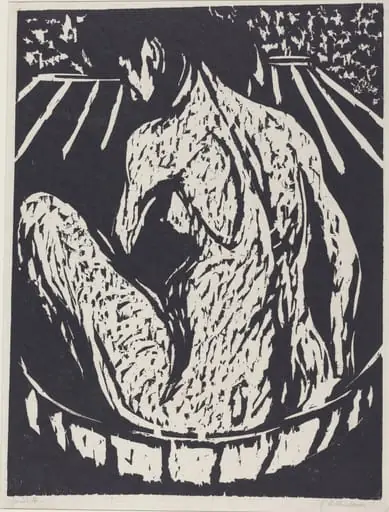
![Mahna no Varua Ino (The Demon Speaks) [verso], by Paul Gauguin, ink, 1894](https://artifactworldgallery.com/img/paul-gauguin--mahna-no-varua-ino-the-demon-speaks-verso--4d5371963e3166cc-w1024.webp)
Mahna no Varua Ino (The Demon Speaks) [verso] is an ink print by the Impressionist artist Paul Gauguin. It dates from 1894 and is held in the collection of the National Gallery of Art.
About this work
Overview
It belongs to a series of experimental prints made during his time in Tahiti, where he explored indigenous themes and non-Western materials.
Created in 1894, *Mahna no Varua Ino (The Demon Speaks) [verso]* is a color woodcut by Paul Gauguin on Japanese paper. It belongs to a series of experimental prints made during his time in Tahiti, where he explored indigenous themes and non-Western materials. The work exemplifies his shift from oil painting to printmaking as a means of expressing spiritual and mythological ideas with greater immediacy and symbolic weight.
Subject & Meaning
The image depicts a hunched, shadowy figure with a red outline, clutching its head as if in anguish or trance. Above it, a luminous yellow bird with wide wings hovers, its form stark against the dark ground. The title, translated as 'The Demon Speaks,' suggests a confrontation with supernatural forces, possibly drawing from Tahitian cosmology. The bird may represent a spirit guide or omen, while the figure embodies inner turmoil or possession.
Technique & Style
Gauguin carved the design into wood blocks and printed them in bold, flat areas of color—deep black, vivid red, and bright yellow—using Japanese paper for its absorbent, delicate surface. The rough, uneven lines and unpolished edges reflect his deliberate rejection of refined engraving traditions. This approach emphasized emotional intensity over technical precision, aligning with his Synthetist ideals of simplifying form to convey inner truth.
History & Provenance
The print was made during Gauguin’s second stay in Tahiti, when he was financially strained and increasingly isolated. He often reused woodblocks, printing on both sides of the paper, as seen here with the verso designation. Few impressions were made, and most survive in museum collections. Its provenance traces through early 20th-century European collectors who valued his non-conformist prints over his more conventional paintings.
Context
Gauguin’s woodcuts emerged from his broader rejection of European artistic norms and his search for authenticity in Polynesian culture. He was influenced by Japanese ukiyo-e prints, which he admired for their bold outlines and flat color planes. In Tahiti, he combined these formal lessons with local myths and his own psychological preoccupations, producing works that blurred the line between ethnographic record and personal vision.
Legacy
This print contributed to the redefinition of printmaking as a vehicle for expressive, non-representational art in the early 20th century. Gauguin’s raw, unrefined woodcuts inspired Expressionist and Primitivist artists who valued emotional honesty over technical polish. Though less celebrated than his paintings, these prints remain critical to understanding his radical approach to form, material, and cultural hybridity.
Artist & collection
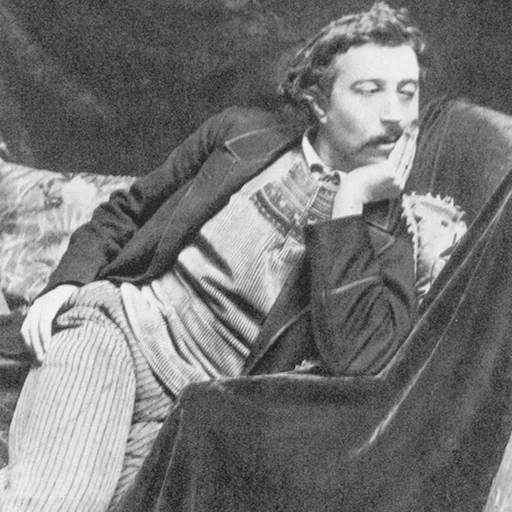
Artist
Eugène Henri Paul Gauguin (; French: ; 7 June 1848 – 8 May 1903) was a French painter, sculptor, printmaker, ceramist, and writer, whose work has been primarily associated with the Post-Impressionist and Symbolist movements.

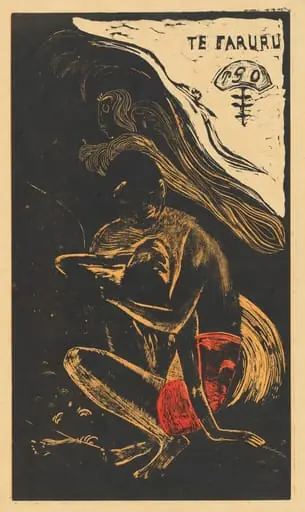 Te Faruru (They are Making Love Here)
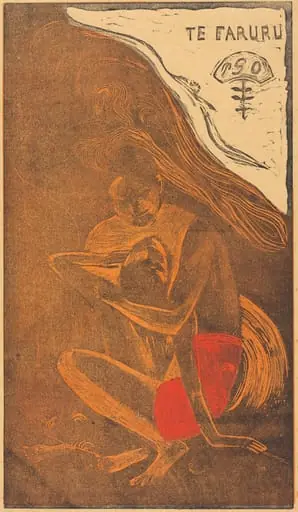 Te Faruru (They are Making Love Here)
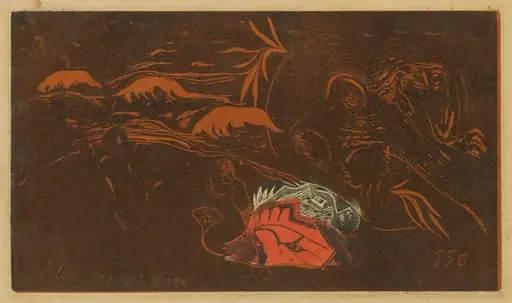 The Universe is Created (L'Univers est cree)
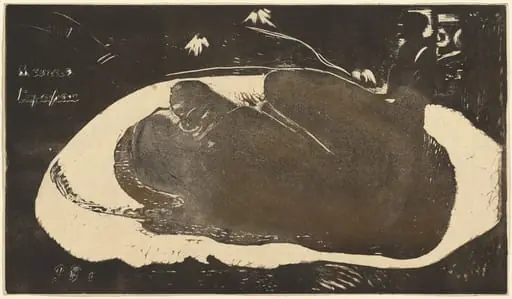 Manao Tupapau (She is Haunted by a Spirit)
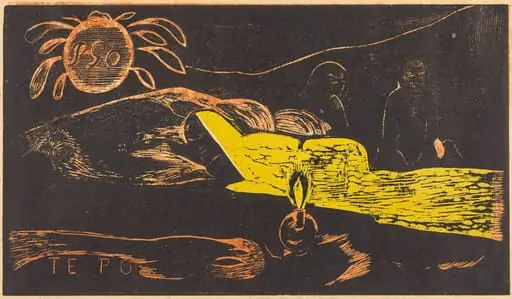 Te Po (The Long Night)
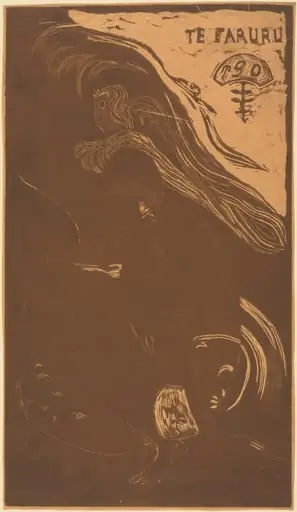 Te Faruru (They are Making Love Here)
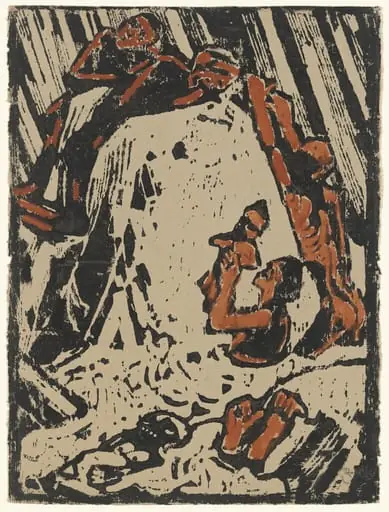 Flood (Sintflut)
 Untitled
 Untitled
 The Wife of Professor Goldstein
 Untitled
 Female Nude