Artwork
Une Nuit d'Avril à Céos; L'Image
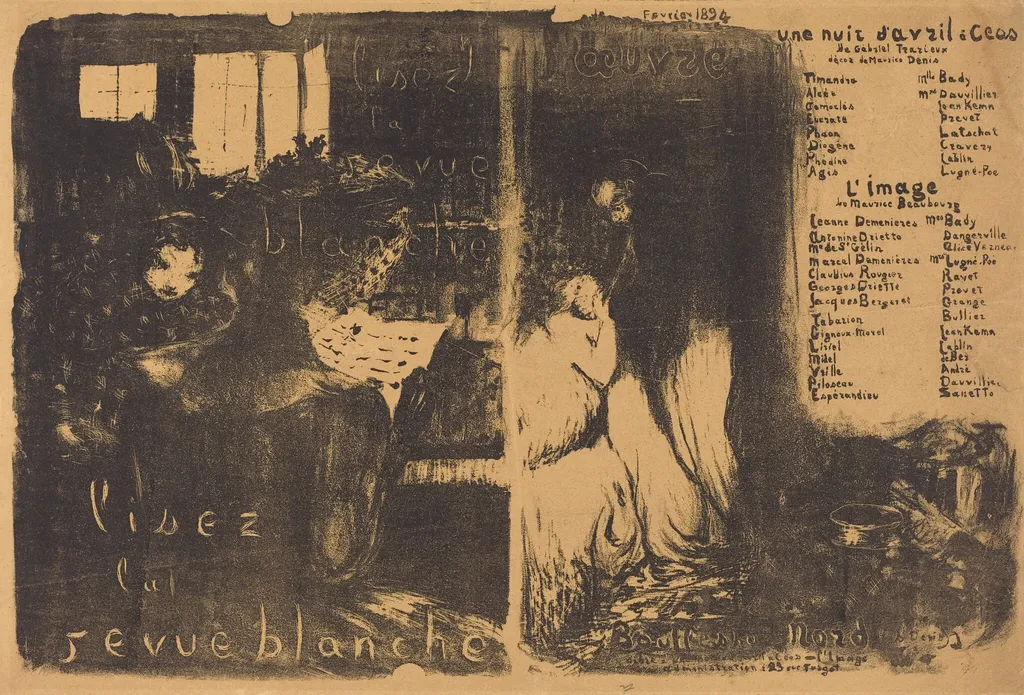
Une Nuit d'Avril à Céos; L'Image is an ink print by the Impressionist artist Édouard Vuillard. It dates from 1894 and is held in the collection of the National Gallery of Art.
About this work
Overview
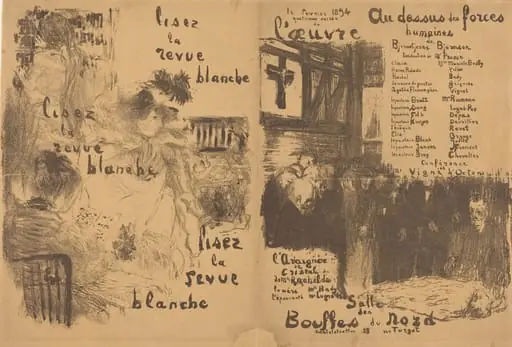
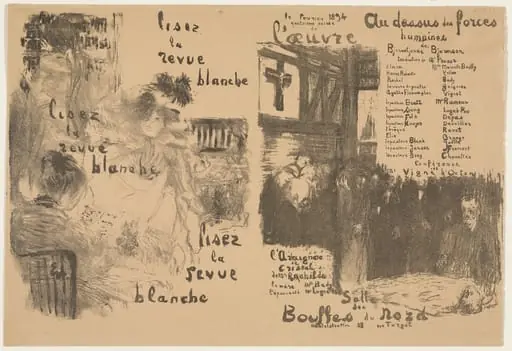
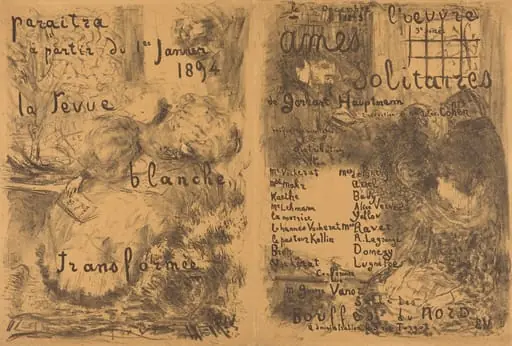
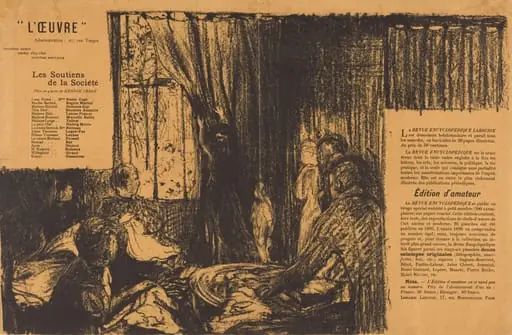
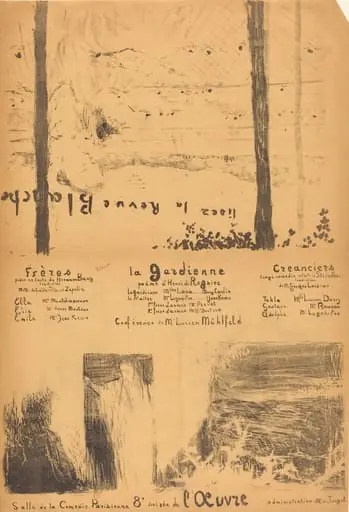
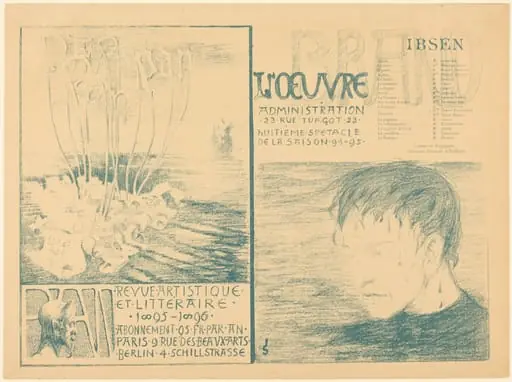
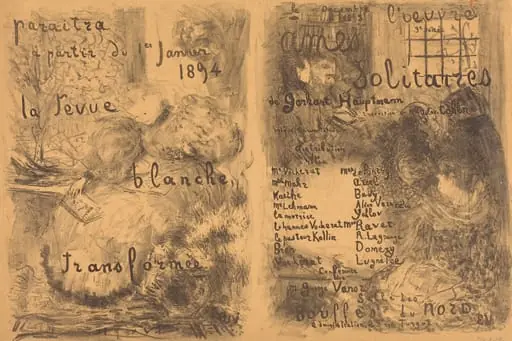
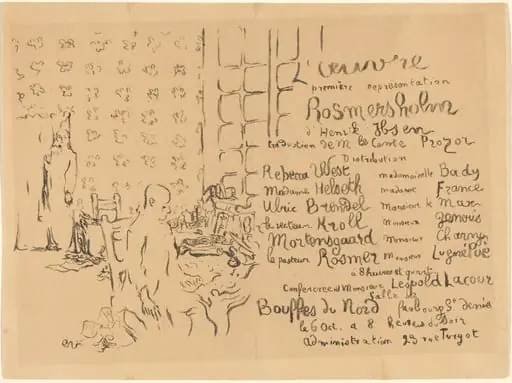
Executed in black ink on light brown wove paper, the work is divided into two distinct panels, each presenting a quiet, introspective scene.
Created in 1894, this lithograph by Édouard Vuillard belongs to a series of prints made during his involvement with Les Nabis, a group of post-Impressionist artists exploring symbolic and decorative forms. Executed in black ink on light brown wove paper, the work is divided into two distinct panels, each presenting a quiet, introspective scene. The medium and tonal restraint reflect Vuillard’s interest in intimate, domestic atmospheres and the graphic possibilities of printmaking.
Subject & Meaning
The left panel shows a solitary figure seated at a table, suggesting a moment of stillness or reflection. The right panel depicts a woman in a flowing white garment, her form rendered with elongated lines that evoke stillness and detachment. Behind her, handwritten text fills the background, possibly alluding to memory, communication, or the presence of unseen narrative. Together, the panels convey a sense of solitude and unspoken thought, characteristic of Vuillard’s psychological approach to everyday scenes.
Technique & Style
Vuillard employed lithography to achieve sharp contrasts between dense black lines and the warm, uninked paper, enhancing the work’s atmospheric depth. The composition flattens space through simplified forms and strong outlines, drawing influence from Japanese woodblock prints. The absence of gradated tones and the emphasis on patterned silhouettes align with the Nabis’ rejection of naturalism, favoring instead symbolic structure and decorative harmony.
History & Provenance
This print was made during Vuillard’s most active period as a printmaker, between 1890 and 1898, when he produced numerous lithographs for private editions and illustrated journals. It was likely created for a limited run, possibly connected to the Nabis’ collaborative publications. Its survival in museum collections today reflects its significance as a rare example of Vuillard’s graphic work, distinct from his better-known oil paintings.
Context
While often associated with Impressionism, Vuillard’s work in the 1890s diverged sharply from its focus on light and outdoor scenes. Instead, he turned inward, exploring interiors and psychological nuance alongside fellow Nabis like Bonnard and Sérusier. The use of handwritten text and divided composition reflects broader Symbolist interests in layered meaning and the blending of visual and literary expression within avant-garde circles of fin-de-siècle Paris.
Legacy
This lithograph exemplifies Vuillard’s contribution to the revival of printmaking as a serious artistic medium in late 19th-century France. Its emphasis on mood over narrative, and its integration of text and image, influenced later artists exploring the boundaries between illustration, decoration, and fine art. Though less widely known than his paintings, such works remain key to understanding his evolution as a modernist observer of private life.
Artist & collection
Artist
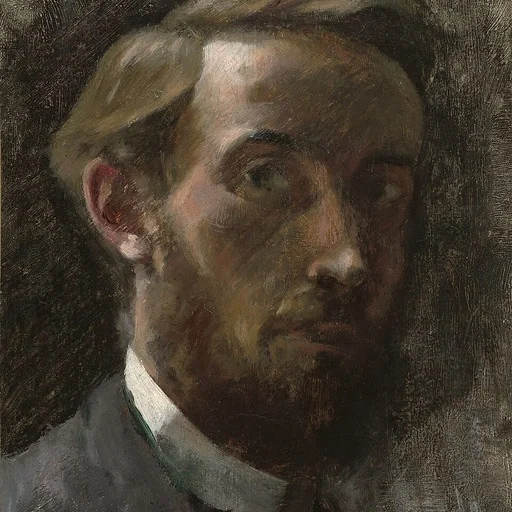
Jean-Édouard Vuillard (French: ; 11 November 1868 – 21 June 1940) was a French painter, decorative artist, and printmaker.