Artwork
Brand
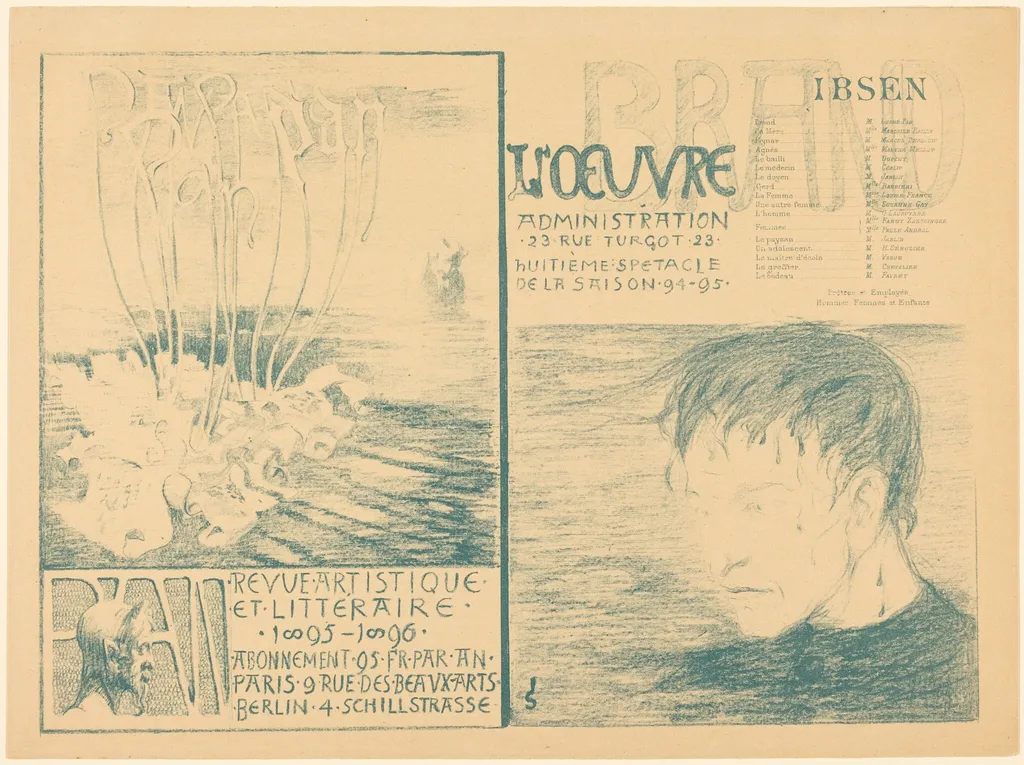
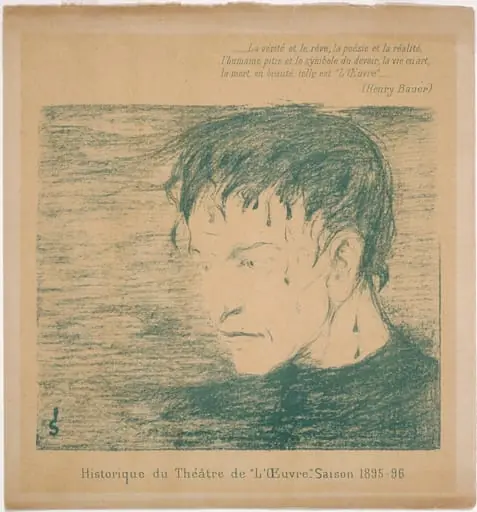
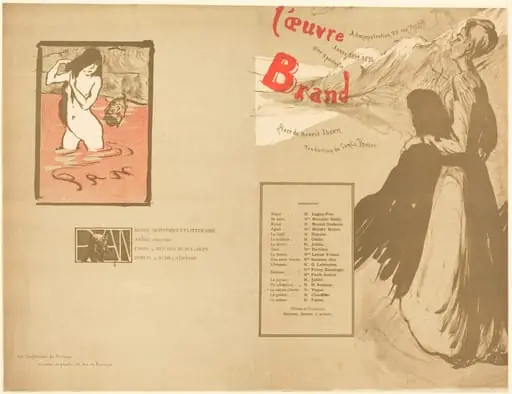
Brand is an ink print by the Impressionist artist Joseph Sattler. It dates from 1895 and is held in the collection of the National Gallery of Art.
About this work
Overview
Unlike traditional prints of the period, it favors atmospheric tone over narrative clarity, using a limited palette to evoke mood rather than detail.
Joseph Kaspar Sattler created *Brand* in 1895 as a lithograph printed in green on wove paper. The work emerged from his engagement with the German Art Nouveau movement and his contributions to the avant-garde magazine *Pan*. Unlike traditional prints of the period, it favors atmospheric tone over narrative clarity, using a limited palette to evoke mood rather than detail. Its restrained color and composition reflect the era’s interest in symbolic expression through graphic art.
Subject & Meaning
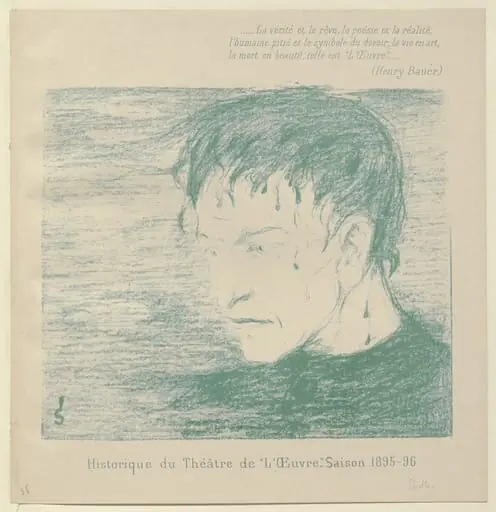
The central figure is a solitary man in a dark shirt, standing before a body of water, his posture suggesting introspection or resignation. Below him, a small portrait of a long-haired man appears in the lower left, introducing a subtle counterpoint—possibly a memory, alter ego, or symbolic echo. The title *Brand*, meaning 'fire' or 'mark' in German, hints at inner turmoil or identity etched by experience, though the image avoids literal storytelling, favoring emotional resonance.
Technique & Style
Sattler employed lithography to achieve soft gradations of green ink on absorbent wove paper, enhancing the work’s hazy, liquid quality. The lines are fluid and organic, characteristic of Art Nouveau, yet deliberately subdued. The background dissolves into washes of tone, while the figures are rendered with minimal detail, emphasizing silhouette and spatial ambiguity. This technique prioritizes mood over precision, aligning with Symbolist tendencies in late 19th-century graphic art.
History & Provenance
Created for publication in *Pan*, a Berlin-based journal promoting modernist aesthetics, *Brand* was part of a broader effort to elevate graphic design as fine art. Sattler’s illustrations in the magazine reached an audience of artists and intellectuals seeking alternatives to academic traditions. The print’s survival in institutional collections suggests early recognition of its significance within the German Art Nouveau circle, though its provenance prior to museum acquisition remains undocumented.
Context
In the mid-1890s, German artists were redefining illustration beyond commercial use, embracing symbolism and stylized form. *Brand* emerged alongside similar works in *Pan* and other journals that rejected realism in favor of emotional and decorative expression. While often grouped with Art Nouveau, Sattler’s approach leaned toward introspection rather than ornament, distinguishing his work from the more floral or ornate styles prevalent in France or Belgium.
Legacy
Though Sattler is less widely known today, *Brand* remains a representative example of how German illustrators used print media to explore psychological themes through restrained visual language. Its influence is seen in later expressionist graphic works that favored mood over clarity. The print’s quiet intensity contributed to the legitimacy of lithography as a medium for personal, non-commercial art in the decades before World War I.
Artist & collection

Artist
Joseph Kaspar Sattler (20 July 1867, Schrobenhausen - 12 May 1931, Munich) was a German painter, bookplate artist and Art Nouveau illustrator. He is best remembered for his work that appeared in the magazine Pan.