Artwork
Forest on the Neman I
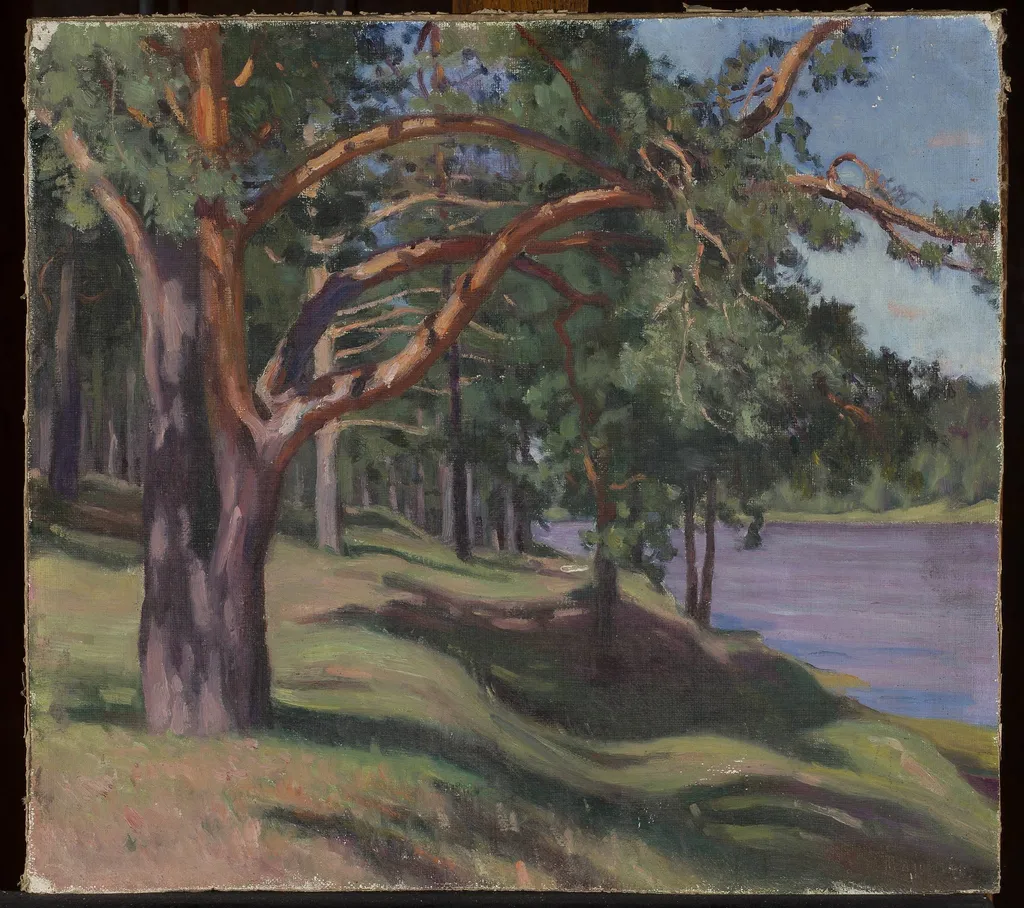
Forest on the Neman I is an oil painting by Władysław Majewski. It is held in the collection of the National Museum in Warsaw.
About this work
Overview
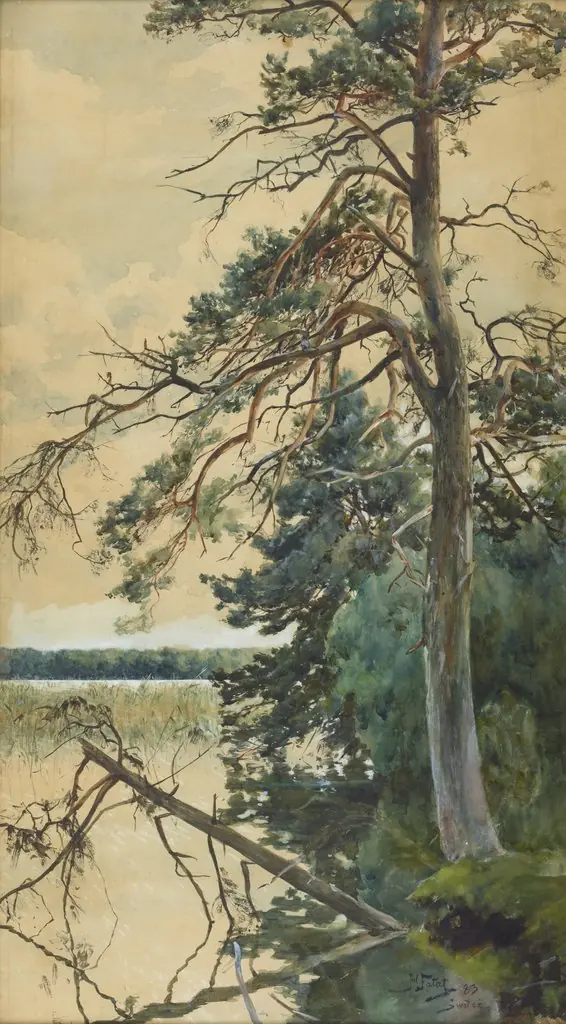
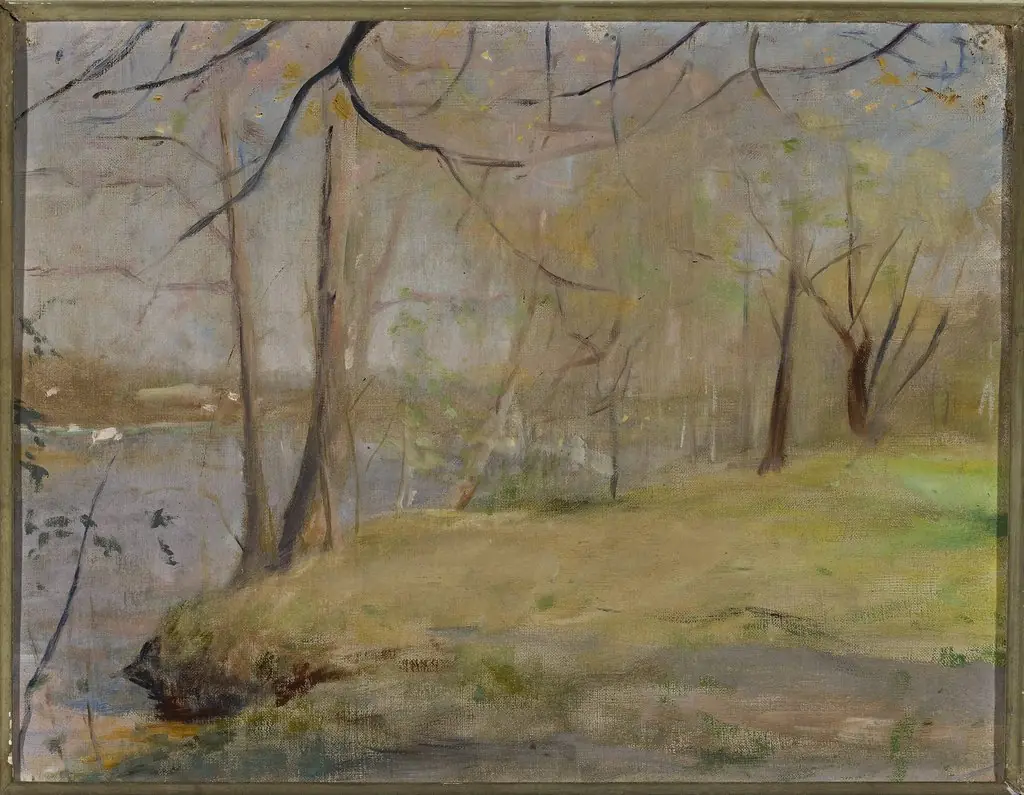
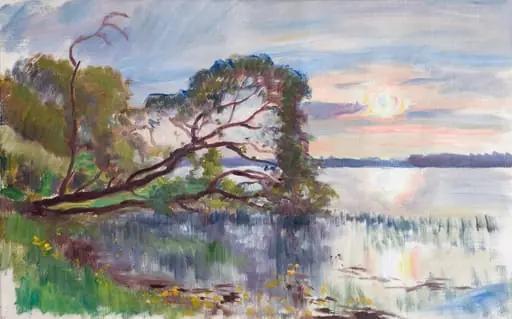
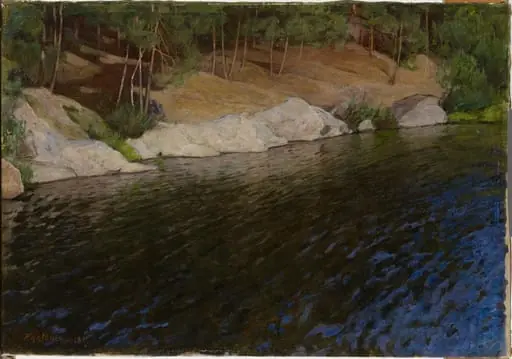
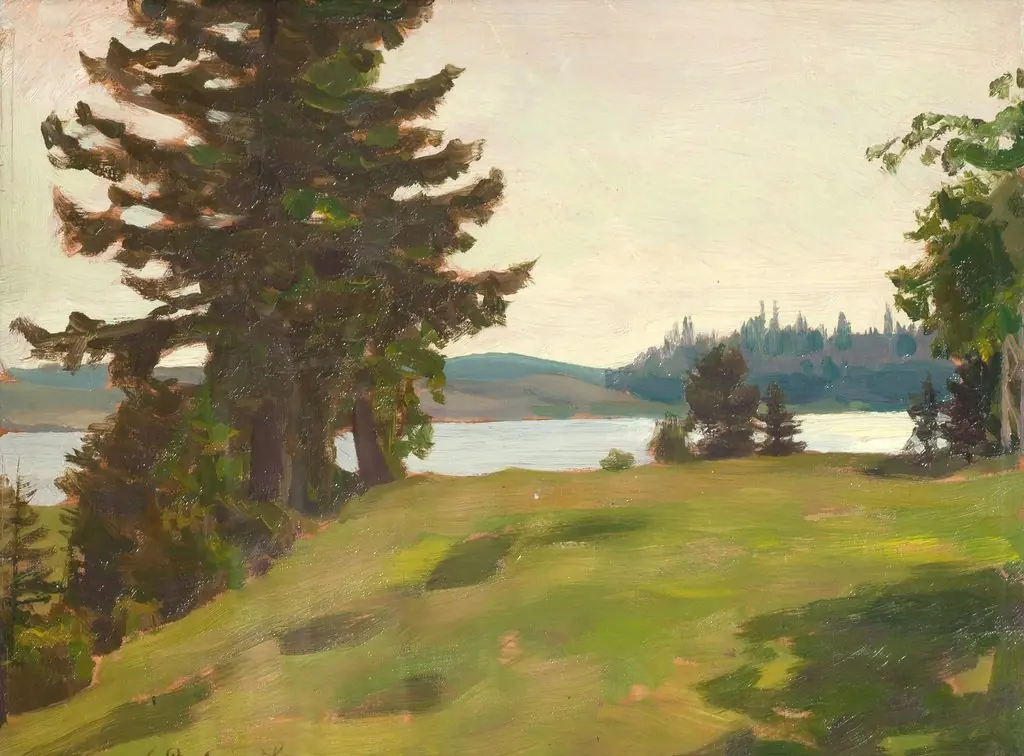
Forest on the Neman I is an oil on canvas created by Polish painter Władysław Majewski. The work is part of the collection of the National Museum in Warsaw, where it is displayed among the museum’s 20th‑century holdings. The painting presents a quiet woodland scene rendered in a restrained palette that emphasizes atmosphere over detail.
Subject & Meaning
The composition centers on a solitary tree whose trunk occupies the left edge of the canvas, its branches extending toward the right. Behind the tree a stretch of water can be seen, bordered by additional trees and foliage, suggesting a riverside forest. The tranquil setting invites contemplation of nature’s stillness and the subtle interplay between land and water.
Technique & Style
Majewski employed oil paint to build layered textures that convey depth, especially in the foliage and water surface. Muted greens, browns and blues dominate, creating a subdued tonal range. Light and shadow are handled with a modest chiaroscuro, giving the central tree a three‑dimensional presence while preserving the overall calm of the scene.
History & Provenance
Since its creation, the canvas has remained in Poland, eventually entering the National Museum’s Warsaw collection. The museum acquired the piece as part of its effort to preserve works by notable Polish artists of the early 20th century, ensuring public access to Majewski’s representation of the Neman river region.
Context
Majewski’s interest in landscape aligns with a broader Polish tradition of depicting the nation’s natural environments. The Neman River, which flows through Lithuania, Belarus and Russia, has been a recurring motif for artists seeking to capture the borderland’s serene vistas. This work reflects that regional focus while employing a modern, restrained aesthetic.
Artist & collection
Artist
Władysław Majewski painted quiet, oil landscapes that feel like snapshots of northern Europe in the early 20th century.