Artwork
Mazeppa
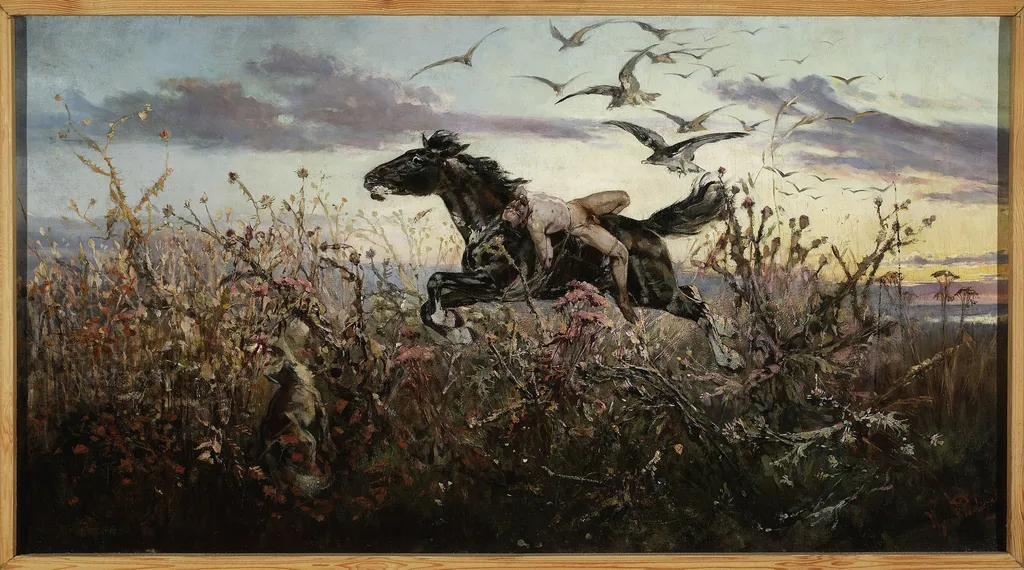
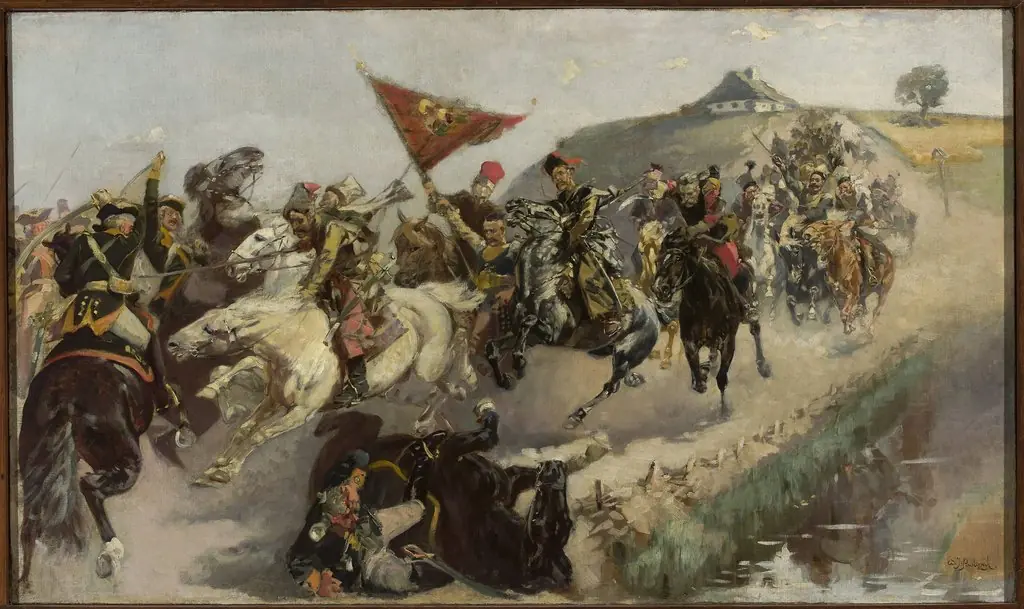
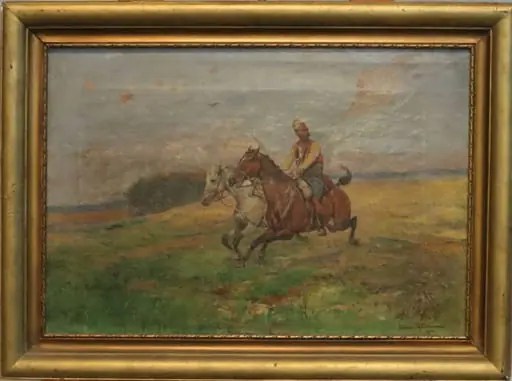
Mazeppa is an oil painting by the Post-Impressionist artist Wacław Pawliszak. It dates from 1893 and is held in the collection of the National Museum in Warsaw.
About this work
Overview
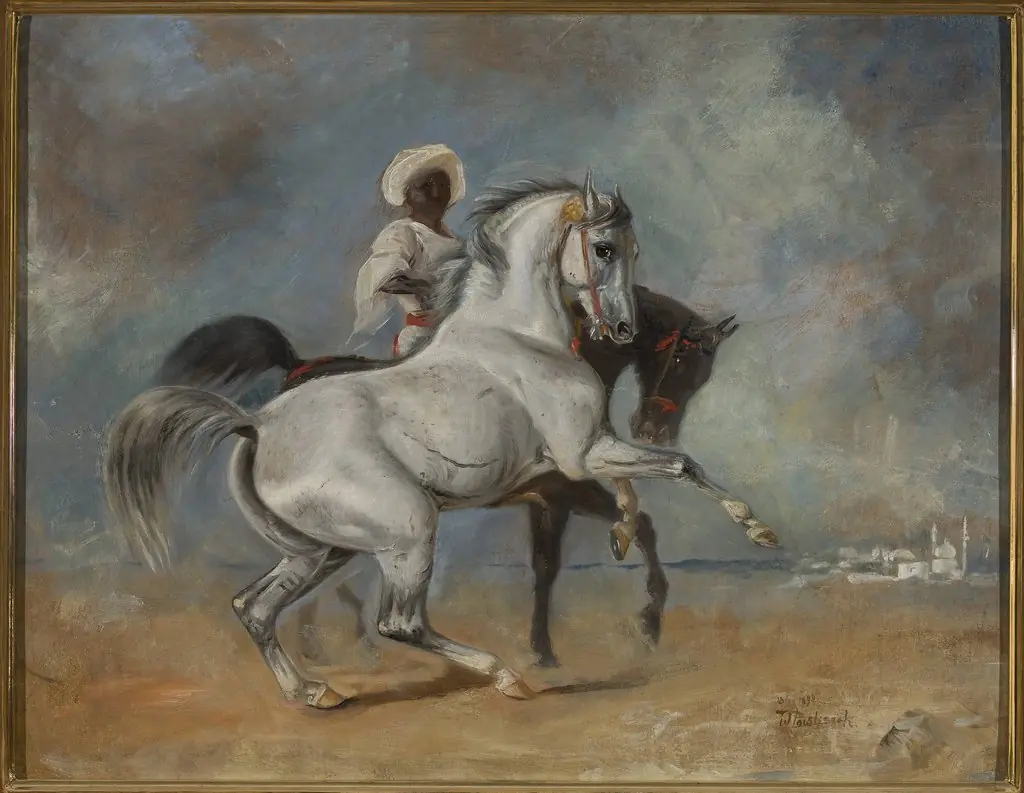
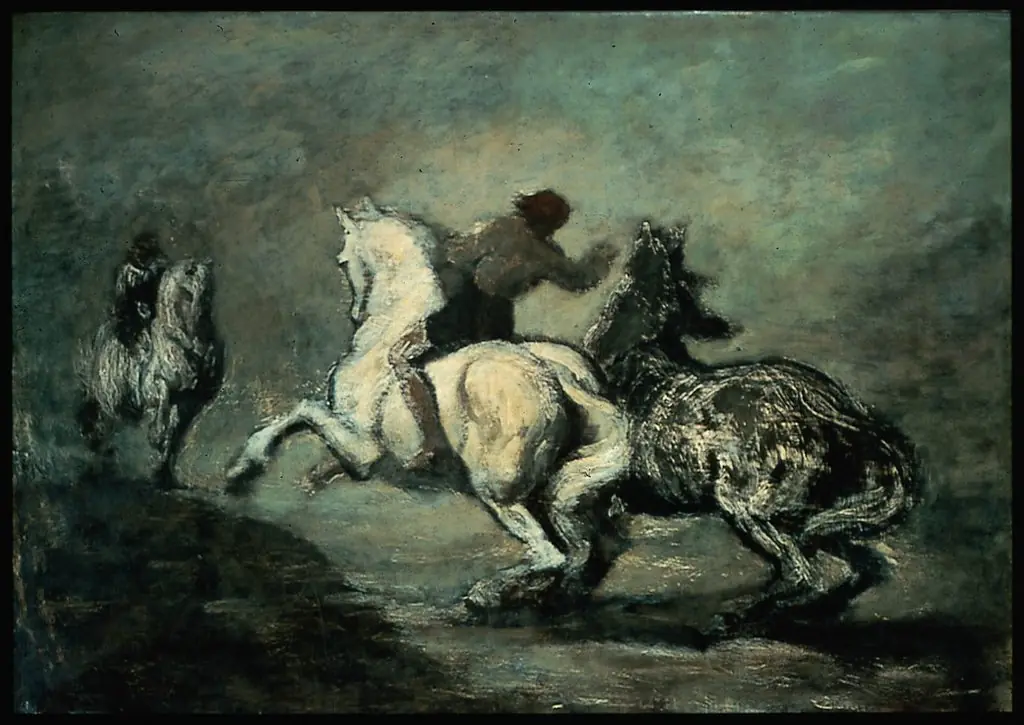
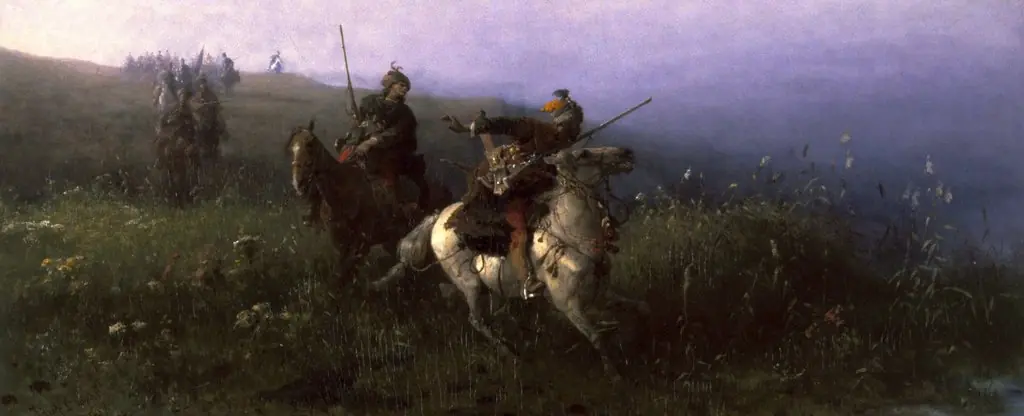
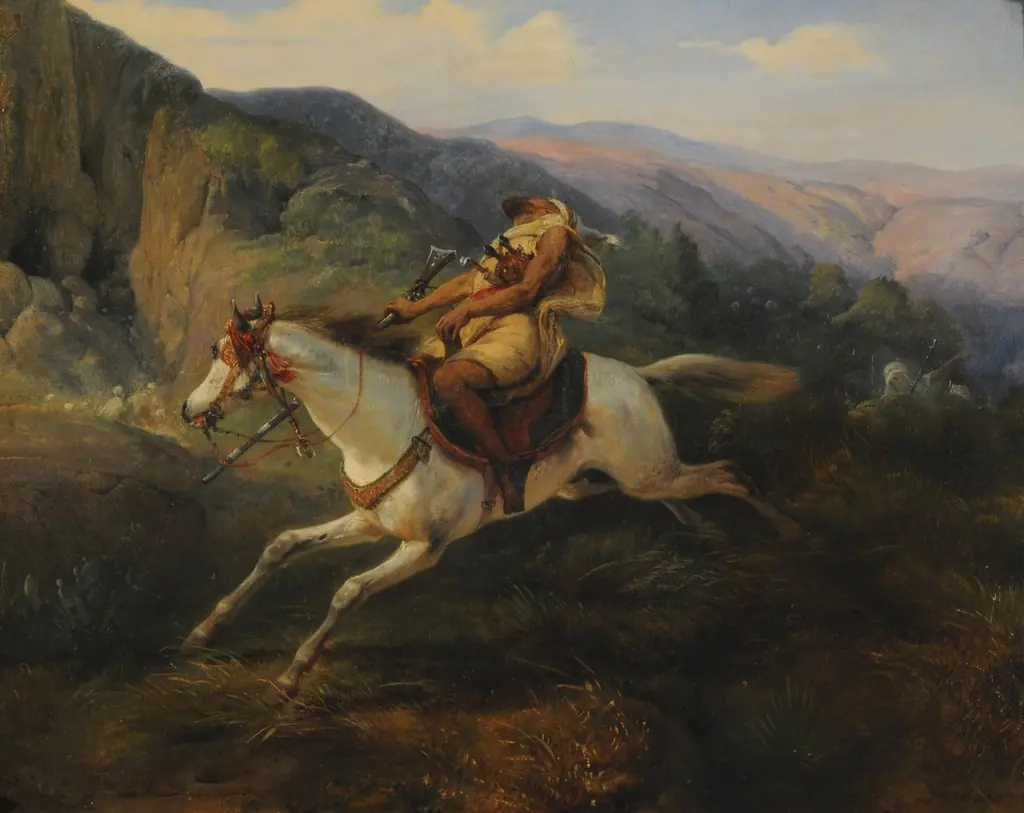
Wacław Pawliszak’s 1893 oil on canvas, titled Mazeppa, is part of the collection of the National Museum in Warsaw. The work portrays a solitary rider, naked‑torso, grasping the mane of a horse that is captured in a full gallop across an open landscape.
Subject & Meaning
The central figure evokes the legendary Ukrainian nobleman Ivan Mazepa, who, according to Romantic folklore, was tied to a horse and set loose as punishment. Pawliszak emphasizes the rider’s vulnerability and the animal’s power, suggesting a clash between human frailty and untamed nature.
Technique & Style
Bold, expressive brushwork defines the composition, while a limited palette of blues, grays and earthy greens creates a stormy atmosphere. The rendering of light and shadow, reminiscent of chiaroscuro, heightens the sense of motion, especially in the horse’s muscular form and the swirling grasses behind them.
History & Provenance
Completed in 1893, Mazeppa entered the National Museum’s holdings in Warsaw during the early 20th century, where it has remained on public display. The painting has been referenced in catalogues of Polish Romantic‑inspired art, confirming its attribution to Pawliszak.
Context
Pawliszak worked at a time when Polish artists frequently revisited national myths and literary subjects. The Mazeppa legend, popularized by Lord Byron and later by Polish poets, offered a dramatic narrative that aligned with the era’s interest in heroic suffering and the sublime in nature.
Artist & collection