Artwork
Market Scene
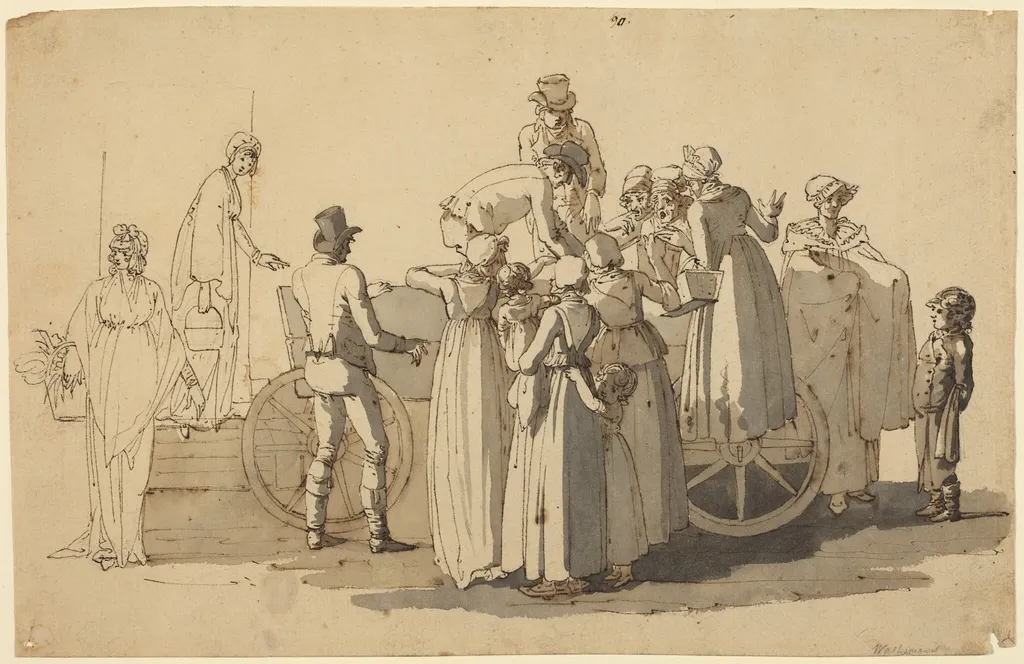
Market Scene is an ink drawing by the Romanticist artist Anton Wachsmann. It dates from 1800 and is held in the collection of the National Gallery of Art.
About this work
Overview
Created around 1800 by Anton Wachsmann, this drawing captures a fleeting moment in a bustling urban market. Executed in pen and black ink with gray wash over graphite, the work reflects the artist’s interest in everyday life. The composition is unpolished, emphasizing spontaneity over finish, suggesting it was made on-site as a rapid observation rather than a formal study.
Subject & Meaning
The scene centers on a cart surrounded by figures engaged in ordinary interactions: a woman in a long dress stands nearby, a man in a top hat leans against the cart, and a boy in short pants watches from the periphery. Others hold bags or converse, suggesting commerce and social exchange. The drawing conveys no narrative climax, instead presenting daily life as a quiet, unremarkable rhythm.
Technique & Style
Wachsmann employed swift, economical lines and subtle gray washes to suggest form and movement. Shading is minimal, used to imply volume rather than detail, while graphite underdrawing remains visible in places. The loose handling and lack of refined contours reflect a sketchbook sensibility, prioritizing immediacy and observation over finish or idealization.
History & Provenance
The drawing’s early history is undocumented, but its style and medium align with 19th-century German sketching practices. It likely originated as a personal study, possibly part of a larger collection of urban observations. No known exhibition or ownership record exists prior to its inclusion in modern institutional collections.
Context
Wachsmann worked during a period when artists increasingly turned to candid scenes of public life, influenced by emerging interest in realism and the everyday. Unlike grand historical compositions, this drawing reflects a shift toward intimate, unidealized documentation — part of a broader trend in European drawing that valued direct observation over academic convention.
Legacy
Though not widely known, the work exemplifies the quiet significance of sketchbook culture in the early 19th century. Its unpretentious style resonates with later artists who valued spontaneity and authenticity over polish. As a record of ordinary urban life, it contributes to a broader visual archive of daily existence during a time of social and economic change.
Artist & collection


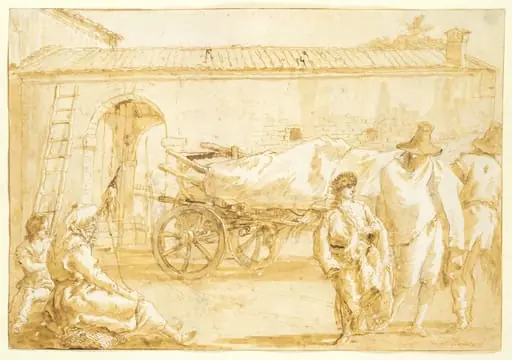 Peasants with a Farm-cart
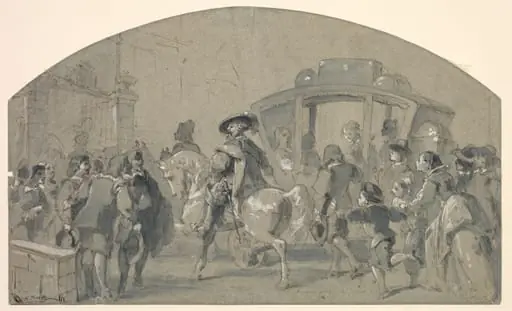 Street Scene (recto)
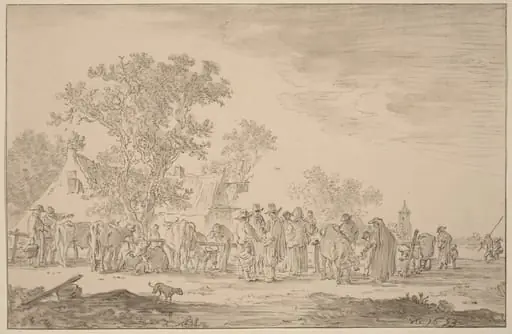 Cattle Market
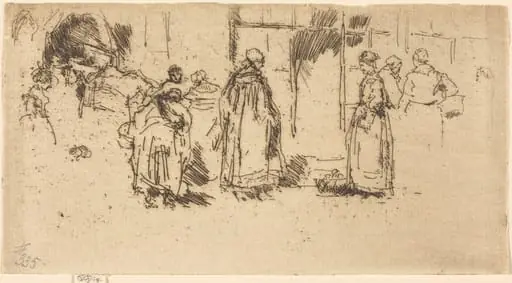 Poultry-Market, Loches
![Le tonneau d'arrosage [upper half], by Gabriel de Saint-Aubin](https://artifactworldgallery.com/img/gabriel-de-saint-aubin--le-tonneau-d-arrosage-upper-half--a57323e669478730-w320.webp) Le tonneau d'arrosage [upper half]
Le tonneau d'arrosage [upper half]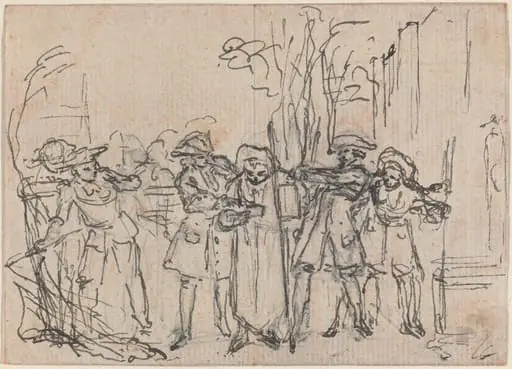 Hob Surprised by Sir Thomas with Mr. Friendly's Letter
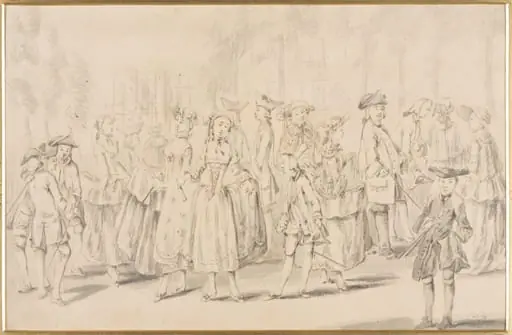 Promenaders in St. James' Park
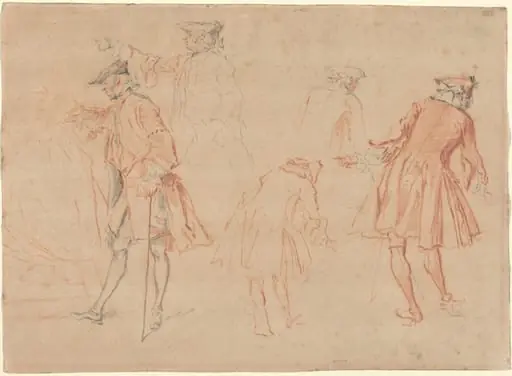 Sketches of a Gentleman
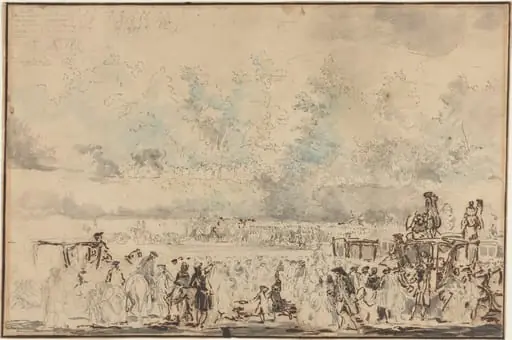 Royal Review of the Troops
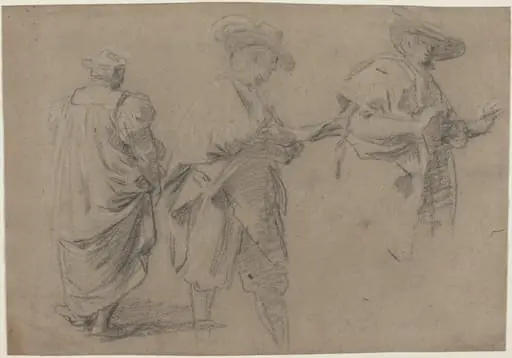 A Judge and Two Gentlemen Lawyers
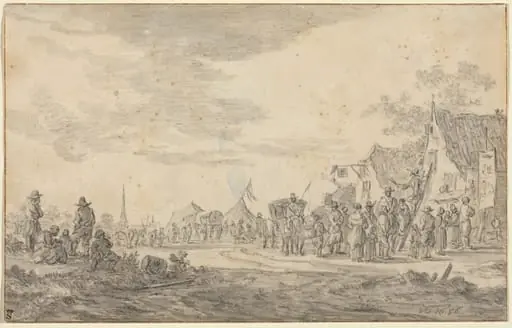 Village Fair
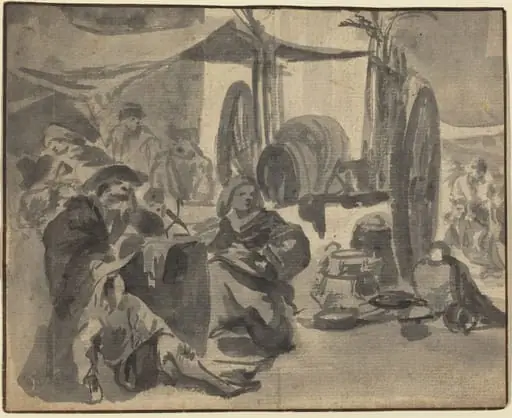 Market Scene